
Arts and Culture
Bay Area African American Women in Music: ‘Music is in The Ear of The Beholder,’ Says Faye Carol

Veteran Bay Area vocalist Faye Carol doesn’t like being tagged a “jazz singer” or “blues singer,” although she sings both.
“Music is in the ear of the beholder,” says the longtime Berkeley resident. “Those are nice words for boxes for selling. If somebody’s gonna come and buy something, they gotta compartmentalize you. I just don’t believe in boxing myself in.”
Carol says, “I’ve been blessed to be able to sing what I like. My biggest hero for that was Ray Charles. You could not pigeonhole that man. He brought his Rayness to whatever he did.”
Carol was born in Meridian, Mississippi, and spent her first 10 years there with her grandmother, a schoolteacher. Except for summers, when she travelled to Port Chicago, California, to be with her parents who moved there for work.
Carol says living in Mississippi was “absolutely wonderful,” yet she was well aware of the “white only” signs and other forms of racism that surrounded her.
“The great thing about segregation was that you were just with your own people,” she says.
“The other thing about segregation that wasn’t so great, but still had side benefits was that you had to be pretty self-sufficient ‘cause wasn’t nobody gonna come and do too much of nothin’ for you. We had our own newspaper, our own restaurants, our own undertakers, our own hairdressers and those juke joints on the outskirts of town,” says Carol.

“We never did try to go into [white] restaurants,” she adds. “Our food was better, anyway.”
Carol began singing in church as a teenager in Pittsburg – where her family had relocated from Port Chicago – and joined a gospel group called the Angelaires, led by pianist-songwriter Faidest Wagoner and also included future singing star Leola Jiles. They performed at churches throughout Northern California and did a national tour, including stops in Chicago, Detroit and New York City.
After winning a talent contest at the Oakland Auditorium during the mid-‘60s, Carol landed a gig with R&B guitarist Johnny Talbot and De Thangs at the Zanzibar Room in the California Hotel.
Carol has, for many years, imparted her vast knowledge of African American music to children, teenagers and adults through workshops and private lessons.
Her late husband, Jim Gamble, a jazz guitar player and bassist who taught Black music history at U.C. Berkeley, helped broaden her musical horizons beyond the R&B hits of the day. She in turn began schooling their daughter Kito, then a budding young piano player, in the music of blues pianist Otis Spann and such jazzmen as McCoy Tyner and Cecil Taylor.
Kito went on to work as her mother’s piano accompanist for more than a decade before launching her own career as a Christian rapper, known as Sista Kee.
On Sunday, May 10 at 5 p.m., Carol will perform with her quartet and some of her students at the EastSide Cultural Center, 2277 International Blvd. in Oakland. For more information, call (510) 533-6629.
Veteran Bay Area vocalist Faye Carol doesn’t like being tagged a “jazz singer” or “blues singer,” although she sings both.
“Music is in the ear of the beholder,” says the longtime Berkeley resident. “Those are nice words for boxes for selling. If somebody’s gonna come and buy something, they gotta compartmentalize you. I just don’t believe in boxing myself in.”
Carol says, “I’ve been blessed to be able to sing what I like. My biggest hero for that was Ray Charles. You could not pigeonhole that man. He brought his Rayness to whatever he did.”
Carol was born in Meridian, Mississippi, and spent her first 10 years there with her grandmother, a schoolteacher. Except for summers, when she travelled to Port Chicago, California, to be with her parents who moved there for work.
Carol says living in Mississippi was “absolutely wonderful,” yet she was well aware of the “white only” signs and other forms of racism that surrounded her.
“The great thing about segregation was that you were just with your own people,” she says.
“The other thing about segregation that wasn’t so great, but still had side benefits was that you had to be pretty self-sufficient ‘cause wasn’t nobody gonna come and do too much of nothin’ for you. We had our own newspaper, our own restaurants, our own undertakers, our own hairdressers and those juke joints on the outskirts of town,” says Carol.
“We never did try to go into [white] restaurants,” she adds. “Our food was better, anyway.”
Carol began singing in church as a teenager in Pittsburg – where her family had relocated from Port Chicago – and joined a gospel group called the Angelaires, led by pianist-songwriter Faidest Wagoner and also included future singing star Leola Jiles. They performed at churches throughout Northern California and did a national tour, including stops in Chicago, Detroit and New York City.
After winning a talent contest at the Oakland Auditorium during the mid-‘60s, Carol landed a gig with R&B guitarist Johnny Talbot and De Thangs at the Zanzibar Room in the California Hotel.
Carol has, for many years, imparted her vast knowledge of African American music to children, teenagers and adults through workshops and private lessons.
Her late husband, Jim Gamble, a jazz guitar player and bassist who taught Black music history at U.C. Berkeley, helped broaden her musical horizons beyond the R&B hits of the day. She in turn began schooling their daughter Kito, then a budding young piano player, in the music of blues pianist Otis Spann and such jazzmen as McCoy Tyner and Cecil Taylor.
Kito went on to work as her mother’s piano accompanist for more than a decade before launching her own career as a Christian rapper, known as Sista Kee.
On Sunday, May 10 at 5 p.m., Carol will perform with her quartet and some of her students at the EastSide Cultural Center, 2277 International Blvd. in Oakland. For more information, call (510) 533-6629.














Activism
Black-Owned Nonprofit Gameheads Expands Youth Opportunities with New Gameheads KIDS Summer Program
Throughout the five-week experience, students will explore Scratch coding, digital illustration using drawing tablets, storytelling, technical art, animation, board games, arts and crafts, physical movement, and STEAM-based learning that encourages creativity, collaboration, and problem-solving.
By Dr. Maritony Jones

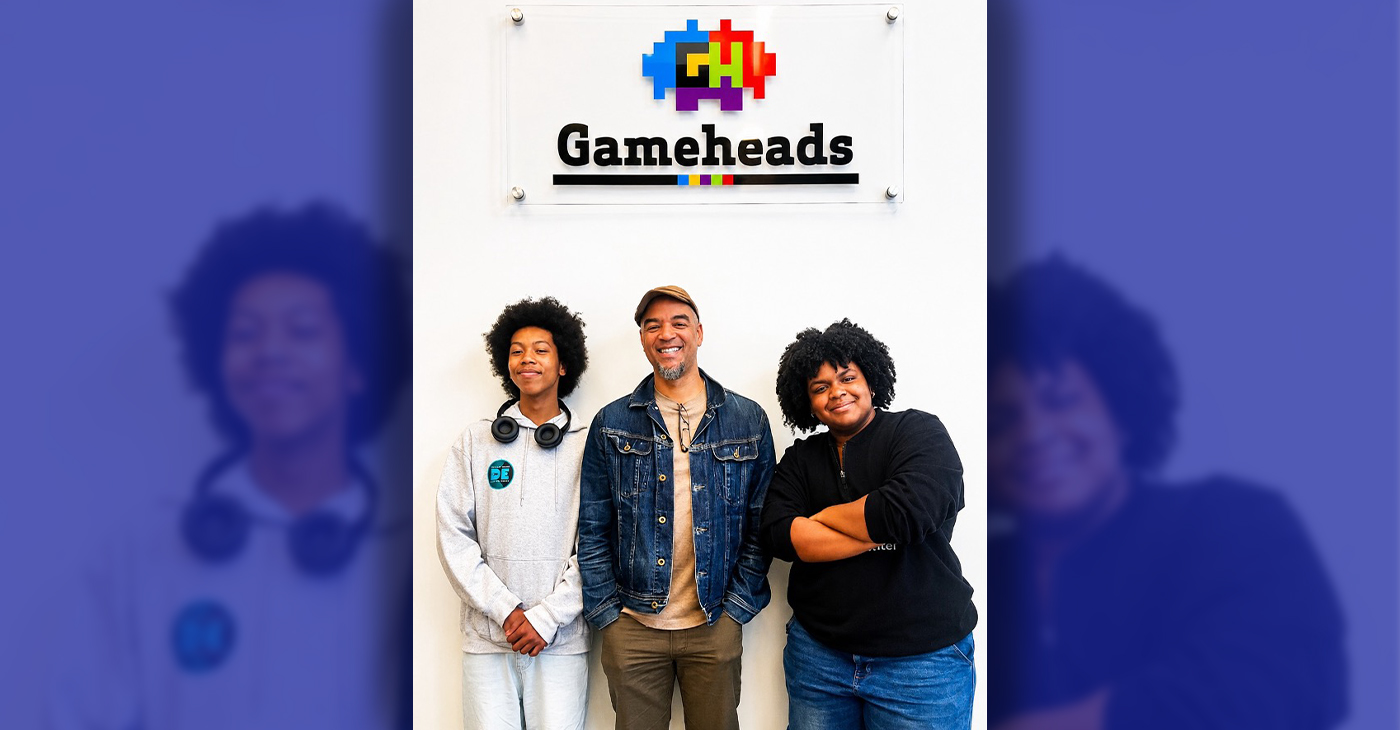
OAKLAND, Calif. — For more than a decade, Oakland-based nonprofit Gameheads has been transforming the lives of young people by turning a passion for video games into pathways toward careers in technology. This summer, the Black-led organization is expanding that mission by launching Gameheads KIDS, a new five-week program designed to inspire children ages 8 to 11.
Running July 13 through Aug. 13, the Kids summer program introduces children to coding, digital art, storytelling, animation, and game design through hands-on activities that encourage creativity, teamwork, and critical thinking.
Founded more than 12 years ago by Damon Packwood, Co-Founder and Executive Director, Gameheads was created to bridge the opportunity gap facing many Oakland youth despite living in the heart of the world’s technology capital. Mr. Packwood, whose background includes leadership roles with Juma Ventures, Hack the Hood, and Upward Bound, has dedicated his career to making technology education accessible to young people from underserved communities.
“Parents are using apps, tablets, and online games to provide children with digital literacy skills. But, some of these platforms have predatory models that are not in a child’s best interest,” said Packwood. “By combining analog and digital activities that are disconnected from the internet, we can provide that very same experience in a safe, child-friendly, and most of all fun environment.”

Packwood’s vision has grown into a nationally recognized nonprofit that connects students with nearly 200 volunteer mentors from the gaming and technology industries, including professionals who have contributed to games like Minecraft and Marvel’s Spider-Man. Through partnerships with companies such as Sony PlayStation, Microsoft Xbox, Autodesk, and other industry leaders, Gameheads has helped prepare students for successful careers in technology, with many graduates earning $75,000 to more than $100,000 in entry-level positions.
Now, Gameheads is introducing those opportunities even earlier.
Learning Through Play
The new Gameheads KIDS program is built on the belief that children learn best through play. Instead of simply playing video games, campers will discover how games are imagined, designed, and created while developing skills that extend far beyond the screen.
Throughout the five-week experience, students will explore Scratch coding, digital illustration using drawing tablets, storytelling, technical art, animation, board games, arts and crafts, physical movement, and STEAM-based learning that encourages creativity, collaboration, and problem-solving.
No previous coding or gaming experience is required—just curiosity and a willingness to learn, organizers say.
Gameheads Program Manager Randi Dean says the program is about creating opportunities that can shape a child’s future.
“I believe in the mission of Gameheads, and that is what has drawn me to them,” Mrs. Dean said. “We give young people opportunities to change the trajectory of their lives and break away from predetermined narratives.”
Families interested in enrolling are encouraged to register soon, as space is limited.
Gameheads KIDS Summer Program (Pilot Program)
- Dates: July 13 – Aug.13/ Schedule: Monday–Thursday, 9 a.m.–4 p.m.
For registration and more information, visit GameHeadsOakland.org or email damon@gameheadsoakland.org
More than a summer camp, Gameheads KIDS is an investment in Oakland’s future—giving young minds the confidence, creativity, and technical skills to imagine new possibilities and become tomorrow’s innovators.
Alameda County
Lower Bottom Playaz Presents Lee Blessing’s ‘Going to St. Ives’
Played by Dr. ayodele nzinga, May N’Kame, the mother of a deadly African dictator, travels to England to see Dr. Cora Gage (Teresa Foss) about medical treatment for her failing eyesight. But what she really wants is a poison to assassinate her son. Gage is then put in a personal dilemma to either uphold her vow to ‘do no harm,’ or help put an end to the atrocities the dictator visits on his people.

Oakland’s oldest North American African theater company presents a story of race, women, violence, and empire.
By Cat Brooks, Special to The Post
The Lower Bottom Playaz 27th season will kick off on July 9 with “Going to St. Ives,” a play by Lee Blessing.
Directed by playwright, actress, and community advocate Cat Brooks, the play by Lee Blessing is the story of two impressive women brought together by the personal and divided by the political, as both seek to accomplish the greatest good.
Played by Dr. ayodele nzinga, May N’Kame, the mother of a deadly African dictator, travels to England to see Dr. Cora Gage (Teresa Foss) about medical treatment for her failing eyesight. But what she really wants is a poison to assassinate her son. Gage is then put in a personal dilemma to either uphold her vow to ‘do no harm,’ or help put an end to the atrocities the dictator visits on his people.
“While the Empire’s location is fictional, a very real genocide is happening in the Congo right now that many of us are ignoring,” Brooks observed. “We set this play there in hopes of utilizing theater to make audiences aware of injustices moving in places and amongst people that mainstream media omits from its headlines.
“In these times, it is more important than ever that theater do more than just entertain. It must tell tales that ignite us into action.”
Also explored in Going to St. Ives are themes of motherhood and sacrifice. What does it cost mothers to raise sons only to lose them to the violence of the world? What experiences are shared amongst mothers across race, class, and country?
“Going to St. Ives examines the weight of privilege against the cost of ‘being responsible’ in a world carved by colonialism, greed, and loss in a high-stakes chess game between two women with only one thing in common,” said nzinga who is also the artistic director of Lower Bottom Playaz.
The play was first performed in 1997 in Seattle, eventually enjoying a highly praised off-Broadway run in New York in 2005.
For this production, Lower Bottom Playaz is partnering with non-government organizations that focus on raising awareness and providing support to displaced refugees across the diaspora, emphasizing community solidarity and collective action.
“Going to St. Ives” premieres on July 9 at BAM House in the Sister Thea Theater, 1540 Broadway, Oakland, CA 94612. All performances are scheduled through July 26 on Friday and Saturday at 8 p.m. and matinees on Saturday and Sunday at 2 p.m. For tickets and more information, please visit http://www.lowerbottomplayaz.com/. Reservations: 510 332-1319, leave a message.
Activism
‘The Oakland Street Academy Saved My Life’
The first time a teacher pulled up a chair to sit next to me to help me out, I panicked because no adult had ever sat so close to me in any kind of a caring or helping way. My English teacher, Kitty (Epstein), would make the biggest impact in my life. I didn’t know then what it meant to have a teacher who would care about me enough to spend her precious time with me even through all of my frustration about learning and thinking the whole time I couldn’t learn anything because I thought I was stupid.
By Ze Segundo, Special to The Post
This is an autobiographical statement by a former Street Academy student who overcame many obstacles in the1970s, attended S.F. State University, and built a successful life for herself.
I was born and raised in Oakland, living in a household with a single mother and eight children. My life was chaotic: I never felt loved, never hearing the words, “I love you.”
I was 4 years old when all of us were sent to foster homes. There, my little sister and I were tortured. I believe we were there a little over a year.
When we finally returned home to our mother, she had a new husband who was very abusive to all of us including my mother.
I and my other sisters were sexually abused by two uncles and my big brother. I remember my uncle choking me and telling me if I told anyone, he would kill me and my little brother – so I didn’t tell. I was terrified of him. I tried to stay away from him as much as possible, but that’s kind of hard to do when a sexual predator lives with you.
My mother would have parties on the weekends where there would be many people drinking and fighting. The police were often at my home. I hated Sunday mornings because my mother would make us kids clean up after the parties. The house had the stench of cigarettes and booze.
Having to clean up other people’s vomit made me sick to my stomach. This is when I started to drink myself. Taking sips of leftover alcohol in glasses and beer cans. That would be the start of my alcoholism.
I started cutting myself when I was 11 years old and didn’t know why. I think it was because it made me feel something different and somehow made whatever I was feeling go away for the moment.
I didn’t have many friends and didn’t have any social skills. I was very shy and withdrawn. In my early teen I couldn’t look people in the eyes. If I was walking down the street and someone was walking towards me, I would purposely cross the street, so I didn’t have to have contact with them.
I was terrified of the world around me. I didn’t even talk to my mother much because I didn’t know what kind of mood she would be in. I learned to stay silent and stay away from her.
My grandmother lived in Hayward; my sister, brother and I took a bus from Oakland to attend junior high school there. Because I didn’t have any social skills, the kids would tease me and bully me. I had to fight a lot, so much that my brother and I were kicked out; they didn’t want any of us in their schools.
After we were kicked out of the school district, I tried to attend a junior high in Oakland, but the noise in the classroom overwhelmed me. The sounds rumbled in my ears.
Again, I was bullied and teased. So, I stopped going to school. I would leave the house with my brothers and sisters but didn’t set foot into any classroom after that. I just wandered the streets until it was time to go home.
It was a very chaotic home life, and I was a severely abused child, overwhelmed with everything around me.
When I was 15, a social worker talked to my mother about sending me to Oakland Street Academy. My mother thought it was a continuation school, where the worst students went.
I didn’t want to go to Street Academy, fearful of being bullied again, but I was tired of hanging out in the street all day. I thought the Street Academy was strange, a school that took over an old furniture store building. It was an open floor plan with partitions that sectioned off classes.
During class, we could hear the buses go by and people talking as they were walking by. I was still painfully shy and withdrawn. I would show up to school early, so I didn’t have to walk past other students in the classroom. I didn’t speak to any students and barely spoke to the teachers. Even when class was going on, I would sit across the room in a small chair and table between two lockers.
I isolated myself from the rest of the class, not really knowing why, but that’s where I sat. I had a third-grade reading level at age 15 and couldn’t spell much at all.
The first time a teacher pulled up a chair to sit next to me to help me out, I panicked because no adult had ever sat so close to me in any kind of a caring or helping way. My English teacher, Kitty (Epstein), would make the biggest impact in my life. I didn’t know then what it meant to have a teacher who would care about me enough to spend her precious time with me even through all of my frustration about learning and thinking the whole time I couldn’t learn anything because I thought I was stupid.
Kitty told me that I could learn, and that there were no stupid students. I remember one time a small group of students walked to fast food restaurants just to read the menu because reading anything is better than reading nothing at all.
Kitty didn’t give up on me – so, I didn’t give up on myself.
School was difficult for me because so many things were going on at home. It was hard for me to focus, but the teachers were really patient with me. Street Academy empowered students by teaching Chicano studies and Black studies. We were learning about our own histories and cultures. Street Academy students participated in demonstrations like the United Farm Workers grape boycott of the mid-1970s. We learned that we could make a difference with our voices. It was a great self-esteem builder.
In many ways, Street Academy saved my life because I was going nowhere.
The minute I set foot into that school I knew it was something special. It took me four years to graduate because I was so far behind in my schooling, and I was dyslexic.
When I left Street Academy, I was reading college material and attended San Francisco State University. I was the first in my family to graduate high school and the first to go to college. As a 15-year-old with CPTSD (Complex Post-Traumatic Stress Disorder), I accomplished what I thought would never happen to me.
I am grateful to the school’s staff and what Street Academy stands for. Schools and teachers should treat students like human beings, care about them, spend a little extra time, believe in them, and they will believe in themselves because you never know what students are going through and what they have experienced in their past that affects their learning.
There are no stupid kids, bad kids, or lazy kids, only kids who need to be understood and loved. Street Academy gave all of that to me.
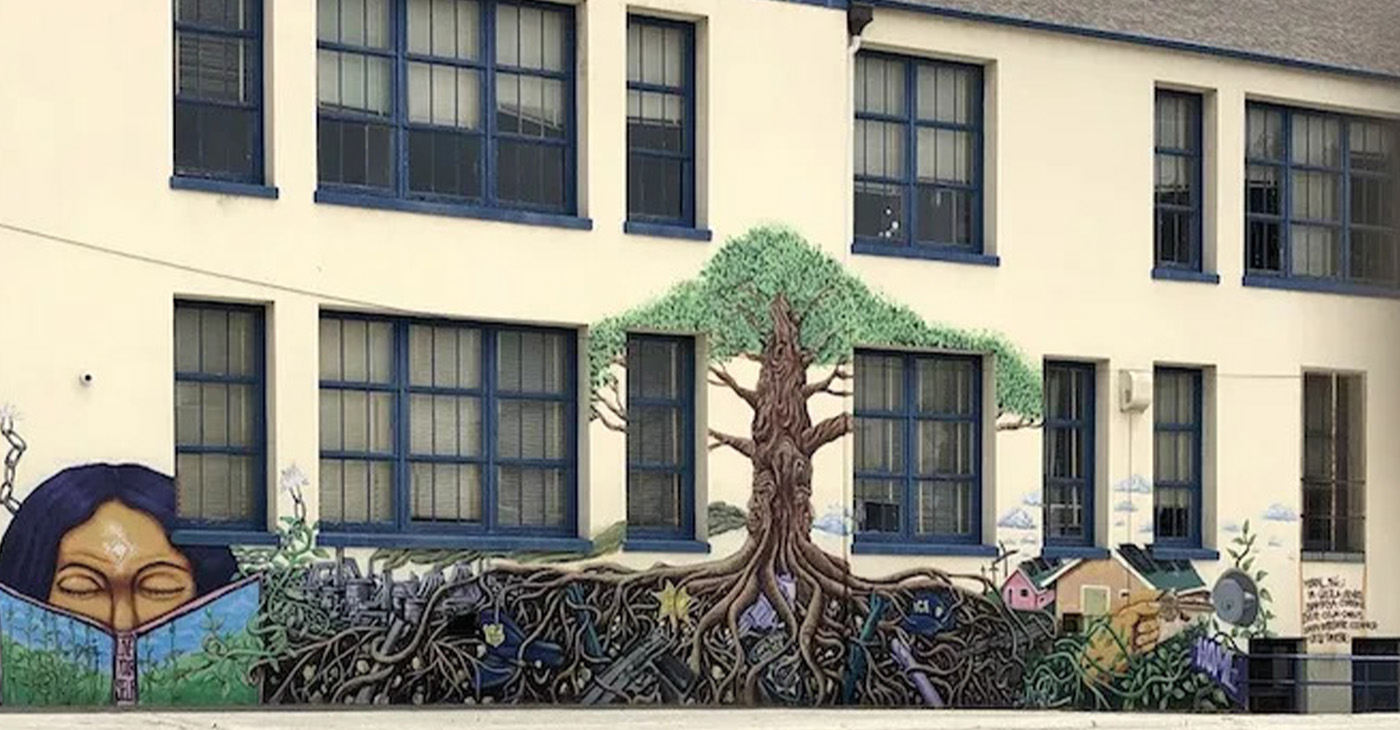
During the 1970s, Ze Segundo attended the Oakland Street Academy, an Oakland Unified School District school now known as Emiliano Zapata Street Academy located at 417 29th St. in Oakland.



OP-ED: Proposition 44 Would Put a Price on Trust

OP-ED: Proposition 40: It’s Time to Play Chess, Not Checkers

Listening as a Lifeline: A Doula’s Witness to Black Maternal Health

New Protections for Ticket Buyers: Gov. Newsom Signs Assemblymember Isaac Bryan’s Bill

‘We Don’t Talk Trash — We Pick Up Trash!’

Zakiya Jendayi Arrested, Locked Out of Home by Sheriff’s Deputies

Oakland Post: Week of September 30 – October 6, 2026

Asm. Corey Jackson Announces Launch of 24-Hour Childcare in His District

IN MEMORIAM: The Rev. Leon “Sonny” Clark, Longtime Orange County Pastor and Community Leader, Dies at 72

Poll: Becerra Widens His Lead Over Hilton; Californians Split on Wealth Tax

From Historic Memories to New Possibilities: Oakland Celebrates Coliseum 60

County Office of Education Says OUSD Finances Are Getting Healthier, Materially Stronger

LIVE FREE Sunday Dinner Brings Faith, Fellowship and Civic Conversation to Oakland

Remembering Chauncey Bailey as Student Journalists Face Threats to Truth-Telling

BLACspace Cooperative Invites Bay Area to Experience Oakland’s Black Cultural Ecosystem Through a BLAC Map Tour + Party

Standoff for Justice: Our Homes Are Worth Fighting For

Oakland Post: Week of August 26 – September 1, 2026

Frontier Airlines’ Return to Oakland Airport Brings Flights, Jobs and Opportunity

Gubernatorial Candidate Steve Hilton Blasts California New Tire Rules; Newsom Hits Back

Chef Sharon Lee Blends Culinary Excellence, Education and Empowerment

Jackie Wright Champions Bay Area Stories, Filmmakers and Cultural Institutions

Misnamed ‘Parent’ PAC Seeks to Influence Oakland School Board Elections

Oakland Coliseum Project Opens Door for Small Businesses to Build Bigger

Gov. Newsom’s Latest Appointees Include Sacramento Advocate for Formerly Incarcerated Students; State’s New Tech Chief

Big City Mayors Ask for “Yes” Vote on Housing Bond Measure; Conservatives Say “No”

Longtime BWOPA Member Brendalyn Goodall Appointed to California Workforce Development Board

Oakland Post: Week of September 2 – 8, 2026

Gov. Newsom Signs Law Shielding Immigration Aid Workers From Doxing Threats

Secretary of State Shirley N. Weber Urges Californians to Vote Early as Voter ID Battle Intensifies

IN MEMORIAM: Dolly Parton Dead at 80 — How She Built a Legacy of Love and Earned Her Place in Black Culture

The Conversation With Al McFarlane 6/23/26

Media Monday 6/22/26

LIVE! ASK ALMA! — TUES. 6.23.26 7PM EST

Car Buying Secrets: 4 Hidden Checks Before You Sign!

Is This 550 HP Charger Worth YOUR Money? AutoNetwork Review

Celebrating Juneteenth – Frederick Douglass on education and resistance

LIVE! — ASK ALMA! — TUES. 6.19.26 7PM EST

Hyundai Ioniq 5 Parking, Safety, and 360 View #shorts

2025 Ioniq 5 New Wiper & Powerful Performance! #shorts

Electric SUV Range: Is 259 Miles Enough? #shorts

EV Charging: How Fast Can You Charge an Electric Vehicle? #shorts

Biometric Cooling… Messaging Seats…Come on! 2025 Infiniti QX80 Autograph 4WD

Charged Up: Witness the Magic of a Fully Electric Car! #shorts

Range Rover Sport PHEV Included…: See What’s Inside This Luxury SUV! #shorts

Invisible Hood View: Perfect Parking with X-Ray Vision! #shorts
-
 Community4 weeks ago
Misnamed ‘Parent’ PAC Seeks to Influence Oakland School Board Elections
-

 Activism4 weeks ago
Oakland Post: Week of September 9 – 15, 2026
-

 Community4 weeks ago
Richmond Tiny House Village Farm & Garden Set to Open Gates on Sept. 26
-

 Black History4 weeks ago
Latest Massacre in Haiti Reveals Cruelty U.S. Deportations
-

 Black History4 weeks ago
OPINION: Nolan Wells’ Death One of Several Signifying Racial Terror Lives on in U.S. South
-

 Business2 weeks ago
Mayor Lee Announces $1 Million Kaiser Permanente Grant for Pilot Program to Address Homelessness, Clean Up Public Spaces throughout Oakland
-

 Community4 weeks ago
Democratic Clubs Interview Candidates for Oakland School Board
-

 Uncategorized2 weeks ago
Oakland People’s Arms Embargo Coalition Demands End to Military Shipments Thru Oakland
