
Community
Justice and Childhood
ST. LOUIS AMERICAN — Juvenile authorities have filed a first-degree murder petition against a 10-year-old boy in connection with the shooting death of an infant girl. The case highlights ongoing questions about how Missouri’s legal system addresses very young children accused of serious crimes. The situation also brings to light persistent racial disparities within Missouri’s juvenile justice system.


A day after a 10-year-old boy was arrested for allegedly shooting and killing an infant girl in the city’s Baden neighborhood, juvenile authorities filed a petition alleging first-degree murder.
The case raises questions about how Missouri’s legal system handles very young children accused of its most serious crimes.
It also comes as Missouri’s juvenile justice system continues to confront longstanding racial disparities affecting Black children. According to the Missouri Department of Public Safety’s 2023 Racial and Ethnic Disparities Action Plan, Black youth are referred to juvenile offices at a rate 2.32 times higher than White youth, are less likely to have their cases diverted from the formal court process and are certified to stand trial as adults at significantly higher rates. Reducing those disparities is one of the system’s stated priorities.
Dr. Kenya Brumfield-Young, a criminal justice associate professor at Saint Louis University, noted how quickly the 10-year-old was charged before a thorough psychological examination was conducted.
“In Missouri, first-degree murder requires that a person knowingly caused the death of another person after deliberation,” Brumfield-Young explained, adding, “with a 10-year-old, the question of intent is much deeper.

“A child may understand that something is ‘right’ or ‘wrong’ in a basic way and may even understand that death means someone is not coming back,” she continued. “But that is not the same as understanding the totality of the circumstances, the long-term consequences of the act, or the meaning of being processed through court on a homicide allegation.”

According to court documents, the 10-year-old shot 7-month-old Kiyomi Parker in the head June 26 inside a home in the 8400 block of North Broadway. She later died at a hospital. A 7-year-old also was inside the home.
The infant’s father, Ca’Marion Pawnell, 19, of East St. Louis, is charged with second-degree felony murder, first-degree child endangerment resulting in death and two additional child endangerment counts.
According to the probable cause statement, the handgun had been stored beneath a mattress. The 10-year-old told investigators he knew where it was and had handled it before the shooting. Pawnell admitted the gun belonged to him and that he stored it beneath the mattress.
Under Missouri law, children generally must be at least 12 before a judge can consider transferring them to adult court on serious felony charges. Because the boy in this case is 10, he would likely face the first-degree murder allegation in juvenile court.
That approach reflects Missouri’s juvenile justice philosophy. The St. Louis Family Court says its system emphasizes accountability alongside rehabilitation, family engagement and repairing harm rather than punishment alone. Court officials also acknowledge racial and ethnic disparities as an ongoing challenge and say reducing those disparities remains a priority.
In April, lawmakers passed and Gov. Mike Kehoe signed Senate Bill 888, a wide-ranging criminal justice measure that critics say makes it easier to try some juveniles as adults.
The new law allows prosecutors to seek hearings to transfer older juveniles to adult court, an option critics say gives prosecutors greater influence over those decisions.
House Democrats say that because prosecutors are elected officials, the law could politicize criminal cases and lead to more minors being tried as adults.
“Sometimes prosecutors, they get power hungry,” said Rep. David Tyson-Smith, D-Columbia. “They get in office and they want convictions,” Tyson-Smith said, adding that prosecutors are supposed to “seek justice, not convictions” of minors.
Rep. Michael Johnson, a Kansas City Democrat and chair of the Missouri Legislative Black Caucus, denounced the legislation.
“Public safety and accountability must always be priorities, but we cannot ignore the long-term consequences of policies that criminalize our youth instead of investing in their potential,” Johnson wrote.
In defense of the bill, Rep. Brad Christ, R-St. Louis County, described some juveniles as “very hardened criminals” who have taken advantage of what he called the state’s “catch-and-release process” for minors.
Brumfield-Young unequivocally does not support charging juveniles as adults.
“That does not mean there should be no accountability, and it does not minimize the seriousness of the harm,” she said. “It means that accountability for children and adolescents should happen in a system designed around the cognitive, emotional and social development of young people.
“This is especially important when we are talking about a 10-year-old. A child that young is still very early in the developmental process, including the development of the capacities we expect adults to use when making serious decisions.”
Skyla Pawnell, who identified herself as Ca’Marion Pawnell’s cousin on Facebook, has started a Change.org petition asking “the legal system to exercise compassion and justice” for her cousin. The petition acknowledges that “leaving a loaded firearm accessible was certainly a mistake,” but argues the legal system has placed “the full weight” of the tragedy on Pawnell while overlooking what it describes as the “complex circumstances” surrounding the shooting.
Brumfield-Young argues that “juveniles are not monoliths” and although a 10-year-old child and a 17-year-old adolescent “are developmentally different,” neither should be treated “as though they are adults.”
“For example, California’s youth offender parole framework applies to many people who were under 26 when they committed their offense, and Vermont’s youthful offender law reaches some young people who are under 22,” Brumfield-Young said. “Those laws do not erase accountability. They reflect the reality that there is a developmental difference between a teenager or an emerging adult and a fully mature adult.”
She also believes the criminal justice system isn’t equipped to punish older teens as adults.
This type of prosecution, she believes, exposes young people to systems and consequences that “often make rehabilitation harder” and can lead to educational disruption, reduced access to age-appropriate treatment and lifelong collateral consequences.
“I really believe that we can hold children and adolescents accountable without treating them as adults,” Brumfield-Young said.
“In a case this tragic, we can grieve the death of the infant, support the family, take seriously the child’s behavior and mental health needs, and still recognize that a 10-year-old is not legally, developmentally or neurologically the same as an adult.”
Sylvester Brown Jr. is the Deaconess Foundation Community Advocacy Fellow.
The post Justice and childhood appeared first on St. Louis American.
Based on reporting by St. Louis American.













Community
WCCUSD Joins Statewide Organic School Food Purchasing Cooperative
Other districts involved include: Alameda USD, Albany USD, Berkeley USD, Capistrano USD, Cupertino Union SD, Hayward USD, Laguna Beach USD, Lagunitas Elementary SD, Mt. Diablo USD, North Monterey County USD, Pajaro Valley USD, San Leandro USD, San Ramon Valley USD, Santa Clara USD, Sausalito Marin City SD, Tahoe-Truckee USD and West Contra Costa USD.

Seventeen California public school districts, including West Contra Costa Unified (WCCUSD), have joined a purchasing cooperative to pool their buying power and expand access to organic food in school meals.
The nonprofit Conscious Kitchen recently announced the launch of the Conscious Organic School Food Purchasing Cooperative. Its founding districts serve more than 300,000 students combined.
The cooperative partnered with food distributors UNFI and Sysco to expand the organic products available to participating districts. Combining schools’ purchasing demand helps distributors plan with suppliers while creating more dependable markets for organic farmers and food makers, according to Conscious Kitchen.
Other eligible California school districts can access the cooperative’s products and pricing through its existing contracts without conducting their own bids. Mt. Diablo Unified School District serves as the lead district for the cooperative’s grocery bid.
Other districts involved include: Alameda USD, Albany USD, Berkeley USD, Capistrano USD, Cupertino Union SD, Hayward USD, Laguna Beach USD, Lagunitas Elementary SD, Mt. Diablo USD, North Monterey County USD, Pajaro Valley USD, San Leandro USD, San Ramon Valley USD, Santa Clara USD, Sausalito Marin City SD, Tahoe-Truckee USD and West Contra Costa USD.

Barbara Jellison, WCCUSD’s executive director of food services, said the cooperative builds on years of work bringing fresh, organic food into school kitchens.
“The next challenge has always been how to make that possible for more districts,” Jellison said. “The Co-op gives schools a way to take what we have learned and move it to a completely different scale.”
Community
Democrats, Community Groups Back Measure EE to Change How Oakland Is Governed
Along with clearer executive responsibility, the Charter reform would also create new checks and balances, including an independent Budget and Legislative Analyst office, City Council confirmation of key appointments, expanded council hearing and subpoena authority, and give the council the ability to override a mayoral veto with six votes.
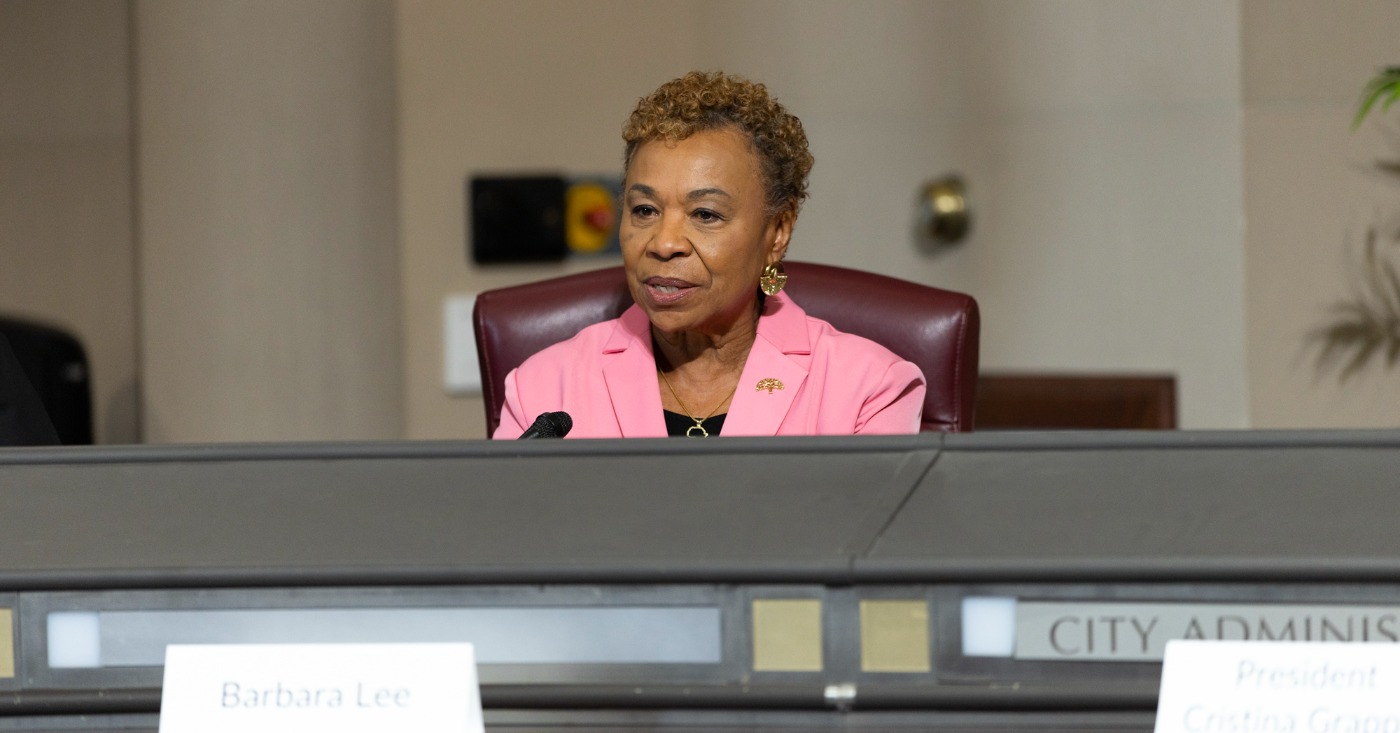
The Alameda County Democratic Party has voted to endorse Measure EE, the Oakland Charter reform measure on the November 2026 ballot. The party’s endorsement is announced alongside a broad coalition of organizations spanning labor, business, faith, and community advocacy, including Oakland Rising Action that are also supporting the measure.
Those supporters include:
- League of Women Voters of Oakland
- AFSCME Council 57
- SPUR
- Bay Area Council
- Black Women Organized for Political Action
- Faith in Action East Bay
- Oakland Chamber of Commerce
- Oakland Rising Action
- Revitalize East Bay
- Empower Oakland
Measure EE would reform Oakland’s hybrid governance system by establishing a strong-mayor structure, making the mayor the city’s chief executive, responsible for delivering effective, efficient services.
The measure would also reform and expand responsibilities of City Councilmembers.
Measure EE would create clearer lines of responsibility for the performance of city government, allowing voters to evaluate the mayor based on how effectively the city delivers services and produces results.
Along with clearer executive responsibility, the Charter reform would also create new checks and balances, including an independent Budget and Legislative Analyst office, City Council confirmation of key appointments, expanded council hearing and subpoena authority, and give the council the ability to override a mayoral veto with six votes.
“Oakland voters deserve a City Hall where they know exactly who’s responsible when something goes wrong and exactly who to credit when it gets fixed. Measure EE puts that responsibility squarely with the mayor, backed by real checks and balances, so Oakland can finally move as fast as its problems demand. That’s why the Alameda County Democratic Party is proud to stand behind it,” said Igor Tregub, chair of the Alameda County Democratic Party.
Oakland Rising Action, a collaboration of racial, economic, and environmental justice organizations, has also issued a press statement explaining its support for Measure EE.
Measure EE “represents a critical opportunity for residents to clarify the governance role of the Oakland Mayor and City Council, so we, as residents, know who to hold accountable for the execution of voter-approved and budgeted services within city departments,” the statement said.
Measure EE would reform Oakland’s Charter, which is the city’s Constitution, strengthening “the role of the mayor as the CEO of Oakland, with the city administrator being hired and managed by the mayor explicitly.”
The measure would also strengthen oversight of city departments by mandating reporting directly to the City Council and provide the mayor with veto power in approving policies and the budget.
Measure EE was placed on the ballot by the Oakland City Council in June 2026. For more than half a year, the mayor’s working group on Charter reform engaged residents and elected officials on the options for governance of Oakland, which led to Measure EE.
“Oaklanders need clarity about who is responsible for the management of our city departments, our tax dollars, and our voter-approved ballot measures,” said Pecolia Manigo, executive director of Oakland Rising.
“The average resident believes that we already have a strong mayor system,” she continued. “However, this is simply not the truth in our City Charter. It is time for us to stop talking about the Charter changes Oakland needs. This is the first of many Charter reforms that are needed to improve conditions in Oakland, especially the flatlands. It’s time all voters start paying attention to who is making decisions for Oakland. This election allows us to say how we believe Oakland should be governed.”
Business
Veterans Housing Project Proposed for South Richmond
According to the development team’s presentation, the project has an estimated total cost of nearly $158 million. The presentation outlines five phases encompassing entitlement and construction documents, community outreach, soil remediation and utility work, podium and building construction, solar technology integration, and interior buildouts.

A proposed mixed-use development at 338 Carlson Blvd. could bring hundreds of homes and support services for military veterans to South Richmond.
Led by the Richmond-based Veterans Resource Program in partnership with Eagle Environmental Construction & Development, the proposal covers an approximately 2.3-acre property the nonprofit acquired in 2018.
The proposal features a multi-building residential development with various apartment sizes, though city documents and developer materials cite conflicting totals ranging from 226 to 268 units.
The proposal also includes approximately 40,000 square feet of commercial and retail space, about 200 parking spaces, and an entrepreneurial training and job-development component intended to connect veterans with economic and workforce opportunities.
According to the development team’s presentation, the project has an estimated total cost of nearly $158 million. The presentation outlines five phases encompassing entitlement and construction documents, community outreach, soil remediation and utility work, podium and building construction, solar technology integration, and interior buildouts.
Founded in 2011, the Veterans Resource Program provides housing assistance and other services to veterans, including those experiencing homelessness or transitioning from incarceration.
The proposal aims to advance Richmond’s affordable housing goals while connecting veterans with housing and supportive services. Details of affordability and veteran eligibility remain to be clarified.
The Richmond City Council was scheduled to receive an informational presentation on the project at its Oct. 6 meeting, following a continuance from Sept. 22. The item does not seek project approval or city funding. Any future request for city financial assistance or other public resources would require separate consideration and approval.



WCCUSD Joins Statewide Organic School Food Purchasing Cooperative

Democrats, Community Groups Back Measure EE to Change How Oakland Is Governed

Four Tips to Help You Plan a Holiday “Staycation”

Veterans Housing Project Proposed for South Richmond
PRESS ROOM: Transformative Justice Coalition 2026 Voting Rights Champion Awards Reception ‘Yesterday Is Today: The Battle For Voting Rights

Mayor Lee Delivers 2026 State of the City Address: ‘Oakland Continues to Be on the Move’

Oakland Awarded More than $14 Million in State Funding

Jendayi Arrest Raises Community Concerns Regarding Sheriff’s Chain of Command

Marin County Supes Expand Small Business Options with Home Kitchen Pilot Program

Allen Temple Baptist Church Hosts Free Prostate Cancer Screenings on Oct. 17

AC Transit Labor Unions Back Director Joel Young

Locals Can Get Locally Grown Produce Delivered Through Urban Tilth

‘ICE-Free Marin’ Supporters Press Supervisors as County Drafts Enforcement Restrictions

Oakland Post: Week of October 7 – 13, 2026

Ghana’s Ministry of Foreign Affairs Publishes Global Circle’s Vatican Reparations Call in Special Edition Alongside Heads of State

Jackie Wright Champions Bay Area Stories, Filmmakers and Cultural Institutions

Chef Sharon Lee Blends Culinary Excellence, Education and Empowerment

Misnamed ‘Parent’ PAC Seeks to Influence Oakland School Board Elections

Big City Mayors Ask for “Yes” Vote on Housing Bond Measure; Conservatives Say “No”

Oakland Post: Week of September 2 – 8, 2026

Longtime BWOPA Member Brendalyn Goodall Appointed to California Workforce Development Board

Gov. Newsom Signs Law Shielding Immigration Aid Workers From Doxing Threats

Oakland Post: Week of September 9 – 15, 2026

Richmond Tiny House Village Farm & Garden Set to Open Gates on Sept. 26

Latest Massacre in Haiti Reveals Cruelty U.S. Deportations

‘Passing a Law Isn’t The Finish Line’: California Assembly Evaluates Implementation, Results

OPINION: Nolan Wells’ Death One of Several Signifying Racial Terror Lives on in U.S. South

OPINION: Angie Nixon Will Turn You Into a Democratic Socialist If Donald Trump Hasn’t Already

Mayor Lee Announces $1 Million Kaiser Permanente Grant for Pilot Program to Address Homelessness, Clean Up Public Spaces throughout Oakland

Poll: Becerra Widens His Lead Over Hilton; Californians Split on Wealth Tax

The Conversation With Al McFarlane 6/23/26

Media Monday 6/22/26

LIVE! ASK ALMA! — TUES. 6.23.26 7PM EST

Car Buying Secrets: 4 Hidden Checks Before You Sign!

Is This 550 HP Charger Worth YOUR Money? AutoNetwork Review

Celebrating Juneteenth – Frederick Douglass on education and resistance

LIVE! — ASK ALMA! — TUES. 6.19.26 7PM EST

Hyundai Ioniq 5 Parking, Safety, and 360 View #shorts

2025 Ioniq 5 New Wiper & Powerful Performance! #shorts

Electric SUV Range: Is 259 Miles Enough? #shorts

EV Charging: How Fast Can You Charge an Electric Vehicle? #shorts

Biometric Cooling… Messaging Seats…Come on! 2025 Infiniti QX80 Autograph 4WD

Charged Up: Witness the Magic of a Fully Electric Car! #shorts

Range Rover Sport PHEV Included…: See What’s Inside This Luxury SUV! #shorts

Invisible Hood View: Perfect Parking with X-Ray Vision! #shorts
-
 Business3 weeks ago
Mayor Lee Announces $1 Million Kaiser Permanente Grant for Pilot Program to Address Homelessness, Clean Up Public Spaces throughout Oakland
-
 Economy2 weeks ago
Poll: Becerra Widens His Lead Over Hilton; Californians Split on Wealth Tax
-

 Business2 weeks ago
County Office of Education Says OUSD Finances Are Getting Healthier, Materially Stronger
-

 Uncategorized3 weeks ago
Oakland People’s Arms Embargo Coalition Demands End to Military Shipments Thru Oakland
-

 Activism3 weeks ago
Oakland Post: Week of September 16 – 22, 2026
-

 Community3 weeks ago
Two Looming Threats Every Alameda County Elder Should Know About
-

 Art2 weeks ago
BLACspace Cooperative Invites Bay Area to Experience Oakland’s Black Cultural Ecosystem Through a BLAC Map Tour + Party
-

 Lead Story1 week ago
Zakiya Jendayi Arrested, Locked Out of Home by Sheriff’s Deputies
