
Business
COMMUNITY: What Trump’s Presidency Means for Black Economic Mobility
HOUSTON DEFENDER — Economic mobility for Black communities encompasses more than just income, including factors like homeownership, business creation, education, healthcare access, and voting rights.


By any measure, economic mobility is about more than money.
The ability to buy a home, start a business, attend college, access healthcare, vote, and advocate for one’s interests all shape whether families can build wealth and pass opportunity to future generations.
That reality is why many economists and civil rights scholars argue that the policies emerging from President Donald Trump’s second administration have major implications for Black economic mobility.
Some supporters contend that Trump’s emphasis on deregulation, lower taxes, and merit-based policies could create broader economic growth. Critics argue that cuts to diversity initiatives, civil-rights protections, and social programs disproportionately harm Black communities that already face historic barriers to wealth accumulation.
The truth may ultimately be found somewhere between those competing narratives.

Economic mobility: Income and more
According to Federal Reserve data, the median wealth of Black families remains a fraction of that of white families. Black homeownership rates also continue to trail national averages, while Black entrepreneurs remain more likely to be denied financing and less likely to receive venture capital investment.
“Where you start in America still matters too much,” noted economist William Darity Jr., whose research has focused extensively on racial wealth disparities.
As corporations scaled back Diversity, Equity, and Inclusion initiatives and government agencies faced sweeping cuts, Black women were among the hardest hit. Between spring and late 2025, more than 300,000 Black women either lost jobs, left the workforce, or were pushed out of employment, according to labor data and economic reports tracking the crisis.


Unemployment among Black women climbed from 5.4% to as high as 7.3% by the end of the year — one of the steepest increases of any demographic group. These numbers have an outsized impact on Black communities because nearly 80% of Black mothers in America are primary, sole, or co-breadwinners for their families, according to the Institute for Women’s Policy Research.
And what has gone almost unnoticed is that between November 2025 and February 2026, the U.S. Bureau of Labor Statistics reported that 567,000 Black men lost their jobs across all sectors.
As a result, policy changes affecting employment, housing, education, healthcare, business development, and voting rights can have significant economic consequences.
Texas Southern University (TSU) Professor Michael O. Adams argues that the current U.S. “war economy” isn’t helping matters.
“We need more reinvestment into domestic kinds of issues,” said Adams. “I’m looking at healthcare, education, and economic development… the war economy takes away from those efforts.”
According to Fortune Magazine, the engagement—dubbed Operation Epic Fury—is producing a “war economy” that is costing U.S. taxpayers over $1 billion a day.
Housing: The foundation of wealth
Homeownership remains the primary source of wealth for most American families.
One area of concern among housing advocates is the Trump administration’s opposition to race-conscious housing and reparative programs. The administration recently challenged a housing-reparations initiative in Evanston, Illinois, arguing that race-based housing assistance violates civil-rights laws. Supporters of the program say such initiatives are designed to address generations of housing discrimination.
Critics worry that similar challenges could limit future efforts to narrow the racial homeownership gap.
At the same time, supporters of the administration argue that reducing regulations and increasing housing supply could help all buyers regardless of race.
Whether those broader market benefits outweigh the loss of targeted programs remains a subject of debate among housing economists.
Black businesses face new questions
Black-owned businesses generated record growth following the pandemic, yet many still rely heavily on government contracts, supplier-diversity programs, and technical-assistance initiatives.
One of Trump’s most consequential actions has been a series of executive orders that have ended or restricted Diversity, Equity, and Inclusion (DEI) requirements in federal agencies and federal contracting. The administration argues these measures restore “merit-based opportunity” and equal treatment under the law.
However, many Black business advocates see potential economic risks.
The administration revoked Executive Order 11246, a civil rights-era policy that required federal contractors to take affirmative action to ensure equal opportunity.
Reuters reported that minority contractors have already expressed concerns that changes to disadvantaged-business programs could reduce opportunities for Black-owned firms competing for infrastructure and government projects. Some contractors reported revenue losses, delays, and layoffs connected to certification changes.
For cities like Houston, where minority-owned firms play a major role in public contracting, the long-term effects could be substantial.

And with so many taxpayer dollars still directed towards the war in Iran, Houston’s roughly 200,000 Black businesses are on the front lines when it comes to being negatively impacted. Higher freight and energy costs, for instance, are wreaking havoc on already thin margins.
“I’m not sure people realize the tight margins small businesses operate within,” said Judson Robinson, president and CEO of the Houston Area Urban League. “When the price of oil needlessly skyrockets, the burden on Black people increases exponentially… it erases profit margins and can put you out of business.”
Education and workforce development
Higher education remains one of the strongest predictors of lifetime earnings.
The Trump administration has highlighted additional investments in Historically Black Colleges and Universities (HBCUs) as evidence of its commitment to expanding opportunity. The White House has promoted increased support for HBCUs and workforce development initiatives as part of its Black History Month agenda.
However, in September of last year, the Department of Education (ED) announced it would pull the plug on approximately $350 million in discretionary funds for institutions that enroll a high percentage of minority students, including HBCUs
Additionally, many education advocates argue that the broader anti-DEI campaign may reduce programs designed to recruit, retain, and support underrepresented students on college campuses.
The administration contends such programs often violate principles of equal treatment. Opponents argue they address documented disparities in access and outcomes.
Healthcare and economic security
Economic mobility is difficult without good health.
Healthcare cuts or reductions in public benefits often affect Black households disproportionately because Black Americans are more likely to rely on Medicaid and other public-health programs.
Policy analysts warn that reductions in healthcare access can produce long-term economic consequences, including higher medical debt, lower workforce participation, and reduced family wealth.
For many families, healthcare costs can be the difference between building savings and falling deeper into financial insecurity.
Voting rights and political power
Economic mobility is also connected to political power.
Voting determines who controls budgets, education funding, housing policy, infrastructure spending, and economic-development initiatives.
Civil-rights advocates have expressed concern that efforts to weaken federal oversight of voting protections could reduce political influence in Black communities. While supporters argue that election-integrity measures strengthen confidence in elections, critics contend that some policies not only create additional barriers to participation but also actively create a reality of voter suppression.
The economic implications are significant because communities with less political representation often have less influence over public investment decisions.
Bottom line
For Black America, economic mobility has never depended solely on individual effort. It has also depended on public policy. Federal and state policies moving forward may determine whether Black families can narrow longstanding wealth gaps—or whether those gaps become even harder to close.
Based on reporting by Houston Defender.














Black History
PRESS ROOM: Mississippi Congressman Bennie Thompson to Speak at Oakland Post/El Mundo and Post News Group 64th Anniversary Celebration
POST NEWS GROUP — The anniversary fundraising luncheon, to be held at Scott’s Restaurant in Jack London Square, will also celebrate the 200th anniversary of the founding of the Freedom’s Journal, the first Black newspaper, published March 16, 1827, in New York.

Mississippi Congressman Bennie G. Thompson will be the keynote speaker at the 64th Anniversary Celebration of the Oakland Post/El Mundo and the Post News Group on Feb. 12, 2027.
The anniversary fundraising luncheon, to be held at Scott’s Restaurant in Jack London Square, will also celebrate the 200th anniversary of the founding of the Freedom’s Journal, the first Black newspaper, published March 16, 1827, in New York.
More details on the anniversary celebration will be announced soon.
(The Oakland Post was founded in 1963 by Thomas L. Berkley and his wife, Velda. Paul and Gay Plair Cobb purchased the Post newspapers in 2004.)
The Cobbs’ connection to Thompson goes back decades. After a brief home libation ceremony with “Roots” writer Alex Haley and civil rights activist Beni Ivey in 1973, the Cobbs moved to the South to continue their work in the civil rights, voter education, and political development movements.
As national field director of the Southern Elections Fund (SEF), Paul Cobb helped raise funds, register voters, and politically organize with the late Julian Bond and John Lewis when Bennie Thompson ran for mayor of Bolton, Mississippi, in 1973.
After two terms as mayor, Thompson served on the Hinds County Board of Supervisors in the 1980s before being elected to represent Mississippi’s 2nd congressional district in 1993. A Democrat, he has served as chair of the Committee on Homeland Security from 2007 to 2011 and from 2019 to 2023.

Thompson was appointed chair of the Jan. 6th Congressional Committee by Nancy Pelosi in 2021 and will likely be appointed chair of the Homeland Security Committee, which oversees issues concerning immigration and ICE agents.
In an interview on NPR, Thompson praised Scott Colom’s recent Senate victory, pointing out that Colom is the first Black U.S. senator elected from Mississippi since Reconstruction.
For more information, visit: https://postnewsgroup64th.eventbrite.com
Business
City Council Hearing Shines a Light on Failures of City’s Prompt Payment Policy
Oakland’s Finance and Management Committee recently held a hearing to address systemic failures in the city’s Prompt Payment Policy, which mandates that vendors be paid within 20 business days. Despite official reports claiming a 96% success rate, local business leaders and Councilmember Janani Ramachandran argue the data ignores the struggles of small firms and nonprofits. Many contractors reported waiting months or even a year for compensation, forcing some to take out loans to survive. Community leaders are now demanding greater accountability for department heads to ensure the city’s business community remains viable. Read more.

For years, many small businesses and nonprofits have not been paid on time
A City Council hearing this week shined a light on the shortcomings of the implementation of Oakland’s Prompt Payment Policy, which requires the city to pay vendors and consultants within 20 business days for work done for the city.
The hearing, led by Councilmember Janani Ramachandran at the City Council’s Finance and Management Committee on Tuesday, was a discussion of the track record of implementation of the Prompt Payment Policy, which was enacted in 2008 as part of the Oakland Municipal Code to ensure that local vendors are paid promptly and to “increase local business contracting opportunities with the city,” according to a city report.
In 2014, the ordinance was extended to cover local grant recipients.
Ensuring that this policy lives up to its promise is a crucial part of the city’s pledge in the wake of the findings of a Disparity Study in 2024 to end decades of discrimination preventing Black-owned, women-owned, and other small local businesses from obtaining contracts in their own hometown.
“Small businesses are the lifeblood of our city: timely payment is critical for small businesses and nonprofit organizations that provide direct services to our youth and young adults that are typically underfunded and rely on predictable cash flow to sustain operations,” said Ramachandran in a memo requesting a report from city staff on the implementation of the Prompt Payment Policy.
Many small businesses and nonprofits have complained loudly for years that they have not been paid on time. Though the city has produced a report that says over the past five years 96% of vendors were paid promptly, there are concerns that the report did not focus sufficiently on the treatment of small businesses and nonprofits.
In addition, the report did not cover whether subcontractors are paid promptly. A vast majority of the city’s contracts go to a handful of large “prime” contracts, and many small companies perform work as subcontractors of the larger firms.
Speakers at Tuesday’s hearing reported that small companies and nonprofits have not been paid for months or for as long as year, forcing them to take out loans or go out of business while waiting to be reimbursed for costs for employees and resources for work already completed.
City staff did acknowledge that at present the city does not track whether “prime” contactors pay their subcontractors on time.
Speaking at the hearing, Councilmember Ken Houston said that the failure to pay on time has been an issue in the city for at least 15 years.
Cathy Adams, president and CEO of the Oakland African American Chamber of Commerce and representing the Oakland Business Coalition and city’s multi-cultural chambers of commerce, said, “Our small businesses deserve to be paid on time for work they have already performed.”
“(The staff report) does not tell the whole story because the city does not track payment to subcontractors,” she said. “Our (small) businesses cannot operate on promises. They have employees to pay, insurance to maintain, suppliers to compensate, and families dependent on them. When payments are delayed, businesses suffer. Some may not survive.
“Accountability requires prime contractors to pay their subcontractors promptly with clear payment requirements written into every contract (with the city),” she said.
In a statement to the Oakland Post, Adams said, “The City must conduct a comprehensive audit of every department to identify operational failures, inadequate staffing performance, and breakdowns in management oversight.”
“Department heads must be held accountable, and employees who consistently fail to perform their responsibilities must face corrective action, including termination when warranted,” she continued. “Our businesses deserve to be paid promptly for work performed. We are not asking for special treatment; we are demanding fair treatment.”
“Under Mayor Barbara Lee’s leadership, Oakland is moving in the right direction, but we cannot allow bureaucratic failures to undermine our business community,” Adams said.


To enlarge your view of this issue, use the slider, magnifying glass icon or full page icon in the lower right corner of the browser window.




Iowa’s State Black and Brown Caucus Demand Investigation into Lead Azine Detonation

COMMENTARY: The Judicial System Silenced Jendayi by Using the Penal Codes and Locking Her Up in Jail

PRESS ROOM: Mississippi Congressman Bennie Thompson to Speak at Oakland Post/El Mundo and Post News Group 64th Anniversary Celebration

OP-ED: More Sleep and Lower Blood Pressure — An Overlooked Connection

Native American Health Center Connects 140 Community Members to Career Opportunities During Native American Heritage Month

Oakland Chamber of Commerce Faces $42,000 Ethics Fine for Campaign Violation

Attorney General Bonta Serves Investigative Subpoena on Nvidia

A Record 216 Firearms Collected at East Oakland Gun Buy-Back Event

City Council Hearing Shines a Light on Failures of City’s Prompt Payment Policy

IN MEMORIAM: Claude T. Everhart, San Francisco’s First Black Deputy Mayor, Dies at 73

UC Doctors, Nurses and Community Rally to Demand ICE Out of UC Hospitals

Hypertension and Heart Disease: Doctors, Advocates and Patients Are Tackling the Leading Cause of Death for Black Californians

Marin City Is Especially Vulnerable to El Niño High Tides, Strong Winds, Flooding and Power Outages

‘We’re Committed to Delivering the Change that the American People Deserve’

Staying Ready: What Every Californian Should Know About Preparing for El Niño

COMMENTARY: Valarie Bachelor and Jennifer Brouhard are Excellent School Board Members and Deserve to Be Reelected
Iowa’s State Black and Brown Caucus Demand Investigation into Lead Azine Detonation

SEIU Local 1000 and State of California Will Continue to Negotiate New Labor Contract

OUSD Receives State Review of District Finances; Outlines Progress Since January

HISTORY MADE: Keisha Lance Bottoms Becomes First Black Woman Elected Governor in American History

Golden State Valkyries Become Bay Area Legends Winning WNBA Championship on Halloween Night

COMMENTARY: Your California Living Trust Could Be Next: When Evidence Isn’t Enough

Fate of Bay Area Public Transit Hinges on Regional Transit Measure

Five Hospitals Said No! Who Will Help Annette Henry Recover?

From Backyard Grilling to Jack London Square: Jamale Carlyle’s Chicken Wing Success Story

Chase Launches Fraud & Scam Prevention Month

Hutchinson Concedes: Ballots Still Being Counted in Oakland Board Elections

IN MEMORIAM: Marcia Ann Gillespie, Editor of Essence and Ms. Magazines, Dies at 82
UC Doctors, Nurses and Community Rally to Demand ICE Out of UC Hospitals

Post News Group Nov. 3 Election Endorsements

The Conversation With Al McFarlane 6/23/26

Media Monday 6/22/26

LIVE! ASK ALMA! — TUES. 6.23.26 7PM EST

Car Buying Secrets: 4 Hidden Checks Before You Sign!

Is This 550 HP Charger Worth YOUR Money? AutoNetwork Review

Celebrating Juneteenth – Frederick Douglass on education and resistance

LIVE! — ASK ALMA! — TUES. 6.19.26 7PM EST

Hyundai Ioniq 5 Parking, Safety, and 360 View #shorts

2025 Ioniq 5 New Wiper & Powerful Performance! #shorts

Electric SUV Range: Is 259 Miles Enough? #shorts

EV Charging: How Fast Can You Charge an Electric Vehicle? #shorts

Biometric Cooling… Messaging Seats…Come on! 2025 Infiniti QX80 Autograph 4WD

Charged Up: Witness the Magic of a Fully Electric Car! #shorts

Range Rover Sport PHEV Included…: See What’s Inside This Luxury SUV! #shorts

Invisible Hood View: Perfect Parking with X-Ray Vision! #shorts
-
 Commentary4 weeks ago
COMMENTARY: Valarie Bachelor and Jennifer Brouhard are Excellent School Board Members and Deserve to Be Reelected
-
 Community2 days ago
Iowa’s State Black and Brown Caucus Demand Investigation into Lead Azine Detonation
-
 Business4 weeks ago
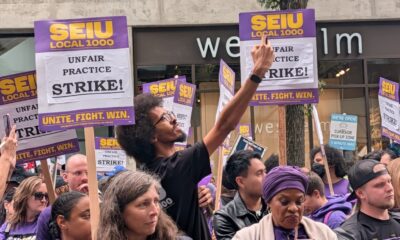
SEIU Local 1000 and State of California Will Continue to Negotiate New Labor Contract
-
 Education4 weeks ago
OUSD Receives State Review of District Finances; Outlines Progress Since January
-
 Black History3 weeks ago
HISTORY MADE: Keisha Lance Bottoms Becomes First Black Woman Elected Governor in American History
-
 Community3 weeks ago
Golden State Valkyries Become Bay Area Legends Winning WNBA Championship on Halloween Night
-
 Business4 weeks ago
COMMENTARY: Your California Living Trust Could Be Next: When Evidence Isn’t Enough
-
 Black History4 weeks ago
Five Hospitals Said No! Who Will Help Annette Henry Recover?
