
Bay Area
BRIDGE Housing and The Unity Council Celebrate Grand Opening of Casa Sueños, a 181-Unit Affordable Housing Community in Oakland’s Fruitvale Village
OAKLAND, Calif. (June 26, 2024) – BRIDGE Housing, the leading nonprofit affordable housing developer and manager on the West Coast, and The Unity Council, an acclaimed social equity development corporation, today welcomed dignitaries, partners and community members to celebrate the grand opening of Casa Sueños, a 181-unit affordable housing community in Oakland’s Fruitvale Village.

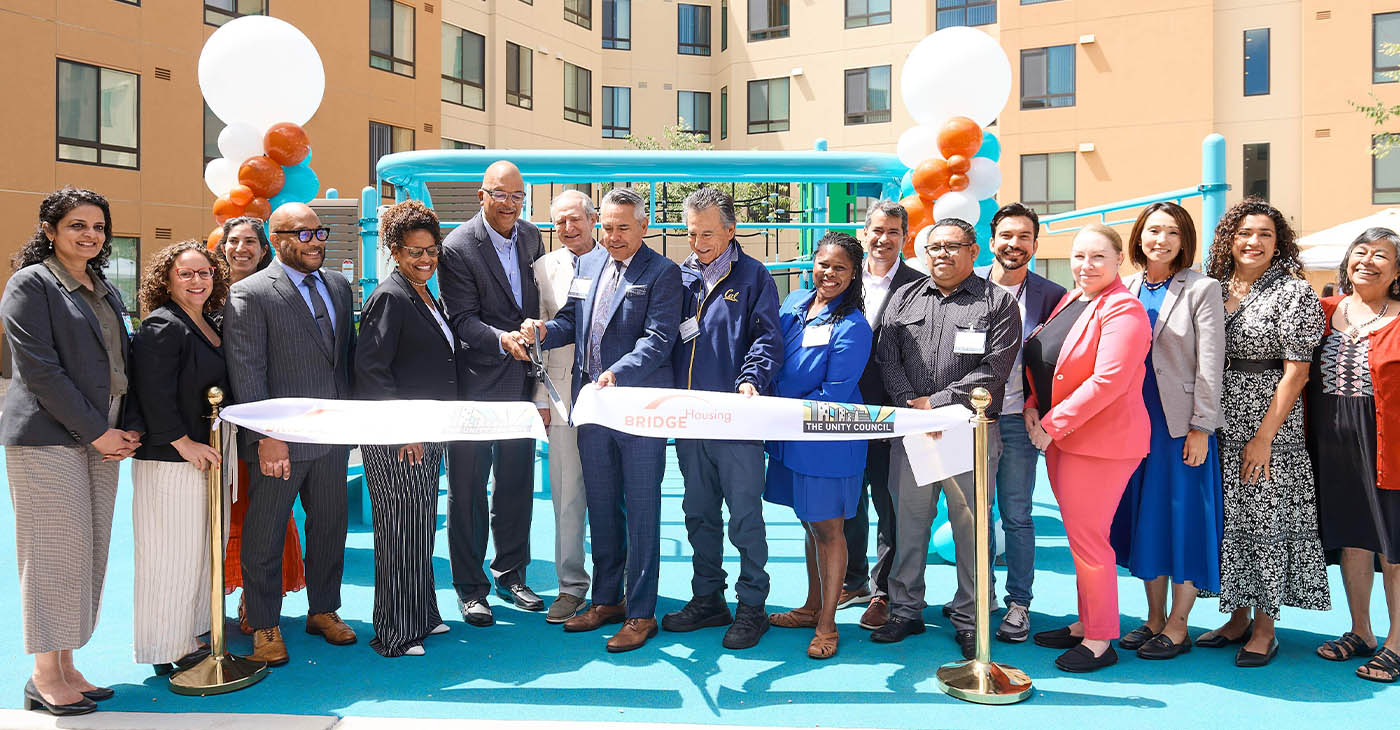
As part of the award-winning, transit-oriented Fruitvale Village, Casa Sueños provides essential affordable housing for individuals, families, and those who have experienced homelessness
OAKLAND, Calif. (June 26, 2024) – BRIDGE Housing, the leading nonprofit affordable housing developer and manager on the West Coast, and The Unity Council, an acclaimed social equity development corporation, today welcomed dignitaries, partners and community members to celebrate the grand opening of Casa Sueños, a 181-unit affordable housing community in Oakland’s Fruitvale Village.
Casa Sueños, located at the intersection of East 12th Street and 35th Avenue, will help address Oakland’s critical housing shortage by providing studio, one-, two-, and three-bedroom apartments that will be affordable for families earning 20-80% of Area Median Income. Forty-six units are reserved for residents who have previously experienced homelessness, with permanent supportive services provided by Lifelong Medical Care and funded by Alameda County. Another 29 apartments are available through vouchers from the Oakland Housing Authority. Youth and family services are provided by The Unity Council.
Casa Sueños also includes 7,500 square feet of affordable ground-floor commercial space that will be utilized by Communities United for Restorative Youth Justice (CURYJ), an Oakland-based nonprofit focused on ending youth criminalization and mass incarceration.
Today’s ribbon-cutting was attended by dozens of government leaders, housing officials, financing partners, new Casa Sueños residents, and community members.
“Casa Sueños demonstrates the transformational power of high-quality affordable housing, along with resident services, that will make a lasting positive difference in the lives of 181 individuals and families,” said BRIDGE Housing President and CEO Ken Lombard. “Working shoulder to shoulder with The Unity Council and our other partners, we have made the innovative Fruitvale Village even more vibrant – setting a new standard for livable communities that help residents realize their fullest potential.”
“Place-based affordable housing is the cornerstone of stability. This incredible structure was a BART parking lot just a few years ago. Now it will offer affordable, dignified housing to families and essential workers in the heart of Oakland,” said The Unity Council CEO Chris Iglesias. “The return on investment will benefit the entire region. All parties need to find ways to remove barriers, work collaboratively, and speed up the process for the greater good.”
Casa Sueños responds to the growing need for affordable homes for working families and essential workers in Oakland and the Bay Area. It was developed in partnership with City, County and transit partners, is steps away from Fruitvale BART station, a major AC Transit hub, and the planned Bus Rapid Transit. Initially planned as a market-rate housing development, Casa Sueños is the final residential component of the award-winning Fruitvale Transit Village, which first opened in 2004.
Importantly, Casa Sueños was the model development instrumental in the passage of AB 434, a state law that streamlines four funding programs for rental housing into a single application and award process – accelerating the production of affordable housing for Californians.
Amenities at Casa Sueños include a multi-purpose room with chairs and tables for resident educational use; a community room with desks, sofas, and a kitchen; communal laundry rooms on the first four floors; Amazon lockers in the mailroom; a large courtyard with children’s play equipment, grills, and numerous seating areas; and an underground garage with EV chargers and a bike storage room.
Founded in 1983, BRIDGE Housing has a 40-year history of providing safe, affordable homes for families in the Bay Area and throughout the West Coast. With a focus on community development and comprehensive support services, BRIDGE has nearly 1,200 units of affordable housing in 10 locations throughout Oakland, including the historic St. Joseph’s campus in Fruitvale. Its total portfolio exceeds 13,000 units in California, Washington and Oregon, providing affordable homes for 30,000 residents.
For 60 years, The Unity Council has been focused on supporting Oakland residents through improved social equity and quality of life while addressing the area’s most pressing challenges – unemployment, poverty, access to education, and erasure of cultural identity. Its programs include workforce development, early childhood education, food security, youth leadership and senior services, and development without displacement.
“As we celebrate the grand opening of Casa Sueños, a beacon of opportunity in our beloved Fruitvale of Oakland’s District 5, we affirm our commitment to equity and dignity for all,” said Oakland City Councilmember Noel Gallo (D-5). “This remarkable transit-oriented community not only provides affordable housing but also embodies our shared vision of inclusive development. Thanks to the leadership of The Unity Council and BRIDGE Housing, Casa Sueños stands as a testament to what is possible when we come together with purpose and passion. Let us continue to build unity and bridges as we create homes where every resident can thrive and contribute to the vibrant tapestry of our city.”
Financing for Casa Sueños was provided by the City of Oakland; Oakland Housing Authority; Alameda County; Alameda County Health Care Services Agency; California Department of Housing and Community Development TOD Housing Program; California Climate Investments (funded through the Greenhouse Gas Reduction Fund); Affordable Housing and Sustainable Communities Program through the Strategic Growth Council and the California Department of Housing and Community Development; National Affordable Housing Trust; Lument; JPMorgan Chase; California Tax Credit Allocation Committee; and California Debt Limit Allocation Committee. The architect is SVA Architects, and the general contractor is J.H. Fitzmaurice.
About BRIDGE Housing
BRIDGE Housing is a leading nonprofit developer, owner and manager of high-quality affordable housing on the West Coast, with a mission to strengthen communities and improve lives. Founded in 1983, BRIDGE has participated in the creation of more than 21,000 affordable homes in California, Oregon and Washington, with a total development cost of $5.2 billion. Its current portfolio totals more than 13,000 apartments that are home to 30,000 residents, with another 8,000 units in the development pipeline. For more information, visit www.bridgehousing.com.
About The Unity Council
The Unity Council is a non-profit community development organization committed to promoting social equity and improving the quality of life for diverse communities in Oakland and the Greater East Bay. Since its inception in 1964, The Unity Council has provided vital services, including affordable housing, workforce development, and health and wellness programs, to empower residents and strengthen neighborhoods.











Activism
Oakland Post: Week of September 30 – October 6, 2026
The printed Weekly Edition of the Oakland Post: Week of September 30 – October 6, 2026
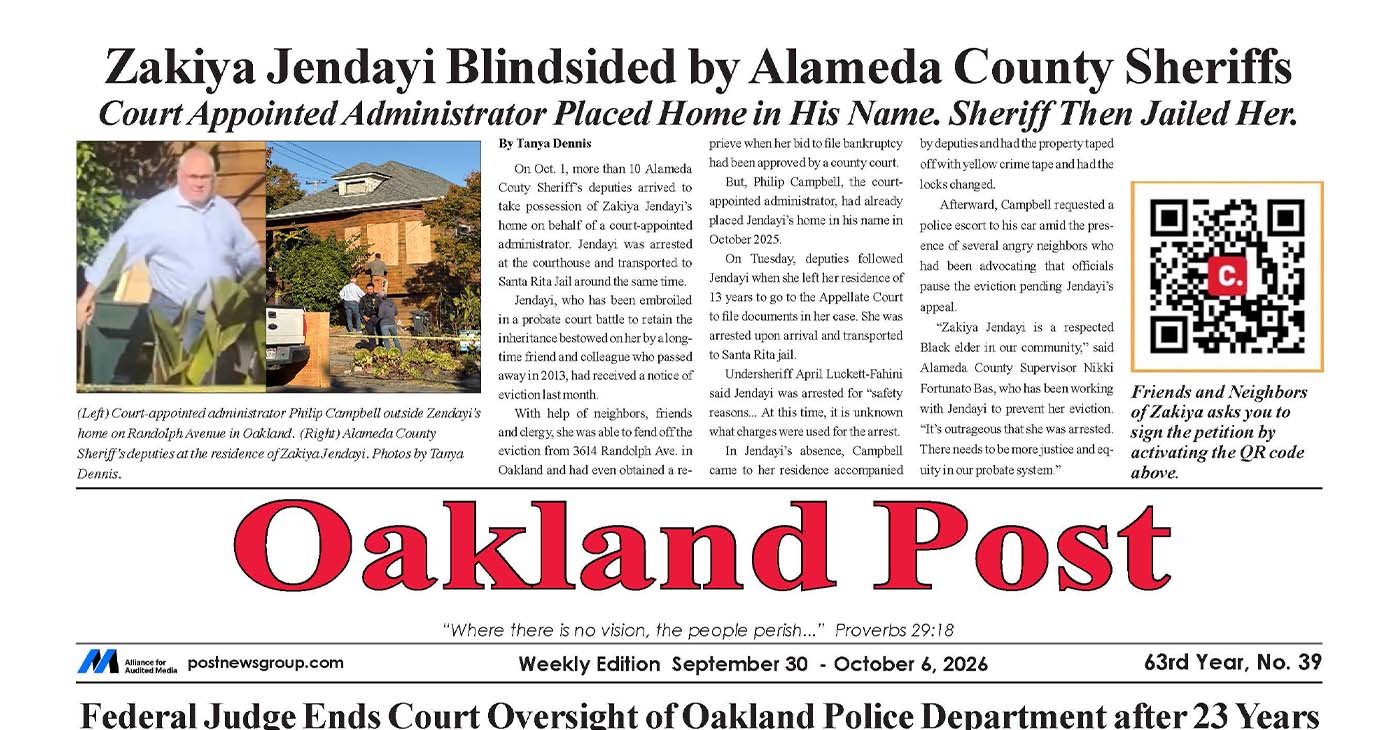
To enlarge your view of this issue, use the slider, magnifying glass icon or full page icon in the lower right corner of the browser window.
Activism
Oakland Post: Week of September 23 – 29, 2026
The printed Weekly Edition of the Oakland Post: Week of September 23 – 29, 2026
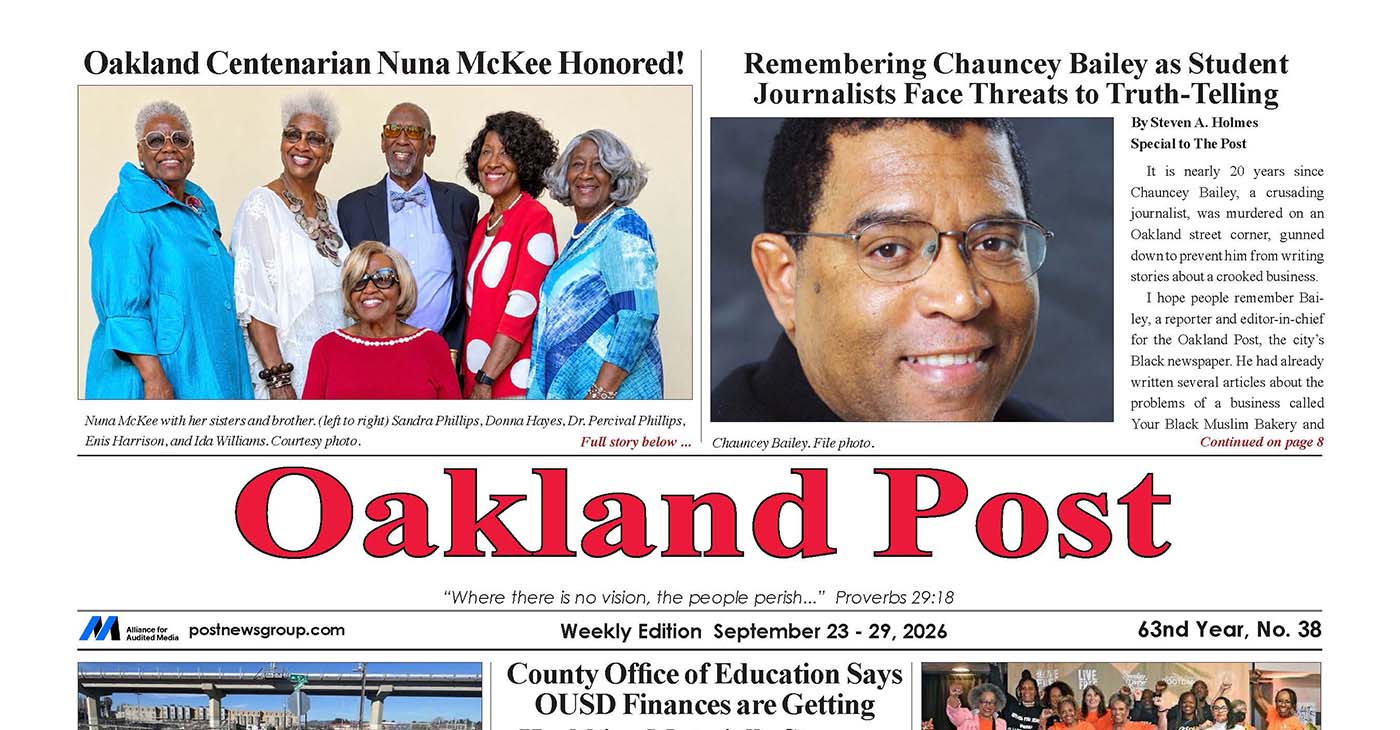
To enlarge your view of this issue, use the slider, magnifying glass icon or full page icon in the lower right corner of the browser window.

Activism
Oakland Post: Week of September 16 – 22, 2026
The printed Weekly Edition of the Oakland Post: Week of September 16 – 22, 2026

To enlarge your view of this issue, use the slider, magnifying glass icon or full page icon in the lower right corner of the browser window.



Listening as a Lifeline: A Doula’s Witness to Black Maternal Health

New Protections for Ticket Buyers: Gov. Newsom Signs Assemblymember Isaac Bryan’s Bill

‘We Don’t Talk Trash — We Pick Up Trash!’

Zakiya Jendayi Arrested, Locked Out of Home by Sheriff’s Deputies

Oakland Post: Week of September 30 – October 6, 2026

Asm. Corey Jackson Announces Launch of 24-Hour Childcare in His District

IN MEMORIAM: The Rev. Leon “Sonny” Clark, Longtime Orange County Pastor and Community Leader, Dies at 72

Poll: Becerra Widens His Lead Over Hilton; Californians Split on Wealth Tax

From Historic Memories to New Possibilities: Oakland Celebrates Coliseum 60

County Office of Education Says OUSD Finances Are Getting Healthier, Materially Stronger

LIVE FREE Sunday Dinner Brings Faith, Fellowship and Civic Conversation to Oakland

Remembering Chauncey Bailey as Student Journalists Face Threats to Truth-Telling

BLACspace Cooperative Invites Bay Area to Experience Oakland’s Black Cultural Ecosystem Through a BLAC Map Tour + Party

In Wake of Death on Doorstep, Williams Chapel Baptist Church Calls for Better Care, Funding for Unhoused

Oakland Centenarian Nuna McKee Honored!

Standoff for Justice: Our Homes Are Worth Fighting For

Oakland Post: Week of August 26 – September 1, 2026

Frontier Airlines’ Return to Oakland Airport Brings Flights, Jobs and Opportunity

Gubernatorial Candidate Steve Hilton Blasts California New Tire Rules; Newsom Hits Back

Chef Sharon Lee Blends Culinary Excellence, Education and Empowerment

Jackie Wright Champions Bay Area Stories, Filmmakers and Cultural Institutions

Misnamed ‘Parent’ PAC Seeks to Influence Oakland School Board Elections

Oakland Coliseum Project Opens Door for Small Businesses to Build Bigger

Big City Mayors Ask for “Yes” Vote on Housing Bond Measure; Conservatives Say “No”

Gov. Newsom’s Latest Appointees Include Sacramento Advocate for Formerly Incarcerated Students; State’s New Tech Chief

Longtime BWOPA Member Brendalyn Goodall Appointed to California Workforce Development Board

Gov. Newsom Signs Law Shielding Immigration Aid Workers From Doxing Threats

Secretary of State Shirley N. Weber Urges Californians to Vote Early as Voter ID Battle Intensifies

Oakland Post: Week of September 2 – 8, 2026

IN MEMORIAM: Dolly Parton Dead at 80 — How She Built a Legacy of Love and Earned Her Place in Black Culture

The Conversation With Al McFarlane 6/23/26

Media Monday 6/22/26

LIVE! ASK ALMA! — TUES. 6.23.26 7PM EST

Car Buying Secrets: 4 Hidden Checks Before You Sign!

Is This 550 HP Charger Worth YOUR Money? AutoNetwork Review

Celebrating Juneteenth – Frederick Douglass on education and resistance

LIVE! — ASK ALMA! — TUES. 6.19.26 7PM EST

Hyundai Ioniq 5 Parking, Safety, and 360 View #shorts

2025 Ioniq 5 New Wiper & Powerful Performance! #shorts

Electric SUV Range: Is 259 Miles Enough? #shorts

EV Charging: How Fast Can You Charge an Electric Vehicle? #shorts

Biometric Cooling… Messaging Seats…Come on! 2025 Infiniti QX80 Autograph 4WD

Charged Up: Witness the Magic of a Fully Electric Car! #shorts

Range Rover Sport PHEV Included…: See What’s Inside This Luxury SUV! #shorts

Invisible Hood View: Perfect Parking with X-Ray Vision! #shorts
-
 Community3 weeks ago
Misnamed ‘Parent’ PAC Seeks to Influence Oakland School Board Elections
-
 Activism4 weeks ago
Oakland Post: Week of September 2 – 8, 2026
-

 Community3 weeks ago
Richmond Tiny House Village Farm & Garden Set to Open Gates on Sept. 26
-

 Activism3 weeks ago
Oakland Post: Week of September 9 – 15, 2026
-

 Black History3 weeks ago
Latest Massacre in Haiti Reveals Cruelty U.S. Deportations
-

 Black History3 weeks ago
OPINION: Nolan Wells’ Death One of Several Signifying Racial Terror Lives on in U.S. South
-

 Community3 weeks ago
Democratic Clubs Interview Candidates for Oakland School Board
-

 Business2 weeks ago
Mayor Lee Announces $1 Million Kaiser Permanente Grant for Pilot Program to Address Homelessness, Clean Up Public Spaces throughout Oakland
