
City Government
Bonds for the 385 Drake Development Halted
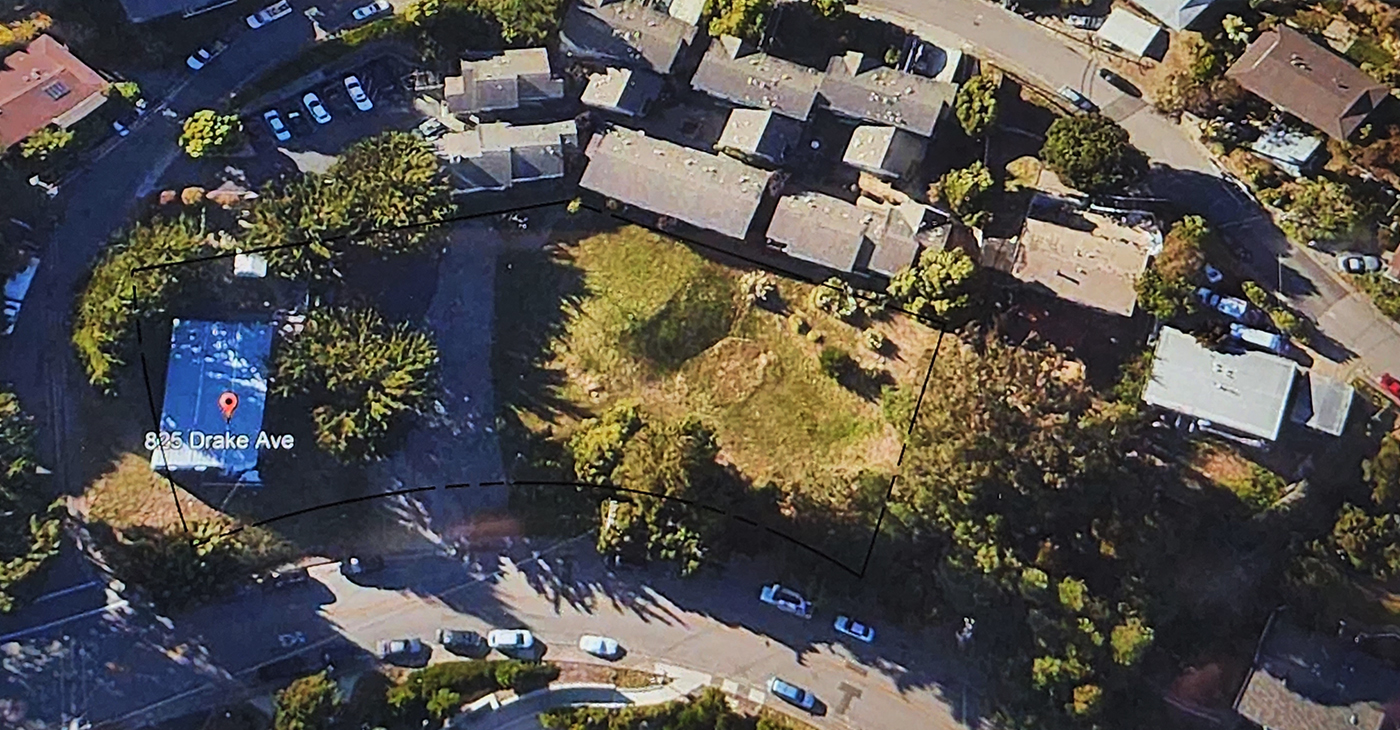
In a ruling that marks a major milestone for affirming the concerns of Marin City residents, a Marin County judge has issued a preliminary injunction to halt public funding for the construction of a 5-story, 74-unit housing development at 825 Drake Avenue in Marin City, a historically Black community that already holds a disproportionate number of public and affordable housing in the wealthy enclave of Marin County.

By Godfrey Lee
Below is a summary of the recent Save Our City press release.
In a ruling that marks a major milestone for affirming the concerns of Marin City residents, a Marin County judge has issued a preliminary injunction to halt public funding for the construction of a 5-story, 74-unit housing development at 825 Drake Avenue in Marin City, a historically Black community that already holds a disproportionate number of public and affordable housing in the wealthy enclave of Marin County.
Because the 825 Drake development was approved under SB 35, a law intended to fast-track affordable housing projects without public notice or hearings, the residents of Marin City were not given notice of the development until after it was approved by the Marin County Board of Supervisors.
While SB 35 was adopted to sideline wealthy enclaves that have historically stonewalled affordable housing projects in their communities, it has been used in Marin City to create even more housing density in the County’s most racially diverse, economically disadvantaged, and politically disempowered community.
The well-intentioned law failed to carve out adequate protections for low-income California communities that already have a grossly disproportionate share of their region’s affordable and public housing options, and it has failed to ensure that the term “affordable” takes into account low-income communities like Marin City that are embedded within regions with the highest Average Median Income levels in the state.
On Sept. 6, Marin County Superior Court Judge Stephen P. Freccero entered a Limited Preliminary Injunction on behalf of a Marin City organization, Save Our City (SOC), temporarily halting public funding approved by the Marin County Board of Supervisors (Board) for the construction of a 5-story, 74-unit housing development at 825 Drake Avenue in Marin City.
SOC had filed suit on May 18 to invalidate the Board’s approval of the bonds, arguing that the Board had improperly failed to exercise its discretion in deciding whether to approve the bonds. Transcripts of Board proceedings showed that Board members erroneously believed that a recent state law allowing expedited approval for certain housing developments had stripped the Board of the power to decide whether funding such a development was in the community and County’s best interests.
The Court agreed with SOC, finding that Board approval of the bonds did require that “the [local authority] decide the matter [at issue] after considering local residents’ views, and by clear implication requires the [local authority] to consider city priorities and housing needs, the wisdom of preferential financing for the project, and all other relevant considerations to which elected representatives normally give weight in executing their office.”
Given these considerations, the Court stated that the Board’s refusal “to consider or exercise its lawful discretion may be grounds to invalidate the resolution.”
Save Our City was formed to stop this large-scale development from being forced on the small, historically Black community of Marin City, which is already densely saturated with affordable housing and has only one park in the entire city. The proposed development would encroach on that limited open space available to Marin City residents and block sunlight, particularly from the seniors living in existing affordable housing directly next to the proposed site.
Meanwhile, the wealthy and predominantly white surrounding communities in Marin County offer little to no affordable housing options for Marin County residents and have ample open green and recreational spaces for their community.
The Marin County Board of Supervisors is responsible for overseeing affordable and public housing options in unincorporated Marin. To address the housing shortages in California, state law requires each region to supply housing to meet its Regional Housing Needs Allocation (RHNA).
The RHNA is intended to promote several objectives including: (1) increase housing supply and the mix of housing types in an equitable manner; (2) discourage housing development patterns that segment communities, (3) affirmatively further fair housing. Marin County’s approval of the 825 Drake project in Marin City violates all of these principles:
The 825 Drake Development will not be affordable for Marin City residents. Because Marin County has one of the nation’s highest Average Median Income (AMIs), the “affordable” 825 Drake housing development will not be affordable to the vast majority of the residents in Marin City and will perpetuate further gentrification of this community.
Marin County has repeatedly denied Marin City residents the courtesy of notice or an opportunity to be heard concerning the County’s approval of the 825 Drake project. During the County’s March 21 hearing to consider approval of $40 million in non-taxable bonds to support developer Caleb Roope’s construction of 825 Drake, the residents raised their concerns about inequity and the project’s impacts on the community. Upon five days posted notice for the hearing, community members scrambled to provide substantive feedback during the limited minutes of public comment. However, their comments fell upon deaf ears.
SOC co-founder Bettie Hodges observed that “The County has failed to represent Marin City throughout this process. First, we are told that they were not legally required to give us notice of 825 Drake’s approval, then in the bond hearing they tell us that they did not have discretion to consider our comments.
“We have been completely silenced at every turn. Our elected representatives could and should have given us the courtesy of notice and an opportunity to be heard, especially given the inequities in Marin City that are a direct result of Marin County’s history of discriminatory housing practices.”
Marilyn Mackel, co-founder of SOC, stated that “I was disappointed to see that even in the preliminary injunction hearing, the County stood silent. They did not defend their approval of the bonds, but also did not have the moral fortitude to concede that they failed to consider our concerns when they approved the bonds. Their repeated choice to stand silent is not just an abdication of responsibility, it is a perpetuation of economic and racial segregation in Marin County.”
Save Our City’s lawsuit seeks to preserve this small piece of open space in Marin City. Marin County is known for its green and open spaces, including hiking trails, streams, open fields and waterways. While the rest of unincorporated Marin County is characterized by these copious green spaces, Marin City has only one small park that is made of concrete and astro-turf.
For more information, please contact: Bettie Hodges at bettie@hannahprograms.org, or Marilyn Mackel at mmackel@gmail.com














Activism
Oakland Post: Week of September 23 – 29, 2026
The printed Weekly Edition of the Oakland Post: Week of September 23 – 29, 2026

To enlarge your view of this issue, use the slider, magnifying glass icon or full page icon in the lower right corner of the browser window.
Activism
Oakland Post: Week of September 16 – 22, 2026
The printed Weekly Edition of the Oakland Post: Week of September 16 – 22, 2026

To enlarge your view of this issue, use the slider, magnifying glass icon or full page icon in the lower right corner of the browser window.
Activism
Oakland Post: Week of September 9 – 15, 2026
The printed Weekly Edition of the Oakland Post: Week of September 9 – 15, 2026

To enlarge your view of this issue, use the slider, magnifying glass icon or full page icon in the lower right corner of the browser window.



Asm. Corey Jackson Announces Launch of 24-Hour Childcare in His District

IN MEMORIAM: The Rev. Leon “Sonny” Clark, Longtime Orange County Pastor and Community Leader, Dies at 72

Poll: Becerra Widens His Lead Over Hilton; Californians Split on Wealth Tax

From Historic Memories to New Possibilities: Oakland Celebrates Coliseum 60

County Office of Education Says OUSD Finances Are Getting Healthier, Materially Stronger

LIVE FREE Sunday Dinner Brings Faith, Fellowship and Civic Conversation to Oakland

Remembering Chauncey Bailey as Student Journalists Face Threats to Truth-Telling

BLACspace Cooperative Invites Bay Area to Experience Oakland’s Black Cultural Ecosystem Through a BLAC Map Tour + Party

In Wake of Death on Doorstep, Williams Chapel Baptist Church Calls for Better Care, Funding for Unhoused

Oakland Centenarian Nuna McKee Honored!

Caribbean Nations Produce Action Plan Calling for UK Reparations Over Slavery

Oakland Post: Week of September 23 – 29, 2026

Doulas Are Helping Black California Moms Navigate Pregnancy–Even as High Mortality Rates Persist

Newsom Signs Addictive Social Media Law to Protect Kids

On Your November Ballot: Prop 38 Would Allocate $8.4 Billion to Immunology and Immunotherapy Funding

Standoff for Justice: Our Homes Are Worth Fighting For

Oakland Post: Week of August 26 – September 1, 2026

Frontier Airlines’ Return to Oakland Airport Brings Flights, Jobs and Opportunity

Gubernatorial Candidate Steve Hilton Blasts California New Tire Rules; Newsom Hits Back

Chef Sharon Lee Blends Culinary Excellence, Education and Empowerment

Jackie Wright Champions Bay Area Stories, Filmmakers and Cultural Institutions

Big City Mayors Ask for “Yes” Vote on Housing Bond Measure; Conservatives Say “No”

Oakland Coliseum Project Opens Door for Small Businesses to Build Bigger

Gov. Newsom’s Latest Appointees Include Sacramento Advocate for Formerly Incarcerated Students; State’s New Tech Chief

Misnamed ‘Parent’ PAC Seeks to Influence Oakland School Board Elections

Longtime BWOPA Member Brendalyn Goodall Appointed to California Workforce Development Board

Gov. Newsom Signs Law Shielding Immigration Aid Workers From Doxing Threats

Secretary of State Shirley N. Weber Urges Californians to Vote Early as Voter ID Battle Intensifies

From Palestine to Oakland: Seeds for Liberation Examines Shared Struggles for Freedom

IN MEMORIAM: Dolly Parton Dead at 80 — How She Built a Legacy of Love and Earned Her Place in Black Culture

The Conversation With Al McFarlane 6/23/26

Media Monday 6/22/26

LIVE! ASK ALMA! — TUES. 6.23.26 7PM EST

Car Buying Secrets: 4 Hidden Checks Before You Sign!

Is This 550 HP Charger Worth YOUR Money? AutoNetwork Review

Celebrating Juneteenth – Frederick Douglass on education and resistance

LIVE! — ASK ALMA! — TUES. 6.19.26 7PM EST

Hyundai Ioniq 5 Parking, Safety, and 360 View #shorts

2025 Ioniq 5 New Wiper & Powerful Performance! #shorts

Electric SUV Range: Is 259 Miles Enough? #shorts

EV Charging: How Fast Can You Charge an Electric Vehicle? #shorts

Biometric Cooling… Messaging Seats…Come on! 2025 Infiniti QX80 Autograph 4WD

Charged Up: Witness the Magic of a Fully Electric Car! #shorts

Range Rover Sport PHEV Included…: See What’s Inside This Luxury SUV! #shorts

Invisible Hood View: Perfect Parking with X-Ray Vision! #shorts
-
 Community3 weeks ago
Misnamed ‘Parent’ PAC Seeks to Influence Oakland School Board Elections
-

 Activism4 weeks ago
Oakland Post: Week of September 2 – 8, 2026
-

 Community3 weeks ago
Richmond Tiny House Village Farm & Garden Set to Open Gates on Sept. 26
-

 Activism3 weeks ago
Oakland Post: Week of September 9 – 15, 2026
-

 Black History3 weeks ago
Latest Massacre in Haiti Reveals Cruelty U.S. Deportations
-

 Black History3 weeks ago
OPINION: Nolan Wells’ Death One of Several Signifying Racial Terror Lives on in U.S. South
-

 Community3 weeks ago
Democratic Clubs Interview Candidates for Oakland School Board
-

 Business2 weeks ago
Mayor Lee Announces $1 Million Kaiser Permanente Grant for Pilot Program to Address Homelessness, Clean Up Public Spaces throughout Oakland
