
Bay Area
Burundi’s Ambassador visits Oakland to unite and collaborate with Oakland-Burundi Sister Cities
In a remarkable display of international goodwill and cooperation, Ambassador Dr. Albert Nasasagare, the former Special Advisor to President Évariste Ndayishimiye of Burundi, Africa, embarked on a historic visit to Oakland, California. Invited by Dr. Maritony Ann Jones, a fellow ambassador and humanitarian, the visit took place on Sept. 25th-26th, and it offered a unique opportunity to foster international relations and showcase Oakland’s hospitality by the Oakland-Burundi Sister Cities executive team.

By Post Staff
In a remarkable display of international goodwill and cooperation, Ambassador Dr. Albert Nasasagare, the Special Advisor to President Évariste Ndayishimiye of Burundi, Africa, embarked on a historic visit to Oakland, California. Invited by Dr. Maritony Ann Jones, a fellow ambassador and humanitarian, the visit took place on Sept. 25th-26th, and it offered a unique opportunity to foster international relations and showcase Oakland’s hospitality by the Oakland-Burundi Sister Cities executive team.
The visit was hosted and sponsored by JonathanFitnessJones, Oakland Post Ambassador to the Community/AASEG, and Ray Bobbit founder of African American Sports & Entertainment Group (AASEG), underscoring the significance of this diplomatic engagement.
Dr. Albert Nasasagare, met with the board and staff of the Oakland Private Industry Council (PIC) and was briefed on how projects like the AASEG could become a resource of hope and opportunity for groups like the Formerly Incarcerated Giving Back (FIGB) founded by Richard Johnson. The Ambassador was given information on how to develop and utilize youth employment and training programs by PIC CEO Ray Lankford.
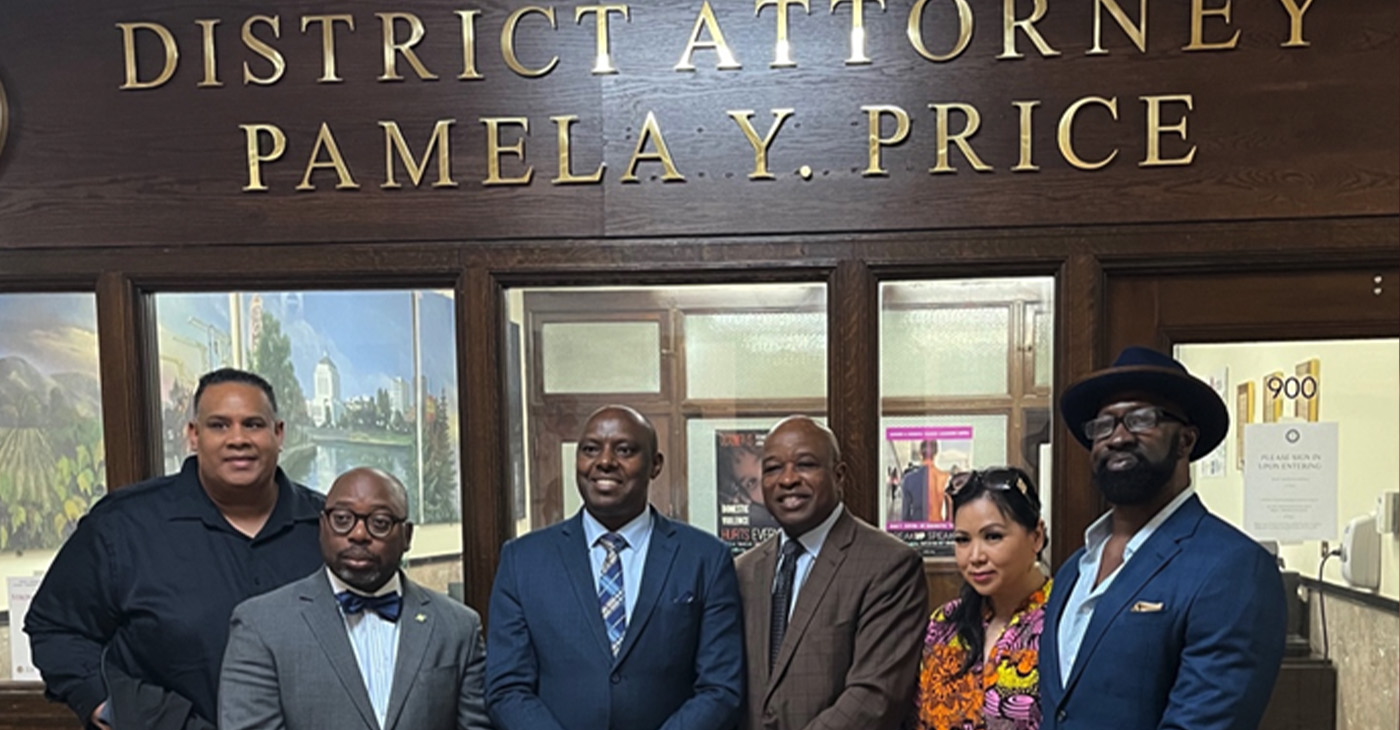
Dr. Nasasagare also visited the offices of Alameda County District Attorney Pamela Y. Price where he met with DA Senior Staff Ottis Bruce Jr., Chief Assistant District Attorney, and Royl L. Roberts, Chief Assistant District Attorney, and Antwon Cloird Senior Program Specialist.
Their discussions revolved around the Burundi-Oakland Sister Cities exchange students program plans which were proposed to be in alignment with DA Price’s program called “Drum Major for Justice, ” which was launched this summer for the youth.
The Ambassador visited the Oakland Post and was invited by Paul Cobb, publisher of Oakland Post to join him at the City Hall, where he met District 6 City Councilmember Kevin Jenkins. Cobb invited the Ambassador to join him as an observer to a press interview at the City of Oakland Mayor’s office.
Ray Bobbit took the Ambassador on a city-wide tour and shared a brief history of Oakland, stopping at the local landmarks and seeing all parts of Oakland which also included touring the Oakland Coliseum.
The Ambassador wanted to immerse himself in the local culture and to learn of the city’s diversity. He engaged with residents who spoke French, Swahili and Kirundi, connecting with African communities in California. Ambassador Nasasagare said his visit was marked by “meaningful discussions and interactions, aimed at addressing common challenges and exploring opportunities for collaboration.”
One of the pressing issues discussed during the visit was the rising crime rates in California, particularly in the city of Oakland. Ambassador Nasasagare’s insights, drawn from his experience in Burundi, where a decade-long civil war wreaked havoc, proved invaluable. He emphasized the importance of listening to the voices of youth in the community, and the victims affected by crime and the need to work collectively to find solutions as a united community.
Ambassador Nasasagare’s journey to Oakland reflects his life story. Hailing from Burundi, a country in central Africa, he said he had witnessed firsthand how “political agendas exploited youth, leading to a decade-long civil war from 1993 to 2006, resulting in a staggering death toll of over 300,000.”
Poverty in Burundi surged during this period, reaching 67% of the population. Ambassador Nasasagare, even in his youth, recognized the need for change and rallied young people to work together to shape their future.
The Ambassador’s advocacy for youth empowerment led him to serve for fifteen years as Deputy Chief of Staff in Charge of Protocol for late President Pierre Nkurunziza, and was the former Special Advisor to Burundi President Evariste Ndayishimiye for three years. He is also the founder of the Youth Coalition in Action (YCA), a local NGO dedicated to helping children in need, mentoring youth and women for financial empowerment, and promoting community development and environmental protection.
The visit culminated in a dinner where future collaborations between sister cities and Burundi were discussed. The potential for empowering youth and organizing exchange programs for Oakland’s youth in Burundi, providing training and job opportunities, was a focal point of discussion and the visit. Mwaro in Burundi will become the first city in Burundi to be part of the Oakland-Burundi Sister Cities International, a project initiated by Ambassador JonathanFitnessJones.
Jones said Ambassador Dr. Albert Nasasagare’s visit to Oakland “has opened doors to new possibilities, emphasizing the importance of global cooperation, youth empowerment, and community development. It is a testament to the power of dialogue and partnership in addressing complex challenges and building a brighter future for all.”







Activism
Oakland Post: Week of September 30 – October 6, 2026
The printed Weekly Edition of the Oakland Post: Week of September 30 – October 6, 2026

To enlarge your view of this issue, use the slider, magnifying glass icon or full page icon in the lower right corner of the browser window.
Activism
Oakland Post: Week of September 23 – 29, 2026
The printed Weekly Edition of the Oakland Post: Week of September 23 – 29, 2026

To enlarge your view of this issue, use the slider, magnifying glass icon or full page icon in the lower right corner of the browser window.
Activism
Oakland Post: Week of September 16 – 22, 2026
The printed Weekly Edition of the Oakland Post: Week of September 16 – 22, 2026

To enlarge your view of this issue, use the slider, magnifying glass icon or full page icon in the lower right corner of the browser window.



Listening as a Lifeline: A Doula’s Witness to Black Maternal Health

New Protections for Ticket Buyers: Gov. Newsom Signs Assemblymember Isaac Bryan’s Bill

‘We Don’t Talk Trash — We Pick Up Trash!’

Zakiya Jendayi Arrested, Locked Out of Home by Sheriff’s Deputies

Oakland Post: Week of September 30 – October 6, 2026

Asm. Corey Jackson Announces Launch of 24-Hour Childcare in His District

IN MEMORIAM: The Rev. Leon “Sonny” Clark, Longtime Orange County Pastor and Community Leader, Dies at 72

Poll: Becerra Widens His Lead Over Hilton; Californians Split on Wealth Tax

From Historic Memories to New Possibilities: Oakland Celebrates Coliseum 60

County Office of Education Says OUSD Finances Are Getting Healthier, Materially Stronger

LIVE FREE Sunday Dinner Brings Faith, Fellowship and Civic Conversation to Oakland

Remembering Chauncey Bailey as Student Journalists Face Threats to Truth-Telling

BLACspace Cooperative Invites Bay Area to Experience Oakland’s Black Cultural Ecosystem Through a BLAC Map Tour + Party

In Wake of Death on Doorstep, Williams Chapel Baptist Church Calls for Better Care, Funding for Unhoused

Oakland Centenarian Nuna McKee Honored!

Standoff for Justice: Our Homes Are Worth Fighting For

Oakland Post: Week of August 26 – September 1, 2026

Frontier Airlines’ Return to Oakland Airport Brings Flights, Jobs and Opportunity

Gubernatorial Candidate Steve Hilton Blasts California New Tire Rules; Newsom Hits Back

Chef Sharon Lee Blends Culinary Excellence, Education and Empowerment

Jackie Wright Champions Bay Area Stories, Filmmakers and Cultural Institutions

Big City Mayors Ask for “Yes” Vote on Housing Bond Measure; Conservatives Say “No”

Oakland Coliseum Project Opens Door for Small Businesses to Build Bigger

Misnamed ‘Parent’ PAC Seeks to Influence Oakland School Board Elections

Gov. Newsom’s Latest Appointees Include Sacramento Advocate for Formerly Incarcerated Students; State’s New Tech Chief

Longtime BWOPA Member Brendalyn Goodall Appointed to California Workforce Development Board

Gov. Newsom Signs Law Shielding Immigration Aid Workers From Doxing Threats

Secretary of State Shirley N. Weber Urges Californians to Vote Early as Voter ID Battle Intensifies

Oakland Post: Week of September 2 – 8, 2026

IN MEMORIAM: Dolly Parton Dead at 80 — How She Built a Legacy of Love and Earned Her Place in Black Culture

The Conversation With Al McFarlane 6/23/26

Media Monday 6/22/26

LIVE! ASK ALMA! — TUES. 6.23.26 7PM EST

Car Buying Secrets: 4 Hidden Checks Before You Sign!

Is This 550 HP Charger Worth YOUR Money? AutoNetwork Review

Celebrating Juneteenth – Frederick Douglass on education and resistance

LIVE! — ASK ALMA! — TUES. 6.19.26 7PM EST

Hyundai Ioniq 5 Parking, Safety, and 360 View #shorts

2025 Ioniq 5 New Wiper & Powerful Performance! #shorts

Electric SUV Range: Is 259 Miles Enough? #shorts

EV Charging: How Fast Can You Charge an Electric Vehicle? #shorts

Biometric Cooling… Messaging Seats…Come on! 2025 Infiniti QX80 Autograph 4WD

Charged Up: Witness the Magic of a Fully Electric Car! #shorts

Range Rover Sport PHEV Included…: See What’s Inside This Luxury SUV! #shorts

Invisible Hood View: Perfect Parking with X-Ray Vision! #shorts
-
 Community3 weeks ago
Misnamed ‘Parent’ PAC Seeks to Influence Oakland School Board Elections
-
 Activism4 weeks ago
Oakland Post: Week of September 2 – 8, 2026
-

 Community3 weeks ago
Richmond Tiny House Village Farm & Garden Set to Open Gates on Sept. 26
-

 Activism3 weeks ago
Oakland Post: Week of September 9 – 15, 2026
-

 Black History3 weeks ago
Latest Massacre in Haiti Reveals Cruelty U.S. Deportations
-

 Black History3 weeks ago
OPINION: Nolan Wells’ Death One of Several Signifying Racial Terror Lives on in U.S. South
-

 Community3 weeks ago
Democratic Clubs Interview Candidates for Oakland School Board
-

 Business2 weeks ago
Mayor Lee Announces $1 Million Kaiser Permanente Grant for Pilot Program to Address Homelessness, Clean Up Public Spaces throughout Oakland
