
If you have a question about COVID-19, email Ask SciCheck, a project of FactCheck.org, at AskSciCheck@FactCheck.org. Tell them you are a reader of the Houston Forward Times. You can read previous Ask SciCheck answers here.
#NNPA BlackPress
Launching Impeachment Inquiries: Reviewing What Happened in 2019 and 2023
House Speaker Kevin McCarthy reneged on his promise not to move forward with an impeachment inquiry into President Joe Biden without having a full vote by the House of Representatives. When defending his reversal, McCarthy blamed his predecessor, Democratic Rep. Nancy Pelosi. “Nancy Pelosi changed the rules and the precedent,” McCarthy said on Sept. 13, when responding […]
The post Launching Impeachment Inquiries: Reviewing What Happened in 2019 and 2023 first appeared on BlackPressUSA.


House Speaker Kevin McCarthy reneged on his promise not to move forward with an impeachment inquiry into President Joe Biden without having a full vote by the House of Representatives. When defending his reversal, McCarthy blamed his predecessor, Democratic Rep. Nancy Pelosi.
“Nancy Pelosi changed the rules and the precedent,” McCarthy said on Sept. 13, when responding to a reporter who asked how he justified not holding a vote before launching Biden’s impeachment inquiry on Sept. 12.
However, Pelosi has pushed back, saying in television interviews that she did hold a vote on the impeachment inquiry into then-President Donald Trump in 2019.
“I say that that’s hogwash. I mean it’s ridiculous, and I don’t know why the press keeps repeating it,” Pelosi said while responding to McCarthy’s claim during an MSNBC interview on Sept. 14. “Don’t blame it on me. Just take responsibility for what you are doing there, and don’t misrepresent the care that we took, the respect that we had for the institution to go forward in a way that really addressed the high crimes and misdemeanors of Donald Trump.”
To be clear, there was no House vote before Pelosi announced, in September 2019, the start of an impeachment inquiry into allegations that Trump pressured the president of Ukraine to investigate Biden, Trump’s political foe. The vote came over a month later, when Democrats leading the inquiry were ready to pass a resolution laying out the procedures for the next phase of the impeachment investigation that had already begun.
In the time between her announcement and the passing of the resolution, Pelosi said her caucus was preparing for a vote by developing the facts necessary to make a case for impeachment. But the delay in voting wasn’t a change in “the rules and the precedent,” as McCarthy claimed.
To sort out the conflicting statements, we will review what happened this year, under McCarthy, and what happened four years ago, under Pelosi.
2023 Inquiry
An impeachment inquiry is an investigation into potential wrongdoing that may be grounds for removing a federal official from office via the impeachment process.
As we have written, McCarthy originally told the conservative Breitbart News website that he would require the House to vote on opening an impeachment inquiry into Biden.
“To open an impeachment inquiry is a serious matter, and House Republicans would not take it lightly or use it for political purposes,” Breitbart News quoted McCarthy saying in a story published Sept. 1. “That’s why, if we move forward with an impeachment inquiry, it would occur through a vote on the floor of the People’s House and not through a declaration by one person.”
Less than two weeks later, on Sept. 12, McCarthy went back on his promise and unilaterally announced an impeachment inquiry.
“House Republicans have uncovered serious and credible allegations into President Biden’s conduct. Taken together, these allegations paint a picture of a culture of corruption,” McCarthy said in his remarks. “That’s why today, I am directing our House committees to open a formal impeachment inquiry into President Joe Biden. This logical next step will give our committees the full power to gather all the facts and answers for the American public.”
McCarthy said the Republican chairmen of the House oversight, judiciary, and ways and means committees will lead the inquiry, which is largely an extension of an already eight-month-old investigation into Biden and the international business dealings of his family members, particularly his son, Hunter.
So far, Republicans on the oversight committee leading that investigation have not produced evidence that shows Joe Biden participated in his family’s business deals, that he benefited from the deals or that he ever used his position as then-vice president to facilitate any of the deals.
Due to the lack of evidence, even several House Republicans have publicly said that the impeachment inquiry into the president should not proceed — suggesting that there likely would not be enough votes to approve the inquiry if McCarthy brought it to the floor for a vote at this time.
Pelosi said not having the support of a majority of the House is one reason McCarthy may have changed his mind about having a vote.
2019 Inquiry
But Pelosi, who was the House speaker in 2019, also proceeded with an impeachment inquiry without holding a vote first.
Democratic-led House committees had been investigating Trump administration activities for months. But Pelosi said she was compelled to start the impeachment inquiry after an intelligence community whistleblower alleged in an August 2019 complaint that Trump, ahead of the 2020 presidential election, had pressured Ukrainian President Volodymyr Zelenskyy, during a July 2019 phone call, to investigate Joe and Hunter Biden. “I have received information from multiple U.S. Government officials that the President of the United States is using the power of his office to solicit interference from a foreign country in the 2020 U.S. election,” according to the complaint.
Trump’s actions had revealed his “betrayal of his oath of office, betrayal of our national security and betrayal of the integrity of our elections,” Pelosi said while making her announcement on Sept. 24. “Therefore, today I’m announcing the House of Representatives is moving forward with an official impeachment inquiry. I’m directing our six committees to proceed with their investigations under that umbrella of impeachment inquiry.”
But it was not until about five weeks later, on Oct. 31, that the House voted on a resolution establishing procedures for those committees to “continue their ongoing investigations as part of the existing House of Representatives inquiry into whether sufficient grounds exist” to impeach Trump.
The resolution passed by a vote of 232 to 196. No Republicans supported it, and two Democrats opposed it.
Then, on Dec. 10, Democrats introduced two articles of impeachment against Trump. Eight days later, the House — for only the third time in history — voted to impeach the sitting president, for abuse of power (230 to 197) and obstruction of Congress (229 to 198).
But Trump was acquitted of those charges on Feb. 5, 2020, after a Senate trial.
Precedent
McCarthy, who was the House minority leader in 2019, was among the Republicans who criticized Pelosi for initiating an impeachment inquiry into Trump before letting the House vote on it.
He introduced a resolution of disapproval, which he said would allow lawmakers to publicly declare if they were for or against the inquiry.
“If Speaker Pelosi refuses to seek approval of the whole House in the critical decision of impeachment — as is longstanding practice and precedent — I will again give all members the opportunity to go on record so their constituents can know where they stand on this issue,” McCarthy wrote in a Sept. 26, 2019, post on the platform then known as Twitter.
“Every Member of Congress should go on record to say where they stand on Speaker Pelosi’s unilateral impeachment. I am once again making a motion to disapprove of her unprecedented actions,” he wrote in a post a day later.
But neither the Constitution nor House rules require a vote before an impeachment inquiry can begin, as Pelosi explained in an Oct. 3 letter responding to McCarthy’s request that she suspend the inquiry into Trump.
Also, in a 2019 report, the Congressional Research Service noted examples of impeachment investigations that were conducted without an authorization vote, as well as examples when the investigation began before an authorization vote was held later.
In the case of President Richard Nixon, for example, the House Judiciary Committee had started the “preliminary phases of an inquiry into possible impeachment” months before the House voted on an authorizing resolution, the CRS report said.
(There was no impeachment inquiry in January 2021, when the House voted to impeach Trump a second time – for “incitement of insurrection” against the U.S. government. Democrats introduced the article of impeachment against Trump on Jan. 11, five days after a mob of his supporters attacked the U.S. Capitol, and the House vote was held on Jan. 13, seven days before Trump was scheduled to leave office. The Senate acquitted Trump of the incitement charge on Feb. 13, 2021, after Trump was no longer president.)
In a CNN interview last week, on Sept. 13, Pelosi said that she waited “a few weeks” before calling for a vote in October 2019, so that the investigating committees could gather necessary information about Trump’s actions and make a case prior to bringing a bill to the floor.
“They’ve had what, nine months of collecting information?” Pelosi said about the House Republicans now investigating Biden. “They have nothing.”
It remains to be seen if McCarthy, like Pelosi, will eventually call for a vote authorizing Biden’s impeachment inquiry.
Editor’s note: FactCheck.org does not accept advertising. We rely on grants and individual donations from people like you. Please consider a donation. Credit card donations may be made through our “Donate” page. If you prefer to give by check, send to: FactCheck.org, Annenberg Public Policy Center, 202 S. 36th St., Philadelphia, PA 19104.
The post Launching Impeachment Inquiries: Reviewing What Happened in 2019 and 2023 appeared first on Forward Times.
The post Launching Impeachment Inquiries: Reviewing What Happened in 2019 and 2023 first appeared on BlackPressUSA.














#NNPA BlackPress
NFL: Week Two Recap | Jalen Hurts did not fold; Caleb Williams exits game with injury
Philadelphia Eagles quarterback Jalen Hurts found Darius Cooper with nine seconds left for the game winning touchdown as his team beat the Tennessee Titans 24-20 in Nashville. Hurts finished the day 26/37 for 264 yards. He threw for two touchdowns and two interceptions. Prior to the final drive, the Eagles ran 25 plays for 45 […]
The post NFL: Week Two Recap | Jalen Hurts did not fold; Caleb Williams exits game with injury appeared first on BlackPressUSA.

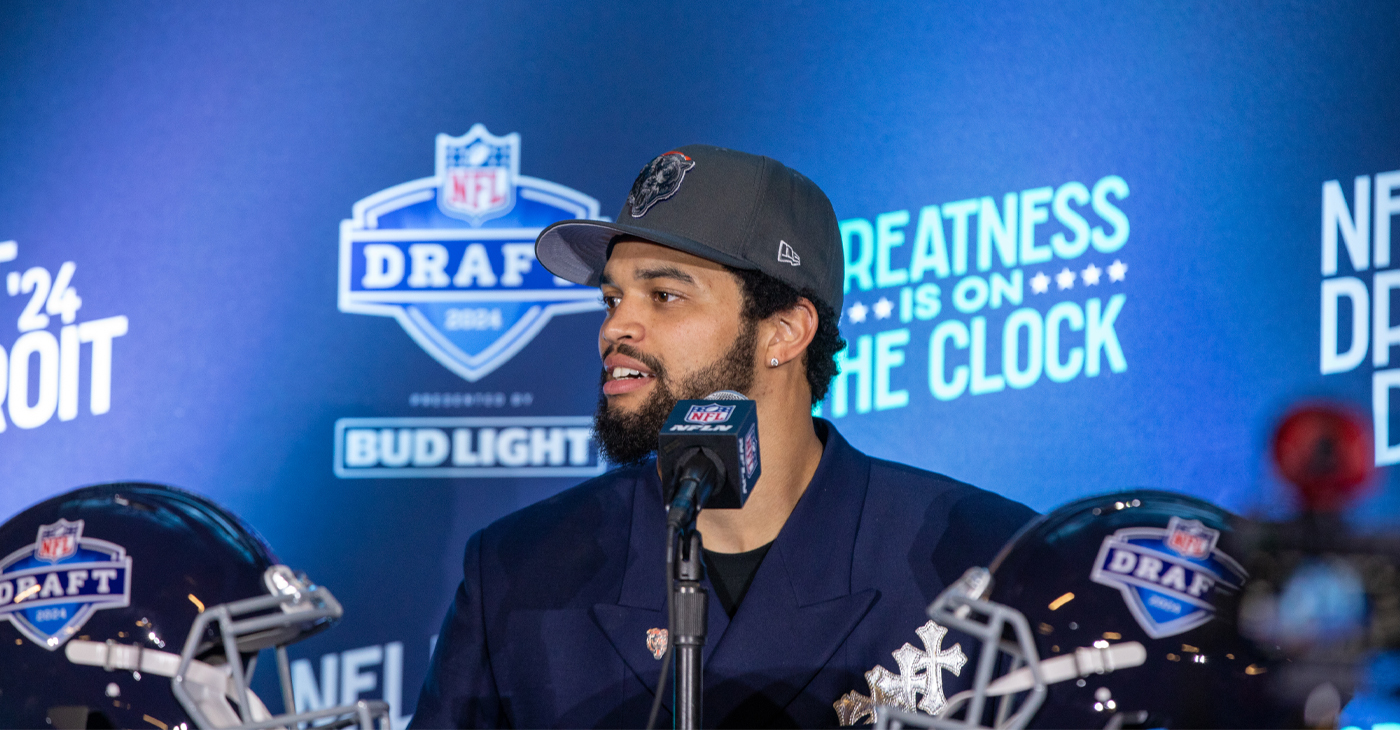
Philadelphia Eagles quarterback Jalen Hurts found Darius Cooper with nine seconds left for the game winning touchdown as his team beat the Tennessee Titans 24-20 in Nashville. Hurts finished the day 26/37 for 264 yards. He threw for two touchdowns and two interceptions.
Prior to the final drive, the Eagles ran 25 plays for 45 yards. During the final drive Hurts went 6-8 with 61 passing yards and the touchdown. Titans defensive tackle — and team captain — Jeffery Simmons said this week that the way to defend Jalen Hurts is to make him “play quarterback.”
Hurts said to Simmons after today’s game: “You started that sh**. I had to finish it.”
Running back Saquon Barkley suffered a stinger in the first half but he ultimately finished the game. He had four carries and nine yards and one catch for eleven yards. He will get an MRI for his injury, but admitted to Cameron Wolfe of the NFL Network he was fine.
Caleb Williams leaves game against Vikings with apparent lower-body injury
Chicago Bears quarterback Caleb Williams was helped off the field with a right leg injury with 7:42 remaining in the fourth quarter. Williams was down, writhing in pain after scrambling to his left. After departing the injury tent, Williams raised his right fist, acknowledging the crowd while expressing his frustration. Testing will commence on Monday to find out more details about his injury.

“We’ll know tomorrow,” Johnson admitted regarding Williams’ injury. “He’s in good spirits. He’s a team player.”
Williams finished the day with 138 passing yards and one interception.
“I’m actually happy it’s nothing with the knee — that was my first inclination,” Johnson said. “But, a hamstring could be pretty damaging as well. So, we’ll see. We’ll see how bad it is tomorrow and we’ll go from there.”
Bryce Young once again dominated the Falcons
Carolina Panthers quarterback Bryce Young is 5-1 against the Atlanta Falcons and is undefeated at Mercedes-Benz Stadium. Today, Young threw for 287 yards and three touchdowns as he led the Panthers to a 34-3 dismembering of the Atlanta Falcons. Georgia Tech alumnus Darren Waller caught two touchdowns and linebacker Devin Lloyd returned one of his two interceptions for a touchdown.
Cooper Rush started his second straight game for the Falcons and it did not go well. The partisan crowd voiced their displeasure after Rush completed 10/17 passes for 86 yards and two interceptions. Jack Strand entered the game for Rush prompting cheers from the Falcons fans. The rookie threw a pick-six on his first career pass attempt. Strand was the first QB to accomplish that feat since Sam Darnold in 2018 and is the first Falcons player to do that since Brett Favre in 1991. Strand finished the day with 59 passing yards and 16 rushing yards.
According to reports, quarterback Michael Penix, Jr. is expected to make his season debut this Thursday at the Green Bay Packers. His return should help the Falcons. They are the first team since the 2008 Rams to not run any plays in the red zone after the first two games to open a season.
The bright spots for the Falcons today were the Spelman College Jaguarettes performing with the Falcons cheerleaders and Florida A&M’s marching band, The Marching 100, also performed during halftime!
Jayden Daniels gets carted off after apparent arm injury
Washington Commanders quarterback Jayden Daniels appeared to injure his left elbow on the final play of the first half in his game against the Dallas Cowboys. During the play, Daniels got stepped on, braced himself for the fall, and his elbow bent the wrong way. Daniels draped a towel over his head as he exited the field on the cart.
He was later ruled out.
Daniels suffered a dislocated elbow to the same arm during week nine of last season against the Washington Commanders, which led to him being shut down for the remainder of the season.
The post NFL: Week Two Recap | Jalen Hurts did not fold; Caleb Williams exits game with injury appeared first on BlackPressUSA.

#NNPA BlackPress
The Complete Negotiation Framework — Every Stage, Every Tactic, Every Win
Master the complete vehicle-purchase negotiation framework with Roosevelt Gist and Roosevelt. Learn every stage, tactic, and win!
The post The Complete Negotiation Framework — Every Stage, Every Tactic, Every Win appeared first on BlackPressUSA.

Roosevelt Gist and Roosevelt deliver the complete vehicle-purchase negotiation framework in Episode 8 of The Color of Our Money Is Green. This episode covers the three foundations of every effective negotiation, the full seven-stage negotiation sequence with exact language for every stage, and five of the most common dealership tactics with the specific response each one requires.
What You Learn in This Episode:
The three foundations that make every negotiation tactic work
The complete seven-stage car-buying negotiation sequence
Exact language for every stage of the dealership conversation
Five common dealership tactics — the turnover, the four-square, the packed payment, spot delivery, and forced add-ons — and how to counter each one
Why signing preliminary paperwork isn’t the same as signing the final contract
___________________________________________________________________
“The Color of Our Money Is Green: A Buyer’s Guide to What Cars Actually Cost” — stan.store/RGist
____________________________________________________________________
AutoNetwork helps serious car shoppers inspect any new vehicle online before walking into a dealership. I’m Roosevelt — I’ve been reviewing cars and shaping digital car buying and credit union auto leasing since before YouTube car reviews existed.
You’ll find detailed walkaround reviews, POV test drives, and buyer-focused breakdowns covering comfort, space, features, and real-world value.
How to use the channel:
Watch the walkaround of the car you’re considering
Visit AutoNetwork.com for the full review
Check CouponsOffersAndDeals.com for current dealer specials
Walk in already knowing what you want — and what it should cost
 AutoNetwork.com
 CouponsOffersAndDeals.com
Affiliate disclosure: some links earn a small commission at no cost to you and help support the channel. Insta360 is one of those partners.
The post The Complete Negotiation Framework — Every Stage, Every Tactic, Every Win appeared first on BlackPressUSA.
#NNPA BlackPress
Mazda CX-90 Luxury: Heated Seats & Premium Comfort! #shorts
Stay toasty in the CX-90! Plush Nappa leather, heated/ventilated seats, and a memory-equipped heated steering wheel deliver ultimate luxury.
The post Mazda CX-90 Luxury: Heated Seats & Premium Comfort! #shorts appeared first on BlackPressUSA.

Experience ultimate comfort in the CX-90. Nappa leather, heated/ventilated seats, 8-way power adjustments, and memory settings for both front passengers. The heated steering wheel with memory tilt/telescope adds premium convenience.
 Watch the full video: https://youtu.be/EH5A4eQ4ipY
#AutoNetwork
The post Mazda CX-90 Luxury: Heated Seats & Premium Comfort! #shorts appeared first on BlackPressUSA.



Business14 minutes ago
From Historic Memories to New Possibilities: Oakland Celebrates Coliseum 60

Business20 minutes ago
County Office of Education Says OUSD Finances Are Getting Healthier, Materially Stronger

Community35 minutes ago
LIVE FREE Sunday Dinner Brings Faith, Fellowship and Civic Conversation to Oakland

Black History42 minutes ago
Remembering Chauncey Bailey as Student Journalists Face Threats to Truth-Telling

Art47 minutes ago
BLACspace Cooperative Invites Bay Area to Experience Oakland’s Black Cultural Ecosystem Through a BLAC Map Tour + Party

Black History52 minutes ago
In Wake of Death on Doorstep, Williams Chapel Baptist Church Calls for Better Care, Funding for Unhoused

Community59 minutes ago
Oakland Centenarian Nuna McKee Honored!

Black History1 hour ago
Caribbean Nations Produce Action Plan Calling for UK Reparations Over Slavery

Activism1 hour ago
Oakland Post: Week of September 23 – 29, 2026

Black History4 days ago
Doulas Are Helping Black California Moms Navigate Pregnancy–Even as High Mortality Rates Persist

Business5 days ago
Newsom Signs Addictive Social Media Law to Protect Kids

Featured5 days ago
On Your November Ballot: Prop 38 Would Allocate $8.4 Billion to Immunology and Immunotherapy Funding

Uncategorized5 days ago
Ask California: Golden State Releases New AI Chatbot

Community5 days ago
Asm. Isaac Bryan’s Bill Banning California Police From ICE Side Jobs Reaches Newsom’s Desk

Community5 days ago
Assemblymember LaShae Sharp-Collins’s Bill Would Pause Law Enforcement’s Use of Shock Gloves Pending Study

Community1 month ago
Less Affluent School Districts, Including Sacramento City, Face Threat of State Takeover

Commentary1 month ago
ESSAY: California Can Close Its Colorectal Cancer Gap

Business1 month ago
California Hispanic Chambers of Commerce Unveils: ‘Powering the Future’ Theme for 47th Annual Statewide Convention

Community1 month ago
Four Candidates, Including Incumbent Barbara Lee, Qualify for Oakland Mayor’s Race

Activism1 month ago
Oakland Post: Week of August 12 – 18, 2026

Business1 month ago
From Blueprint to Breakthrough: Tackling Affordable Housing in Oakland

Black History1 month ago
Oakland Observes Black August with Block Parties, Film Showings, Workshops

Commentary1 month ago
COMMENTARY: Why Local School Tax Measure G1 Will Not Be on the November Ballot

Commentary4 weeks ago
Standoff for Justice: Our Homes Are Worth Fighting For

Business1 month ago
Returning to Its Roots, the Oakland Black-Eyed Pea Festival Partners with the Freedom Farmers Market Sept. 12

Activism4 weeks ago
Oakland Post: Week of August 26 – September 1, 2026

Business1 month ago
NPRC Scores First Advocacy Victory: David Shaw Finally Gets His Wish to ‘Go Home’

Business4 weeks ago
Frontier Airlines’ Return to Oakland Airport Brings Flights, Jobs and Opportunity

Business4 weeks ago
Gubernatorial Candidate Steve Hilton Blasts California New Tire Rules; Newsom Hits Back

Business4 weeks ago
Chef Sharon Lee Blends Culinary Excellence, Education and Empowerment

#NNPA BlackPress3 months ago
The Conversation With Al McFarlane 6/23/26

#NNPA BlackPress3 months ago
Media Monday 6/22/26

#NNPA BlackPress3 months ago
LIVE! ASK ALMA! — TUES. 6.23.26 7PM EST

#NNPA BlackPress3 months ago
Car Buying Secrets: 4 Hidden Checks Before You Sign!

#NNPA BlackPress3 months ago
Is This 550 HP Charger Worth YOUR Money? AutoNetwork Review

#NNPA BlackPress3 months ago
Celebrating Juneteenth – Frederick Douglass on education and resistance

#NNPA BlackPress3 months ago
LIVE! — ASK ALMA! — TUES. 6.19.26 7PM EST

#NNPA BlackPress1 year ago
Hyundai Ioniq 5 Parking, Safety, and 360 View #shorts

#NNPA BlackPress1 year ago
2025 Ioniq 5 New Wiper & Powerful Performance! #shorts

#NNPA BlackPress1 year ago
Electric SUV Range: Is 259 Miles Enough? #shorts

#NNPA BlackPress1 year ago
EV Charging: How Fast Can You Charge an Electric Vehicle? #shorts

#NNPA BlackPress1 year ago
Biometric Cooling… Messaging Seats…Come on! 2025 Infiniti QX80 Autograph 4WD

#NNPA BlackPress1 year ago
Charged Up: Witness the Magic of a Fully Electric Car! #shorts

#NNPA BlackPress1 year ago
Range Rover Sport PHEV Included…: See What’s Inside This Luxury SUV! #shorts

#NNPA BlackPress1 year ago
Invisible Hood View: Perfect Parking with X-Ray Vision! #shorts
-
 Commentary4 weeks ago
Standoff for Justice: Our Homes Are Worth Fighting For
-
 Activism4 weeks ago
Oakland Post: Week of August 26 – September 1, 2026
-
 Business4 weeks ago
Frontier Airlines’ Return to Oakland Airport Brings Flights, Jobs and Opportunity
-
 Business4 weeks ago
Gubernatorial Candidate Steve Hilton Blasts California New Tire Rules; Newsom Hits Back
-
 Business4 weeks ago
Chef Sharon Lee Blends Culinary Excellence, Education and Empowerment
-

 Community4 weeks ago
Big City Mayors Ask for “Yes” Vote on Housing Bond Measure; Conservatives Say “No”
-

 Black History4 weeks ago
Jackie Wright Champions Bay Area Stories, Filmmakers and Cultural Institutions
-

 Education4 weeks ago
Gov. Newsom’s Latest Appointees Include Sacramento Advocate for Formerly Incarcerated Students; State’s New Tech Chief
