
Activism
State Task Force Getting Closer to Identifying What Reparations Look Like
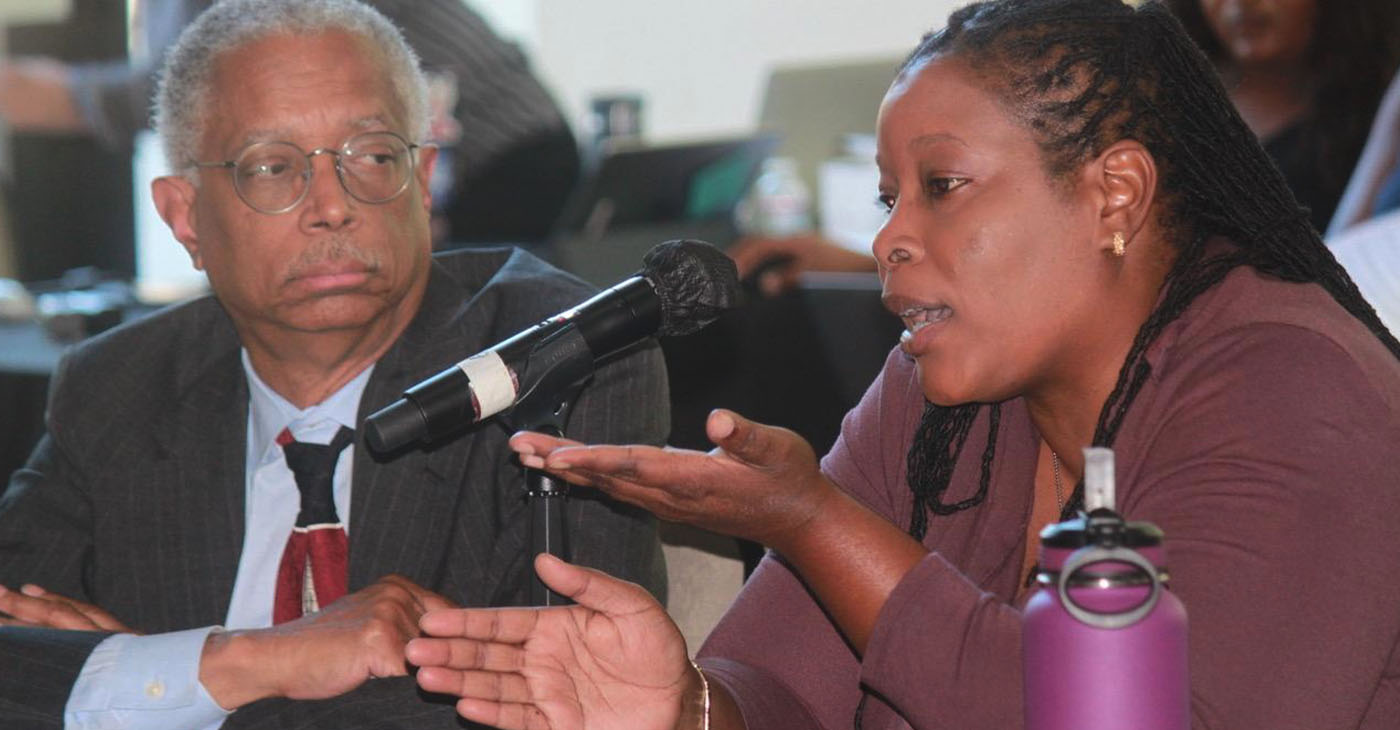
The five-member expert panel, appointed by the task force, is quantifying past economic injustices African Americans faced in the state and elsewhere, and determining what or how much compensation should be made to Black people living in California.

By Antonio Ray Harvey
California Black Media
The California Task Force to Study and Develop Reparations Proposals for African Americans will be conducting its last meeting of 2022 on Wednesday, Dec. 14, and Thursday, Dec. 15, at Oakland City Hall Chambers located at 1 Frank H. Ogawa Plaza adjacent to 14th Street.
The start time is 9 a.m. for both days beginning with one hour of public comment. The meetings will be live streamed via the official Task Force website or ETM Media on YouTube.
Task Force Chairperson Kamilah Moore says that the next meeting is of high importance “for a few reasons,” and will include an in-depth conversation about redress and repair.
“No. 1, we will begin to refine community eligibility standards (including residency requirements); No. 2, we’re inviting leaders from local/municipal reparations efforts from across the state to share their incredible work (i.e., Oakland, Los Angeles, Berkeley, Russell City, Palms Springs etc.),” Moore said in a written statement on Dec. 1. “No. 3, it will be the first-time task force members will collectively discuss and begin to determine what types of reparation proposals will be in the final report that will be released in June 2023.”

The task force’s two-year charge is scheduled to end in June 2023.
California’s AB 3121, signed by Gov. Gavin Newsom into law in 2020, created the nine-member task force to investigate the history and costs of slavery in California and around the United States.
The law charges the Reparations Task Force with studying the institution of slavery and its lingering negative effects on Black Californians who are descendants of persons enslaved in the United States.
From the information they collect, the task force will develop reparation proposals for African Americans and recommend appropriate ways to educate Californians about the task force’s findings.
After the task force decided who would be eligible for compensation in March, the panel approved a framework for calculating how much should be paid — and for which offenses — to individuals who are Black descendants of enslaved people in the United States.
An expert panel reported to the task force in March that a “conservative estimate” of 2 million African Americans in California have ancestors who were enslaved in the United States. According to the U.S. 2020 Census, there are about 2.6 million Black Californians out of a total state population of nearly 40 million residents.
The five-member expert panel, appointed by the task force, is quantifying past economic injustices African Americans faced in the state and elsewhere, and determining what or how much compensation should be made to Black people living in California.
The expert panel includes William Spriggs, chief economist for the AFL-CIO and former chair of the Department of Economics at Howard University; Thomas Craemer, Public Policy professor at the University of Connecticut; Dr. Kaycea Campbell, CEO for Ventana Capital Advisors and Los Angeles Pierce College associate professor of Economics; Dr. William A. “Sandy” Darity Jr., director of the Samuel DuBois Cook Center on Social Equity at Duke University; and Kirsten Mullen, a writer, and lecturer whose work focuses on race, art, history, and politics.
All five experts participated on the first day of the two-day meeting held at the California Science Center in Los Angeles two months ago. Spriggs and Campbell attended the event in person, while the other three experts appeared virtually.
Campbell and her colleagues discussed with the task force the “models” to provide a “road map” that would determine how reparations would be “paid and measured.”

Milagro Jones, a participant at the Reparation Task Force meeting in Los Angeles, holds up a 500-page interim report that was submitted to the California Legislature in June 2022. CBM photo by Antonio Ray Harvey, Sept. 23, 2022.
The experts presented “five harms or atrocities,” down from the 13 they originally proposed, that could be used to determine compensations.
Campbell said the five categories under review will not be “exhausted” until they have received enough data to complete the process.
“This is not to say that other harms and atrocities are not important. As soon as, or if we get better data or more recent data, then we can, in fact, go through the process of what these look like,” Campbell said.
The experts made “rough estimates,” of property unjustly taken by eminent domain, devaluation of Black businesses, housing discrimination, the disproportion of mass incarceration and over-policing, and health inequities as the major harms.
Task Force Member Sen. Steven Bradford (D-Inglewood) released the following statement as clarification that the task force has not proposed that California compensate descendants of slaves with direct compensation for historical housing discrimination.
Bradford said, “Since its formation, a lot of misinformation and willful misrepresentation of the work from the Task Force has been released. The fact is that the Task Force has not completed its work and has made no formal recommendations to the Legislature. It’s important that we be deliberative and get this right because the nation is watching and it’s more than likely ours will be the model for all to follow.”
Members of the community and media are encouraged to visit the Reparations Task Force website and subscribe to the task force’s mailing list for updates at: https://oag.ca.gov/subscribe or call (213) 519-0504.









Activism
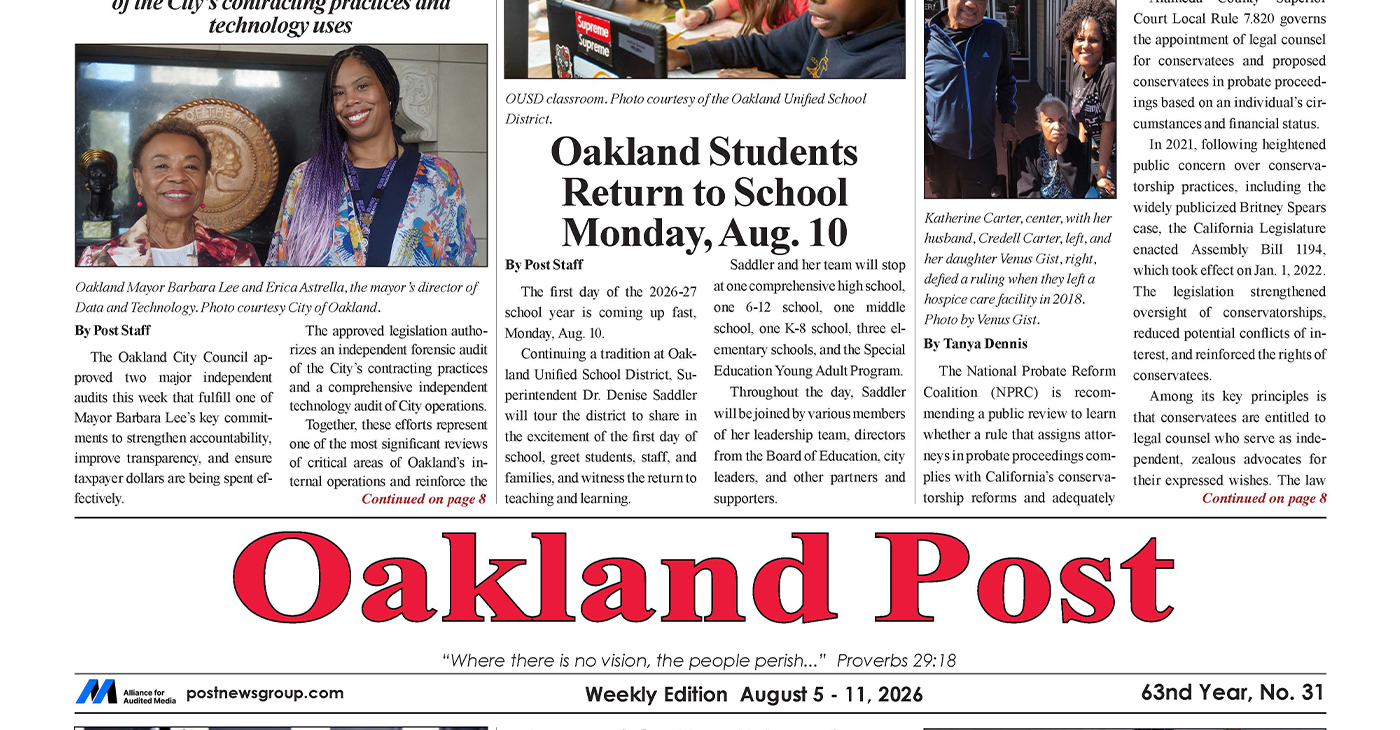
Oakland Post: Week of August 5 – 11, 2026
The printed Weekly Edition of the Oakland Post: Week of August 5 – 11, 2026
To enlarge your view of this issue, use the slider, magnifying glass icon or full page icon in the lower right corner of the browser window.
Activism
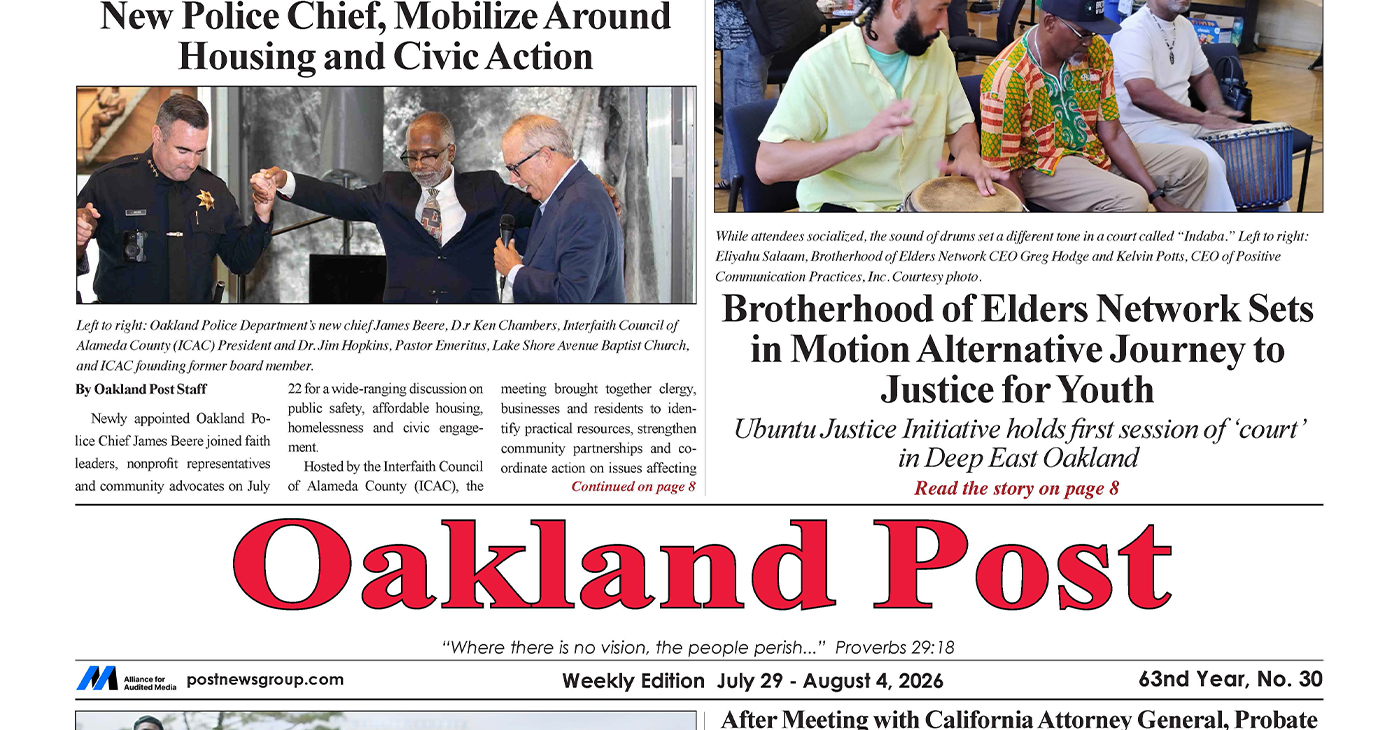
Oakland Post: Week of July 29 – August 4, 2026
The printed Weekly Edition of the Oakland Post: Week of July 29 – August 4, 2026
To enlarge your view of this issue, use the slider, magnifying glass icon or full page icon in the lower right corner of the browser window.
Activism
Oakland Post: Week of July 22 – 28, 2026
The printed Weekly Edition of the Oakland Post: Week of July 22 – 28, 2026
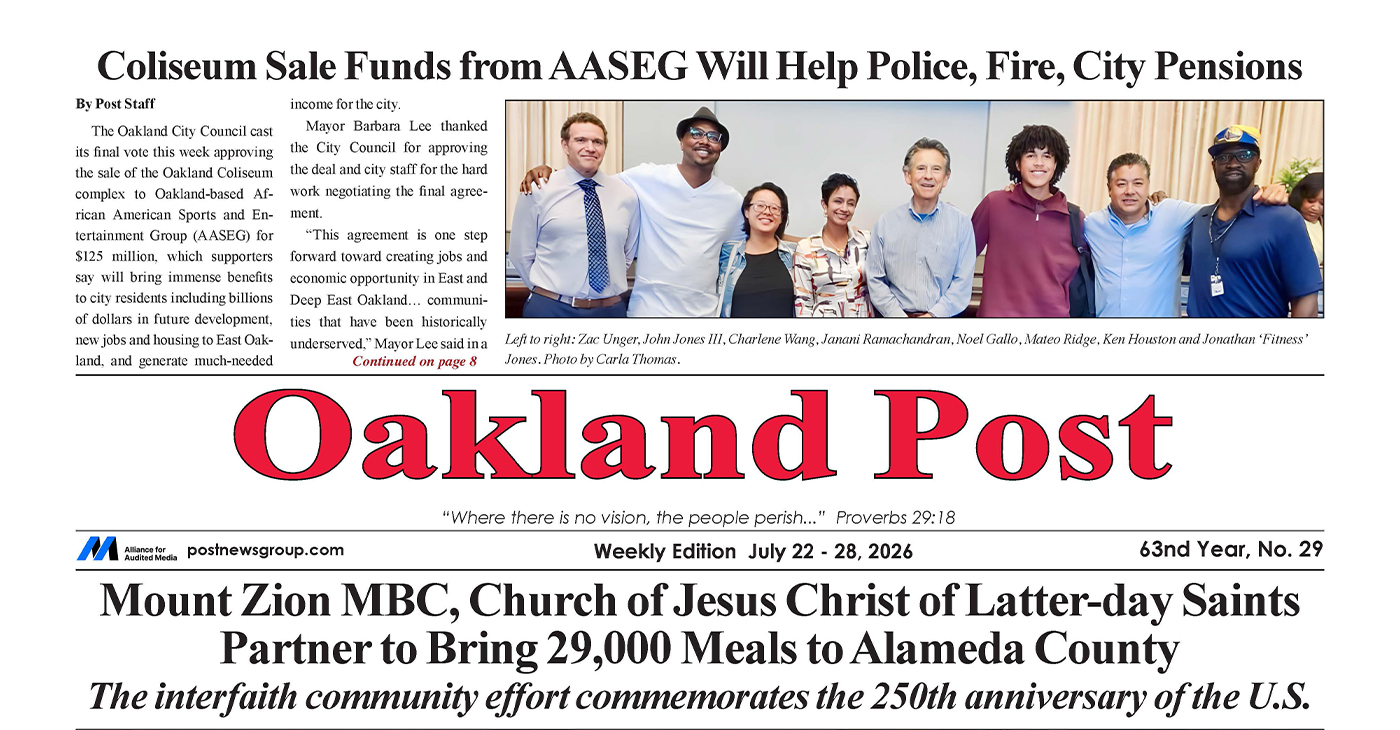
To enlarge your view of this issue, use the slider, magnifying glass icon or full page icon in the lower right corner of the browser window.
WORK FROM HOME
Home-based business with potential monthly income of $10K+ per month. A proven training system and website provided to maximize business effectiveness. Perfect job to earn side and primary income. Contact Lynne for more details: Lynne4npusa@gmail.com 800-334-0540


Car Wash Workers Cope with Lingering Impacts of ICE Raids

Misty Copeland Shapes Ballet’s Tomorrow

As Part of Your Back-to- School Checklist, Vaccinate

As Part of Your Back-to- School Checklist, Vaccinate

Congresswoman Simon Demands Investigation into Trump’s Abuse of Emergency Powers for Coal Export Terminal in West Oakland

OPINION: The Philippines Isn’t Foreign When Your Family Still Lives There

Asm. McKinnor’s Bill Banning Drones Above Outdoor Entertainment Events Awaits Senate Decision

California Sen. Padilla Joins Colleagues to Introduce Bill Imposing Term Limits on Supreme Court Justices

Department of Homeland Security Demands California Secretary of State Shirley N. Weber Scrub Voter Rolls

George Cook: The Inventor Who Made Fishing Smarter

Gov. Newsom Announces $109.6 Million in Funding for 278 Supportive Homes in Bakersfield, Contra Costa, Sacramento and Fresno

Rep. Kamlager Dove Demands Care, Justice for Man Shot by ICE

“The Power to See Threats Sooner”: Gov. Newsom, Safety Officials Showcase California’s Investments in Hi-Tech Wildfire Prevention

100 Black Wings’ Team Oakland Youth Athletes Heading to Taiwan for 2026 International Children’s Games

Oakland ‘Port Serves as a Powerful Engine for Good Jobs and Economic Development
Department of Homeland Security Demands California Secretary of State Shirley N. Weber Scrub Voter Rolls

Oakland Children’s Hospital Workers and Patients Rally for Pediatric Medical Care

New Judge Could Decide if Karmelo Anthony Gets a New Trial
“The Power to See Threats Sooner”: Gov. Newsom, Safety Officials Showcase California’s Investments in Hi-Tech Wildfire Prevention

Alpha Kappa Alpha Sorority, Inc. Celebrates New North Atlantic Regional Director

Surveillance Pricing Fight: State Senate Debates Bill Banning Retailers from Using AI to Set Prices Based on a Buyer’s Profile

Mount Zion MBC, Church of Jesus Christ of Latter-day Saints Partner to Bring 29,000 Meals to Alameda County
California Sen. Padilla Joins Colleagues to Introduce Bill Imposing Term Limits on Supreme Court Justices

Starting This Summer, California Car Buyers Can Get an Instant $3500 Off the Cost of Electric Vehicles

COMMENTARY: You Are Already Paying for the AI Boom

California Bill Would Let Abuse Victims Use Trauma as Legal Defense for Violent Crime

Fed Court to Decide Landmark First Amendment Case

Gov. Gavin Newsom Signs Law Streamlining Affordable Housing Rules

Oakland Celebrates $125 Million Coliseum Sale
Car Wash Workers Cope with Lingering Impacts of ICE Raids

The Conversation With Al McFarlane 6/23/26

Media Monday 6/22/26

LIVE! ASK ALMA! — TUES. 6.23.26 7PM EST

Car Buying Secrets: 4 Hidden Checks Before You Sign!

Is This 550 HP Charger Worth YOUR Money? AutoNetwork Review

Celebrating Juneteenth – Frederick Douglass on education and resistance

LIVE! — ASK ALMA! — TUES. 6.19.26 7PM EST

Hyundai Ioniq 5 Parking, Safety, and 360 View #shorts

2025 Ioniq 5 New Wiper & Powerful Performance! #shorts

Electric SUV Range: Is 259 Miles Enough? #shorts

EV Charging: How Fast Can You Charge an Electric Vehicle? #shorts

Biometric Cooling… Messaging Seats…Come on! 2025 Infiniti QX80 Autograph 4WD

Charged Up: Witness the Magic of a Fully Electric Car! #shorts

Range Rover Sport PHEV Included…: See What’s Inside This Luxury SUV! #shorts

Invisible Hood View: Perfect Parking with X-Ray Vision! #shorts
-
 Featured5 days ago
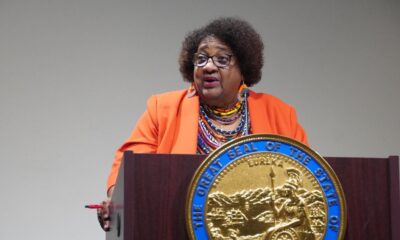
Department of Homeland Security Demands California Secretary of State Shirley N. Weber Scrub Voter Rolls
-
 Business3 weeks ago
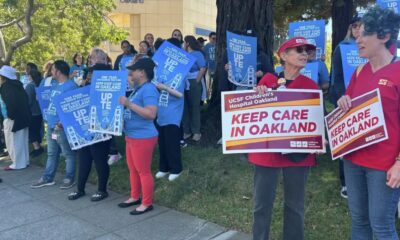
Oakland Children’s Hospital Workers and Patients Rally for Pediatric Medical Care
-
 #NNPA BlackPress2 weeks ago
New Judge Could Decide if Karmelo Anthony Gets a New Trial
-
 Environment5 days ago
“The Power to See Threats Sooner”: Gov. Newsom, Safety Officials Showcase California’s Investments in Hi-Tech Wildfire Prevention
-
 Black History2 weeks ago
Alpha Kappa Alpha Sorority, Inc. Celebrates New North Atlantic Regional Director
-
 Business3 weeks ago
Surveillance Pricing Fight: State Senate Debates Bill Banning Retailers from Using AI to Set Prices Based on a Buyer’s Profile
-
 Business3 weeks ago
Mount Zion MBC, Church of Jesus Christ of Latter-day Saints Partner to Bring 29,000 Meals to Alameda County
-
 Featured5 days ago
California Sen. Padilla Joins Colleagues to Introduce Bill Imposing Term Limits on Supreme Court Justices
