
Bay Area
Marin City’s George Duke Remembered in Celebration of City’s 80th Anniversary
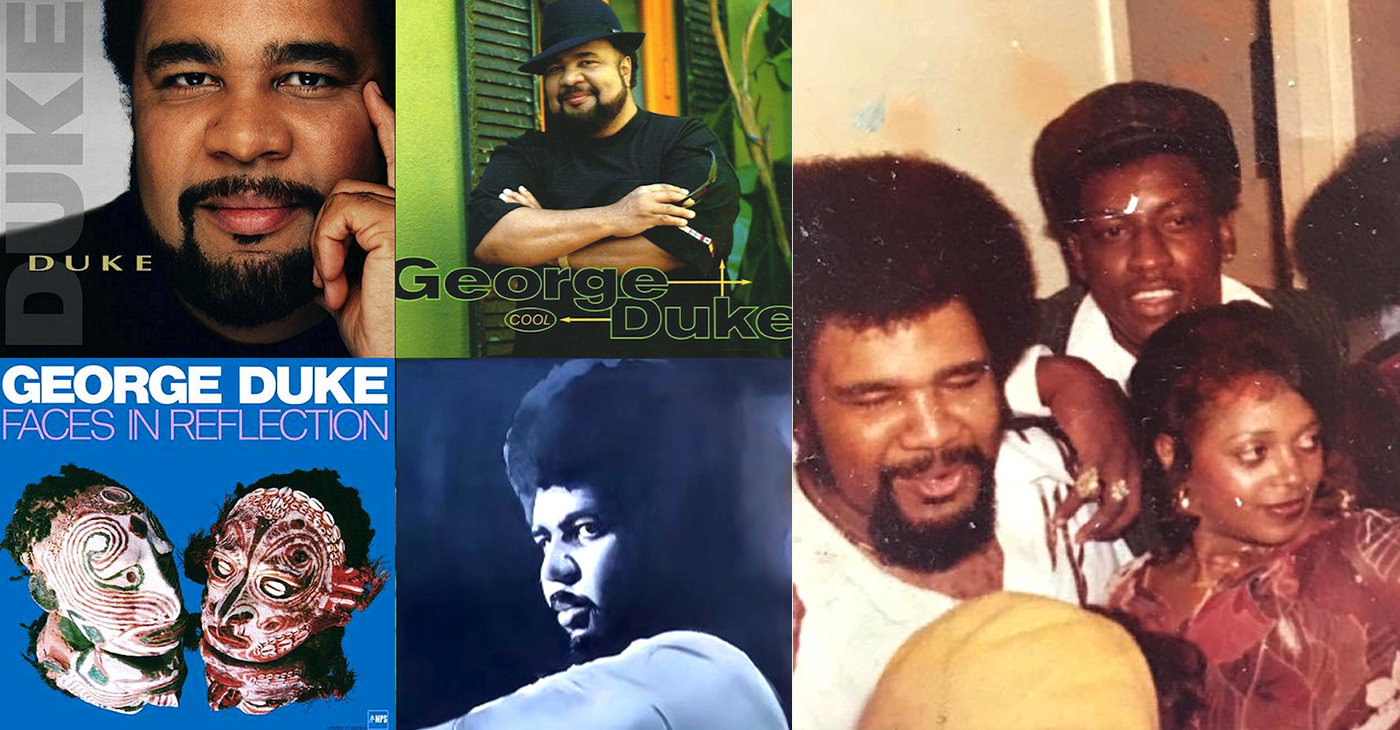
George Duke received multiple Grammy nominations, the Edison Lifetime Achievement Award, and Keyboard Magazine’s “R&B Keyboardist of The Year,” and won a Grammy for producing the Best Jazz Vocal Album: Dianne Reeves’ “In the Moment.” Over the course of his life, Duke produced 32 studio albums, nine collaboration albums, 47 singles, and eight live albums.

By Godfrey Lee
The late musician and music producer George Duke, a former Marin City resident who passed away in 2013, is being remembered during Marin City’s 80th Anniversary celebration this year.
Duke was born George Mac Duke on Jan. 12, 1946, in San Rafael, California. He grew up in Marin City and attended the First Missionary Baptist Church.
Duke first got interested in music when his mother took him to see Duke Ellington in concert when he was 4 years old. When they got home, he went crazy and ran around saying “Get me a piano, get me a piano!” his mother said.
Duke began studying the piano at age 7. He learned a lot about music and absorbed the roots of Black music while attending the First Missionary Baptist Church in Marin City, observing “how music could trigger the emotions in a cause-and-effect relationship.”
Duke played in a number of high school jazz groups when he attended Tamalpais High School in Mill Valley and was influenced by Miles Davis, Les McCann and Cal Tjader. Duke received his bachelor’s degree in music from the San Francisco Conservatory of Music in 1967.
Duke then formed a group with the late Al Jarreau at San Francisco’s Half Note Club, and worked at the Both/And with Letta Mbulu, Sunny Rollins and Dexter Gordon.
George later received a master’s degree in music composition from San Francisco State University and briefly taught a course on Jazz and American Culture at Merritt Junior College in Oakland.
Duke and Jean-Luc Ponty captured the attention of the jazz world with their jazz fusion album “The Jean-Luc Ponty Experience” with the George Duke Trio in 1969.
In the early 1970s, Duke also collaborated with other musicians, such as Frank Zappa, and in 1971 with Julian “Cannonball” Adderley. He also worked with artists such as Nancy Wilson, Joe Williams, Dizzy Gillespie, Stanley Clarke, Flora Purim, and Airto Moreira.
Duke also collaborated and performed with Jeffrey Osborne, Deniece Williams, Stanley Clarke, Barry Manilow, Smokey Robinson, The Pointer Sisters, Gladys Knight and Anita Baker.
In 1973, Duke, Zappa and Jean-Luc Pont formed a band that stayed together for the next three years. Duke then left to perform with drummer Billy Cobham.
In 1978, Duke’s funk heavy album “Reach for It” went gold and propelled him to the top of the music charts. A year later, he recorded his best-known album, “A Brazilian Love Affair.”
Duke directed numerous musical television specials, including the Soul Train Music Awards. He also worked in television and film scoring during the 1990s, and on films such as “The Five Heartbeats,” “Karate Kid III,” “Leap of Faith,” “Good Fences,” and “Never Die Alone.”
He received multiple Grammy nominations, the Edison Lifetime Achievement Award, and Keyboard Magazine’s “R&B Keyboardist of The Year,” and won a Grammy for producing the Best Jazz Vocal Album: Dianne Reeves’ “In the Moment.”
Over the course of his life, Duke produced 32 studio albums, nine collaboration albums, 47 singles, and eight live albums.
He passed on Aug. 5, 2013, at age 67.












Activism
Oakland Post: Week of September 23 – 29, 2026
The printed Weekly Edition of the Oakland Post: Week of September 23 – 29, 2026

To enlarge your view of this issue, use the slider, magnifying glass icon or full page icon in the lower right corner of the browser window.
Activism
Oakland Post: Week of September 16 – 22, 2026
The printed Weekly Edition of the Oakland Post: Week of September 16 – 22, 2026

To enlarge your view of this issue, use the slider, magnifying glass icon or full page icon in the lower right corner of the browser window.
Activism
Oakland Post: Week of September 9 – 15, 2026
The printed Weekly Edition of the Oakland Post: Week of September 9 – 15, 2026

To enlarge your view of this issue, use the slider, magnifying glass icon or full page icon in the lower right corner of the browser window.



Asm. Corey Jackson Announces Launch of 24-Hour Childcare in His District

IN MEMORIAM: The Rev. Leon “Sonny” Clark, Longtime Orange County Pastor and Community Leader, Dies at 72

Poll: Becerra Widens His Lead Over Hilton; Californians Split on Wealth Tax

From Historic Memories to New Possibilities: Oakland Celebrates Coliseum 60

County Office of Education Says OUSD Finances Are Getting Healthier, Materially Stronger

LIVE FREE Sunday Dinner Brings Faith, Fellowship and Civic Conversation to Oakland

Remembering Chauncey Bailey as Student Journalists Face Threats to Truth-Telling

BLACspace Cooperative Invites Bay Area to Experience Oakland’s Black Cultural Ecosystem Through a BLAC Map Tour + Party

In Wake of Death on Doorstep, Williams Chapel Baptist Church Calls for Better Care, Funding for Unhoused

Oakland Centenarian Nuna McKee Honored!

Caribbean Nations Produce Action Plan Calling for UK Reparations Over Slavery

Oakland Post: Week of September 23 – 29, 2026

Doulas Are Helping Black California Moms Navigate Pregnancy–Even as High Mortality Rates Persist

Newsom Signs Addictive Social Media Law to Protect Kids

On Your November Ballot: Prop 38 Would Allocate $8.4 Billion to Immunology and Immunotherapy Funding

Four Candidates, Including Incumbent Barbara Lee, Qualify for Oakland Mayor’s Race

Standoff for Justice: Our Homes Are Worth Fighting For

Oakland Post: Week of August 26 – September 1, 2026

Frontier Airlines’ Return to Oakland Airport Brings Flights, Jobs and Opportunity

Gubernatorial Candidate Steve Hilton Blasts California New Tire Rules; Newsom Hits Back

Chef Sharon Lee Blends Culinary Excellence, Education and Empowerment

Jackie Wright Champions Bay Area Stories, Filmmakers and Cultural Institutions

Big City Mayors Ask for “Yes” Vote on Housing Bond Measure; Conservatives Say “No”

Gov. Newsom’s Latest Appointees Include Sacramento Advocate for Formerly Incarcerated Students; State’s New Tech Chief

Oakland Coliseum Project Opens Door for Small Businesses to Build Bigger

Misnamed ‘Parent’ PAC Seeks to Influence Oakland School Board Elections

Longtime BWOPA Member Brendalyn Goodall Appointed to California Workforce Development Board

Gov. Newsom Signs Law Shielding Immigration Aid Workers From Doxing Threats

Secretary of State Shirley N. Weber Urges Californians to Vote Early as Voter ID Battle Intensifies

From Palestine to Oakland: Seeds for Liberation Examines Shared Struggles for Freedom

The Conversation With Al McFarlane 6/23/26

Media Monday 6/22/26

LIVE! ASK ALMA! — TUES. 6.23.26 7PM EST

Car Buying Secrets: 4 Hidden Checks Before You Sign!

Is This 550 HP Charger Worth YOUR Money? AutoNetwork Review

Celebrating Juneteenth – Frederick Douglass on education and resistance

LIVE! — ASK ALMA! — TUES. 6.19.26 7PM EST

Hyundai Ioniq 5 Parking, Safety, and 360 View #shorts

2025 Ioniq 5 New Wiper & Powerful Performance! #shorts

Electric SUV Range: Is 259 Miles Enough? #shorts

EV Charging: How Fast Can You Charge an Electric Vehicle? #shorts

Biometric Cooling… Messaging Seats…Come on! 2025 Infiniti QX80 Autograph 4WD

Charged Up: Witness the Magic of a Fully Electric Car! #shorts

Range Rover Sport PHEV Included…: See What’s Inside This Luxury SUV! #shorts

Invisible Hood View: Perfect Parking with X-Ray Vision! #shorts
-
 Business4 weeks ago
Chef Sharon Lee Blends Culinary Excellence, Education and Empowerment
-
 Black History4 weeks ago
Jackie Wright Champions Bay Area Stories, Filmmakers and Cultural Institutions
-
 Community4 weeks ago
Big City Mayors Ask for “Yes” Vote on Housing Bond Measure; Conservatives Say “No”
-
 Community2 weeks ago
Misnamed ‘Parent’ PAC Seeks to Influence Oakland School Board Elections
-
 Business4 weeks ago
Longtime BWOPA Member Brendalyn Goodall Appointed to California Workforce Development Board
-
 Community4 weeks ago
Gov. Newsom Signs Law Shielding Immigration Aid Workers From Doxing Threats
-

 Activism3 weeks ago
Oakland Post: Week of September 2 – 8, 2026
-
 Featured4 weeks ago
‘Passing a Law Isn’t The Finish Line’: California Assembly Evaluates Implementation, Results
