
Employment
Lawmakers Approve “Upward Mobility” Bill, Proposing More Slots for Blacks on State Boards, Commissions
The bill also directs the Department of Human Resources (CalHR) to develop model upward mobility goals to include race, gender, and LGBTQ identity as factors to the extent permissible under state and federal equal protection laws.


Assemblymember Chris Holden’s (D-Pasadena) ‘Upward Mobility Bill’ (AB 105) passed the California State Senate with a 29-to-8 vote on September 9.
The legislation promotes more opportunities for people of color in California’s civil services system and requires diversity on state boards and commissions. The bill now heads to the governor’s desk to either be signed into law or to be vetoed.
“Upward mobility is integral to achieving racial justice, and we should be setting the example,” said Holden. “The existing systems in place at our own state agencies fail to create inclusive workplace environments and hinder qualified individuals to move up within their department simply based on the color of their skin. Today, the Legislature took a bold step to fix the problem.”
Specifically, AB 105 would require the California State Personnel Board (SPB) to establish a process that includes best practices and emphasizes diversity in the announcement, design, and administration of exams for potential state employees.
The bill also directs the Department of Human Resources (CalHR) to develop model upward mobility goals to include race, gender, and LGBTQ identity as factors to the extent permissible under state and federal equal protection laws.
Additionally, AB 105 calls for state agencies to collect and report demographic data using more nuanced categories of Californians of African descent, similar to the data collected for Californians of Asian descent. This data will be critical in accurately reporting who among Californians of African descent is experiencing barriers to upward mobility.
Last year, Gov. Gavin Newsom signed AB 3121 into law, which was authored by former Assemblymember Dr. Shirley Weber, who is now Secretary of State. That bill established a task force to study and develop reparations proposals for African Americans. AB 105 would give the task force more accurate data to utilize in its deliberations.
CalHR data shows that the majority of non-white civil service personnel are paid a salary in the “$40,000 and below” range. When the salary range increases, the percentage of non-white civil servants working in upper-level or management positions decreases. The opposite is true for white civil servants who dominate in management and upper-level civil service positions.
The Sacramento Bee has published a series of letters written on behalf of Black employees working at state agencies such as the California Air Resources Board (CARB) and the California Department of Corrections and Rehabilitation with detailed accounts of how Black employees are passed up for promotions over white employees. The problem, however, is not limited to upward mobility. In early November, three Black employees at the California Office of Publishing found racial slurs written on cards at their desk.
“We already mandated the private sector to do their part. It’s time for the state to step up and do theirs,” said Holden.
Newsom has until Oct. 10, 2021, to sign the legislation.













Black History
Report Examines Link Between Low Earnings and Incarceration Rates
Researchers found that low earnings were common throughout the employment histories they examined. Only 28% of people employed before incarceration earned more than the federal poverty threshold in at least one year. Although that share rose to 45% after release, many workers continued to earn too little to achieve lasting financial stability.


By Bo Tefu, California Black Media
Low earnings and unstable employment before incarceration may play a larger role in the cycle of imprisonment than previously understood, according to a new report from the Public Policy Institute of California (PPIC) that tracks the work histories of nearly 170,000 people released from state prisons.
The report, Employment Before, During, and After Prison in California, found that many people entering prison had weak ties to the labor market, often working temporary, low-paying jobs that failed to lift them above the federal poverty line. Researchers said the findings underscore the need for stronger education, workforce development and employment programs to improve long-term economic outcomes and reduce barriers to successful reentry.
The study analyzed employment records for people released from California prisons between 2015 and 2019, examining their work histories before incarceration, jobs held while in prison and employment after release. Researchers found that nearly half of those studied never held a job outside prison during the period examined, while one in four had no recorded employment before, during or after incarceration.
“Policymakers have long sought to promote employment among released prisoners through policies and programs that reduce incarceration and broaden access to the labor market,” researcher Heather Harris stated. “This descriptive report provides previously unavailable information about employment before, during, and after incarceration among released prisoners with the aim of highlighting opportunities for improvement.”
Before incarceration, about one-third of employed individuals worked temporary jobs. After release, that share increased to 42%, suggesting employment remained unstable even after returning to the community. The report also found that prison jobs generally paid about 40% less than the national average, and nearly one-third of incarcerated workers received no wages at all.
Researchers found that low earnings were common throughout the employment histories they examined. Only 28% of people employed before incarceration earned more than the federal poverty threshold in at least one year. Although that share rose to 45% after release, many workers continued to earn too little to achieve lasting financial stability.
The report also identified significant disparities, with Black workers earning an average of 38% less than White workers and women earning about 20% less than men.
Despite those challenges, the report identified several factors associated with stronger employment outcomes. Individuals who worked before incarceration were nine times more likely to find employment after release, while prison jobs, vocational education, college coursework and substance use disorder treatment were all linked to improved employment prospects.
“Our findings suggest that improving access to education, job training and employment opportunities before, during and after incarceration could strengthen labor market outcomes for formerly incarcerated Californians,” Harris stated.
The researchers said expanding evidence-based workforce and education programs could help break the connection between persistent low earnings and incarceration, while improving economic mobility and reducing the likelihood of future justice system involvement.

Activism
Newsom, Legislature Reach Deal on $355.9 Billion Budget That Protects Health Care; Averts Deficits for Two Years
Other major investments include a record $2.4 billion in ongoing funding for special education, $5 billion for TK-12 schools, $500 million in Low-Income Housing Tax Credits, $200 million for affordable multifamily housing, a $100 million Disaster Rebuilding Fund, and new funding to strengthen election security, voter outreach and protections against misinformation. The agreement also preserves free school meals, universal transitional kindergarten, universal preschool, summer school programs and childcare slots.
By Bo Tefu, California Black Media
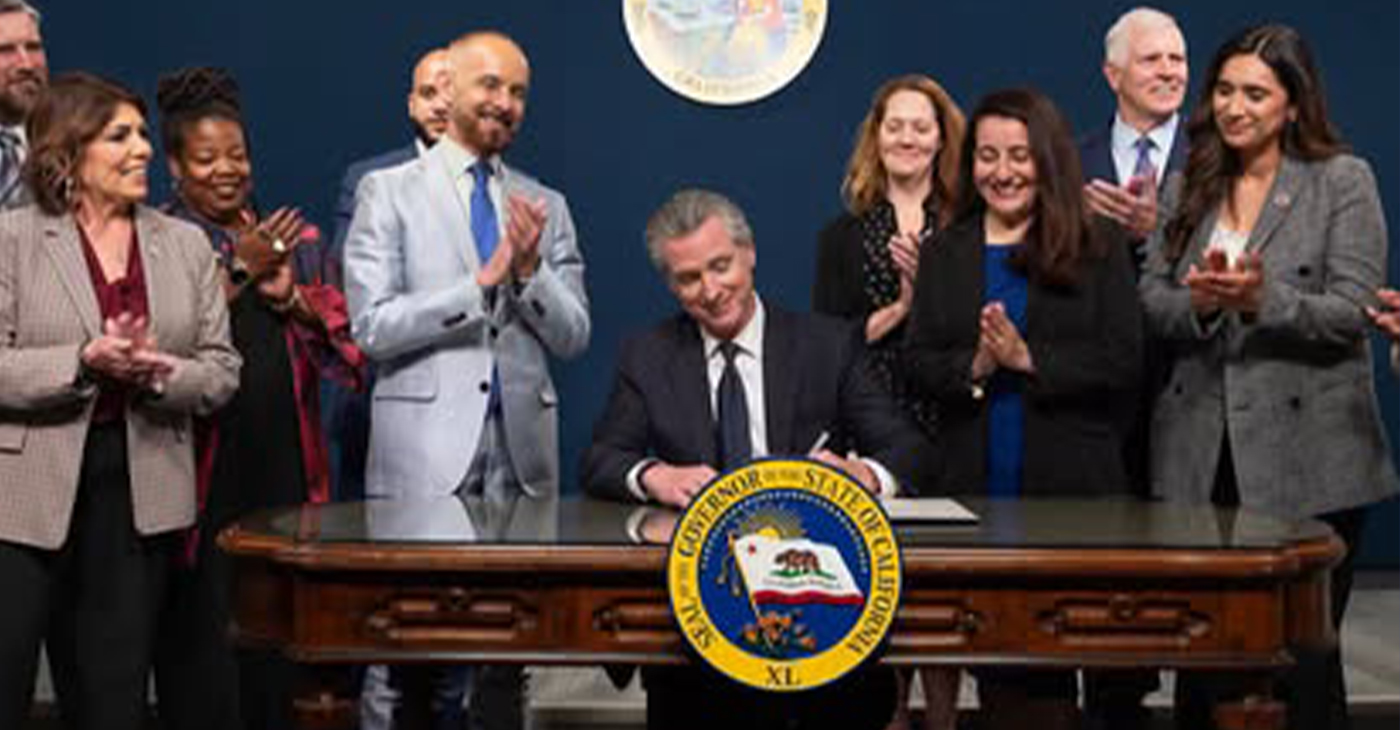
Gov. Gavin Newsom and Democratic legislative leaders announced a final agreement June 26 on California’s $355.9 billion 2026–27 state budget, saying the spending plan preserves health care and other essential services while eliminating projected deficits through the next two fiscal years.
The agreement between Newsom, Senate President Pro Tempore Monique Limón (D-Santa Barbara), and Assembly Speaker Robert Rivas (D-Hollister) balances the budget while maintaining investments in health care, education, housing, public safety and other priorities despite continued economic uncertainty and federal funding challenges.
“A balanced budget isn’t an end in itself — it’s how we deliver for Californians,” Newsom said. “This budget demonstrates responsible choices that protect our fiscal strength while continuing to invest in what matters most. In California, we support working families, create more opportunity, and build safer, healthier communities.”
The budget includes $300 million to lower health care costs, preserves $0 monthly health plans for many lower-income Californians, and helps offset higher insurance premiums resulting from the expiration of enhanced federal Affordable Care Act subsidies. It also protects funding for behavioral health programs and continues implementation of Proposition 1.
Other major investments include a record $2.4 billion in ongoing funding for special education, $5 billion for TK-12 schools, $500 million in Low-Income Housing Tax Credits, $200 million for affordable multifamily housing, a $100 million Disaster Rebuilding Fund, and new funding to strengthen election security, voter outreach and protections against misinformation. The agreement also preserves free school meals, universal transitional kindergarten, universal preschool, summer school programs and childcare slots.
Limón said lawmakers worked to shield Californians from federal spending reductions while strengthening the state’s finances.
“Today’s budget agreement reflects our commitment to protect core programs and address our short and long-term financial future by building up our rainy-day fund and making responsible budgeting choices,” Limón said. “I am also proud that the Senate was able to secure critical funding for childcare slots, safeguard access to care, and take significant steps toward ensuring large corporations pay their fair share.”
Rivas said the budget “protects health care, preserves food programs, invests in housing at record levels and builds reserves to fight back no matter what Trump and Republicans throw at us.”
Activism
At the event, 16 entities signed the EIP pledge, vowing to take steps to increase public contracting opportunities in their spheres for small and historically underutilized businesses. The pledge signees included Hub International, the Port of San Francisco, the San Francisco Public Utilities Commission, California High-Speed Rail Authority, the Port of Oakland, Robert Graham of Webcor Builders, Holder Construction, the Weitz Company, Sky Blue Builders, Hornblower, Swinerton, Luster National, Talson Solutions, Center for Community Wealth Building, and the Construction Contractors Alliance.

By Calvin Naito, Special to The Post
On June 4, a national nonprofit named the Equity in Infrastructure Project (EIP) – which aims to increase public construction contracting opportunities for small and historically underutilized businesses – held a day-long event in downtown San Francisco to rally supporters and build momentum to its cause.
It was attended by more than 100 individuals from public agencies, private firms, and other organizations committed to increasing contracting opportunities with governmental agencies, thereby creating more competition and lowering public costs.
The EIP event was held the Hyatt Regency San Francisco in conjunction with BuildIT, which aims to increase contracting opportunities for LGBT-owned businesses.
At the event, 16 entities signed the EIP pledge, vowing to take steps to increase public contracting opportunities in their spheres for small and historically underutilized businesses.
The pledge signees included Hub International, the Port of San Francisco, the San Francisco Public Utilities Commission, California High-Speed Rail Authority, the Port of Oakland, Robert Graham of Webcor Builders, Holder Construction, the Weitz Company, Sky Blue Builders, Hornblower, Swinerton, Luster National, Talson Solutions, Center for Community Wealth Building, and the Construction Contractors Alliance.
Following the workshop, BuildIT hosted a VIP evening reception honoring EIP, whose principals – Phil Washington, John Procari, and Rick Jacobs – accepted the award.

The event also set in motion the coalition’s efforts to implement recommendations from EIP’s “Procurement for Prosperity: A Playbook.”
The Playbook is a practical guide for public agency leaders and procurement and contracting practitioners to grow the capacity of small and first-time contractors, strengthen competition, and deliver better value for taxpayers.
Toks Omishakin, Secretary of the California State Transportation Agency (CalSTA), a long-time EIP supporter, also told attendees, “This is about commitment. This has been a life’s work. This is a tailwind moment.”
The event’s presenting sponsor was Hub International, one of the largest insurance brokerages in the nation, which was joined by partners Travelers Insurance and the State Compensation Insurance Fund.
After the pledge-signing ceremony, attendees participated in a workshop in which they examined the policies, practices, and programs needed to meet EIP goals, learned from practitioners, and identified next steps toward utilizing the Playbook.
Ingrid Meriwether, formerly of Merriwether & Williams Insurance Services (MWIS) and current president of Hub International’s Aligned Risk Management, MWIS, described the hard-fought lessons she and her MWIS team have learned over the last three decades administering contractor development programs (CDPs) for the City and County of San Francisco, Alameda County, City of Los Angeles, LA Metro, and other municipalities.
The CDPs help small and local construction firms win public infrastructure contracts with these government agencies. The program provides bonding assistance, contract financing, technical support, training, and other services to underrepresented businesses funded by public agencies who seek greater contracting participation with these firms.
Merriwether said programs like these “break down systemic barriers, create greater fairness, and save taxpayers money by enabling more competition. The contractor development programs have, cumulatively, over two decades, helped contractors access over $1 billion in bonding, supporting over $380 million in awarded contracts, and maintaining a loss ratio 250 times lower than the industry average – while saving participating municipalities more than $27 million in contracting costs as a result of enabling more competition.”
Rick Jacobs, EIP co-founder and co-chair urged attendees make plans to meet again in the near future “to continue building on this work, share progress on organizational commitments, and discuss how we can collectively advance the goals of the EIP pledge.”
For more information on the EIP and to access a copy of the Playbook, go online to https://equityininfrastructure.org/
Calvin Naito is communications manager for Equity in Infrastructure Project.



Asm. Corey Jackson Announces Launch of 24-Hour Childcare in His District

IN MEMORIAM: The Rev. Leon “Sonny” Clark, Longtime Orange County Pastor and Community Leader, Dies at 72

Poll: Becerra Widens His Lead Over Hilton; Californians Split on Wealth Tax

From Historic Memories to New Possibilities: Oakland Celebrates Coliseum 60

County Office of Education Says OUSD Finances Are Getting Healthier, Materially Stronger

LIVE FREE Sunday Dinner Brings Faith, Fellowship and Civic Conversation to Oakland

Remembering Chauncey Bailey as Student Journalists Face Threats to Truth-Telling

BLACspace Cooperative Invites Bay Area to Experience Oakland’s Black Cultural Ecosystem Through a BLAC Map Tour + Party

In Wake of Death on Doorstep, Williams Chapel Baptist Church Calls for Better Care, Funding for Unhoused

Oakland Centenarian Nuna McKee Honored!

Caribbean Nations Produce Action Plan Calling for UK Reparations Over Slavery

Oakland Post: Week of September 23 – 29, 2026

Doulas Are Helping Black California Moms Navigate Pregnancy–Even as High Mortality Rates Persist

Newsom Signs Addictive Social Media Law to Protect Kids

On Your November Ballot: Prop 38 Would Allocate $8.4 Billion to Immunology and Immunotherapy Funding

Standoff for Justice: Our Homes Are Worth Fighting For

Oakland Post: Week of August 26 – September 1, 2026

Frontier Airlines’ Return to Oakland Airport Brings Flights, Jobs and Opportunity

Gubernatorial Candidate Steve Hilton Blasts California New Tire Rules; Newsom Hits Back

Chef Sharon Lee Blends Culinary Excellence, Education and Empowerment

Jackie Wright Champions Bay Area Stories, Filmmakers and Cultural Institutions

Big City Mayors Ask for “Yes” Vote on Housing Bond Measure; Conservatives Say “No”

Oakland Coliseum Project Opens Door for Small Businesses to Build Bigger

Gov. Newsom’s Latest Appointees Include Sacramento Advocate for Formerly Incarcerated Students; State’s New Tech Chief

Misnamed ‘Parent’ PAC Seeks to Influence Oakland School Board Elections

Longtime BWOPA Member Brendalyn Goodall Appointed to California Workforce Development Board

Gov. Newsom Signs Law Shielding Immigration Aid Workers From Doxing Threats

Secretary of State Shirley N. Weber Urges Californians to Vote Early as Voter ID Battle Intensifies

From Palestine to Oakland: Seeds for Liberation Examines Shared Struggles for Freedom

IN MEMORIAM: Dolly Parton Dead at 80 — How She Built a Legacy of Love and Earned Her Place in Black Culture

The Conversation With Al McFarlane 6/23/26

Media Monday 6/22/26

LIVE! ASK ALMA! — TUES. 6.23.26 7PM EST

Car Buying Secrets: 4 Hidden Checks Before You Sign!

Is This 550 HP Charger Worth YOUR Money? AutoNetwork Review

Celebrating Juneteenth – Frederick Douglass on education and resistance

LIVE! — ASK ALMA! — TUES. 6.19.26 7PM EST

Hyundai Ioniq 5 Parking, Safety, and 360 View #shorts

2025 Ioniq 5 New Wiper & Powerful Performance! #shorts

Electric SUV Range: Is 259 Miles Enough? #shorts

EV Charging: How Fast Can You Charge an Electric Vehicle? #shorts

Biometric Cooling… Messaging Seats…Come on! 2025 Infiniti QX80 Autograph 4WD

Charged Up: Witness the Magic of a Fully Electric Car! #shorts

Range Rover Sport PHEV Included…: See What’s Inside This Luxury SUV! #shorts

Invisible Hood View: Perfect Parking with X-Ray Vision! #shorts
-
 Community2 weeks ago
Misnamed ‘Parent’ PAC Seeks to Influence Oakland School Board Elections
-

 Activism3 weeks ago
Oakland Post: Week of September 2 – 8, 2026
-

 Community2 weeks ago
Richmond Tiny House Village Farm & Garden Set to Open Gates on Sept. 26
-

 Black History2 weeks ago
Latest Massacre in Haiti Reveals Cruelty U.S. Deportations
-

 Activism2 weeks ago
Oakland Post: Week of September 9 – 15, 2026
-

 Black History2 weeks ago
OPINION: Nolan Wells’ Death One of Several Signifying Racial Terror Lives on in U.S. South
-

 Community2 weeks ago
Democratic Clubs Interview Candidates for Oakland School Board
-

 Featured2 weeks ago
‘Ready to See These Bills Become Law’: Sen. Weber’s Package of 15 Bills Advance to Gov. Newsom’s Desk
