
Art
Griot Theater Company Presents ‘The Queen of Cubs’ in Mill Valley
This play grapples with social justice issues and current events. Featured singers and performers will include the appearance of Rafiki the baboon as yoga instructor and tour guide.

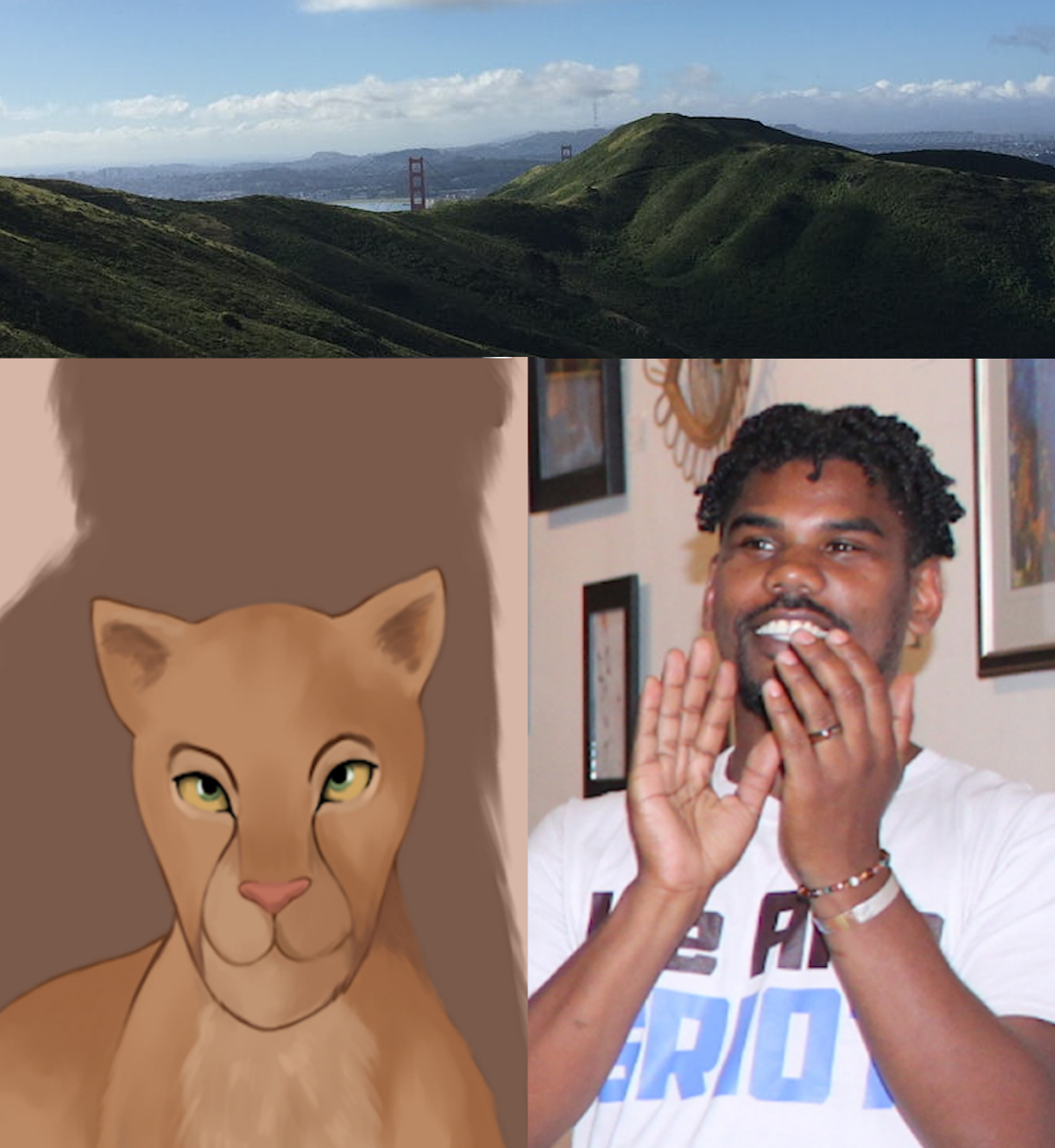
The Griot Theater Company will be presenting their play “The Queen of Cubs,” a theater adaption of Disney’s “Lion King,” on Saturday, July 18, at 11:00 a.m., 1:00 p.m., and 3:00 p.m. The play is an ‘exertainment,’ a combination of exercise and entertainment and will be presented on the Oakwood Valley – Alta Trail in Tennessee Valley in Mill Valley.

The “Queen of Cubs” play, co-written by Griot Theater Company Artistic Director LeShawn Darnell Holcomb, follows Nala’s story from cubhood to lioness-hood. Will she and the other lionesses survive her uncle’s tyranny or will they die from his antagonistic ways?
This play grapples with social justice issues and current events. Featured singers and performers will include the appearance of Rafiki the baboon as yoga instructor and tour guide.
Go to www.griottheatercompany.org for more information about Griot Theater Company and to get tickets for the play.











Art
Statue of ‘La Catrina,’ a Beloved Symbol of Dia de Los Muertos, Visits Oakland
Oakland is hosting a monumental 34-foot-tall sculpture of La Catrina at the Fruitvale Transit Village to mark the 31st annual Día de Los Muertos Festival. Handcrafted by master artisans from Mexico City, the massive figure traveled 2,000 miles to serve as a centerpiece for the city’s cultural celebrations. The statue, adorned with marigolds and monarch butterflies, symbolizes the migrant experience and the enduring connections between generations. The installation will remain on public display through early November, offering visitors a unique opportunity to engage with this iconic symbol of remembrance. Read more.

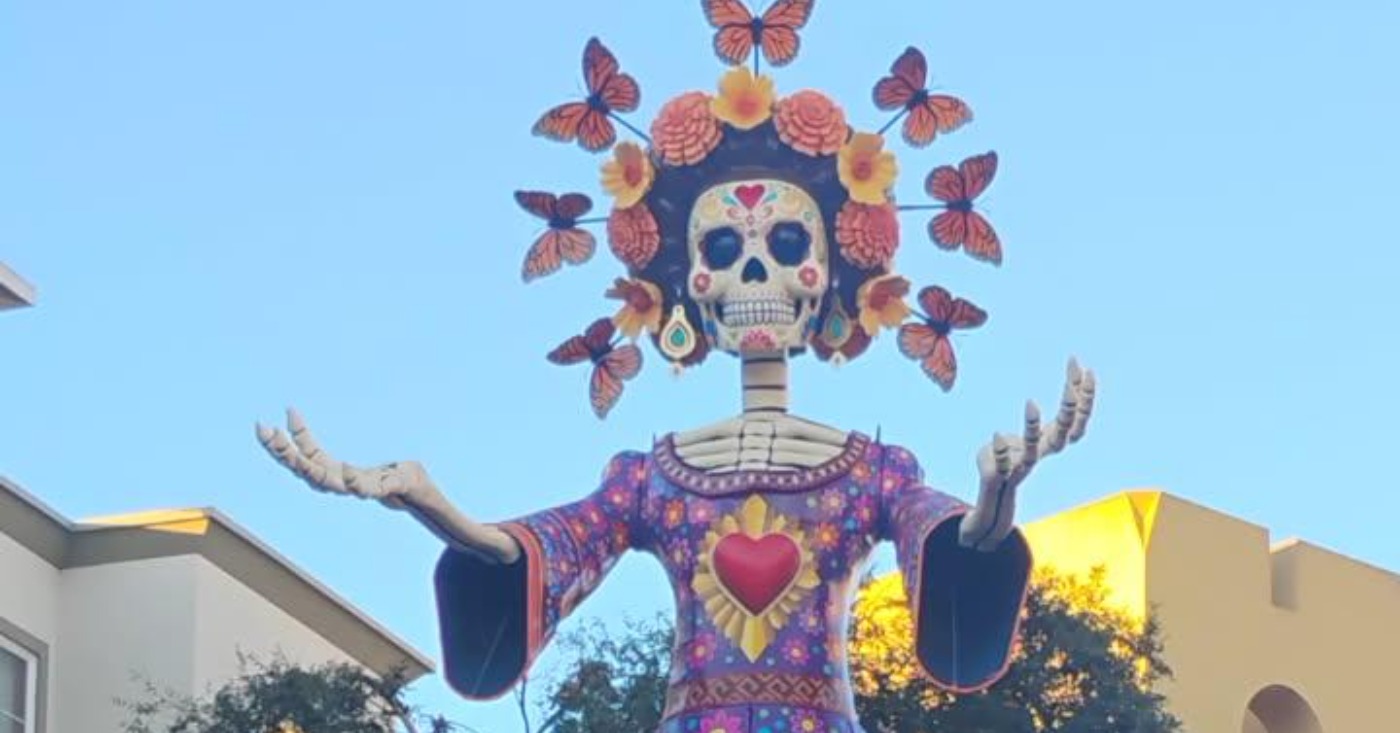
Every year, the Día de Los Muertos Festival brings people together in Oakland to honor those who came before us and to celebrate the bonds that unite the living and the dead.
For the festival’s 31st observation, the Unity Council, Visit Oakland, the City of Oakland, the Consulate of Mexico, renowned artist Romain Greco of Artsumex, and cultural leaders from Mexico City, commissioned a monumental 34-foot-tall sculpture of ‘La Catrina,’ handcrafted by master artisans from the Mexican capital.
The statue that arrived in pieces was unveiled on Sept. 22 and stands at the Fruitvale Transit Village, where she rises as an impressive symbol of Mexican culture, art, and the connection between Oakland and Mexico.
She will remain on display until Nov. 5, welcoming visitors and community members during various events, before becoming one of the main attractions of the Día de Los Muertos Festival on Nov. 1.
What does La Catrina symbolize?
La Catrina is one of the most recognized symbols of Día de Los Muertos. She represents the remembrance of our loved ones, the celebration of life, and the lasting connection between generations. Wearing a crown of orange marigolds, poppies, and monarch butterflies, the Oakland sculpture has her arms outstretched, as if she wants to embrace everyone who approaches her. This gesture symbolizes a warm welcome to the migrants who arrive in the Fruitvale community and expresses shared values such as inclusion, care, a sense of belonging, and cultural pride.
La Catrina also represents another kind of journey. She reflects the experiences of many families who have traveled north to the United States in search of safety, opportunity, and a better future. Her 2,000-mile journey from Mexico City to Oakland becomes a powerful metaphor for these migration experiences. Across borders, the sculpture carries memories, culture, and identity with her.
This story is deeply connected to the history of immigration in the United States, where generations of newcomers have sought opportunity while also helping to build and sustain their communities.
In California, migrants work in the fields, care for our families, build our neighborhoods, and enrich the cultural and economic life of the region. Their contributions are an essential part of the society we live in.
That is why La Catrina is much more than an impressive work of art. She reminds us of the journeys people make, the sacrifices they make, and the lasting contributions they offer to their communities. Her presence in Oakland celebrates Mexican roots, recognizes the migrant experience, and invites us to reflect on the essential role we all play in building a shared future.
The theme for this year’s festival is “La Lucha Continúa: Aquí estamos y no nos vamos” (The Struggle Continues: We Are Here and We’re Not Leaving). The free, family friendly festival is from 10 a.m. to 5 p.m. Sunday Nov. 1 along International Boulevard between Fruitvale and 34th avenues.

Art
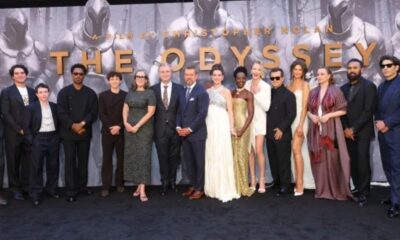
BLACspace Cooperative Invites Bay Area to Experience Oakland’s Black Cultural Ecosystem Through a BLAC Map Tour + Party
BLACspace Cooperative invites the Bay Area to experience Oakland’s Black cultural ecosystem through its BLAC Map Tour + Party on October 2. Presented as part of the Museum of the African Diaspora’s Nexus: SF/Bay Area Black Art Week, the event offers a guided field trip through creative and cultural spaces, followed by a celebration. Guests will explore the people and places shaping Black arts and culture across Oakland. The tour highlights BLACspace’s interactive guide to spaces stewarded by its members. Read more to learn about this unique event.
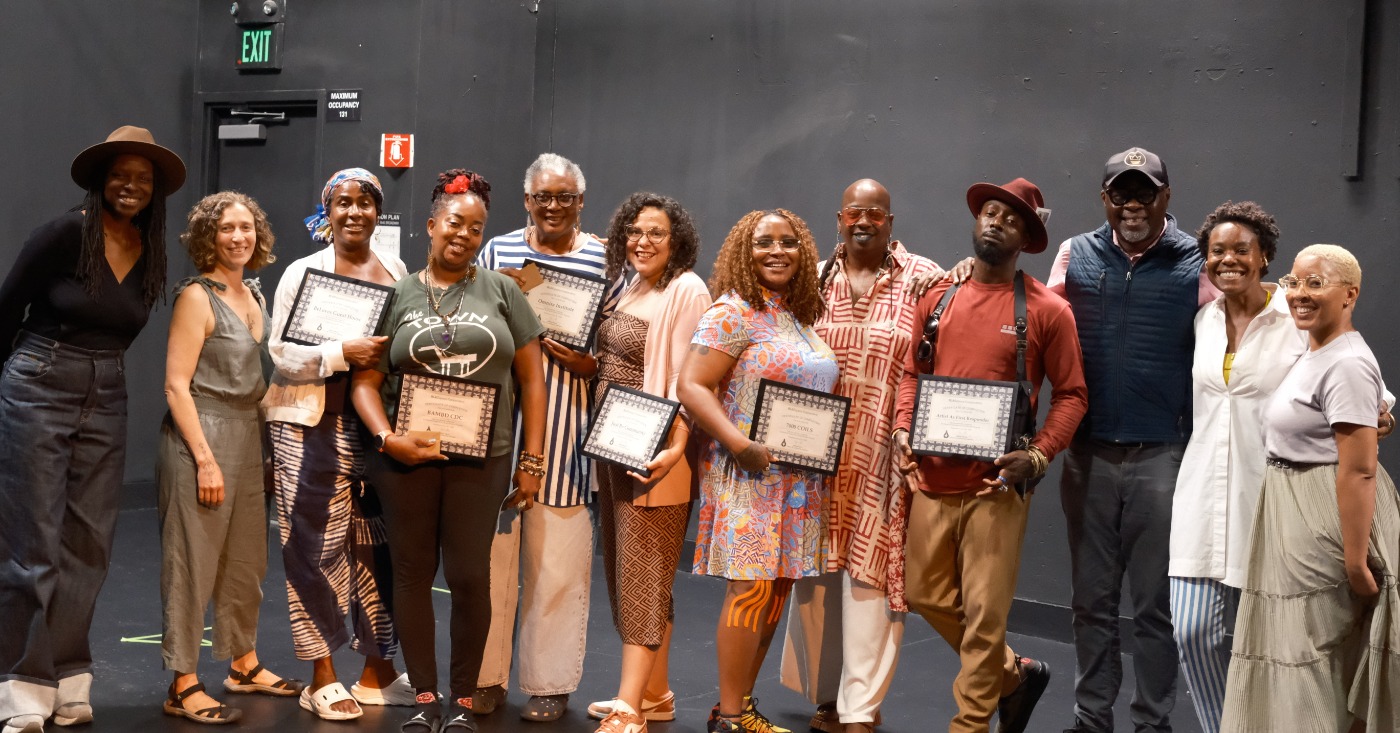
Presented as part of MoAD’s Nexus: SF/Bay Area Black Art Week, the October 2 experience takes guests inside the spaces, practices, and relationships that keep Black arts and culture rooted in Oakland
What does Oakland’s Black cultural ecosystem look like from the inside?
On Friday, October 2, BLACspace Cooperative will bring its BLAC Map to life with The BLAC Map Tour + Party, a two-part experience connecting artists, cultural workers, community partners, funders, and arts lovers with the people and places shaping Black arts and culture across Oakland and the greater Bay Area.
Presented as part of the Museum of the African Diaspora’s Nexus: SF/Bay Area Black Art Week, the day begins at MoAD at 685 Mission St. at 12 noon with a guided field trip through creative and cultural spaces connected to the BLACspace ecosystem.
Guests will travel together by bus from San Francisco to Oakland, stepping inside studios, cultural hubs, creative businesses, and gathering places while experiencing artist talks, exhibitions, film, music, movement, ancestral practice, and opportunities for conversation.
The Tour is an extension of The BLAC Map of Oakland, BLACspace’s interactive guide to creative and cultural spaces stewarded by members of its ecosystem. The map makes visible a network of people and places working to keep Black culture rooted in a city where displacement, rising costs, and shrinking arts funding continue to threaten cultural permanence.

“We call this work Cultural Reforestation,” said Zakiya Harris, Vision and Leadership steward of BLACspace Cooperative. “It’s about repairing, replenishing, and rooting Black arts and culture where it has been displaced, and creating the conditions for our cultural ecosystem to remain for generations to come.”
The Tour will move through several Bay Area cultural spaces, including Minnesota Street Project, The Barn, B-Love’s Guest House, Koo Labs Production & Design Center, BAM House, and BlaQyard, with experiences featuring members and collaborators across the BLACspace ecosystem.
At 5 p.m., the field trip gives way to The BLAC Map Party, a celebration of the ecosystem the Tour spent the day exploring. The evening invites the wider community to gather for music, food, art, cultural activations, an opening Ring Shout ceremony, and connection among Black artists, cultural workers, organizations, and the people who support their work.
The experience reflects BLACspace’s larger belief that the future of Black arts and culture requires cooperation.
As a Black arts and culture-promoting cooperative, BLACspace brings together artists, cultural workers, creative businesses, and organizations to share resources, relationships, knowledge, and stewardship.
Through membership, holistic business coaching, mutual aid, consulting, storytelling, and advocacy for cultural spaces, the cooperative is building infrastructure intended to strengthen Oakland’s Black cultural economy for the long term.
EVENT INFORMATION
The BLAC Map Tour + Party
Friday, Oct. 2
BLAC Map Tour: 12–5 p.m.
Begins at the Museum of the African Diaspora (MoAD)
685 Mission St., San Francisco
BLAC Map Party: 5–8 p.m.
Oakland, California
Party location provided to confirmed RSVP guests.
Tickets, RSVP information, and additional event details are available through BLACspace Cooperative at ABOUT BLACSPACE COOPERATIVE
About BLACspace Cooperative:
BLACspace Cooperative connects and cultivates an ecosystem of artists, cultural workers, creative businesses, and organizations shaping Black arts and culture. Through holistic business coaching, values-aligned consulting, shared stewardship, and advocacy for cultural spaces, BLACspace works to create the conditions for its ecosystem to remain rooted and thrive.
Its work is grounded in Cultural Reforestation: strengthening what is here, restoring what has been displaced, and building toward cultural permanence in Oakland and beyond for the next 100 years.
Adéniké Amin is the storytelling steward for BLACspace Cooperative. For media and other information, please reach out to adenike@blacspace.coop
Art
Misty Copeland Shapes Ballet’s Tomorrow
THE POSITIVE COMMUNITY — Misty Copeland will curate the 2026 Joyce Ballet Festival, a two-week event in New York City from August 4-16. This role allows her to influence the future of ballet by showcasing a wide range of dancers, choreographers, and companies. The festival will present both established and contemporary works, blending classical traditions with new artistic expressions.
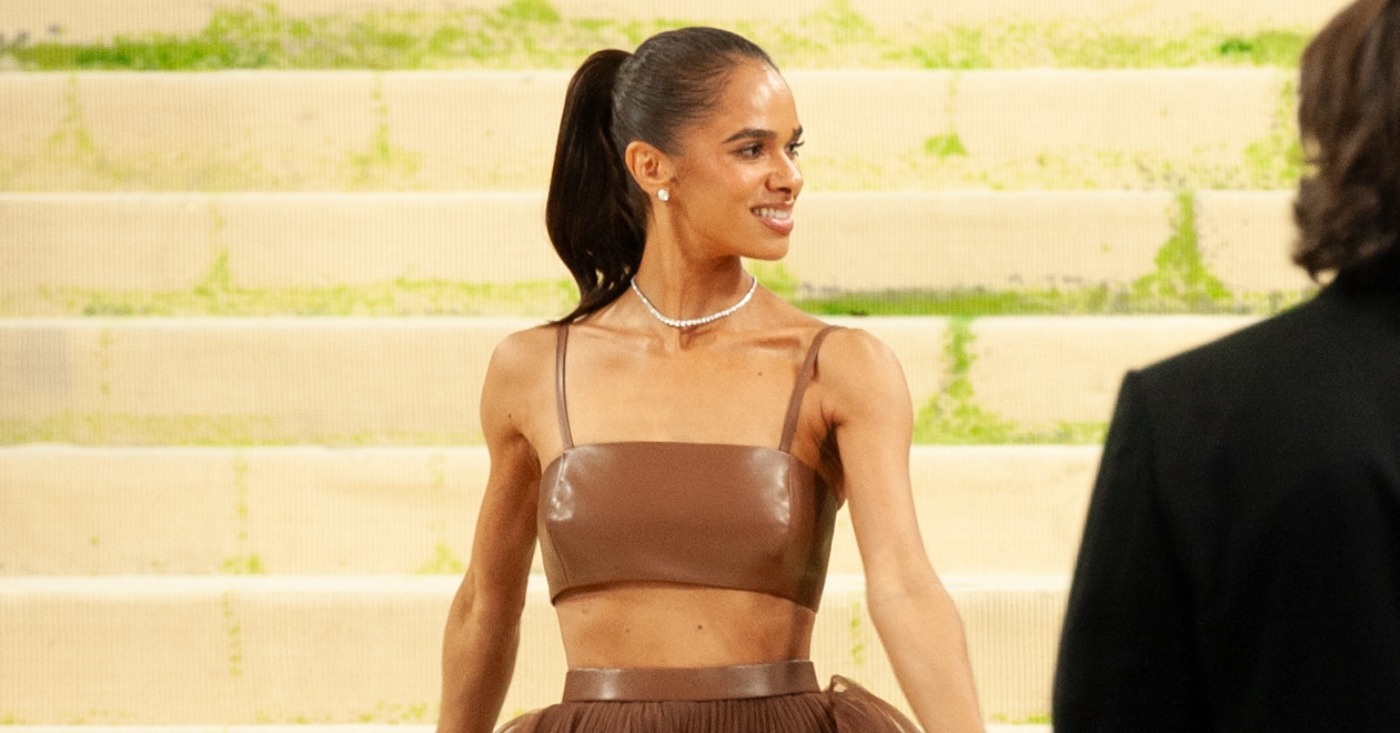
This summer, Misty Copeland will step into a different kind of spotlight. Instead of taking center stage as a dancer, she will help determine what audiences see onstage as curator of the 2026 Joyce Ballet Festival. Taking place August 4 through August 16 at The Joyce Theater in New York City, the two-week celebration will bring together dancers, choreographers and companies representing a broad spectrum of ballet. The festival gives Copeland an opportunity to share not only her appreciation for ballet’s traditions, but also her vision for its future.
Copeland understands better than most how powerful a ballet stage can be. Her historic career with American Ballet Theatre changed the conversation about representation in one of the world’s most traditional performing arts. When she became the company’s first Black woman to reach the rank of principal dancer, her achievement carried significance far beyond a personal milestone. It gave young dancers of color a new image of what was possible and challenged the industry to reconsider who belonged at the center of ballet.
That history informs the perspective she brings to the festival. Copeland has spent much of her career moving between performance, mentorship, advocacy and storytelling. Her curatorial role allows her to bring those interests together by creating a program that does not treat ballet as a museum piece. Instead, the festival presents dance as an evolving language capable of carrying classical traditions into new cultural and artistic territory.

Audiences will encounter a mixture of established works and contemporary creations during the festival. Classical ballet vocabulary will share space with choreography that pushes dancers toward different physical, emotional and theatrical possibilities. The result is intended to give audiences a broader understanding of the art form while demonstrating that tradition and innovation do not have to be competing forces.
The lineup also provides an opportunity to see dancers from different artistic environments. Performers connected to organizations including American Ballet Theatre, New York City Ballet, Paris Opera Ballet, Houston Ballet, Dance Theatre of Harlem and Complexions Contemporary Ballet are among those represented in the festival. Each company carries its own history and artistic identity, making their participation part of a larger conversation about the many ways ballet can be performed and interpreted.
The presence of Dance Theatre of Harlem is particularly meaningful within the larger story of Copeland’s career and the evolution of Black representation in ballet. Founded during a period when opportunities for Black dancers were severely limited, the company helped demonstrate that excellence and classical training could flourish in a Black cultural environment. Its legacy continues to influence dancers and audiences, making its connection to a festival curated by Copeland especially resonant.
The program also reaches beyond a single definition of contemporary ballet. Choreographers with different backgrounds and artistic philosophies contribute to an evening that can move from recognizable classical structures to works shaped by modern dance, theater, popular culture and new approaches to movement. That diversity reflects a generation of artists who increasingly see ballet not as a rigid vocabulary but as a foundation from which they can explore.
For New York audiences, the festival offers something that is increasingly valuable: the opportunity to experience outstanding dancers in an intimate setting. The Joyce is known for presenting dance in a theater where audiences can see movement and artistry up close. That environment can make a familiar ballet work feel newly personal while allowing experimental pieces to communicate with unusual immediacy.
Copeland’s role as curator also sends a message about the importance of artistic leadership. The people who select performers and choreography help determine which stories receive attention and which artists receive opportunities. By bringing a range of voices into the festival, Copeland is using that responsibility to broaden the conversation around ballet. Her choices can introduce audiences to artists they may not otherwise encounter while encouraging longtime ballet followers to look at the form from a different perspective.
The 2026 Joyce Ballet Festival ultimately arrives at an important moment for the art form. Ballet is carrying centuries of tradition into an era defined by changing audiences, broader representation and increasingly adventurous choreography. Copeland’s festival reflects that transition. For two weeks in August, The Joyce will become a meeting place for the familiar and the unexpected—a celebration of where ballet came from and a preview of where it may be going. And with Misty Copeland helping shape the conversation, the future of ballet promises to be as expansive as the dancers who are defining it.
Based on reporting by The Positive Community.


Native American Health Center Connects 140 Community Members to Career Opportunities During Native American Heritage Month

Oakland Chamber of Commerce Faces $42,000 Ethics Fine for Campaign Violation

Attorney General Bonta Serves Investigative Subpoena on Nvidia

A Record 216 Firearms Collected at East Oakland Gun Buy-Back Event

City Council Hearing Shines a Light on Failures of City’s Prompt Payment Policy

IN MEMORIAM: Claude T. Everhart, San Francisco’s First Black Deputy Mayor, Dies at 73

UC Doctors, Nurses and Community Rally to Demand ICE Out of UC Hospitals

Hypertension and Heart Disease: Doctors, Advocates and Patients Are Tackling the Leading Cause of Death for Black Californians

Marin City Is Especially Vulnerable to El Niño High Tides, Strong Winds, Flooding and Power Outages

‘We’re Committed to Delivering the Change that the American People Deserve’

Staying Ready: What Every Californian Should Know About Preparing for El Niño

Oakland Post: Week of November 18 – 24, 2026

Oakland Post: Week of November 11 -17, 2026

Alameda County Supervisor Miley to Propose Illegal Dumping Ordinance

Oakland City Council Extends AI Data Center Moratorium for 10 Months.

COMMENTARY: Valarie Bachelor and Jennifer Brouhard are Excellent School Board Members and Deserve to Be Reelected

OUSD Receives State Review of District Finances; Outlines Progress Since January

HISTORY MADE: Keisha Lance Bottoms Becomes First Black Woman Elected Governor in American History

SEIU Local 1000 and State of California Will Continue to Negotiate New Labor Contract

Golden State Valkyries Become Bay Area Legends Winning WNBA Championship on Halloween Night

Fate of Bay Area Public Transit Hinges on Regional Transit Measure

COMMENTARY: Your California Living Trust Could Be Next: When Evidence Isn’t Enough

Chase Launches Fraud & Scam Prevention Month

Democrats, Community Groups Back Measure EE to Change How Oakland Is Governed

Mayor Barbara Lee Holds Special State of the City Address in Deep East Oakland

Post News Group Nov. 3 Election Endorsements

It’s Time to Lose Weight Before the Holidays

Richmond Neighbors Put Pantry Power on the Map

From Backyard Grilling to Jack London Square: Jamale Carlyle’s Chicken Wing Success Story

Oakland Post: Week of October 7 – 13, 2026

The Conversation With Al McFarlane 6/23/26

Media Monday 6/22/26

LIVE! ASK ALMA! — TUES. 6.23.26 7PM EST

Car Buying Secrets: 4 Hidden Checks Before You Sign!

Is This 550 HP Charger Worth YOUR Money? AutoNetwork Review

Celebrating Juneteenth – Frederick Douglass on education and resistance

LIVE! — ASK ALMA! — TUES. 6.19.26 7PM EST

Hyundai Ioniq 5 Parking, Safety, and 360 View #shorts

2025 Ioniq 5 New Wiper & Powerful Performance! #shorts

Electric SUV Range: Is 259 Miles Enough? #shorts

EV Charging: How Fast Can You Charge an Electric Vehicle? #shorts

Biometric Cooling… Messaging Seats…Come on! 2025 Infiniti QX80 Autograph 4WD

Charged Up: Witness the Magic of a Fully Electric Car! #shorts

Range Rover Sport PHEV Included…: See What’s Inside This Luxury SUV! #shorts

Invisible Hood View: Perfect Parking with X-Ray Vision! #shorts
-
 Commentary3 weeks ago
COMMENTARY: Valarie Bachelor and Jennifer Brouhard are Excellent School Board Members and Deserve to Be Reelected
-
 Education3 weeks ago
OUSD Receives State Review of District Finances; Outlines Progress Since January
-
 Black History3 weeks ago
HISTORY MADE: Keisha Lance Bottoms Becomes First Black Woman Elected Governor in American History
-
 Business3 weeks ago
SEIU Local 1000 and State of California Will Continue to Negotiate New Labor Contract
-
 Community2 weeks ago
Golden State Valkyries Become Bay Area Legends Winning WNBA Championship on Halloween Night
-
 Business4 weeks ago
Fate of Bay Area Public Transit Hinges on Regional Transit Measure
-
 Business3 weeks ago
COMMENTARY: Your California Living Trust Could Be Next: When Evidence Isn’t Enough
-
 Business4 weeks ago
Chase Launches Fraud & Scam Prevention Month
