
Politics
Fauntroy’s Friends Lead Fundraising Drive


Walter Fauntroy
By Barrington M. Salmon
Special to the NNPA from the Washington Informer
WASHINGTON (NNPA) – Growing concern for the well-being of the Walter Fauntroy and his wife, Dorothy, has led a number of supporters and friends to rally around the couple in their time of need.
Fauntroy, 82, has been away in Dubai, the most populous city in the United Arab Emirates near the Persian Gulf, working on pulling together resources for some projects dear to his heart such as feeding the hungry, moving towards a green world and accomplishing world peace, said his lawyer Johnny Barnes.
Beginning March 25, Barnes said, the group, which includes E. Faye Williams of the National Congress of Black Women; Barry LeNoir of the National Black United Fund; Ward 8 Advisory Neighborhood Commissioner Keith Silver; radio personality and talk show host Joe Madison; the Rev. Dexter Nutall, pastor of New Bethel Baptist Church; and Denise Rolark Barnes, publisher of the Washington Informer; have led efforts to assist Fauntroy’s family.
“We’re raising money to pay off the mortgage on the home the Fauntroys have shared for the past half-century,” said [Johnny] Barnes, who is the couple’s personal attorney. “We’re starting to raise money. There will be a series of events not just in Washington but probably all over the country.
“We’re planning to raise funds beginning with a full-page ad in The Washington Informer. We’ll continue with the use of social media, electronic address books and so on. I’ve been very encouraged by the amount of support that we’ve received already. People have just been willing to help because he’s helped so many. His help was given at great personal sacrifice. He made a lot of money in his career but gave most of it away. He was always a source as a member of Congress. He made money speaking all over the country but used it for a necessary good. He didn’t plan for a future. Some would say that’s foolhardy. It’s a fabric we see but most can’t wear.”
Fauntroy is a civil rights legend, was a confidante of Dr. Martin Luther King, Jr., and served as a key figure in the city’s quest for autonomy and voting rights. He helped organize the historic March on Washington in 1963 and was active in the Free South Africa and anti-apartheid protests in the 1980s. While serving as D.C.’s delegate to Congress, he also pastored at New Bethel Baptist Church for many years.
In recent months, concern for him has ratcheted up with questions swirling about his whereabouts as well as his mental state.
Fauntroy’s nephew, Michael Fauntroy, recently posted this on Facebook: “I want to thank the many, many people who have reached out to me and the family in genuine friendship and concern regarding recent reports concerning the health and welfare of Rev. Walter E. Fauntroy. My uncle is a man of great faith and determination. He is also a man that has done so much for so many for so long. Whatever circumstances he faces in the winter of his life, we are confident that his great work has created a wonderful legacy that many people appreciate.
“As anyone with an 82-year-old relative traveling alone would be, we are concerned about his well-being. While we are uncertain of his current whereabouts, we remain hopeful that he is well and will return soon to his beloved District of Columbia, the city of his birth and where he built a deep reservoir of good will through a lifetime of service. We ask for his many friends to pray for him and his safe return to the District.”
Attorney Barnes, Fauntroy’s former chief of staff when he served in Congress, said he’s in touch with Fauntroy and sought to dispel a number of the rumors.
“I have had a regular stream of communication with the congressman by email, sometimes every day, and sometimes by telephone,” he said. “He sounds like the congressman to me. I’ve heard the rumors like you do but I’m a lawyer not a mental health expert. He sounds like the congressman who I worked with for 15 years and have known for more than 30.”
There have also been queries about where Fauntroy currently resides.
“I believe with all sincerity that he’s in Dubai. He has represented to me his lawyer, and his wife that he’s there,” Barnes said. “I have received packages from DHL addressed there and I have sent him packages.”
Any income Fauntroy’s receiving is coming from his pension and gifts from friends, he said. Barnes said he’s seen and heard news stories about Fauntroy’s passport being revoked by the State Department and the issuance of a bench warrant in Prince George’s County for a $50,000 bounced check.
“Based upon the indicators I have, the suspension of passport is a rumor,” Barnes explained. “He’s had three different passports: diplomatic, official and personal. He has never said to me, ‘I don’t have a passport.’ On the strength of the rumors, I checked public no-fly lists and he’s not on any of this. Homeland security has a private list. I can’t imagine him being on that no fly list. I treat that as rumor.
“He has indicated on several occasions that he’s coming home and he’s changed his mind. I don’t believe that any potential trouble he might have with would stop him from coming home. He doesn’t fear arrest. He genuinely believes he can accomplish his projects where he is. He’s a dreamer. He lives his life with the faith of a mustard seed.”
###














Books
Oakland Mayor Reads to Children at Bookout Block Party at Marcus Books Store
Booths lined the street with arts and crafts, and children participated in hands-on art projects. A large display of books was on display and each child chose his/her free book to take home. Food and snacks were available, and free water was encouraged to keep all hydrated.


Floating bubbles greeted families on arrival at the Bookout Block Party held on Sat. Sept. 12 at 39th and MLK Blvd. in Oakland.
Sponsored by Marcus Books and Storyland Collective, a wonderland of activity for children stretched to Longfellow School while live music filled the air, courtesy of KWC Complex Jazz Group.
Booths lined the street with arts and crafts, and children participated in hands-on art projects. A large display of books was on display and each child chose his/her free book to take home. Food and snacks were available, and free water was encouraged to keep all hydrated.
A large area of turf was filled with huge bean bags for jumping, rolling, and sitting to listen as families crowded close to listen to Oakland Mayor Barbara Mayor Barbara Lee read a book out loud.
Of the numerous booths present were, “Claim Your Scholarship,” a program for Oakland Public School students and “VOLUNTEER NOW,” a program encouraging volunteers to help boost reading proficiency. Individuals sold their art and products. Free gifts were at many tables and a raffle was held.
The event with Marcus books culminated a summer-long program organized by Storyland Collective, a literacy arts organization bringing children’s ‘storytime,’ local authors, and art activities to Bay Area neighborhoods. Marcus Books is the oldest, independent Black-owned book store in the U.S., featuring books by and about Black people here and abroad.

Business
Attorney General Rob Bonta Continues Opposition to President Trump’s Tariff Regime
“President Trump is so intent on raising the cost of living for Americans that he is willing to break law after law to continue his tariff regime,” said Bonta.
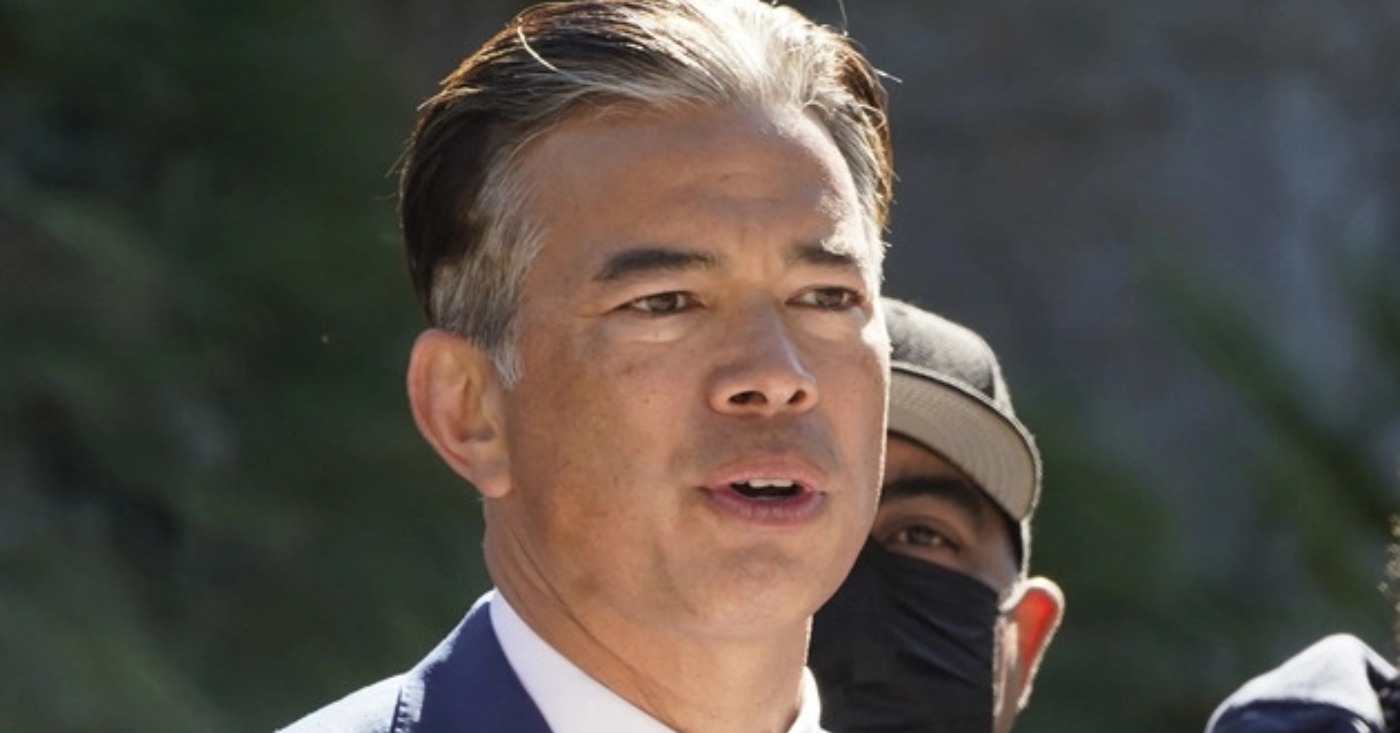
California Attorney General Rob Bonta, as part of a coalition of 25 states, filed an amicus brief in the Court of International Trade in Learning Resources v. Trump, a case challenging President Trump’s latest “unlawful” attempt to tax the states and American consumers through illegal tariffs, according to a media release issued by the California Department of Justice.
In the brief, Bonta argues the latest round of tariffs levied under Section 301 of the Trade Act of 1974 are pretextual and are not targeted to address the purported harms of forced labor, as that statute requires, but instead are designed to re-create the tariffs already declared illegal by various courts.
Last month, Bonta and the coalition filed a lawsuit challenging the administration’s decision to impose these tariffs on over 80 countries that together account for 99.4% of all U.S. imports — costs that will be passed along to Americans already struggling with affordability.
“President Trump is so intent on raising the cost of living for Americans that he is willing to break law after law to continue his tariff regime,” said Bonta.
“Imposing these tariffs under Section 301 has nothing to do with forced labor and everything to do with continuing the President’s failed economic policy and reimposing the global tariffs that the Supreme Court invalidated,” he continued.

“We urge the Court of International Trade to declare the president’s tariffs under Section 301 illegal. Tariffs are taxes, and the American people cannot and should not shoulder the extra costs that come from the president’s illegal tariffs.”
Business
Oakland Launches Aerbits Program to Identify, Report Abandoned Trash
“Aerbits, which was approved by the Privacy Advisory Commission, uses modern technology and best practices to help our crews clear trash faster and more efficiently, while our targeted outreach and enforcement strategies address the root causes of dumping. Together, we are going to get the job done.”
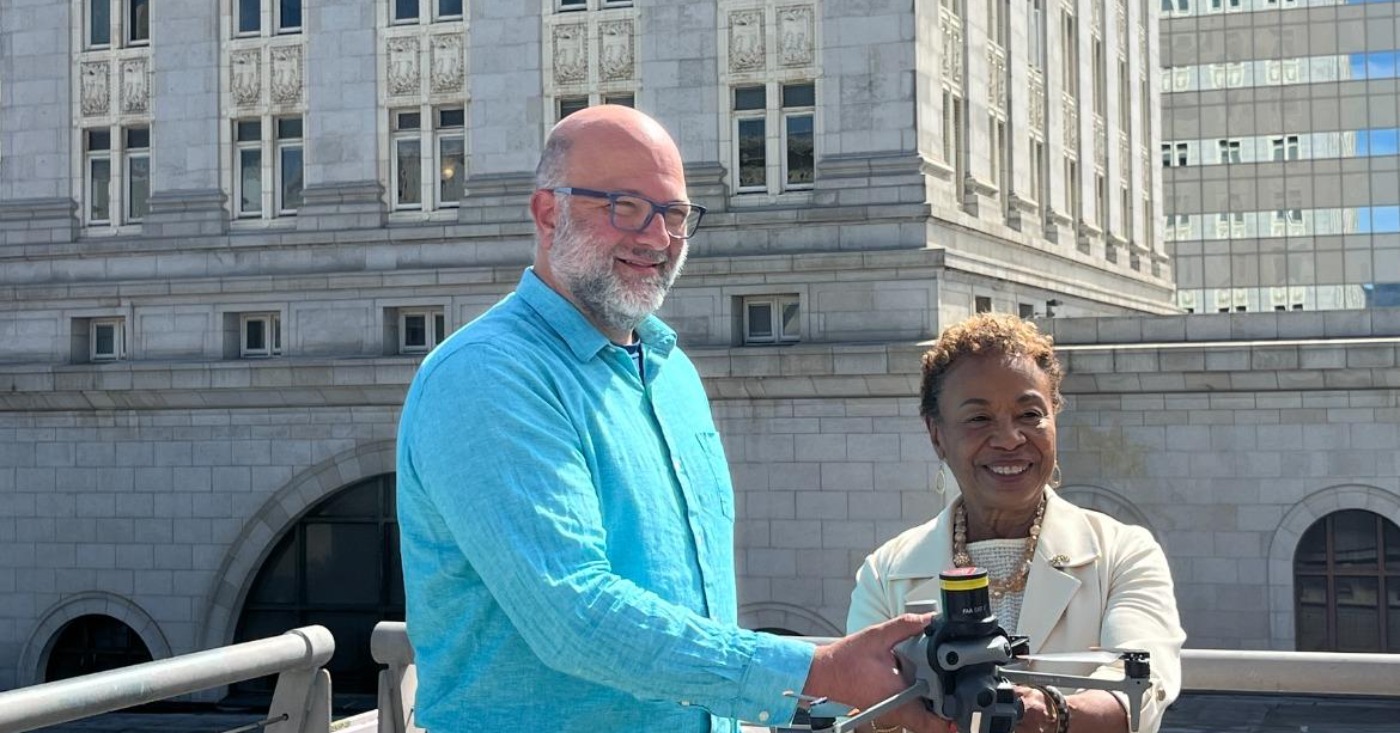
On Tuesday, the City of Oakland launched Aerbits, an innovative new program that deploys AI-assisted aerial imaging technology to proactively detect and report abandoned trash on streets and sidewalks – to support timely and effective removal of illegal dumping.
By shifting from a reactive, complaint-based system to data-driven proactive detection, the City can deploy cleanup resources faster, more efficiently, and more equitably to the areas in greatest need.
Approved by both the Privacy Advisory Commission and the Oakland City Council, Aerbits is the latest addition to Oakland’s comprehensive strategy to eliminate illegal dumping from the Town.
“Oakland residents and businesses deserve clean streets and today we are one step closer to a safer, cleaner, and greener Oakland,” said Mayor Barbara Lee. “Our strategy strengthens eradication, education, and enforcement efforts across every neighborhood.
“Aerbits, which was approved by the Privacy Advisory Commission, uses modern technology and best practices to help our crews clear trash faster and more efficiently, while our targeted outreach and enforcement strategies address the root causes of dumping. Together, we are going to get the job done.”
The impacts of illegal dumping on Oakland are profound, disproportionately burdening historically disinvested communities while threatening public health, safety, and economic vitality.
The City is united in taking action to remedy it – with the mayor, Council, administration, Public Works Department, community groups and more coming together to make change.
In May, the City Council approved the Illegal Dumping Expenditures Action Plan, which approves and funds multiple actions – including Aerbits – to help remedy illegal dumping.
This past June, Oakland secured $9.2 million from the Crankstart Foundation to scale up operations like Aerbits and break the cycle of illegal dumping across Oakland.
The Aerbits aerial imaging system photographs public rights-of-way to pinpoint exact locations, estimate waste volumes, and classify types of debris. This enables City dispatchers to understand the problem and efficiently deploy the appropriate crew and equipment to each site.
Built with privacy at its core, the technology contains no facial recognition, no license plate readers, and uses no personally identifying information. Aerbits takes pictures of trash – not of people.
“I founded Aerbits because I saw a major gap in the data that was available to City crews on the streets, and I wanted our children to have a cleaner environment” said Aerbits Founder Brian Johnson.
“Aerbits enables cleanups to be timelier, more effective, and more equitable. By providing real-time comprehensive data, automating the creation of work orders, and improving closure of cleared tickets, we are removing the problems that occur when relying primarily on a complaint-based system,” he said.
Aerbits is the latest milestone in the series of actions the City is taking to implement the City Council-approved Illegal Dumping Expenditures Action Plan. Recent actions taken by the City include:
- Stricter Enforcement: Enacted a new Illegal Dumping Enforcement Ordinance increasing penalties and holding vehicle owners responsible; hired additional Environmental Enforcement Officers equipped with updated citation technology; and worked alongside State Senator Jesse Arreguin on legislation that allows the City to boot vehicles tied to repeat dumping offences.
- Community Resources: Reinstated the popular “Bulky Block Parties” offering residents free, convenient ways to get rid of bulky waste, alongside expanded public education campaigns.
- Expanded Fleet Equipment: Obtained new heavy-duty Lightning Loader trucks that allow us to clean up more volumes of debris faster than ever before.
Rebecca Kaplan is a former City Councilmember-at-large for the City of Oakland.



Oakland Mayor Reads to Children at Bookout Block Party at Marcus Books Store

Tradition Comes to the Streets in 11th Annual Black-Eyed Pea Festival at the Freedom Farmers Market

Attorney General Rob Bonta Continues Opposition to President Trump’s Tariff Regime

Neighborhood Empowerment Day in Deep East Oakland Brings Community Together After Recent Tragedy

Community Action Group ‘Friends of Zakiya’ Ask Sheriff for Time

Oakland Launches Aerbits Program to Identify, Report Abandoned Trash

Mayor Lee Announces $1 Million Kaiser Permanente Grant for Pilot Program to Address Homelessness, Clean Up Public Spaces throughout Oakland

Alameda County DA Ursula Jones Dickson Says Key to Optimal Use of DA’s Office Is Knowledge

Oakland Post: Week of September 16 – 22, 2026

NFL: Week Two Recap | Jalen Hurts did not fold; Caleb Williams exits game with injury

The Complete Negotiation Framework — Every Stage, Every Tactic, Every Win

Mazda CX-90 Luxury: Heated Seats & Premium Comfort! #shorts

Car Dashboard Glare: Avoid This Distraction! #shorts

Mazda CX-90 Safety: All Driver Assistance Features Explained #shorts

Subaru Outback: 19-Inch Wheels & 8.8″ Ground Clearance! #shorts

Department of Homeland Security Demands California Secretary of State Shirley N. Weber Scrub Voter Rolls

“The Power to See Threats Sooner”: Gov. Newsom, Safety Officials Showcase California’s Investments in Hi-Tech Wildfire Prevention

California Sen. Padilla Joins Colleagues to Introduce Bill Imposing Term Limits on Supreme Court Justices

Less Affluent School Districts, Including Sacramento City, Face Threat of State Takeover

Car Wash Workers Cope with Lingering Impacts of ICE Raids

ESSAY: California Can Close Its Colorectal Cancer Gap

As Part of Your Back-to- School Checklist, Vaccinate

Oakland ‘Port Serves as a Powerful Engine for Good Jobs and Economic Development

Gov. Newsom Announces $109.6 Million in Funding for 278 Supportive Homes in Bakersfield, Contra Costa, Sacramento and Fresno

California Hispanic Chambers of Commerce Unveils: ‘Powering the Future’ Theme for 47th Annual Statewide Convention

Congresswoman Simon Demands Investigation into Trump’s Abuse of Emergency Powers for Coal Export Terminal in West Oakland

Four Candidates, Including Incumbent Barbara Lee, Qualify for Oakland Mayor’s Race

Oakland Post: Week of August 12 – 18, 2026

From Blueprint to Breakthrough: Tackling Affordable Housing in Oakland

Oakland Observes Black August with Block Parties, Film Showings, Workshops

The Conversation With Al McFarlane 6/23/26

Media Monday 6/22/26

LIVE! ASK ALMA! — TUES. 6.23.26 7PM EST

Car Buying Secrets: 4 Hidden Checks Before You Sign!

Is This 550 HP Charger Worth YOUR Money? AutoNetwork Review

Celebrating Juneteenth – Frederick Douglass on education and resistance

LIVE! — ASK ALMA! — TUES. 6.19.26 7PM EST

Hyundai Ioniq 5 Parking, Safety, and 360 View #shorts

2025 Ioniq 5 New Wiper & Powerful Performance! #shorts

Electric SUV Range: Is 259 Miles Enough? #shorts

EV Charging: How Fast Can You Charge an Electric Vehicle? #shorts

Biometric Cooling… Messaging Seats…Come on! 2025 Infiniti QX80 Autograph 4WD

Charged Up: Witness the Magic of a Fully Electric Car! #shorts

Range Rover Sport PHEV Included…: See What’s Inside This Luxury SUV! #shorts

Invisible Hood View: Perfect Parking with X-Ray Vision! #shorts
-

 Commentary3 weeks ago
Standoff for Justice: Our Homes Are Worth Fighting For
-

 Activism3 weeks ago
Oakland Post: Week of August 26 – September 1, 2026
-

 Business3 weeks ago
Gubernatorial Candidate Steve Hilton Blasts California New Tire Rules; Newsom Hits Back
-

 Business3 weeks ago
Frontier Airlines’ Return to Oakland Airport Brings Flights, Jobs and Opportunity
-

 Business3 weeks ago
Chef Sharon Lee Blends Culinary Excellence, Education and Empowerment
-

 Education3 weeks ago
Gov. Newsom’s Latest Appointees Include Sacramento Advocate for Formerly Incarcerated Students; State’s New Tech Chief
-

 Business3 weeks ago
Oakland Coliseum Project Opens Door for Small Businesses to Build Bigger
-

 Community3 weeks ago
Big City Mayors Ask for “Yes” Vote on Housing Bond Measure; Conservatives Say “No”
