
Opinion
Let’s Not Censor Dr. King’s Life Even As We Glorify Him

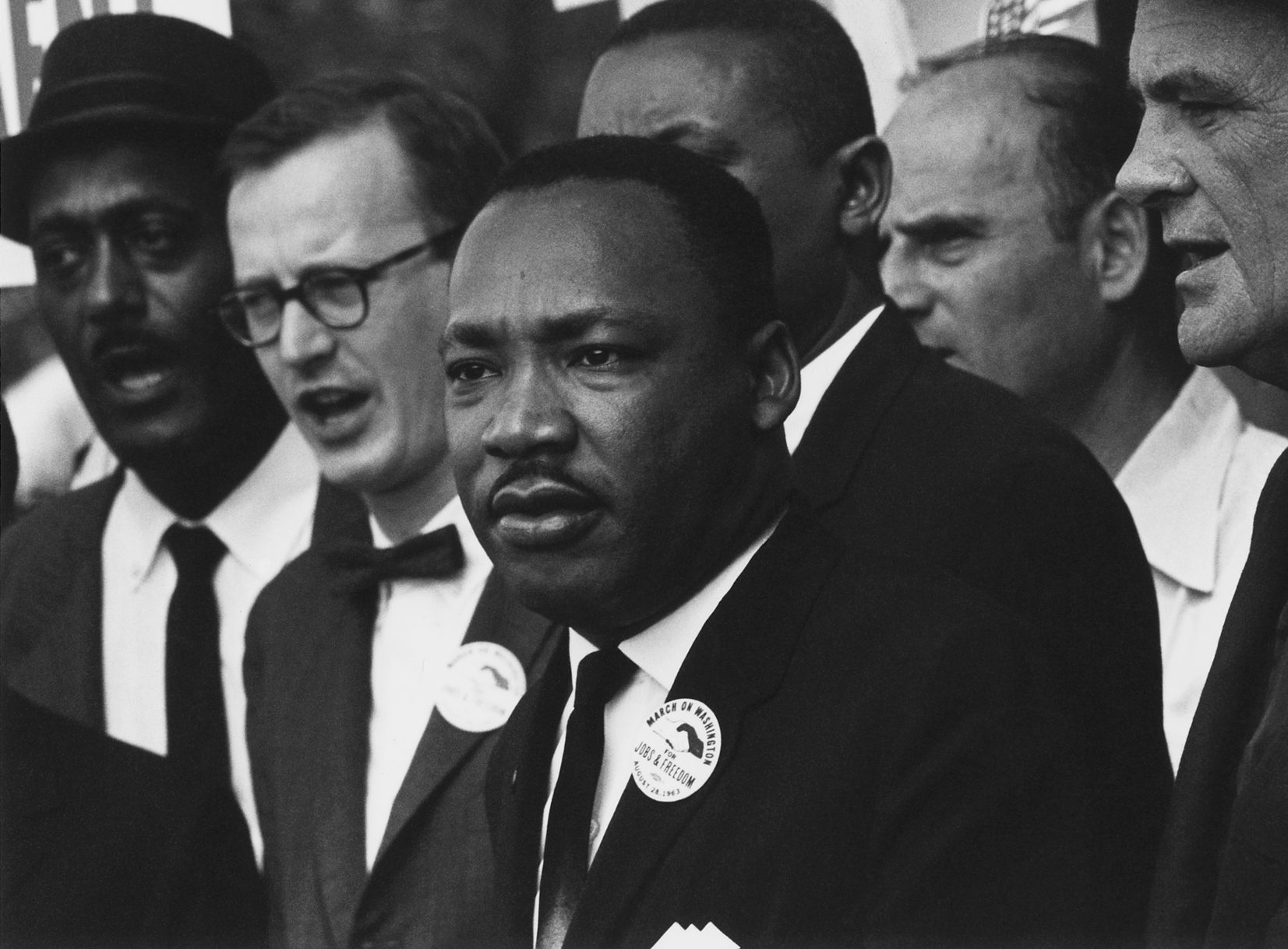
As another year passes with celebrations marking the birthday of Dr. Martin Luther King, I worry about the dangers of neutering Dr. King’s life, turning him into a “dreamer” who became a martyr.
We shouldn’t forget that Dr. King was a leader, a man of conscience and of action. He sought to transform America and that forced him to be a disrupter—and to bear the wounds of being unpopular in a just cause.
With segregation the law of the land and voting rights suppressed, Dr. King understood the only way change would come would be by disrupting an unjust system. He believed in nonviolence, but not in passivity. One of my favorite quotes of Dr. King was when he was asked what his favorite demonstration was. “This week’s,” he responded, even as he planned for the next week’s demonstrations.
Dr. King opposed those who equated quiet with peace. We were told to be quiet at the back of the bus, quiet in the face of oppression. He understood that true peace came only with justice, and justice could not be achieved without disruption.
He was not an idle dreamer; he was clear about wanting to amass power. He emphasized the drive for the Voting Rights Act, to protect the power of the vote, because that would give African Americans the power to change their conditions.

Consider the 2016 election, where Donald Trump lost the popular vote nationally, but won the electoral college by the margin of less than 80,000 votes in three key states; Michigan, Wisconsin and Pennsylvania. 10,704 in Michigan, 22,177 in Wisconsin and 46,765 in Pennsylvania.
In each state, eligible African American voters could have changed the election if they had turned out to vote. In 2020, Dr. King would be leading efforts to register new voters in numbers larger than those margins as a measure of their power. There are more 18-year-old voters than 81-year-old voters. If they register and vote, they can change the course of history.
Dr. King was fearless in the cause of justice. He realized early that the war in Vietnam was an unjust folly that would not be won. The cost of that war was draining the funds from the war on poverty at home. He came out publicly against the war in a dramatic speech at Riverside Church, publicly criticizing the Democratic president, Lyndon Johnson, with whom he had worked to achieve the end of segregation and the Voting Rights Bill.
He was savaged by the establishment media and criticized by leading liberals. Black leaders spoke out against him. At the height of the controversy, he was seen unfavorably by three-fourths of whites, and as “irrelevant” by a majority of blacks. The FBI intensified its covert operations against him, deeming him a national security threat. He was deluged with threats of assassination.
He knew he would spark a fierce reaction but realized that he had no choice but to speak. The Vietnam debacle would divide the country and eliminate any hope of rebuilding at home.
Dr. King, of course, was proven right. He was right about the injustice of segregation and of efforts to suppress voting rights. He was right about the need for economic justice in the United States, for basic economic rights that would extend to people of all races. He was right about the need for a war on poverty rather than war abroad. And he was right that the Vietnam War was a costly, unjust debacle that could never be won. Many more knew that he was right, but too few had the courage of their convictions, the courage to speak out, the commitment to action to make things better.
Let us not censor Dr. King’s life even as we glorify him. What made him remarkable wasn’t his dream, but his willingness to sacrifice, to act, to work to make that dream real. Those who would seek to emulate Dr. King would be well advised to launch voter registration and get out the vote drives. Use the power that he helped provide to build even more power, and more justice.






Activism
Oakland Post: Week of August 12 – 18, 2026
The printed Weekly Edition of the Oakland Post: Week of August 12 – 18, 2026


To enlarge your view of this issue, use the slider, magnifying glass icon or full page icon in the lower right corner of the browser window.

Activism
Oakland Post: Week of August 5 – 11, 2026
The printed Weekly Edition of the Oakland Post: Week of August 5 – 11, 2026
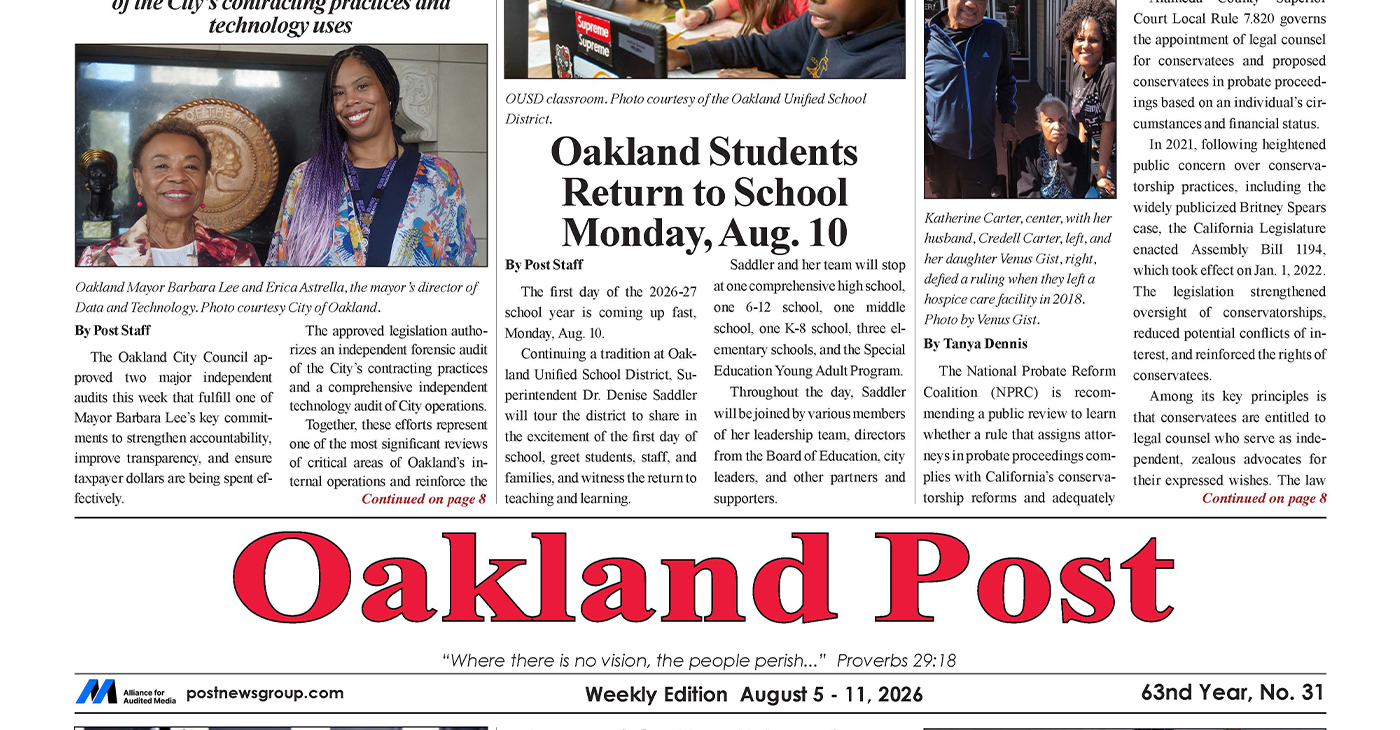
To enlarge your view of this issue, use the slider, magnifying glass icon or full page icon in the lower right corner of the browser window.
#NNPA BlackPress
COMMENTARY: Jim Crow 2.0 at the Pentagon
BLACKPRESSUSA NEWSWIRE — The American people are expected to believe that one extraordinary officer after another suddenly fails to meet some undefined standard of excellence. We are expected to ignore impeccable service records while accepting that political appointees alone possess the wisdom to determine who is worthy of advancement.


Pete Hegseth insists that he is restoring “merit” to the United States military. But after months of dismissals, blocked promotions, and ideological purges, the evidence tells a different story. His campaign against so-called “diversity, equity, and inclusion” has become something far more dangerous: an assault on equal opportunity that falls with particular force on African Americans, while also targeting women, Latinos, gay Americans, and transgender service members.
The latest example is both troubling and infuriating.
Once again, Defense Secretary Pete Hegseth has reportedly blocked the promotion of an exceptionally qualified woman—Rear Admiral Amy Bauernschmidt. Bauernschmidt is no ordinary officer. She became the Navy’s first woman to command a nuclear-powered aircraft carrier, one of the most demanding leadership assignments in the world. Her career reflects decades of exemplary performance, operational excellence, and leadership under extraordinary pressure.
Yet once again, a distinguished military career appears to have been subordinated to an ideological agenda masquerading as “merit.”
I call BS!
The American people are expected to believe that one extraordinary officer after another suddenly fails to meet some undefined standard of excellence. We are expected to ignore impeccable service records while accepting that political appointees alone possess the wisdom to determine who is worthy of advancement.

The pattern has become impossible to ignore.
General Charles Q. Brown Jr., only the second African American to serve as Chairman of the Joint Chiefs of Staff, was dismissed despite a career that placed him among the most accomplished military leaders of his generation.
Admiral Lisa Franchetti, the first woman ever to serve as Chief of Naval Operations, was removed despite decades of distinguished command experience.
Reports have documented interventions that blocked or delayed the promotions of Black officers and women selected through the military’s rigorous promotion system.
Now Rear Admiral Amy Bauernschmidt joins the growing list of highly accomplished officers whose careers have been derailed for reasons that have never been persuasively explained.
Where is Congress?
Its silence has become deafening.
Congress has an independent constitutional responsibility to oversee the armed forces. Instead, too many lawmakers have watched silently while one of the nation’s most respected institutions is subjected to ideological litmus tests and political interference.
This is not military reform. It is testosterone-fueled performative masculinity disguised as a philosophy of military excellence.
The irony is impossible to miss. Hegseth repeatedly invokes “merit,” yet his rhetoric begins with the assumption that Black officers, women, and other historically excluded Americans must somehow justify their achievements in ways that white male officers are rarely required to do.
That is not meritocracy. It is prejudice wrapped in patriotic language.
No one is asking that anyone be promoted because of race or gender. Americans simply expect that promotions be based on demonstrated competence, leadership, integrity, and service. The officers being targeted have already proven themselves repeatedly under one of the world’s most demanding evaluation systems.
Their records speak for themselves.
The attack on African American military leadership has been especially pernicious.
For generations, Black Americans fought in segregated units, earned decorations while denied equal treatment, and repeatedly demonstrated loyalty to a nation that often failed to extend them full citizenship. They broke barriers not because standards were lowered but because excellence finally overcame institutional discrimination.
Today’s campaign against “diversity” threatens to revive old assumptions under new slogans.
The implication that Black generals and admirals somehow owe their success to affirmative action rather than extraordinary performance echoes some of the ugliest stereotypes of the Jim Crow era. Yesterday’s segregationists claimed Black Americans were inherently less qualified. Today’s culture warriors simply employ more politically acceptable language while inviting the same suspicion about Black achievement.
That is why Hegseth’s campaign increasingly resembles Jim Crow 2.0.
The targets may now wear stars on their shoulders instead of military patches on segregated uniforms, but the underlying message is hauntingly familiar: Black excellence is presumed suspect, while white excellence is presumed earned.
America’s military became the finest fighting force in history because it opened its doors to talent wherever it could be found. It grew stronger after President Truman desegregated the armed forces. It became stronger when women assumed greater command responsibilities. It became stronger when every qualified American was given the opportunity to serve to the fullest extent of their abilities.
Diversity is not a concession. It is a strategic advantage.
The nation’s adversaries do not fear an American military because it is racially homogeneous. They fear it because it draws upon the talents of more than 340 million Americans whose diverse experiences, perspectives, and abilities make our armed forces unmatched anywhere in the world.
Every politically motivated dismissal of a distinguished officer sends a chilling message throughout the ranks: excellence alone may no longer be enough if you belong to the wrong demographic group.
That weakens morale. It weakens recruitment. It weakens retention.
And ultimately, it weakens national security.
Pete Hegseth has every right to pursue military readiness. He has no right to redefine merit in ways that repeatedly cast suspicion upon the accomplishments of Black officers, women, and others who have devoted their lives to defending this nation.
America deserves better. The men and women who wear the uniform deserve better. The Constitution deserves better.
And unless Congress finds the courage to exercise meaningful oversight, history may well remember this period not as a restoration of military excellence, but as the moment political ideology attempted to resurrect, in modern form, the old poison of exclusion.
Jim Crow did not strengthen America. Jim Crow 2.0 will not strengthen America’s military. It will only diminish it
Wade Henderson
Strategic Advisor
Civil and Human Rights
wade@wadejhenderson.com


WORK FROM HOME
Home-based business with potential monthly income of $10K+ per month. A proven training system and website provided to maximize business effectiveness. Perfect job to earn side and primary income. Contact Lynne for more details: Lynne4npusa@gmail.com 800-334-0540


Four Candidates, Including Incumbent Barbara Lee, Qualify for Oakland Mayor’s Race

Oakland Observes Black August with Block Parties, Film Showings, Workshops

Oakland Post: Week of August 12 – 18, 2026

COMMENTARY: Why Local School Tax Measure G1 Will Not Be on the November Ballot

California Hispanic Chambers of Commerce Unveils: ‘Powering the Future’ Theme for 47th Annual Statewide Convention

Returning to Its Roots, the Oakland Black-Eyed Pea Festival Partners with the Freedom Farmers Market Sept. 12

Less Affluent School Districts, Including Sacramento City, Face Threat of State Takeover

From Blueprint to Breakthrough: Tackling Affordable Housing in Oakland

NPRC Scores First Advocacy Victory: David Shaw Finally Gets His Wish to ‘Go Home’

ESSAY: California Can Close Its Colorectal Cancer Gap

Car Wash Workers Cope with Lingering Impacts of ICE Raids

Misty Copeland Shapes Ballet’s Tomorrow

As Part of Your Back-to- School Checklist, Vaccinate

As Part of Your Back-to- School Checklist, Vaccinate

Congresswoman Simon Demands Investigation into Trump’s Abuse of Emergency Powers for Coal Export Terminal in West Oakland

Department of Homeland Security Demands California Secretary of State Shirley N. Weber Scrub Voter Rolls

Oakland Children’s Hospital Workers and Patients Rally for Pediatric Medical Care

New Judge Could Decide if Karmelo Anthony Gets a New Trial

“The Power to See Threats Sooner”: Gov. Newsom, Safety Officials Showcase California’s Investments in Hi-Tech Wildfire Prevention

Alpha Kappa Alpha Sorority, Inc. Celebrates New North Atlantic Regional Director

Surveillance Pricing Fight: State Senate Debates Bill Banning Retailers from Using AI to Set Prices Based on a Buyer’s Profile

Mount Zion MBC, Church of Jesus Christ of Latter-day Saints Partner to Bring 29,000 Meals to Alameda County

California Sen. Padilla Joins Colleagues to Introduce Bill Imposing Term Limits on Supreme Court Justices

Starting This Summer, California Car Buyers Can Get an Instant $3500 Off the Cost of Electric Vehicles
Less Affluent School Districts, Including Sacramento City, Face Threat of State Takeover

COMMENTARY: You Are Already Paying for the AI Boom

California Bill Would Let Abuse Victims Use Trauma as Legal Defense for Violent Crime
Car Wash Workers Cope with Lingering Impacts of ICE Raids

Fed Court to Decide Landmark First Amendment Case

Gov. Gavin Newsom Signs Law Streamlining Affordable Housing Rules

The Conversation With Al McFarlane 6/23/26

Media Monday 6/22/26

LIVE! ASK ALMA! — TUES. 6.23.26 7PM EST

Car Buying Secrets: 4 Hidden Checks Before You Sign!

Is This 550 HP Charger Worth YOUR Money? AutoNetwork Review

Celebrating Juneteenth – Frederick Douglass on education and resistance

LIVE! — ASK ALMA! — TUES. 6.19.26 7PM EST

Hyundai Ioniq 5 Parking, Safety, and 360 View #shorts

2025 Ioniq 5 New Wiper & Powerful Performance! #shorts

Electric SUV Range: Is 259 Miles Enough? #shorts

EV Charging: How Fast Can You Charge an Electric Vehicle? #shorts

Biometric Cooling… Messaging Seats…Come on! 2025 Infiniti QX80 Autograph 4WD

Charged Up: Witness the Magic of a Fully Electric Car! #shorts

Range Rover Sport PHEV Included…: See What’s Inside This Luxury SUV! #shorts

Invisible Hood View: Perfect Parking with X-Ray Vision! #shorts
-
 Featured1 week ago
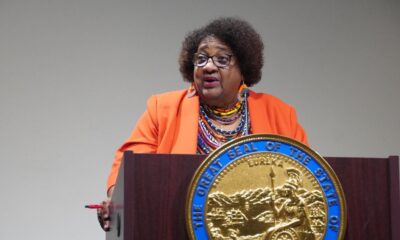
Department of Homeland Security Demands California Secretary of State Shirley N. Weber Scrub Voter Rolls
-
 Business3 weeks ago
Oakland Children’s Hospital Workers and Patients Rally for Pediatric Medical Care
-
 #NNPA BlackPress2 weeks ago
New Judge Could Decide if Karmelo Anthony Gets a New Trial
-
 Environment1 week ago
“The Power to See Threats Sooner”: Gov. Newsom, Safety Officials Showcase California’s Investments in Hi-Tech Wildfire Prevention
-
 Black History2 weeks ago
Alpha Kappa Alpha Sorority, Inc. Celebrates New North Atlantic Regional Director
-
 Business3 weeks ago
Surveillance Pricing Fight: State Senate Debates Bill Banning Retailers from Using AI to Set Prices Based on a Buyer’s Profile
-
 Business3 weeks ago
Mount Zion MBC, Church of Jesus Christ of Latter-day Saints Partner to Bring 29,000 Meals to Alameda County
-
 Featured1 week ago
California Sen. Padilla Joins Colleagues to Introduce Bill Imposing Term Limits on Supreme Court Justices
