Connect with us

History

Education: The Backbone of Change for Black People

Published

on

Tamara Shiloh

Slaveowners were fully aware that their control of slaves must go beyond physical coercion.  Knowledge was power, and virtually all slave codes established in the United States set restrictions making it illegal to teach slaves to read or writer.

This statue, passed by the state of North Carolina (1830-1831), was typical:

“…any free person, who shall hereafter teach, or attempt to teach, any slave with in the State to read or write, the use of fingers excepted, or shall give or sell to such slave or slaves any books or pamphlets, shall be liable to indictment in any court of record…”

Many abolitionists, however, disagreed with this way of thinking.

In 1750, Anthony Benezet, a Quaker, opened the first free school for Blacks in Philadelphia.  In 1779, Benezet founded the Negro School Philadelphia for Black children.  After the state abolished slavery, Philadelphia’s free black community began to flourish.

The first boarding school for Black girls, St. Francis Academy or Rome in Baltimore, MD, opened its doors in 1829.  It was established by Mother Mary Lange and the Oblate Sister of Providence, a group or French-educated Black nuns.  It was a popular school, attracting young women from across the country.

After becoming co-ed in 1965, its name changed to Saint Francis Academy.

Witnessing several violent race riots throughout the city.

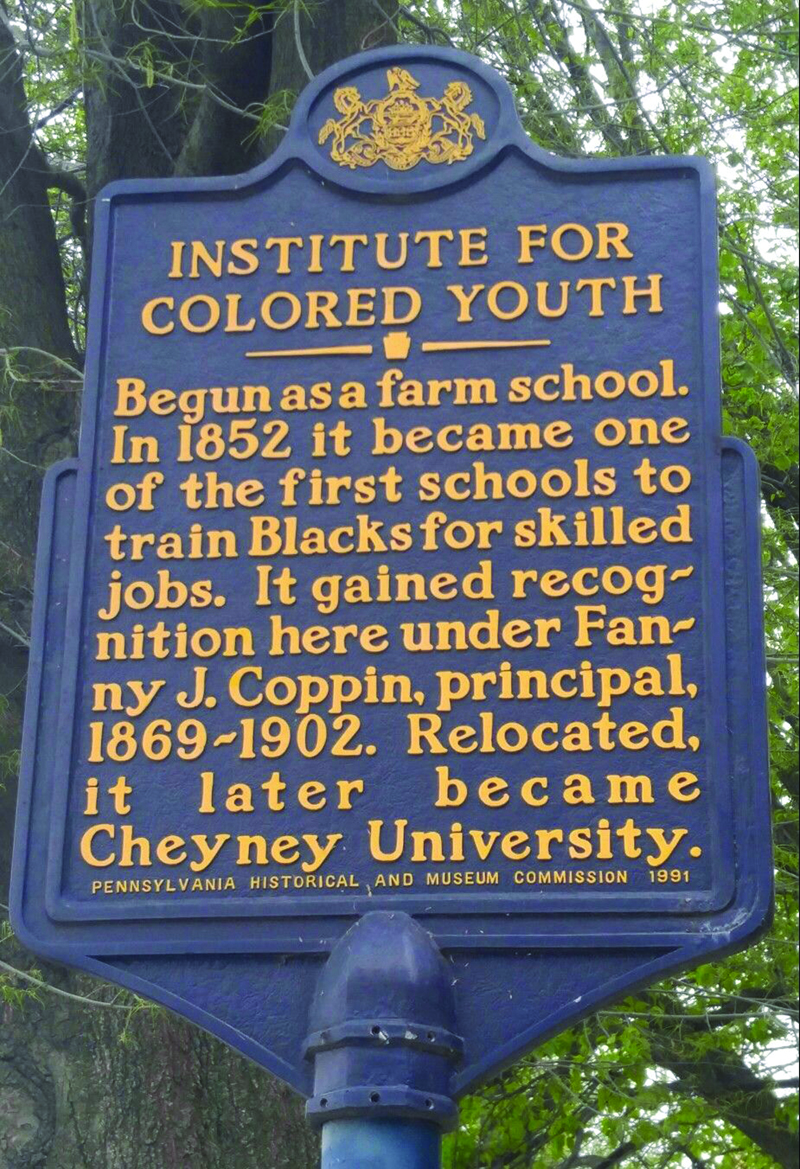
in the last years of philanthropist Richard Humphreys’ life may have convinced him that education was the key to Black progress in Philadel­phia. Whatever his motivation, Humphreys’ $10,000 bequest helped to establish the Quaker-controlled African Institute. By the time it opened in 1840, the school had been renamed the Institute for Colored Youth. ­

The establishment of the institute, the first higher edu­cation institution for blacks, was intimately connected to the Black struggle for social freedom and economic op­portunity in early 19th-century Philadelphia. Operated by the Quaker Board of Managers, its faculty consisted entirely of African Americans. Both boys’ and girls’ high schools existed, as well as a preparatory school.

Mary Smith Kesick Peake, a free woman of color, was the first teacher for freed slaves. Supported by the American Missionary Association, she was appointed to teach the children of Fort Monroe, Va., and in 1861, opened a school in Hampton, Va. This marked the beginning of the general edu­cation of Blacks in the South.

Lincoln University in Penn­sylvania opened in 1854, and Ohio’s Wilberforce University in 1856. In the early years, part of their mission was to pro­vide elementary and secondary schooling for students with no previous education. It was not until the early 1900s that his­torically Black colleges and universities offered degreed programs at the post-secondary level.

In 1869, Howard Univer­sity opened the country’s first Black law school; in 1876 Me­harry Medical College became the first Black medical school; Spelman College became the first college for Black women in 1881, and Booker T. Washing­ton found the Tuskegee Normal and Industrial Institute in Ala­bama that same year. George Washington Carver began his academic career there in 1896.

Tamara Shiloh

Tamara Shiloh


About Tamara Shiloh


Tamara Shiloh has published the first two books in her historical fiction chapter book series, Just Imagine…What If There Were No Black People in the World is about African American inventors, scientists and other notable Black people in history. The two books are Jaxon’s Magical Adventure with Black Inventors and Scientists and Jaxon and Kevin’s Black History Trip Downtown. Tamara Shiloh has also written a book a picture book for Scholastic, Cameron Teaches Black History, that will be available in June, 2022.

Tamara Shiloh’s other writing experiences include: writing the Black History column for the Post Newspaper in the Bay area, Creator and Instruction of the black History Class for Educators a professional development class for teachers and her non-profit offers a free Black History literacy/STEM/Podcast class for kids 3d – 8th grade which also includes the Let’s Go Learn Reading and Essence and tutorial program.   She is also the owner of the Multicultural Bookstore and Gifts, in Richmond, California,

Previously in her early life she was the /Editor-in-Chief of Desert Diamonds Magazine, highlighting the accomplishments of minority women in Nevada; assisting with the creation, design and writing of a Los Angeles-based, herbal magazine entitled Herbal Essence; editorial contribution to Homes of Color; Editor-in-Chief of Black Insight Magazine, the first digital, interactive magazine for African Americans; profile creations for sports figures on the now defunct PublicFigure.com; newsletters for various businesses and organizations; and her own Las Vegas community newsletter, Tween Time News, a monthly publication highlighting music entertainment in the various venues of Las Vegas.

She is a member of:

  • Society of Children’s Book Writers and Illustrators (SCBWI)

  • Richmond Chamber of Commerce

  • Point Richmond Business Association

  • National Association of Professional Women (NAPW)

  • Independent Book Publishers Association (IPBA)

  • California Writers Club-Berkeley & Marin

  • Richmond CA Kiwanis

  • Richmond CA Rotary

  • Bay Area Girls Club


Tamara Shiloh, a native of Northern California, has two adult children, one grandson and four great-grand sons. She resides in Point Richmond, CA with her husband, Ernest.

www.multiculturalbookstore.com

About Tamara Shiloh

Tamara Shiloh has published the first two books in her historical fiction chapter book series, Just Imagine…What If There Were No Black People in the World is about African American inventors, scientists and other notable Black people in history. The two books are Jaxon’s Magical Adventure with Black Inventors and Scientists and Jaxon and Kevin’s Black History Trip Downtown. Tamara Shiloh has also written a book a picture book for Scholastic, Cameron Teaches Black History, that will be available in June, 2022. Tamara Shiloh’s other writing experiences include: writing the Black History column for the Post Newspaper in the Bay area, Creator and Instruction of the black History Class for Educators a professional development class for teachers and her non-profit offers a free Black History literacy/STEM/Podcast class for kids 3d – 8th grade which also includes the Let’s Go Learn Reading and Essence and tutorial program.   She is also the owner of the Multicultural Bookstore and Gifts, in Richmond, California, Previously in her early life she was the /Editor-in-Chief of Desert Diamonds Magazine, highlighting the accomplishments of minority women in Nevada; assisting with the creation, design and writing of a Los Angeles-based, herbal magazine entitled Herbal Essence; editorial contribution to Homes of Color; Editor-in-Chief of Black Insight Magazine, the first digital, interactive magazine for African Americans; profile creations for sports figures on the now defunct PublicFigure.com; newsletters for various businesses and organizations; and her own Las Vegas community newsletter, Tween Time News, a monthly publication highlighting music entertainment in the various venues of Las Vegas. She is a member of:
  • Society of Children’s Book Writers and Illustrators (SCBWI)
  • Richmond Chamber of Commerce
  • Point Richmond Business Association
  • National Association of Professional Women (NAPW)
  • Independent Book Publishers Association (IPBA)
  • California Writers Club-Berkeley & Marin
  • Richmond CA Kiwanis
  • Richmond CA Rotary
  • Bay Area Girls Club
Tamara Shiloh, a native of Northern California, has two adult children, one grandson and four great-grand sons. She resides in Point Richmond, CA with her husband, Ernest. www.multiculturalbookstore.com

Continue Reading
Click to comment

Leave a Reply

Your email address will not be published. Required fields are marked *

Activism

On the Frontlines of Hate: NAACP Links Victims to Critical Support

The NAACP CA/HI has a long and well-established record of supporting victims of discrimination and hate crimes — providing critical referrals and, when necessary, direct assistance through legal advocacy and other forms of support. Beyond responding to incidents, the organization continues to advocate on broader civil rights issues, including voting rights and legal protections. It has also worked to counter efforts at the state and federal levels that could weaken the voting power of communities of color.

Published

on

NAACP members at a recent advocacy day in Sacramento urging lawmakers to protect voting rights. Photo courtesy of California Black Media.

By Joe Kocurek
California Black Media

The California/Hawaii State Conference of the NAACP (CA/HI NAACP) has expanded its efforts to respond to rising hate incidents and civil rights complaints across California, supported in part by funding from California’s Stop the Hate Program

Through that grant, NAACP CA/HI has strengthened its ability to connect individuals experiencing hate or discrimination with critical resources. This includes referring those who file complaints to the CA vs Hate hotline, a statewide, non-emergency hate crime and incident reporting hotline and online portal created to help counter a more than 50% increase in reported hate crimes in California between 2020 and 2024. The system helps ensure incidents are documented, and victims are guided toward appropriate support.

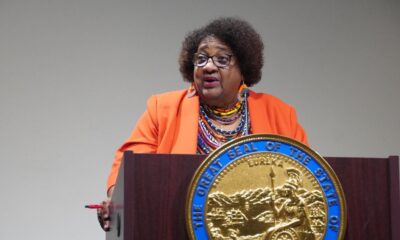
LaJuana Bivens says the work of NAACP is as urgent as ever. Photo by Regina Wilson, California Black Media.

LaJuana Bivens says the work of NAACP is as urgent as ever. Photo by Regina Wilson, California Black Media.

LaJuana Bivens, who has served in a number of roles within the NAACP, said California has seen an increase in civil rights violations and hate-related incidents.

“We have 52 branches, and they are constantly receiving complaints,” she said. “So, without the Stop the Hate, we would not be able to refer those cases up to attorneys at the state level. A lot of the people would not have had an opportunity to be heard.”

Carmen-Nicole Cox helps survivors of hate with their legal options. Photo courtesy of Carmen-Nicole Cox.

Carmen-Nicole Cox helps survivors of hate with their legal options. Photo courtesy of Carmen-Nicole Cox.

Carmen-Nicole Cox, an attorney who works with NAACP CA/HI – as a part of California’s Stop the Hate Program – provides legal consultation to victims of hate incidents and discrimination through her legal practice, the Cox Firm for Law and Policy.

She said the complaints she receives span a wide range of issues.

“People are having home builders and landlords refusing to provide repairs, a student was denied promotion in an academic program, and targeted scrutiny at work,” she said. “It’s typically employment; it’s housing; it’s education.

“We’ll meet and they’ll share their experiences,” she said. “And then I make assessments about possible legal claims.”

According to the California Civil Rights Department (CRD), nearly 1,200 reports of hate against minority groups were submitted in 2024 through the CA vs Hate hotline and online portal for non-emergency incidents.

While the California/Hawaii State Conference of the NAACP, which has tens of thousands of members, does not directly investigate hate incidents or crimes, it plays a key role in connecting victims to the state’s reporting systems and support services.

The NAACP CA/HI has a long and well-established record of supporting victims of discrimination and hate crimes — providing critical referrals and, when necessary, direct assistance through legal advocacy and other forms of support.

Beyond responding to incidents, the organization continues to advocate on broader civil rights issues, including voting rights and legal protections. It has also worked to counter efforts at the state and federal levels that could weaken the voting power of communities of color.

Bivens recently traveled to Sacramento to speak with state lawmakers about voting rights during an advocacy day event hosted by the organization.

“It’s just so hard for communities of color to be up to date because of all of the confusing information coming from the federal level,” she said. “I love our great state of California because here it is possible to vote by mail and to vote early.

“And I’m seeing that trying to be eroded. So, I’m here to urge continued support for vote by mail and early voting.”

When Texas moved to redraw congressional districts in ways critics said would dilute minority voting strength, NAACP CA/HI supported the passage of Proposition 50 in California. The organization also intervened in United States v. Shirley Weber, where federal officials sought access to unredacted California voter records, including Social Security numbers, raising concerns about misuse and voter intimidation.

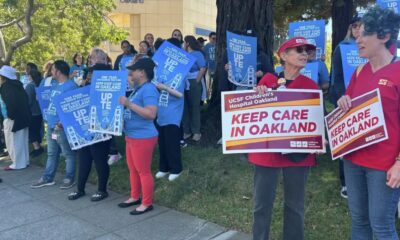
Cultivating the advocacy and leaderships of young people is central to NAACP’s mission to fight racism and dismantle inequality. Photo courtesy of California Black Media.

Cultivating the advocacy and leaderships of young people is central to NAACP’s mission to fight racism and dismantle inequality. Photo courtesy of California Black Media.

A federal district court dismissed that case in January 2026.

The organization’s current work builds on a long history of civil rights advocacy. Today, Bivens says, the organization’s mission remains as urgent as ever.

“We are the oldest, boldest, most feared Civil Rights organization,” Bivens said. “What we do every day is fight for better housing, education, economic development and political inclusion. We take it on because there are just so many people who need that support.

“You would be amazed that our phones ring every single day.”

Get Support After Hate:

California vs Hate is a non-emergency, multilingual hotline and online portal offering confidential support for hate crimes and incidents. Victims and witnesses can get help anonymously by calling 833-8-NO-HATE (833-866-4283), Monday to Friday, 9 a.m.–6 p.m. PT, or online at any time. Anonymous. Confidential. No Police. No ICE.

This story was produced in partnership with CA vs Hate. Join them for the first-ever CA Civil Rights Summit on May 11. More information at www.cavshate.org/summit.

https://youtu.be/_k7UVhI-sN8

Continue Reading

Activism

Mayor Barbara Lee Proclaims April 9 as ‘100 Black Men of the Bay Area Day’

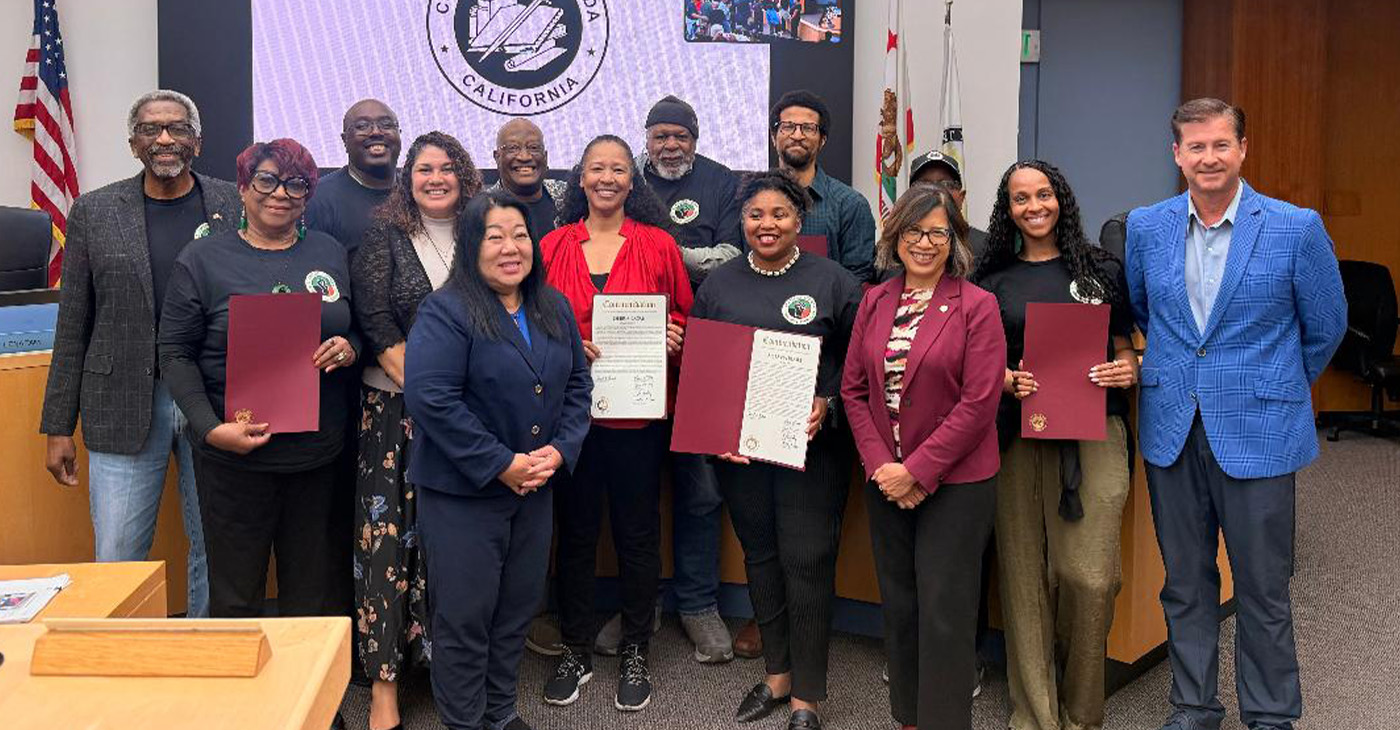
“Today, the 100th day of the year, I proclaim 100 Black Men Day,” said Mayor Barbara Lee standing with newly appointed Oakland Port Commissioner Derek Mohammad, a 100 Black Men member. “Whereas the 100 Black Men of the Bay Area has demonstrated decades of unwavering commitment to uplifting youth and strengthening families and advancing opportunity and access in Oakland and the greater Bay Area with their signature programs…the chapter has impacted thousands of young people and contributed thousands of hours of community service…”

Published

on

At D. Monaghan’s on the Hill, a resolution declaring April 9 ‘100 Black Men of the Bay Area Day’ was witnessed by (l.-r.) 100 Black Men leaders Maurice Harold, Marco T. Lindsey, Danny Lee Williams, Oakland Mayor Barbara Lee, Oakland City Council President Kevin Jenkins, Port of Oakland Commissioner Derek Mohammad, and Oakland Councilmember Janani Ramachandran. Photo by Carla Thomas.

By Carla Thomas 

When Oakland Mayor Barbara Lee announced that she would proclaim Thursday, April 9, as “100 Black Men of the Bay Area Day,” the organization’s board chairman and owner of D. Monaghan’s on the Hill, Danny Lee Williams knew he wanted to mark the historic moment with fanfare his community could share.

Standing at the podium on the patio of his restaurant in the Oakland Hills, he welcomed about 150 members of the organization and the broader community who gathered to celebrate.

“This is a special day, and we are in the midst of our Economic Empowerment week,” he said. Williams also welcomed four vendors to sell their gifts and accessories during the event free of charge.

“Today, the 100th day of the year, I proclaim 100 Black Men Day,” said Mayor Barbara Lee standing with newly appointed Oakland Port Commissioner Derek Mohammad, a 100 Black Men member. “Whereas the 100 Black Men of the Bay Area has demonstrated decades of unwavering commitment to uplifting youth and strengthening families and advancing opportunity and access in Oakland and the greater Bay Area with their signature programs…the chapter has impacted thousands of young people and contributed thousands of hours of community service…”

Lee shared how as a single parent of two boys, she was grateful to have the organization’s support in mentoring her sons.

“Today, my adult son is a member in Illinois, and I thank the organization for supporting so many Black boys.”

The idea for the proclamation originated with Oakland City Councilmember Kevin Jenkins, who praised the organization for its leadership and contributions to Oakland and the greater Bay Area.

“This work that we do would not be possible without partnerships with organizations like the 100 Black Men,” said Jenkins. “We’re saving lives, restoring communities, and giving people hope and opportunities.”

“This is Oakland,” said Mayor Lee. “This is what we’re about. It’s about new ideas, thinking outside the box and being who we are. It’s about bringing joy. This is our holiday.”

The mayor also thanked the organization for volunteering during Oakland Cleanup days.

Councilmember Janani Ramachandran added that while many complain about problems in the city, “the 100” put in the work.

“It’s hard to be in the community and do the work, but that is exactly what the 100 Black Men does,” she said.

The organization’s economic chair and associate director of Diversity Equity and Inclusion at the University of California Berkeley’s Business School, Marco T. Lindsey, shared his enthusiasm for change.

“Today is the culmination of our work and something special is happening in our organization and our city,” he said.  “We have a special opportunity to show up for our community now in ways that we haven’t had in the past. We have a mayor that supports us and it’s important that each and every one of us do our part. We all need our fingerprints on whatever we want to see in our city.”

Lindsey also expressed that if underserved youth and their parents had access to the resources needed for success, “Our youth wouldn’t be breaking windows and joining gangs if they had a pathway to earn $75k to $100k a year.”

The 100 Black Men were hosts of an Economic Empowerment Forum at McClymonds High School on April 11 educating students on entrepreneurship and financial literacy. On Sat., April 18, they will hold their fifth annual Career Expo at Contra Costa College 2600 Mission Bell Drive (G225) in San Pablo from 8 a.m. to 3 p.m. The 100 Black Men chapter of the Bay Area was established in 1988, one of the earliest in the nation.

For more information visit 100blackmenba.org

Continue Reading

Activism

Discrimination in City Contracts

The report was made public by Councilmember Carroll Fife, who brought it this week to the Council’s Life Enrichment Committee, which she chairs. Councilmembers, angry at the conditions revealed, unanimously approved the informational report, which is scheduled to go to an upcoming council meeting for discussion and action. The current study covers five years, 2016-2021, roughly overlapping the two tenures of Libby Schaaf, who served as mayor from January 2015 to January 2023.

Published

on

Dr. Eleanor Ramsey (top, left) founder, and CEO of Mason Tillman Associates, which conducted the study revealing contract disparities, was invited by District 3 Councilmember Carroll Fife (top center) to a Council committee meeting attended by Oakland entrepreneur Cathy Adams (top right) and (bottom row, left to right) Brenda Harbin-Forte, Carol Wyatt, and councilmembers Charlene Wang and Ken Houston. Courtesy photos.

Disparity Study Exposes Oakland’s Lack of Race and Equity Inclusion

Part 1

By Ken Epstein

A long-awaited disparity study funded by the City of Oakland shows dramatic evidence that city government is practicing a deeply embedded pattern of systemic discrimination in the spending of public money on outside contracts that excludes minority- and woman-owned businesses, especially African Americans.

Instead, a majority of public money goes to a disproportionate handful of white male-owned companies that are based outside of Oakland, according to the 369-page report produced for the city by Mason Tillman Associates, an Oakland-based firm that performs statistical, legal and economic analyses of contracting and hiring.

The report was made public by Councilmember Carroll Fife, who brought it this week to the Council’s Life Enrichment Committee, which she chairs. Councilmembers, angry at the conditions revealed, unanimously approved the informational report, which is scheduled to go to an upcoming council meeting for discussion and action.

The current study covers five years, 2016-2021, roughly overlapping the two tenures of Libby Schaaf, who served as mayor from January 2015 to January 2023.

The amount of dollars at stake in these contracts was significant in the four areas that were studied, a total of $486.7 million including $214.6 million on construction, $28.6 million on architecture, and engineering, $78.9 million on professional services, and $164.6 million on goods and services.

While the city’s policies are good, “the practices are not consistent with policy,” said Dr. Eleanor Ramsey, founder and CEO of Mason Tillman Associates.

There have been four disparity studies during the last 20 years, all showing a pattern of discrimination against women and minorities, especially African Americans, she said. “You have good procurement policy but poor enforcement.”

“Most minority- and women-owned businesses did not receive their fair share of city-funded contracts,” she continued.  “Over 50% of the city’s prime contract dollars were awarded to white-owned male businesses that controlled most subcontracting awards. And nearly 65% of the city’s prime contracts were awarded to non-Oakland businesses.”

As a result, she said, “there is a direct loss of revenue to Oakland businesses and to business tax in the city…  There is also an indirect loss of sales and property taxes (and) increased commercial office vacancies and empty retail space.”

Much of the discrimination occurs in the methods used by individual city departments when issuing outside contracts. Many departments have found “creative” ways to circumvent policies, including issuing “emergency” contracts for emergencies that do not exist and providing waivers to requirements to contract with women- and minority-owned businesses, Ramsey said.

Many of the smaller contracts – 59% of total contracts issued – never go to the City Council for approval.

Some people argue that the contracts go to a few big companies because small businesses either do not exist or cannot do the work. But the reality is that a majority of city contracts are small, under $100,000, and there are many Black-, woman- and minority-owned companies available in Oakland, said Ramsey.

“Until we address the disparities that we are seeing, not just in this report but with our own eyes, we will be consistently challenged to create safety, to create equity, and to create the city that we all deserve,” said Fife.

A special issue highlighted in the disparity report was the way city departments handled spending of federal money issued in grants through a state agency, Caltrans. Under federal guidelines, 17.06%. of the dollars should go to Disadvantaged Business Enterprises (DBEs).

“The fact is that only 2.16% of all the dollars awarded on contracts (went to) DBEs,” Ramsey said.

Speaking at the committee meeting, City Councilmember Ken Houston said, “It’s not fair, it’s not right.  If we had implemented (city policies) 24 years ago, we wouldn’t be sitting here (now) waiving (policies).”

“What about us? We want vacations. We want to have savings for our children. We’re dying out here,” he said.

Councilmember Charlene Wang said that she noticed when reading the report that “two types of business owners that are consistently experiencing the most appalling discrimination” are African Americans and minority females.

“It’s gotten worse” over the past 20 years, she said. “It’s notable that businesses have survived despite the fact that they have not been able to do business with their own city.”

Also speaking at the meeting, Brenda Harbin-Forte, a retired Alameda County Superior Court judge, and chair of the Legal Redress Committee for the Oakland NAACP, said, “I am so glad this disparity study finally was made public. These findings … are not just troubling, they are appalling, that we have let  these things go on in our city.”

“We need action, we need activity,” she said. “We need for the City Council and others to recognize that you must immediately do something to rectify the situation that has been allowed to go on. The report says that the city was an active or inactive or unintentional or whatever participant in what has been going on in the city. We need fairness.”

Cathy Adams, president of the Oakland African American Chamber of Commerce, said, “The report in my opinion was very clear. It gave directions, and I feel that we should accept the consultant Dr. Ramsey’s recommendations.

“We understand what the disparities are; it’s going to be upon the city, our councilmembers, and our department heads to just get in alignment,” she said.

Said West Oakland activist Carol Wyatt, “For a diverse city to produce these results is a disgrace. The study shows that roughly 83% of the city contracting dollars went to non-minority white male-owned firms under so-called race neutral policies

These conditions are not “a reflection of a lack of qualified local firms,” she continued. “Oakland does not have a workforce shortage; it has a training, local hire, and capacity-building problem.”

“That failure must be examined and corrected,” she said. “The length of time the study sat without action, only further heightens the need for accountability.”

Continue Reading

Subscribe to receive news and updates from the Oakland Post

* indicates required

CHECK OUT THE LATEST ISSUE OF THE OAKLAND POST

ADVERTISEMENT

WORK FROM HOME

Home-based business with potential monthly income of $10K+ per month. A proven training system and website provided to maximize business effectiveness. Perfect job to earn side and primary income. Contact Lynne for more details: Lynne4npusa@gmail.com 800-334-0540

Facebook

Trending

Copyright ©2021 Post News Group, Inc. All Rights Reserved.