
Education
Black Ivy League law students want university to fire Central Park 5 prosecutor
ROLLINGOUT — After witnessing the implosion of Central Park Five prosecutor Linda Fairstein’s career, Black law students at Columbia University in Manhattan want to see the same happen to Elizabeth Lederer, the lead district attorney on that infamous case.

By Terry Shropshire
After witnessing the implosion of Central Park Five prosecutor Linda Fairstein’s career, Black law students at Columbia University in Manhattan want to see the same happen to Elizabeth Lederer, the lead district attorney on that infamous case.
According to Vulture, the Black Law Students Association wants the Ivy League institution to fire Lederer who headed the D.A.’s case to falsely imprison the Central Park Five teens — Kevin Richardson, Raymond Santana, Antron McCray, Yusef Salaam and Korey Wise.
Lederer was portrayed by actress Vera Farmiga in Ava DuVernay’s Netflix miniseries “When They See Us.” Vulture and AboveTheLaw.com report that Lederer continues to work at the Lecturer in Law at Columbia and remains employed by the New York County District Attorney’s Office, where she has worked for the past 40 years.
Simultaneously, a second Black organization, Columbia’s Black Students Organization, is demanding administrators invalidate an award that Columbia University School of Medicine gave to Lederer’s co-prosecutor in the case, Linda Fairstein, Metro reports.
Right now, however, Lederer remains the Black law students’ priority.
“Since Lederer’s integral role in the case has received a national spotlight, there have been multiple efforts urging Columbia Law School to take action,” stated a letter from Black law students that they posted on Twitter. “In 2013 a petition was circulated, which gained thousands of signatures and demanded the removal of Lederer. Instead of taking decisive action to address the issue, Columbia Law School simply removed the Central Park jogger case from Lederer’s online bio.”
The letter from the Black law students continues: “Now, with the release of Ava DuVernay’s ‘When They See Us’ on Netflix, Columbia’s inaction on this subject shows a disconnect between the values Columbia purports and the actions the Law School takes. Another petition, circulated by our brothers, sisters, and non-binary friends at Columbia University Black Students’ Organization, has gained thousands of signatures and again demands … the removal of Elizabeth Lederer.”
New statement released from the @ColumbiaLaw Black Law Students Association
Students call for #CentralPark5 prosecutor Elizabeth Lederer to be fired from her Lecturer in Law position
Also call on the law school to center anti-racism in its curriculum and pedagogy pic.twitter.com/U8By81KWBB
— Barred and Boujee (@AudreLawdAMercy) June 11, 2019
AboveTheLaw.com reminds readers that Black students also called for Lederer’s firing once before — after the airing of the Ken Burns documentary on the Central Park Five back in 2012. The publication said Columbia University did nothing then. And they have yet to act today.
Below is the trailer from the powerful Netflix miniseries “When They See Us.”
This article originally appeared in Rollingout.com.











Bay Area
A Long Time Coming: School District Kicks Off Massive $97 Million Renovation of West Oakland’s McClymonds High School
The extensive project will involve the full modernization of the campus, including essential upgrades to building systems such as plumbing replacement (with lead abatement), seismic improvements, and modernization of heating, electrical, ventilation, and air conditioning systems. Indoor spaces will be updated with new flooring, wall treatments, and upgrades to classrooms, labs, shops, and sports locker rooms.
‘We gather on sacred ground,’ said OUSD Supt. Denise Saddler
By Post Staff
After being stalled for many years, the massive $97 million renovation of McClymonds High School is finally breaking ground under the leadership of the district’s new superintendent, Dr. Denise Saddler, and backed by the unrelenting efforts of the school’s parents, students, school board members, community, and alumni.
The Oakland Unified School District (OUSD) held the groundbreaking ceremony on June 12 to kick off the three-year modernization project for McClymonds, a historic center of African American culture and educational opportunity in Oakland, located at 2607 Myrtle St. in West Oakland.
The overhaul will include seismic and environmental upgrades, a new turf field, and modernized campus facilities. The comprehensive transformation is financed by Measure Y, a $735 million general obligation bond approved by Oakland voters to renovate and upgrade aging school sites.
This renovation is considered a milestone for the West Oakland campus, which has operated in the same building since 1938 and has been in dire need of structural and plumbing safety remediation for years.
Speaking at the event, Supt. Denise Saddler said,
“We gather on sacred ground… that has shaped generations of Oakland leaders, scholars, artists, activists, entrepreneurs, educators like Mr. Herman Brown – one of our top math teachers. I also want to say it’s the historic home of the mighty Warriors (athletic teams). It’s a historic home of so many people.”
“This was, for Black people, our high school,” she continued “For more than a century, McClymonds has stood as a beacon of excellence in West Oakland and beyond. It’s not simply a school building; it’s a symbol of resilience, pride, community, and possibility.”
The superintendent said the legacy of McClymonds includes legendary alumni such as NBA player-coach Bill Russell, whose excellence transformed the game of basketball and whose courage helped transform the nation.
The school’s legacy also includes MLB players Frank ‘Judge’ Robinson and Curt Flood, basketball player Paul Silas and civic leaders including Lionel Wilson, a Superior Court judge and Oakland’s first African American mayor.
She emphasized that the groundbreaking was not only about honoring the past, but also about investing in the future.
“(It) represents Oakland’s commitment to the young people of West Oakland. It sends a powerful message that our students deserve facilities that match their brilliance, their talent and their dreams. “
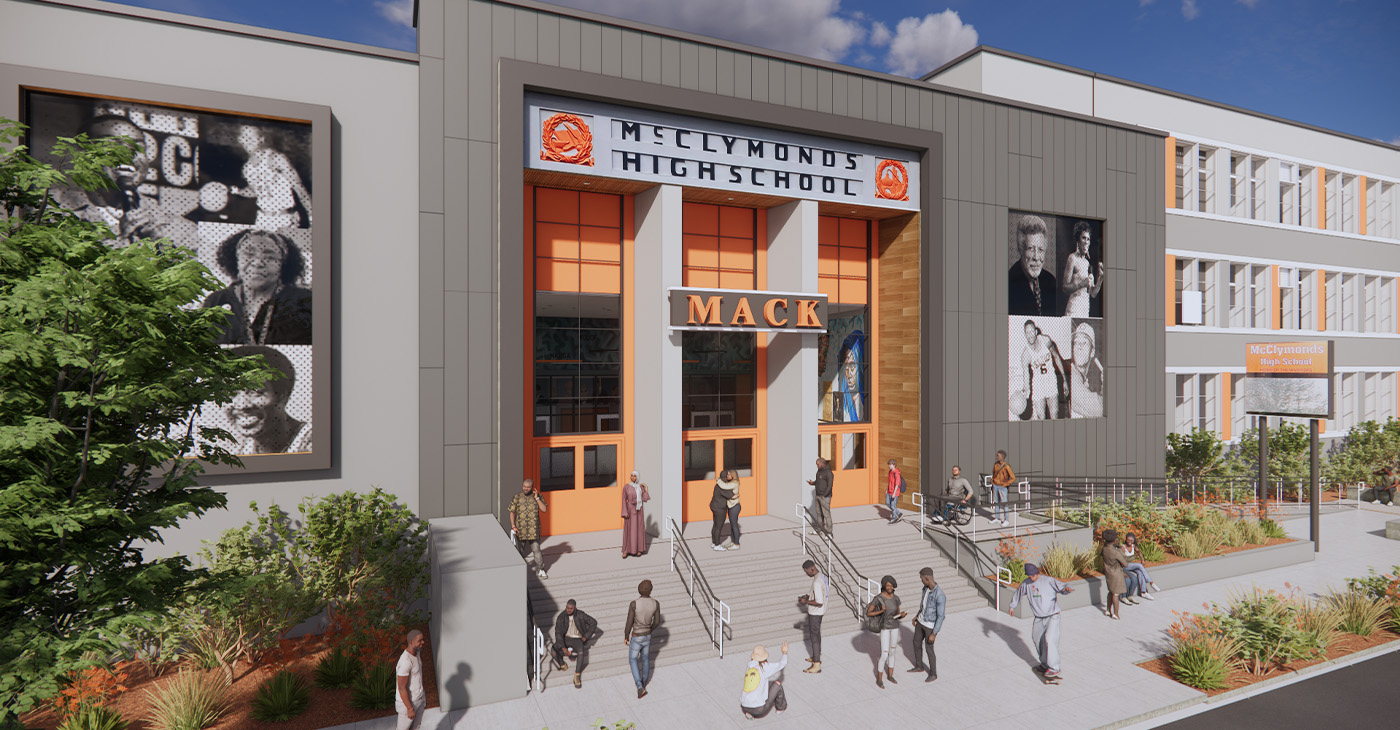
The extensive project will involve the full modernization of the campus, including essential upgrades to building systems such as plumbing replacement (with lead abatement), seismic improvements, and modernization of heating, electrical, ventilation, and air conditioning systems. Indoor spaces will be updated with new flooring, wall treatments, and upgrades to classrooms, labs, shops, and sports locker rooms.
The cafeteria also will be reconfigured, and outdoor areas will feature a new grandstand, track and field upgrades, accessible field bathrooms and concessions, and updates to the plaza, garden, and outdoor gathering areas.
Mayor Barbara Lee, who attended the event, thanked Oakland voters for passing the Measure Y bond that is paying for the school’s renovation.

Renderings of McClymond High School renovation. Courtesy image.
“It’s a good day – It’s a good news day,” she said. “The voters who (approved) Measure Y care about our young people. Today, we have the opportunity on this historic day to say, well done. Thank you to the voters for the facilities our community, our students, our teachers deserve.”
School Board member VanCedric Williams, whose district includes McClymonds, said that OUSD passed repeated school bond measures for decades, promising to renovate the school, but it did not happen.
“I just want to thank all the community (who) put pressure on the district to do right, to hold school board members accountable, and to really say, ‘We’re not going to take anything less than a renovation.’”
“When I first met Dr. Saddler, she said, ‘I have a commitment to McClymonds – I’m going to make it happen.’ And she has done something in one year that has not been done in 20 years. So, I have the belief that we’re going to get it done.”
Rising senior LaTanya Nolen, praised the school for the opportunities she has received and for the dedication of its staff.
“Every student here is treated like they matter and given opportunities to grow and build onto themselves,” she said. “We’ve gotten to do things like sports, field trips, college and career excursions, networking, and more. Our futures are taken seriously, and the people around us are always pushing us so that we are prepared for it.”
Parent Brejea Colthirst said, “Thank you to everyone who had a part in this, who helped make this possible. Together, we are building something special.”
Brian McGhee, popular McClymonds staff member and alumni, pledged to build on the strength of McClymonds’ traditions. “Mack is back. We’re going to up the enrollment with this new school. We’re going to continue to know every student’s name who comes through this school. My job as a community manager is going to continue to provide resources for our families and our students, and continue to communicate with our parents, which is huge.”
Bay Area
UC Berkeley Named Top Public University in the U.S. and No. 7 in the World by ‘U.S. News’
Berkeley has been consistently awarded the distinction of the U.S.’s top public university since the Best Global Universities list was first published in 2014. “A strong position in the Best Global Universities rankings recognizes a school’s profound commitment to world-class research and cross-border academic excellence,” said LaMont Jones, managing editor for education at U.S. News.
The 2026 Best Global Universities rankings evaluated 2,250 research institutions from more than 100 countries
By Lila Thulin
U.S. News & World Report has ranked UC Berkeley No. 7 in its 2026 list of the best global universities, which assesses more than 2,250 research institutions worldwide.
Berkeley also claimed the honor of top public university in the U.S.
Released on Monday, the list evaluates universities from more than 100 countries on 13 metrics such as global and research reputation (as reported by academics and peers) and number of highly cited scholarly papers.
Berkeley has been consistently awarded the distinction of the U.S.’s top public university since the Best Global Universities list was first published in 2014.
“A strong position in the Best Global Universities rankings recognizes a school’s profound commitment to world-class research and cross-border academic excellence,” said LaMont Jones, managing editor for education at U.S. News.
The rankings also assess a university’s strength in various subject areas; these assessments are separate from U.S. News’ 2026 Best Graduate Programs rankings released in April.
This year, Berkeley was named in the top three nationally in seven subject areas – environment/ecology, ecology, water resources, physics, computer science, chemistry, and engineering – and in the top five for a total of 17 subjects. Subject rankings are based heavily on scholarly publications and citations as well as reputation.
In September, U.S. News also released its 2026 Best Colleges list, in which Berkeley was also named the No. 1 public institution among American universities.
That honor joins other accolades judging campus to be the best public university in the country, such as those from Forbes, The Wall Street Journal and Times Higher Education.
Bay Area
IN MEMORIAM: Longtime OUSD Employee Debra King-Cooper, 73
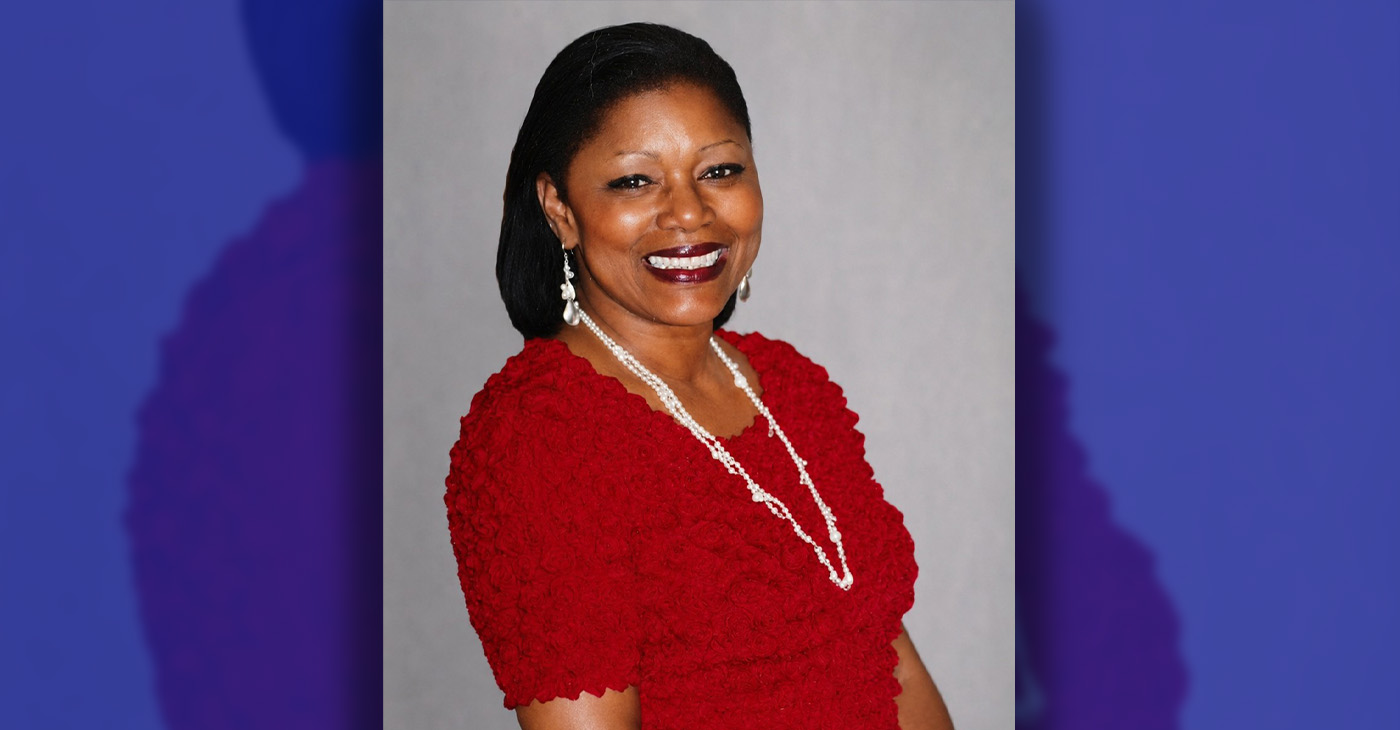
Longtime OUSD Employee Debra King-Cooper, 73 Caption: Debra King-Cooper. Courtesy photo. Special to The Post Debra King-Cooper, a beloved mother, grandmother, queen, sister, church member, caregiver, and matriarch, transitioned peacefully on May 20 surrounded by family and love i

Special to The Post
Debra King-Cooper, a beloved mother, grandmother, queen, sister, church member, caregiver, and matriarch, transitioned peacefully on May 20 surrounded by family and love in the comfort of her home. To her children, she was royalty, grace, strength, and unconditional love embodied.
Debra Diane Edgar was born on May 28, 1952, in San Francisco, California, to Charles Edgar Sr. and Mamie Arthur Edgar. She was raised alongside her younger brother, Charles Edgar Jr., affectionately known as “Little Brother” or “Lil Bruh.” She also shared close bonds with her older siblings Carol Edgar-Lang, Maryann Edgar Calloway, and Lonnie Lewis Sr.
A proud product of San Francisco’s historic Fillmore District, Debra attended Andrew Jackson Elementary School, where she met her lifelong best friend and adopted sister, Lynn Green, in the fifth grade. She later attended Robert Louis Stevenson Elementary School, Roosevelt Junior High School and Thomas Jefferson High School.
Debra’s mother transitioned when she was only 17 years old, and her father transitioned when she was 23. Despite these profound losses, Debra remained grounded through the love and support of extended family and lifelong family friends,
In 1971, she married Harold King. On Sept. 24, 1972, they welcomed their first son, Dajuan Artese King, affectionately called “Pop” or “Poppa.” On Aug. 5, 1976, they welcomed their second son, Dante Dupree King, affectionately called “Tay” or “Taboocoo the Baby.”
After her divorce in 1982, Debra assumed full responsibility for raising her sons.
She supported Dajuan’s passion for football by purchasing sports equipment and attending games faithfully. She supported Dante’s love of music by enrolling him in the San Francisco Boys Choir, Oakland Boys Choir, and the Castlemont Castleers.
Professionally, Debra built an exceptional career. She worked at Blue Shield of California from 1973 until 1994, earning multiple promotions.
She later joined the Oakland Unified School District, initially in a temporary role before being promoted into management within the Labor Relations Department. She retired from OUSD in 2015 after years of distinguished service. During her years at OUSD, she built meaningful friendships with her colleagues.
Faith was central to Debra’s life. During the 1980s, following personal hardship, she joined Love Center Church under the leadership of Bishop Walter Hawkins, where she brought her children regularly. She later became a member of Triumphant: A Church Without Walls Ministries under Pastor Dr. Larry Short, who became a beloved spiritual mentor.
After Triumphant closed in 1992, Debra joined Cosmopolitan Baptist Church in Oakland under the leadership of Pastor Larry Ashley, where she remained for the rest of her life.
At Cosmopolitan, she worked in numerous ministries. She served on the usher board, sang in the choir, participated in the AIDS ministry during the height of the HIV/AIDS epidemic, helped feed and support unhoused community members, and mentored and supported a group of young girls.
After retirement, she cared for older adults in her church community, driving them to appointments, cleaning their homes, managing finances, preparing meals, and helping families navigate funeral arrangements after loved ones transitioned.
Even while battling Stage 4 cancer herself, she continued caring for others.
Debra was preceded in death by her parents, Charles Edgar Sr. and Mamie Arthur Edgar; her brothers, Lonnie Lewis Sr. and Charles Edgar Jr.; her sisters, Maryann Edgar Calloway and Victoria Stephenson Knight; and her adopted mother, Clara Oliver.
She leaves to cherish her memory her beloved sons, Dajuan King and Dante King; grandson, Tiyler Dajuan Artese King; sister, Carol Edgar-Lang; goddaughters Monique Belle and Ricketa Matthews Jones (Leonard); daughter-in-love Quiona Sullivan; son-in-love Marcel Walker; sister-in-law Delores Lewis; adopted sisters and lifelong friends Lynn Green, Barbara Stephenson Hill, and Sarah Fine; a host of nieces, nephews, cousins, great-nieces, great-nephews, extended family members, her church family and dear friends.


WORK FROM HOME
Home-based business with potential monthly income of $10K+ per month. A proven training system and website provided to maximize business effectiveness. Perfect job to earn side and primary income. Contact Lynne for more details: Lynne4npusa@gmail.com 800-334-0540



Oakland Museum Presents Landmark Retrospective Celebrating Beloved Bay Area Artist Mildred Howard

Ferry Fares to Increase July 1 as Ridership Hits Record Highs

Stop the Hate Symposium Brings Oakland Together Through Dialogue, Partnership, and Community Healing

Six Months in, Probate Reform Coalition Marks Progress in Protecting Elders From Financial Abuse

A Long Time Coming: School District Kicks Off Massive $97 Million Renovation of West Oakland’s McClymonds High School

IN MEMORIAM: Oakland Dance Legend Reginald Ray-Savage, 67

UC Berkeley Named Top Public University in the U.S. and No. 7 in the World by ‘U.S. News’

NCBW-OBAC Champions Black Women Entrepreneurs at Business en Blaque Expo

Lock In Car Price: Avoid Dealer Payment Traps!

Sell Your Car: Get Offers BEFORE Visiting Dealerships!

The Conversation With Al McFarlane 6/23/26

Media Monday 6/22/26

LIVE! ASK ALMA! — TUES. 6.23.26 7PM EST

Car Buying Secrets: 4 Hidden Checks Before You Sign!

Book Review: Books for College-Bound Students

Q&A with Steven Bradford: Why He Wants Your Vote for California Insurance Commissioner

Oakland Mayor Pushes Charter Overhaul to Clarify Roles in City Government, Increase Accountability and Improve Service Delivery

The Ladies of Delta Sigma Theta Hold Day of Advocacy at the Capitol in Sacramento

OPINION: The Fire of Oakland’s Justin Jones

How Is AI Affecting California? The State Wants You to Share Your Story

California Launches Free Diaper Program for Newborns Statewide

Rep. Kamlager-Dove Introduces Bill to Protect Women in Custody After Reports Detailing Miscarriages and Neglect

More and More, Black Californians Are Worried About Rising Costs of Housing, Energy, Food and Gas

After 10-Year Wait, Fillmore Heritage Center Reopens in San Francisco

Asm. Jackson Bill Requiring Anti-Hate Speech Training for Calif. Public Officials Sent to “Suspense File”

Oakland Post: Week of May 20 – 26, 2026

Oakland Post: Week of May 27 – June 2, 2026

Oakland Post: Week of June 3 – 9, 2026

Advocates Rally at State Capitol to Demand Heat Protections for Incarcerated People; More Funding for DV Survivors
The Conversation With Al McFarlane 6/23/26
Media Monday 6/22/26
LIVE! ASK ALMA! — TUES. 6.23.26 7PM EST
Car Buying Secrets: 4 Hidden Checks Before You Sign!

Is This 550 HP Charger Worth YOUR Money? AutoNetwork Review

Celebrating Juneteenth – Frederick Douglass on education and resistance

LIVE! — ASK ALMA! — TUES. 6.19.26 7PM EST

Hyundai Ioniq 5 Parking, Safety, and 360 View #shorts

2025 Ioniq 5 New Wiper & Powerful Performance! #shorts

Electric SUV Range: Is 259 Miles Enough? #shorts

EV Charging: How Fast Can You Charge an Electric Vehicle? #shorts

Biometric Cooling… Messaging Seats…Come on! 2025 Infiniti QX80 Autograph 4WD

Charged Up: Witness the Magic of a Fully Electric Car! #shorts

Range Rover Sport PHEV Included…: See What’s Inside This Luxury SUV! #shorts

Invisible Hood View: Perfect Parking with X-Ray Vision! #shorts
-
 Art3 weeks ago
After 10-Year Wait, Fillmore Heritage Center Reopens in San Francisco
-
 Activism3 weeks ago
Oakland Post: Week of June 3 – 9, 2026
-

 #NNPA BlackPress3 weeks ago
5 Cleveland Police Officers Injured, Gunfire Erupts During East Side Pursuit
-

 #NNPA BlackPress3 weeks ago
2026 World Cup is Here and Atlanta is Ready For It
-

 Arts and Culture3 weeks ago
COMMENTARY: Black Music is the Sound of Black Freedom: Let Us Reclaim Both This Juneteenth
-

 Art3 weeks ago
Oakland Director Boots Dazzles Once Again in ‘I Love Boosters’
-
 #NNPA BlackPress3 weeks ago
COMMENTARY: Using Art, Healing, And Community to Transform Mental Health Dialogue
-

 #NNPA BlackPress3 weeks ago
Venus Williams Calls a Sabalenka Exit a Tragedy

2 Comments