
#NNPA BlackPress
2019 New Orleans Jazz & Heritage Festival – A Melting Pot of the Finest Music
NNPA NEWSWIRE — The 2019 New Orleans Jazz & Heritage Festival kicked off its 50th year anniversary with a bang. The annual two-weekend fest featured world-renown musicians, tempting food concession stands, a friendly crowd of music fans and a positive vibe that was even warmer than the sun.

By Dwight Brown, NNPA Newswire Film Critic
The 2019 New Orleans Jazz & Heritage Festival kicked off its 50th year anniversary with a bang. The annual two-weekend fest featured world-renown musicians, tempting food concession stands, a friendly crowd of music fans and a positive vibe that was even warmer than the sun.
Jazz Fest dates back to 1970, when Mahalia Jackson and Duke Ellington graced the stages for famed producer/impresario George Wein. Over the years that spirit has developed into a festival that embraces indigenous music, jazz, blues, soul, funk, Dixieland and Zydeco, rock, pop, country, Latin music, folk and other genres.
As you walk around the Fair Grounds where the fest takes place, on lush lawns or soft sand, you encounter various stages and gigantic white musical tents (jazz, blues, gospel). There’s a wide variety of food booths (ever hear of Alligator Pie?), arts and crafts tents and cultural centers too.
This year, the list of vibrant acts included artists like these:
Ziggy Marley: Legendary singer Bob Marley had 12 children. The most famous is Ziggy Marley, who heads the band Ziggy Marley and the Melody Makers. His career has spanned 15 years and his latest album “Rebellion Rises,” which continues his father’s legacy of social awareness, formed the basis of his energetic performance on The Congo Square Stage, which is usually reserved for African Heritage music. Dancing to a reggae beat and swaying in unison with his backup singers, Ziggy’s optimistic vibe lit the crowd up. One of the biggest treats for his sundrenched fans was his classic, “True to Myself.” Bob had a once-in-a-lifetime voice. Ziggy has a verve all his own and he passes on his father’s spirit of peace and love.
Tom Jones: He’s been around since the ‘60s, currently appears on The Voice UK and Tom Jones’ set was on Gentilly Stage, second largest at NOJHF. Stripped down to just a guitar, a bass and drums, Jones’ band captured a strong beat as his baritone voice bellowed through the air. He performed like he was a young rocker in his prime, and not like a 79-year-old man. Screaming “Maybe there ain’t no heaven. Maybe there ain’t no hell,” the lyrics from his hit song “Burning Hell,” Jones held the audience in the palm of his hand. He was in fine voice, oblivious to the ravages of time and displaying enough British swagger to start a street fight. As his concert continued, with something old and something new, the crowd was amazed that this is the man who rose to fame in 1965 with “What’s New Pussycat.” That’s 55 years ago and counting!
Mavis Staples: As Mavis Staples approaches 80 years of age, she’s turned back the clock by working with younger producers (Ben Harper), exploring music that takes her out of her comfort zone of R&B, Blues, Soul and Gospel, and incorporating those sounds into whatever music she tackles. Innovation came to mind when she launched into The Talking Heads “Slippery People.” Backed by a top-notch band, she infused a funky gospel spirit into her arrangement: “What’s the matter with him? He’s alright. How do you know? The lord won’t mind. Don’t play no games, he’s alright
Love from the bottom to the top.” Emphasizing the syncopation, swirling around on stage, throwing her hands in the air, shuffling her shoulders and occasionally letting out her famous earthy growl, she slayed the crowd. It was a song that the Staple Singers had covered in the mid ‘80s, and Mavis, like she always does, made it her own. The crowd inside the Jazz Tent was so large it spilled outside. They all knew they were watching an icon create a moment that was going to be memorable for years to come. Staples was equally strong with the socially conscious Buffalo Springfield hit “For What It’s Worth.”
Chris Stapleton: Stapleton used to be known for writing hit songs for country music stars like Miranda Lambert, Kenny Chesney and Blake Shelton. That changed one night in 2015 on a broadcast of the Country Music Awards when he dueted with Justin Timberlake. They sang harmony together on “Tennessee Whiskey,” and Stapleton flaunted a supple, elastic voice that was far more flexible and soulful than that of most country western singers. As he took his place on Acura, the biggest stage at NOJHF, the audience had grown deep into the thousands and the Grammy-winner didn’t disappoint. Catchy songs like “Traveler” and “Broken Halos” played to country music fans. His performance of “Millionaire” was more reminiscent of a southern/soul/rock style, the kind that rock legends like Delaney & Bonnie or Leon Russell coined back in the 70s when they blended genres. With his gravelly voice, Stapleton led the listeners through his stable of songs, ending the night with the aforementioned “Tennessee Whiskey,” a sweet song even Patti LaBelle covers in her concerts.
Gary Clark Jr.: Out on a tour that will last at least until September, Clark did his usual opening song, “Bright Lights.” It’s the perfect song to use to begin a set, as he sings to the audience, “You gonna know my name by the end of the night.” This gifted lead guitarist is often mentioned in the same breath with Jimi Hendrix, Eric Clapton and Prince. He’s not as enigmatic as the Jimi, as melodious as Eric nor as dynamic on stage as Prince, but he lets his strumming do the talking. A modern, wide-brimmed hat along with his signature red Fender Stratocaster solidifies his brand. Classic songs like “When My Train Pulls In” and “Gotta Get Into Something” pushed the crowd into a fervor.
Rita Coolidge: Known as the first person to sing the song “Superstar,” and later credited for co-writing it, Rita Coolidge stepped on to the stage dressed in a white blouse and pants with white sneakers. Her set list started with the feminist song “Basic Lady:” “Basic lady doesn’t need a diamond ring…” She sashayed around the stage with great confidence as her country-sounding band played on. Her voice was not as rich and smooth as it has been (the 2005 jazz album “And So Is Love” features her smoothest vocals), but her star power was making up for it. Fans liked her most popular hits the best: “Higher and Higher” and “We’re All Alone.”
Gladys Knight: She’s got more hits than most, a stronger voice than many and her fans know the words to her songs as well as she. So, when Gladys Knight asked the crowd to sing along with her, she got a backup chorus that was in tune and well-rehearsed. Strutting around in a black jumpsuit with a white blouse, Knight commanded her band and crooned. After several residencies in Vegas, this show woman knows exactly how to make an audience happy. With a great sense of urgency, she sang: “I’ve got to use my imagination. To think of good reasons. To keep on keepin’ on (keep on keepin’ on)…” The Pips were missed but ably replaced by a gigantic crowd of well-wishers. “The Best Thing That Ever Happened to Me” was just one in a string of tunes to come that had the audience remembering how Gladys Knight has been such a unique talent for five decades.
Los Lobos: This rock band from East Los Angeles defies categories. Hints of Tex-Mex, zydeco, R&B, blues and other genres are the sounds that make their music distinctive. Their brand of brown-eyed soul has made them a vibrant presence on the music scene since the 1970s. Different members have come and gone over the years, but their affable vibe has remained the same. The band’s name means “The Wolves,” so when they broke into one of their most famous songs, “Will the Wolf Survive?” the audience was particularly happy. Also, of great interest was their rendition of “La Bamba:” the group’s leader, David Hidalgo, sang it, just like he did for the movie of the same name. Actor Lou Diamond Phillips played the lead character Richie Valens in that film, but when it was time to sing, he was miming to Hidalgo’s savory vocals.
These were but a few of the magical roster that had attracted artists from everywhere, who were performing all kinds of music: Diana Ross, Taj Mahal and the Phantom Blues Band, The Doobie Brothers, Santana, Gregory Porter, Katy Perry, Al Green and Bonnie Raitt were all a part of the festivities along with many others.
The 2019 New Orleans Jazz & Heritage Festival was a big gumbo of music that gave NOLA audiences lots to savor.
Visit NNPA Newswire Film Critic Dwight Brown at DwightBrownInk.com and BlackPressUSA.com.












#NNPA BlackPress
NFL: Week Two Recap | Jalen Hurts did not fold; Caleb Williams exits game with injury
Philadelphia Eagles quarterback Jalen Hurts found Darius Cooper with nine seconds left for the game winning touchdown as his team beat the Tennessee Titans 24-20 in Nashville. Hurts finished the day 26/37 for 264 yards. He threw for two touchdowns and two interceptions. Prior to the final drive, the Eagles ran 25 plays for 45 […]
The post NFL: Week Two Recap | Jalen Hurts did not fold; Caleb Williams exits game with injury appeared first on BlackPressUSA.
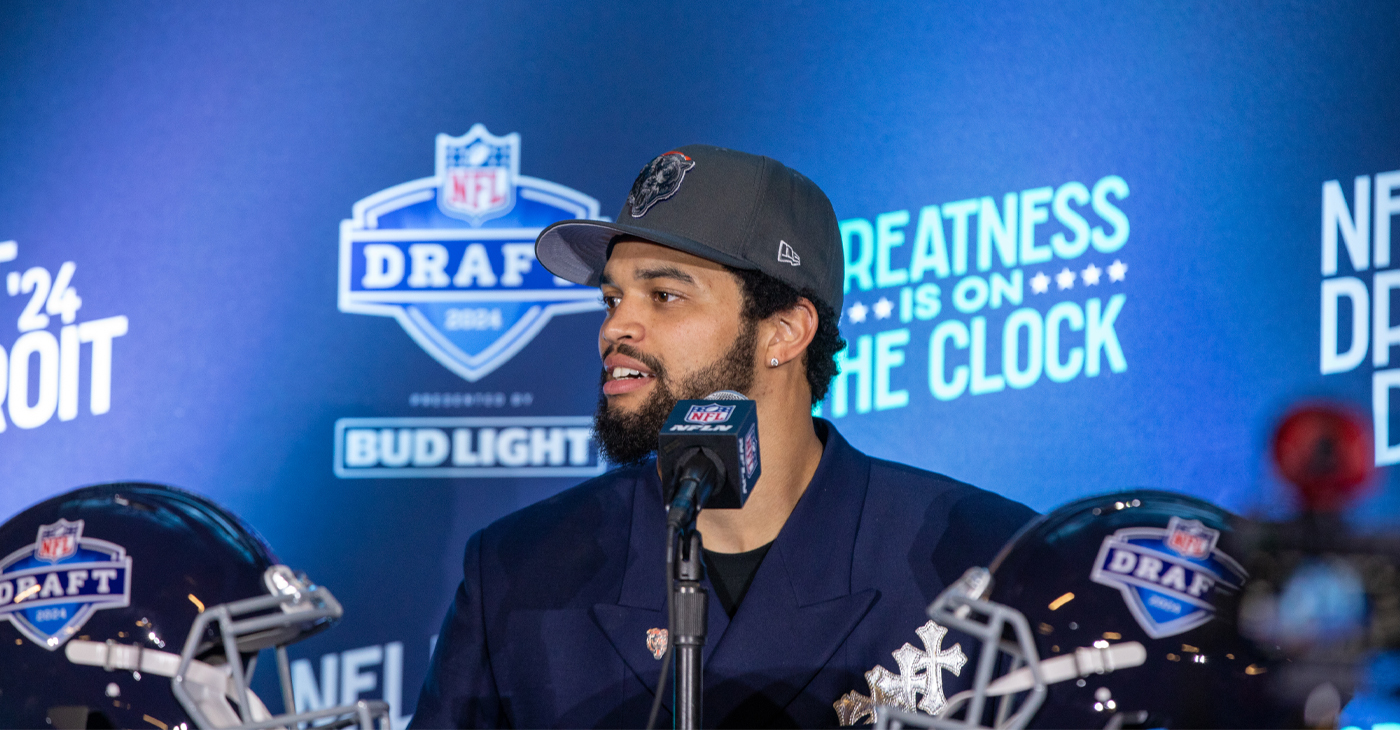

Philadelphia Eagles quarterback Jalen Hurts found Darius Cooper with nine seconds left for the game winning touchdown as his team beat the Tennessee Titans 24-20 in Nashville. Hurts finished the day 26/37 for 264 yards. He threw for two touchdowns and two interceptions.
Prior to the final drive, the Eagles ran 25 plays for 45 yards. During the final drive Hurts went 6-8 with 61 passing yards and the touchdown. Titans defensive tackle — and team captain — Jeffery Simmons said this week that the way to defend Jalen Hurts is to make him “play quarterback.”
Hurts said to Simmons after today’s game: “You started that sh**. I had to finish it.”
Running back Saquon Barkley suffered a stinger in the first half but he ultimately finished the game. He had four carries and nine yards and one catch for eleven yards. He will get an MRI for his injury, but admitted to Cameron Wolfe of the NFL Network he was fine.
Caleb Williams leaves game against Vikings with apparent lower-body injury
Chicago Bears quarterback Caleb Williams was helped off the field with a right leg injury with 7:42 remaining in the fourth quarter. Williams was down, writhing in pain after scrambling to his left. After departing the injury tent, Williams raised his right fist, acknowledging the crowd while expressing his frustration. Testing will commence on Monday to find out more details about his injury.
“We’ll know tomorrow,” Johnson admitted regarding Williams’ injury. “He’s in good spirits. He’s a team player.”
Williams finished the day with 138 passing yards and one interception.
“I’m actually happy it’s nothing with the knee — that was my first inclination,” Johnson said. “But, a hamstring could be pretty damaging as well. So, we’ll see. We’ll see how bad it is tomorrow and we’ll go from there.”
Bryce Young once again dominated the Falcons
Carolina Panthers quarterback Bryce Young is 5-1 against the Atlanta Falcons and is undefeated at Mercedes-Benz Stadium. Today, Young threw for 287 yards and three touchdowns as he led the Panthers to a 34-3 dismembering of the Atlanta Falcons. Georgia Tech alumnus Darren Waller caught two touchdowns and linebacker Devin Lloyd returned one of his two interceptions for a touchdown.
Cooper Rush started his second straight game for the Falcons and it did not go well. The partisan crowd voiced their displeasure after Rush completed 10/17 passes for 86 yards and two interceptions. Jack Strand entered the game for Rush prompting cheers from the Falcons fans. The rookie threw a pick-six on his first career pass attempt. Strand was the first QB to accomplish that feat since Sam Darnold in 2018 and is the first Falcons player to do that since Brett Favre in 1991. Strand finished the day with 59 passing yards and 16 rushing yards.
According to reports, quarterback Michael Penix, Jr. is expected to make his season debut this Thursday at the Green Bay Packers. His return should help the Falcons. They are the first team since the 2008 Rams to not run any plays in the red zone after the first two games to open a season.
The bright spots for the Falcons today were the Spelman College Jaguarettes performing with the Falcons cheerleaders and Florida A&M’s marching band, The Marching 100, also performed during halftime!
Jayden Daniels gets carted off after apparent arm injury
Washington Commanders quarterback Jayden Daniels appeared to injure his left elbow on the final play of the first half in his game against the Dallas Cowboys. During the play, Daniels got stepped on, braced himself for the fall, and his elbow bent the wrong way. Daniels draped a towel over his head as he exited the field on the cart.
He was later ruled out.
Daniels suffered a dislocated elbow to the same arm during week nine of last season against the Washington Commanders, which led to him being shut down for the remainder of the season.
The post NFL: Week Two Recap | Jalen Hurts did not fold; Caleb Williams exits game with injury appeared first on BlackPressUSA.
#NNPA BlackPress
The Complete Negotiation Framework — Every Stage, Every Tactic, Every Win
Master the complete vehicle-purchase negotiation framework with Roosevelt Gist and Roosevelt. Learn every stage, tactic, and win!
The post The Complete Negotiation Framework — Every Stage, Every Tactic, Every Win appeared first on BlackPressUSA.

Roosevelt Gist and Roosevelt deliver the complete vehicle-purchase negotiation framework in Episode 8 of The Color of Our Money Is Green. This episode covers the three foundations of every effective negotiation, the full seven-stage negotiation sequence with exact language for every stage, and five of the most common dealership tactics with the specific response each one requires.
What You Learn in This Episode:
The three foundations that make every negotiation tactic work
The complete seven-stage car-buying negotiation sequence
Exact language for every stage of the dealership conversation
Five common dealership tactics — the turnover, the four-square, the packed payment, spot delivery, and forced add-ons — and how to counter each one
Why signing preliminary paperwork isn’t the same as signing the final contract
___________________________________________________________________
“The Color of Our Money Is Green: A Buyer’s Guide to What Cars Actually Cost” — stan.store/RGist
____________________________________________________________________
AutoNetwork helps serious car shoppers inspect any new vehicle online before walking into a dealership. I’m Roosevelt — I’ve been reviewing cars and shaping digital car buying and credit union auto leasing since before YouTube car reviews existed.
You’ll find detailed walkaround reviews, POV test drives, and buyer-focused breakdowns covering comfort, space, features, and real-world value.
How to use the channel:
Watch the walkaround of the car you’re considering
Visit AutoNetwork.com for the full review
Check CouponsOffersAndDeals.com for current dealer specials
Walk in already knowing what you want — and what it should cost
 AutoNetwork.com
 CouponsOffersAndDeals.com
Affiliate disclosure: some links earn a small commission at no cost to you and help support the channel. Insta360 is one of those partners.
The post The Complete Negotiation Framework — Every Stage, Every Tactic, Every Win appeared first on BlackPressUSA.
#NNPA BlackPress
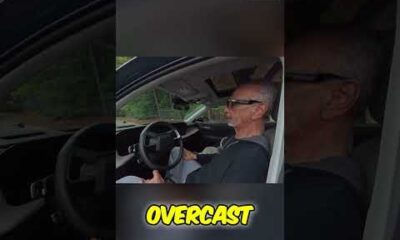
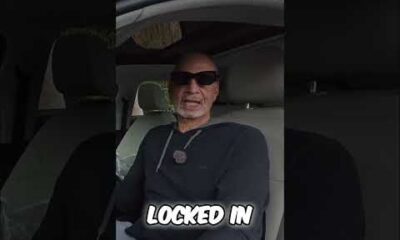
Mazda CX-90 Luxury: Heated Seats & Premium Comfort! #shorts
Stay toasty in the CX-90! Plush Nappa leather, heated/ventilated seats, and a memory-equipped heated steering wheel deliver ultimate luxury.
The post Mazda CX-90 Luxury: Heated Seats & Premium Comfort! #shorts appeared first on BlackPressUSA.

Experience ultimate comfort in the CX-90. Nappa leather, heated/ventilated seats, 8-way power adjustments, and memory settings for both front passengers. The heated steering wheel with memory tilt/telescope adds premium convenience.
 Watch the full video: https://youtu.be/EH5A4eQ4ipY
#AutoNetwork
The post Mazda CX-90 Luxury: Heated Seats & Premium Comfort! #shorts appeared first on BlackPressUSA.


Listening as a Lifeline: A Doula’s Witness to Black Maternal Health

New Protections for Ticket Buyers: Gov. Newsom Signs Assemblymember Isaac Bryan’s Bill

‘We Don’t Talk Trash — We Pick Up Trash!’

Zakiya Jendayi Arrested, Locked Out of Home by Sheriff’s Deputies

Oakland Post: Week of September 30 – October 6, 2026

Asm. Corey Jackson Announces Launch of 24-Hour Childcare in His District

IN MEMORIAM: The Rev. Leon “Sonny” Clark, Longtime Orange County Pastor and Community Leader, Dies at 72

Poll: Becerra Widens His Lead Over Hilton; Californians Split on Wealth Tax

From Historic Memories to New Possibilities: Oakland Celebrates Coliseum 60

County Office of Education Says OUSD Finances Are Getting Healthier, Materially Stronger

LIVE FREE Sunday Dinner Brings Faith, Fellowship and Civic Conversation to Oakland

Remembering Chauncey Bailey as Student Journalists Face Threats to Truth-Telling

BLACspace Cooperative Invites Bay Area to Experience Oakland’s Black Cultural Ecosystem Through a BLAC Map Tour + Party

In Wake of Death on Doorstep, Williams Chapel Baptist Church Calls for Better Care, Funding for Unhoused

Oakland Centenarian Nuna McKee Honored!

Standoff for Justice: Our Homes Are Worth Fighting For

Oakland Post: Week of August 26 – September 1, 2026

Frontier Airlines’ Return to Oakland Airport Brings Flights, Jobs and Opportunity

Gubernatorial Candidate Steve Hilton Blasts California New Tire Rules; Newsom Hits Back

Chef Sharon Lee Blends Culinary Excellence, Education and Empowerment

Jackie Wright Champions Bay Area Stories, Filmmakers and Cultural Institutions

Oakland Coliseum Project Opens Door for Small Businesses to Build Bigger

Big City Mayors Ask for “Yes” Vote on Housing Bond Measure; Conservatives Say “No”

Misnamed ‘Parent’ PAC Seeks to Influence Oakland School Board Elections

Gov. Newsom’s Latest Appointees Include Sacramento Advocate for Formerly Incarcerated Students; State’s New Tech Chief

Longtime BWOPA Member Brendalyn Goodall Appointed to California Workforce Development Board

Gov. Newsom Signs Law Shielding Immigration Aid Workers From Doxing Threats

Secretary of State Shirley N. Weber Urges Californians to Vote Early as Voter ID Battle Intensifies

Oakland Post: Week of September 2 – 8, 2026

IN MEMORIAM: Dolly Parton Dead at 80 — How She Built a Legacy of Love and Earned Her Place in Black Culture

The Conversation With Al McFarlane 6/23/26

Media Monday 6/22/26

LIVE! ASK ALMA! — TUES. 6.23.26 7PM EST

Car Buying Secrets: 4 Hidden Checks Before You Sign!

Is This 550 HP Charger Worth YOUR Money? AutoNetwork Review

Celebrating Juneteenth – Frederick Douglass on education and resistance

LIVE! — ASK ALMA! — TUES. 6.19.26 7PM EST

Hyundai Ioniq 5 Parking, Safety, and 360 View #shorts

2025 Ioniq 5 New Wiper & Powerful Performance! #shorts

Electric SUV Range: Is 259 Miles Enough? #shorts

EV Charging: How Fast Can You Charge an Electric Vehicle? #shorts

Biometric Cooling… Messaging Seats…Come on! 2025 Infiniti QX80 Autograph 4WD

Charged Up: Witness the Magic of a Fully Electric Car! #shorts

Range Rover Sport PHEV Included…: See What’s Inside This Luxury SUV! #shorts

Invisible Hood View: Perfect Parking with X-Ray Vision! #shorts
-
 Community3 weeks ago
Misnamed ‘Parent’ PAC Seeks to Influence Oakland School Board Elections
-
 Activism4 weeks ago
Oakland Post: Week of September 2 – 8, 2026
-

 Community3 weeks ago
Richmond Tiny House Village Farm & Garden Set to Open Gates on Sept. 26
-

 Activism3 weeks ago
Oakland Post: Week of September 9 – 15, 2026
-

 Black History3 weeks ago
Latest Massacre in Haiti Reveals Cruelty U.S. Deportations
-

 Black History3 weeks ago
OPINION: Nolan Wells’ Death One of Several Signifying Racial Terror Lives on in U.S. South
-

 Community3 weeks ago
Democratic Clubs Interview Candidates for Oakland School Board
-

 Business2 weeks ago
Mayor Lee Announces $1 Million Kaiser Permanente Grant for Pilot Program to Address Homelessness, Clean Up Public Spaces throughout Oakland

1 Comment