
National
Federal Officials Investigate Recent Fires at Black Churches


A destroyed piano is part of the charred remains of Briar Creek Road Baptist Church Wednesday, June 24, 2015 in Charlotte, N.C. Investigators with the Charlotte Fire Department say a fire at the predominantly black church is a case of arson. The church’s congregation is predominantly black, and there are about 100 members. Investigators are not sure if the fire was racially motivated. (Davie Hinshaw/The Charlotte Observer via AP)
MEG KINNARD, Associated Press
COLUMBIA, S.C. (AP) — Federal authorities say they are investigating recent fires at predominantly black churches, though the blazes do not appear to be related.
A federal law enforcement official speaking on condition of anonymity said a Friday fire at a church in South Carolina does not appear to have been intentionally set. The official had direct knowledge of the investigations but spoke on condition of anonymity Monday because the official was not authorized to discuss them publicly.

The official said another fire Wednesday at a Charlotte, North Carolina, church appeared to be set by vandals, and investigators have found no graffiti or other evidence that it was racially motivated.
In Georgia, FBI Special Agent in Charge Britt Johnson said Monday that authorities are also looking into whether a June 23 fire could be a hate crime, which is common practice for fires at houses of worship.
“Opening a preliminary inquiry doesn’t suggest that a hate crime has occurred, but rather ensures that it is getting additional scrutiny for hate crime potential,” Johnson said in a statement.
Another fire was reported at the College Hill Seventh Day Adventist church in Knoxville, Tennessee, a predominantly black congregation. Knoxville Police spokesman Darrell DeBusk had said previously that the fire was not being investigated as a hate crime. Authorities have said bales of hay outside the church were set on fire, and a church van was damaged in the blaze.
Federal investigators are tracking the Knoxville blaze and several others in an arson database to determine whether there are any trends or similarities, but none of the fires appear to be related, said Michael Knight, a special agent with the Bureau of Alcohol Tobacco, Firearms and Explosives in Tennessee.
In Elyria, Ohio, arson has been ruled out in the burning of the College Heights Baptist Church, fire Chief Richard Benton told The Chronicle Telegram newspaper.
___
Associated Press reporters Kate Brumback in Atlanta and Rebecca Reynolds Yonker in Louisville, Kentucky, contributed to this report.
___
This story has been corrected to show that the church in Tennessee was not gutted; the fire was started outside and damaged a church van.
Copyright 2015 The Associated Press. All rights reserved. This material may not be published, broadcast, rewritten or redistributed.





Community
Iowa’s State Black and Brown Caucus Demand Investigation into Lead Azine Detonation
The Iowa Legislative Black and Brown Caucus is demanding a full independent investigation following the U.S. Army’s controlled detonation of 10,000 pounds of degraded lead azide at the Iowa Army Ammunition Plant. Legislators expressed serious concerns regarding environmental justice and public health, questioning why the toxic material was allowed to deteriorate for decades until it became too unstable to move. The caucus is calling for transparency regarding potential lead contamination of local soil, water, and agricultural products that sustain rural and working-class communities. Read more.


Note: On Nov. 25, after court and state-requested delays, the U.S. Army completed two simultaneous controlled detonations of about 10,000 pounds of degraded lead azide which had been stored in the Army Ammunition Plant in Middletown. The detonation followed the discovery in March that the material was too unstable to move. In October, local residents were informed of the plan, and the Environmental Protection Agency approved it on Nov. 13. The Army ordered evacuations for residents within a five-mile radius. Protests ensued, and the Eighth Circuit Court paved the way for today’s detonation within a concrete bunker. The states of Illinois and Missouri are also activated monitoring and emergency coordination.
Portions of the statement by the Black and Brown Caucus of Iowa’s state legislators are below:
Lead is highly toxic, and there is no known safe level of lead exposure. The projected release of lead-containing dust raises serious concerns about the health of our children, pregnant people, agricultural workers, livestock, and anyone who may come into contact with contaminated air, soil, water, or surfaces.
Iowans deserve answers and accountability. The Army’s failure to address this material sooner has left our communities facing a dangerous situation, and at the very least, Iowans deserve full transparency, accountability, and every possible safeguard to protect our people, our land, and our future.

The consequences of this failure have been placed on the shoulders of Iowa families and communities.
The Iowa Legislative Black and Brown Caucus is calling for a full, independent
investigation into how nearly 10,000 pounds of lead azide were allowed to deteriorate at the Iowa Army Ammunition Plant for more than two decades, ultimately reaching a point where the Army claims it is too dangerous to safely move or dispose of through alternative methods.
This situation raises serious questions about environmental justice, public health, government
transparency, and the responsibility of public institutions to protect the people they serve.
For generations, Black, Latin, immigrant, rural, and working-class communities have experienced the consequences of environmental hazards and industrial pollution in Iowa. This is a matter of public health, economic security, and basic human dignity.
What happens when lead-containing particles settle on farmland, contaminate water sources, or
accumulate on crops and produce? What protections are in place for livestock, farm animals, and the people who work with, consume, and depend on these agricultural products? These are questions that deserve clear, science-based answers, not assumptions or reassurances.
Every Iowan deserves clear information, meaningful protections, and confidence that their health and safety are being prioritized. We call upon state and federal authorities to ensure:
- Timely, accessible information about the planned operation, potential exposure, and scientific evidence
- Safety advisories and emergency information reach all affected communities, including through Spanish-language and other accessible communications
- Assessment of potential impacts on farmland, crops, livestock, water sources, and agricultural operations, with clear guidance for producers and appropriate testing and remediation
- Independent air, soil, and environmental monitoring with findings made publicly available
- Prioritization of children, pregnant individuals, older adults, outdoor workers, wildlife, and households facing barriers to transportation, healthcare, or emergency services
- Clear expectations for long-term environmental testing, remediation, public health follow-up, and continued communication after the operation
- Full accounting of oversight and decision-making including a documented timeline of how hazardous materials were stored, when deterioration and associated risks were identified, what actions were considered, and how federal, state, local, and civilian personnel were notified and protected

State Rep. Ruth Ann Gaines
State Rep. Rob Johnson
State Rep. Mary Madison
State Rep. Jerome Amos
State Senator Renee Hardman
State Rep. Angel Ramirez
State Rep. Megan Srinivas
State Rep. Ross Wilburn
State Rep. Elect Vincent Collis
State Senator Elect Samy El-Baroudi
State Rep. Elect Ivette Muhammad
State Rep. Elect Shawn Olorundami
State Rep. Elect Nick Salazar
State Senator-Elect Nikhil Wagle
Former State Rep. Ako Abdul-Samad
The source for this statement is the Facebook page for the Iowa Black and Brown Caucus of State Legislators.

Black History
PRESS ROOM: Mississippi Congressman Bennie Thompson to Speak at Oakland Post/El Mundo and Post News Group 64th Anniversary Celebration
POST NEWS GROUP — The anniversary fundraising luncheon, to be held at Scott’s Restaurant in Jack London Square, will also celebrate the 200th anniversary of the founding of the Freedom’s Journal, the first Black newspaper, published March 16, 1827, in New York.

Mississippi Congressman Bennie G. Thompson will be the keynote speaker at the 64th Anniversary Celebration of the Oakland Post/El Mundo and the Post News Group on Feb. 12, 2027.
The anniversary fundraising luncheon, to be held at Scott’s Restaurant in Jack London Square, will also celebrate the 200th anniversary of the founding of the Freedom’s Journal, the first Black newspaper, published March 16, 1827, in New York.
More details on the anniversary celebration will be announced soon.
(The Oakland Post was founded in 1963 by Thomas L. Berkley and his wife, Velda. Paul and Gay Plair Cobb purchased the Post newspapers in 2004.)
The Cobbs’ connection to Thompson goes back decades. After a brief home libation ceremony with “Roots” writer Alex Haley and civil rights activist Beni Ivey in 1973, the Cobbs moved to the South to continue their work in the civil rights, voter education, and political development movements.
As national field director of the Southern Elections Fund (SEF), Paul Cobb helped raise funds, register voters, and politically organize with the late Julian Bond and John Lewis when Bennie Thompson ran for mayor of Bolton, Mississippi, in 1973.
After two terms as mayor, Thompson served on the Hinds County Board of Supervisors in the 1980s before being elected to represent Mississippi’s 2nd congressional district in 1993. A Democrat, he has served as chair of the Committee on Homeland Security from 2007 to 2011 and from 2019 to 2023.

Thompson was appointed chair of the Jan. 6th Congressional Committee by Nancy Pelosi in 2021 and will likely be appointed chair of the Homeland Security Committee, which oversees issues concerning immigration and ICE agents.
In an interview on NPR, Thompson praised Scott Colom’s recent Senate victory, pointing out that Colom is the first Black U.S. senator elected from Mississippi since Reconstruction.
For more information, visit: https://postnewsgroup64th.eventbrite.com
Commentary
OP-ED: More Sleep and Lower Blood Pressure — An Overlooked Connection
POST NEWS GROUP — High blood pressure often produces no noticeable symptoms, even while increasing the risk of heart disease and stroke. The absence of symptoms became even clearer to me at a local festival where free blood pressure screenings were offered. I spoke with a woman whose systolic pressure — the top number — was 198. She said she felt fine.

Essay: More Sleep and Lower Blood Pressure — An Overlooked Connection
Photo Caption:
By
Lack of sleep can contribute to high blood pressure, yet sleep often receives less attention than medication, diet and exercise in discussions about heart health. During sleep, blood pressure normally declines, reducing the demands placed on the heart and blood vessels. When sleep is insufficient or frequently interrupted, blood pressure can remain higher for longer periods.
For Black Americans, the connection deserves particular attention. Nearly 58% of Black adults have high blood pressure, according to the Centers for Disease Control and Prevention. A National Center for Health Statistics report found that 40.2% of Black adults experienced short sleep, compared with 28.9% of White adults.
The figures do not prove that inadequate sleep explains why Black adults have higher rates of hypertension. They do show why sleep belongs in the discussion about Black cardiovascular health.
That connection became personal for me during a routine visit to my cardiologist. My blood pressure was 143/90. I was already taking blood pressure medication, but I had not been monitoring my pressure at home. I had no warning that the reading had changed.
High blood pressure often produces no noticeable symptoms, even while increasing the risk of heart disease and stroke.
The absence of symptoms became even clearer to me at a local festival where free blood pressure screenings were offered. I spoke with a woman whose systolic pressure — the top number — was 198. She said she felt fine.
A systolic reading above 180 is considered severe hypertension and requires prompt medical attention, even without symptoms. Her reading reinforced what I had learned from my own experience: Feeling fine does not mean that blood pressure is normal.
After my cardiology appointment, I began looking at possible reasons for my elevated reading. I considered what I ate, how much I exercised and whether I was taking my medication as prescribed. Then I thought about my sleep.
I was sleeping four to five hours a night. I was not deliberately choosing to sleep less. I would become busy in the evening, move from one activity to another and go to bed later than I intended. Over time, that pattern became routine.
After researching the relationship between sleep and high blood pressure, I began going to bed earlier. I increased my sleep to seven or eight hours a night and continued monitoring my pressure. My medication remained the same.
Within weeks, my blood pressure readings moved into the normal range. One recent reading was 114/68.
I know that one change in my routine does not prove cause and effect. I had no home readings from before the cardiologist visit, so I do not know when my pressure started rising. Blood pressure also changes with stress, activity, time of day and how it is measured.
Still, my medication remained the same while I slept longer and my blood pressure readings improved.
Research has linked inadequate sleep to hypertension.
“When a person doesn’t sleep enough or doesn’t get quality sleep, it can increase their risk of hypertension,” Dr. Chandra Jackson, a senior investigator at the National Institute of Environmental Health Sciences, said in an interview published by the institute.
The American Heart Association added sleep to its Life’s Essential 8 measures of cardiovascular health in 2022. The association recommends seven to nine hours of sleep a night for most adults, which is the amount I now get.
Getting more sleep is also not simply a matter of personal discipline. Work schedules, multiple jobs, caregiving responsibilities, neighborhood noise, housing conditions and concerns about safety can make regular sleep difficult.
Dr. Girardin Jean-Louis, director of the Center on Translational Sleep and Circadian Sciences at the University of Miami, has studied racial disparities in sleep.
“Black and Latino people in the U.S. sleep around 30 to 60 minutes less per night than White people,” Jean-Louis said in an article published by the university.
Racism and discrimination also contribute to stress that can interfere with sleep.
“Things like racism and discrimination, these affect our sleep,” Dr. Dayna Johnson, a sleep epidemiologist at Emory University, said in an interview with North Carolina Public Radio.
Sleep quality matters, too. A person can spend seven or eight hours in bed and still not get restorative sleep. Sleep apnea causes breathing to stop and restart during the night and increases the risk of high blood pressure, heart attack and stroke. Warning signs include loud snoring, gasping during sleep, morning headaches and excessive daytime sleepiness. The condition is more common among Black adults than White adults.
The lesson from my experience is not that sleeping longer cured my high blood pressure. Sleeping longer does not replace medication, medical care or regular monitoring. I told my cardiologist about the change in my sleep schedule, and his concern remained whether my readings were under control.
What changed was my understanding of sleep as part of protecting my heart. I had treated sleep as the time left after I finished everything else. Going to bed earlier was a change I could make, and monitoring my pressure allowed me to see what was happening.
For me, inadequate sleep was a risk factor I had overlooked. Getting enough sleep is now part of how I manage my heart health. I did not know it mattered. Now I do.
About the Author
Joe W. Bowers Jr. is a contributing editor for California Black Media who reports on health, education and public policy. He is a graduate of Stanford University.



Iowa’s State Black and Brown Caucus Demand Investigation into Lead Azine Detonation

COMMENTARY: The Judicial System Silenced Jendayi by Using the Penal Codes and Locking Her Up in Jail

PRESS ROOM: Mississippi Congressman Bennie Thompson to Speak at Oakland Post/El Mundo and Post News Group 64th Anniversary Celebration

OP-ED: More Sleep and Lower Blood Pressure — An Overlooked Connection

Native American Health Center Connects 140 Community Members to Career Opportunities During Native American Heritage Month

Oakland Chamber of Commerce Faces $42,000 Ethics Fine for Campaign Violation

Attorney General Bonta Serves Investigative Subpoena on Nvidia

A Record 216 Firearms Collected at East Oakland Gun Buy-Back Event

City Council Hearing Shines a Light on Failures of City’s Prompt Payment Policy

IN MEMORIAM: Claude T. Everhart, San Francisco’s First Black Deputy Mayor, Dies at 73

UC Doctors, Nurses and Community Rally to Demand ICE Out of UC Hospitals

Hypertension and Heart Disease: Doctors, Advocates and Patients Are Tackling the Leading Cause of Death for Black Californians

Marin City Is Especially Vulnerable to El Niño High Tides, Strong Winds, Flooding and Power Outages

‘We’re Committed to Delivering the Change that the American People Deserve’

Staying Ready: What Every Californian Should Know About Preparing for El Niño

COMMENTARY: Valarie Bachelor and Jennifer Brouhard are Excellent School Board Members and Deserve to Be Reelected

OUSD Receives State Review of District Finances; Outlines Progress Since January

SEIU Local 1000 and State of California Will Continue to Negotiate New Labor Contract

HISTORY MADE: Keisha Lance Bottoms Becomes First Black Woman Elected Governor in American History

COMMENTARY: Your California Living Trust Could Be Next: When Evidence Isn’t Enough

Golden State Valkyries Become Bay Area Legends Winning WNBA Championship on Halloween Night

Fate of Bay Area Public Transit Hinges on Regional Transit Measure

Five Hospitals Said No! Who Will Help Annette Henry Recover?

Chase Launches Fraud & Scam Prevention Month

From Backyard Grilling to Jack London Square: Jamale Carlyle’s Chicken Wing Success Story

Hutchinson Concedes: Ballots Still Being Counted in Oakland Board Elections

IN MEMORIAM: Marcia Ann Gillespie, Editor of Essence and Ms. Magazines, Dies at 82

Post News Group Nov. 3 Election Endorsements

Richmond Neighbors Put Pantry Power on the Map
UC Doctors, Nurses and Community Rally to Demand ICE Out of UC Hospitals

The Conversation With Al McFarlane 6/23/26

Media Monday 6/22/26

LIVE! ASK ALMA! — TUES. 6.23.26 7PM EST

Car Buying Secrets: 4 Hidden Checks Before You Sign!

Is This 550 HP Charger Worth YOUR Money? AutoNetwork Review

Celebrating Juneteenth – Frederick Douglass on education and resistance

LIVE! — ASK ALMA! — TUES. 6.19.26 7PM EST

Hyundai Ioniq 5 Parking, Safety, and 360 View #shorts

2025 Ioniq 5 New Wiper & Powerful Performance! #shorts

Electric SUV Range: Is 259 Miles Enough? #shorts

EV Charging: How Fast Can You Charge an Electric Vehicle? #shorts

Biometric Cooling… Messaging Seats…Come on! 2025 Infiniti QX80 Autograph 4WD

Charged Up: Witness the Magic of a Fully Electric Car! #shorts

Range Rover Sport PHEV Included…: See What’s Inside This Luxury SUV! #shorts

Invisible Hood View: Perfect Parking with X-Ray Vision! #shorts
-
 Commentary4 weeks ago
COMMENTARY: Valarie Bachelor and Jennifer Brouhard are Excellent School Board Members and Deserve to Be Reelected
-
 Education4 weeks ago
OUSD Receives State Review of District Finances; Outlines Progress Since January
-
 Business3 weeks ago
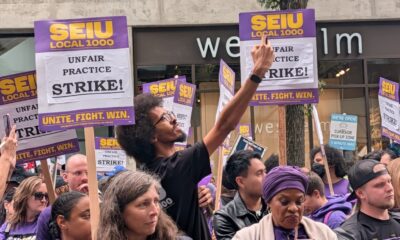
SEIU Local 1000 and State of California Will Continue to Negotiate New Labor Contract
-
 Black History3 weeks ago
HISTORY MADE: Keisha Lance Bottoms Becomes First Black Woman Elected Governor in American History
-
 Business3 weeks ago
COMMENTARY: Your California Living Trust Could Be Next: When Evidence Isn’t Enough
-
 Community3 weeks ago
Golden State Valkyries Become Bay Area Legends Winning WNBA Championship on Halloween Night
-
 Black History3 weeks ago
Five Hospitals Said No! Who Will Help Annette Henry Recover?
-
 Black History3 weeks ago
From Backyard Grilling to Jack London Square: Jamale Carlyle’s Chicken Wing Success Story

Pingback: wyroby szklane piotrków trybunalski