
Business
Protect Yourself from Fake Sweepstakes Scams


By Lucy Drafton-Lowery and Idriys Abdullah
Special to the NNPA via The Washington Informer
YOU WON! We all dream of winning it big through a sweepstakes. But if someone contacts you claiming you won a prize but you didn’t enter a contest — don’t respond! It’s probably a scam.
Recently, a D.C. senior reported to DISB that she was contacted by mail with an official-looking certified award letter stating she had won $1,140,000 in winnings with a “Premium Offer Fee Due For Delivery of only $12.99!” The scam artist undoubtedly mailed millions of these letters. Let’s say the scam artist had a return rate of one to three percent — that means one million bogus award letters could result in 10,000 to 30,000 victims sending illegal fees in excess of $380,000. The scam is then repeated in different zip codes across the country. Scammers often target the elderly, because they are more trusting, financially stable and own their homes.
Scammers contact victims by mail, phone, email or text message and eventually request upfront fees to cover government costs, taxes, and fees. They may also request your social security number, bank account, credit card and other personal information supposedly to verify who you are and secure a “safe” account to deposit your alleged winnings. Do not send them anything!

Providing personal information to unverified sources may result in identify theft, credit card fraud and having your bank account wiped out. If you receive an authentic looking certificate or check informing you that you’ve won a sweepstakes, trash it. Legitimate sweepstakes will not ask you to pay any kind of fee to collect a prize.
If you are ever contacted about being a winner in a contest, remember the following red flags:
• You have to pay. Legitimate sweepstakes do not require you to pay a fee or buy something to enter or improve your chances of winning — that includes paying “taxes,” “shipping and handling charges” or “processing fees” to get your prize.
• You need to verify who you are. There is no reason to give someone your social security number, bank account or credit card numbers in response to a sweepstakes promotion.
• Request to wire money. You may be told to wire money to “insure” delivery of the prize. Don’t do it. Wiring money is like sending cash: once it’s gone, it’s gone.
• Request to deposit a check sent to you. Once their check is deposited in your account you are directed to wire a portion of the money back. Beware, their check is fake and you will owe the bank any money you withdrew.
• You’re told they’re from the government. They might say they’re from a nonexistent agency like the National Consumer Protection Agency or National Sweepstakes Bureau. No federal government agency or legitimate sweepstakes company will contact you to ask for money so you can claim a prize.
• Contact from a well-known company. Scammers pretend to represent a company like Publishers Clearing House or Reader’s Digest, which run legitimate sweepstakes. If you’re unsure, contact the real companies to find out the truth.
• Bulk mail notices. It’s not likely you’ve won a big prize if your notification was mailed by bulk rate. Check the postmark on the envelope or postcard. Do you even remember entering? If not, odds are you didn’t.
• Mandatory sales meetings. If you agree to attend, you’re likely to endure a high-pressure sales pitch. In fact, any pressure to “act now” before you miss out on a prize is a sign of a scam.
• Unsolicited phone calls. You can register your phone number for free at the National Do Not Call Registry at www.donotcall.gov. Unwanted telemarketing calls should stop within 30 days.
• Text Message Prize Offers. Ignore text messages that you’ve won a free prize with directions to go to a website, enter personal information and sign up for “trial offers.” These offers could leave you with recurring monthly charges and possible identity theft.
D.C. residents: Contact the D.C. Department of Insurance, Securities and Banking at disb.dc.gov or by phone at 202-727-8000 if you suspect you have have been a victim of a sweepstake scam or any other financial scam. Read more about sweepstakes schemes on the Federal Trade Commission’s website.
The mission of the D.C. Department of Insurance, Securities, and Banking is twofold: (1) protect consumers by providing equitable, thorough, efficient, and prompt regulatory supervision of the financial services companies, firms, and individuals operating in the District of Columbia; and (2) develop and improve market conditions to attract and retain financial services firms to the District of Columbia. Visit online at disb.dc.gov.
###












Activism
Oakland Post: Week of August 12 – 18, 2026
The printed Weekly Edition of the Oakland Post: Week of August 12 – 18, 2026


To enlarge your view of this issue, use the slider, magnifying glass icon or full page icon in the lower right corner of the browser window.

Business
California Hispanic Chambers of Commerce Unveils: ‘Powering the Future’ Theme for 47th Annual Statewide Convention
POST NEWS GROUP — For nearly 50 years, the CHCC has been the frontline champion of California’s small-business ecosystem. As the economic landscape evolves, “Powering the Future” signals bold momentum—emphasizing the innovation, resilience, and leadership needed to fuel the next generation of entrepreneurs and community leaders. The theme bridges the CHCC’s foundational advocacy over the past 47 years with a strategic vision for rapid economic transformation.

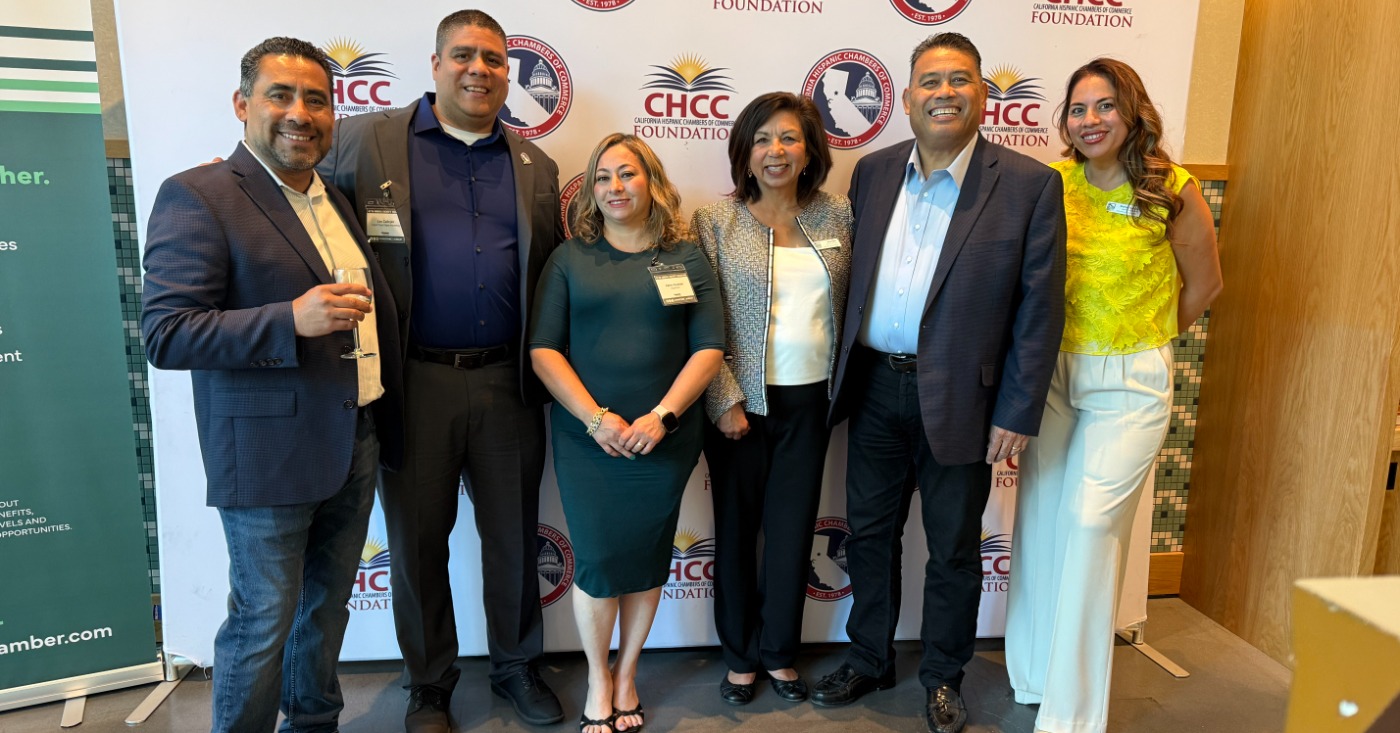
The premier August event in Oakland will unite business leaders, policymakers, and innovators to drive the next generation of California’s economic growth.
The California Hispanic Chambers of Commerce (CHCC) has officially announced “Powering the Future” as the theme for its 47th Annual Statewide Convention. The landmark event will be held August 19-21 at the Oakland Marriott City Center in Oakland, California.
For nearly 50 years, the CHCC has been the frontline champion of California’s small-business ecosystem. As the economic landscape evolves, “Powering the Future” signals bold momentum—emphasizing the innovation, resilience, and leadership needed to fuel the next generation of entrepreneurs and community leaders. The theme bridges the CHCC’s foundational advocacy over the past 47 years with a strategic vision for rapid economic transformation.
Driving Innovation and Economic Influence
As California leads global trends in technology, clean energy, and entrepreneurship, Hispanic-owned businesses are at the helm. From harnessing artificial intelligence and accelerating digital transformation to pioneering sustainable practices, Latino entrepreneurs are actively shaping tomorrow’s industries.
“Hosting this convention in Oakland is deeply meaningful,” said Noel Gallo, who represents Council District 5. “Approximately 28% of Oakland’s population is Latino, and their contributions shape every aspect of our civic, cultural, and economic life.”

Latino‑owned businesses are central to our city’s growth; they drive job creation, revitalize commercial corridors, strengthen neighborhood identity, and contribute to innovation across sectors including construction, hospitality, education, retail, arts, professional services, and more, Gallo asserts.
“These enterprises do more than generate revenue; they anchor family legacies, nurture community pride, and create spaces where culture and commerce meet,” Gallo said.
“Following a period of significant economic transformation, ‘Powering the Future’ is more than a theme—it is a collective call to action,” said Julian Cañete, president and CEO of the CHCC. “Our businesses and future leaders aren’t merely adapting to change; they are driving it. This convention will showcase the innovation and leadership needed to build a stronger, more prosperous California for generations to come.”
Cañete is also excited to have Oakland as the organization’s host city. Noting Oakland’s historical significance and deep-rooted diversity “From its legacy as center of social movements to its modern identity as a hub for innovation, sustainability, and small business growth, Oakland embodies the resilience and creativity that define our state,” Cañete added. “We are proud to contribute to this dynamic community’s ongoing momentum and economic vitality.”
Three Days of Impact, Connection, and Advocacy
The CHCC Annual Convention empowers Hispanic and diverse businesses and communities while fostering connections and advancing economic opportunities. The convention features impactful presentations on business development, current business trends, economic and community development, and policy-oriented discussions.
Attendees can connect with business leaders, thought leaders, elected officials, and other Hispanic and diverse small business and community leaders. Participants establish strategic, long-lasting partnerships through direct personal engagement, best-practice sharing, interactive dialogue, networking workshops, and more.
The agenda includes an annual business matchmaking program, dynamic panels and speakers, an exhibition hall, awards ceremonies, and meal events highlighting the remarkable achievements of Hispanic and diverse businesses and communities.
The CHCC Annual Awards celebrate Hispanic and diverse companies and communities for their hard work, ingenuity, dedication, and contributions to California’s economy. The CHCC Annual Convention also aims to advance a diverse supply chain and create expanded business opportunities for diverse entrepreneurs and communities.
The Oakland Hispanic Chamber of Commerce is the source for this report.

Business
Returning to Its Roots, the Oakland Black-Eyed Pea Festival Partners with the Freedom Farmers Market Sept. 12
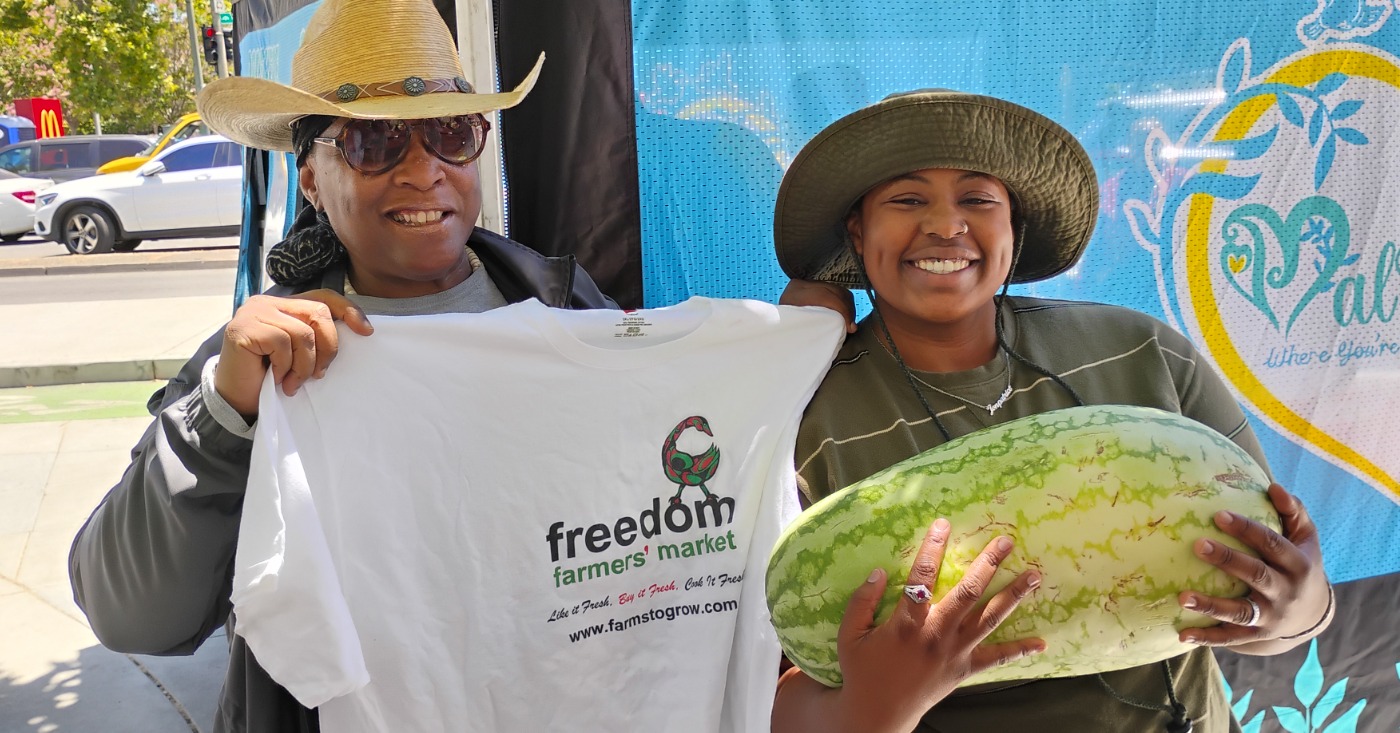
POST NEWS GROUP — Freedom Farmers’ Market (FFM) vendors sell produce and promote wellness and nutrition through organic herbs, massage, and other gift items from July through October on the second and fourth Saturdays at a dozen canopies in the last block of Shattuck Avenue, where it merges with Telegraph Avenue.
By
The Oakland Black-Eyed Pea Festival (BEPF), a celebration of African American traditional music, food and art, will return to its roots through a partnership with Farms to Grow, Inc., the hosts of the Freedom Farmers’ Market on Sept. 12.
Now in its 11th year, the downsized festival sponsored by Omnira Institute will open with presentations by Wakan Wiya Two-Spirit Drum, a drum invocation for the ancestors by Awon Ohun Omnira, a performance by Andre Thierry of Accordion Soul, and most importantly, fresh black-eyed peas for sale.
Freedom Farmers’ Market (FFM) vendors sell produce and promote wellness and nutrition through organic herbs, massage, and other gift items from July through October on the second and fourth Saturdays at a dozen canopies in the last block of Shattuck Avenue, where it merges with Telegraph Avenue.
Over the years, FFM vendors have appeared at the Black-Eyed Pea Festival and vice versa, so this collaboration is like a family reunion.
Farms to Grow, Inc. Executive Director Elaine Smith said the collaboration with Omnira Institute was an opportunity she couldn’t refuse. “People talk about community and unity for Black people – I always want to be an example of what has to be done,” Smith said. “Anyway that we can partner with our people, we want to do that.”
Charlotte Jackson, a longtime vendor with FFM and the festival, had been known for her jellies, jams and chow-chow through Pots n’ Jars. For the last several years, she hasn’t been able to find a commercial kitchen she can afford, so she began selling vegan soap and skin care products that her son and his partner produce under the name Lather and More.
“It’s been a blessing,” said Jackson, who will tell her customers that although they can order the wares from the website, there’s no such thing as ‘smell-avision.” From her table, she encourages passers-by to take a sniff of the soaps, then directs them to the nearby booths.
Jackson functions as a sort of ‘town crier’ of ‘buying Black,’ never failing to encourage Black people to take their mule or Pontiac or Chevrolet and steer it toward Black businesses like Mandela Market.
Likewise, the Black-Eyed Pea Festival was established to encourage Black entrepreneurship by providing a space for Black creatives to sell their handmade or original designs and products without competing with commercially produced goods.
It also served as a way to both commemorate and invigorate memory of the once-thriving Black community of West/North Oakland before it was divided by highways, BART, and then ravaged by the crack cocaine epidemic.
“For one day, I wanted to invoke the success of that community through the sound of music, the taste of soul food and black-eyed peas and the beauty of our art,” Ravernell said.
Once deciding to follow through on the idea of holding a festival celebrating African American traditions, Ravernell settled on using the black-eyed pea as its symbol because of its pride of place in Black people’s consciousness on New Year’s Day and because the peas were originally cultivated in Africa.
Learning that Fresno farmer Wil Scott, former president of the California African American Farmers Association, grew black-eyed peas as well as other legacy crops that are the foundation of a soul food menu, Ravernell was intent on ensuring Scott’s presence at the first festival in 2014. Whenever he could, and whenever the weather yielded a bountiful crop, Scott would bring his black-eyed peas to the festival, shelled or on the pods.
Originally cultivated in Africa, the black-eyed pea is believed to have been brought to the U.S. hidden in the hair of African captives brought to the Western Hemisphere during the holocaust of the Atlantic Slave Trade.
Known to grow plentifully even in poor soil, the pea was associated with abundance in Africa and later, in the U.S., with good luck.
She also learned that black-eyed peas nourish poor soil, that they are a very good source of nutrition, and that they probably contributed to the longevity of the enslaved.
“I thought the black-eyed pea, its story and its significance for Black people made it a great symbol to represent Black culture,” she said. In spite of everything they endured, Black people emerged from slavery and Jim Crow as masters of making a lot from a little, creating a culture that would be emulated and imitated at home and abroad.
Feeling that many people know only the most recent iterations of Black music – Hip Hop and R&B – she created the festival to promote the music of earlier eras, which reflect the thoughts and feelings of Black people over time.
That’s why the festival highlights straight-ahead jazz, gospel, zydeco and the Second Line of the New Orleans jazz funeral.
“It’s not enough to remember,” Ravernell said. “We need to actively nourish the roots of our culture.”

WORK FROM HOME
Home-based business with potential monthly income of $10K+ per month. A proven training system and website provided to maximize business effectiveness. Perfect job to earn side and primary income. Contact Lynne for more details: Lynne4npusa@gmail.com 800-334-0540


Four Candidates, Including Incumbent Barbara Lee, Qualify for Oakland Mayor’s Race

Oakland Observes Black August with Block Parties, Film Showings, Workshops

Oakland Post: Week of August 12 – 18, 2026

COMMENTARY: Why Local School Tax Measure G1 Will Not Be on the November Ballot

California Hispanic Chambers of Commerce Unveils: ‘Powering the Future’ Theme for 47th Annual Statewide Convention

Returning to Its Roots, the Oakland Black-Eyed Pea Festival Partners with the Freedom Farmers Market Sept. 12

Less Affluent School Districts, Including Sacramento City, Face Threat of State Takeover

From Blueprint to Breakthrough: Tackling Affordable Housing in Oakland

NPRC Scores First Advocacy Victory: David Shaw Finally Gets His Wish to ‘Go Home’

ESSAY: California Can Close Its Colorectal Cancer Gap

Car Wash Workers Cope with Lingering Impacts of ICE Raids

Misty Copeland Shapes Ballet’s Tomorrow

As Part of Your Back-to- School Checklist, Vaccinate

As Part of Your Back-to- School Checklist, Vaccinate

Congresswoman Simon Demands Investigation into Trump’s Abuse of Emergency Powers for Coal Export Terminal in West Oakland

Department of Homeland Security Demands California Secretary of State Shirley N. Weber Scrub Voter Rolls

Oakland Children’s Hospital Workers and Patients Rally for Pediatric Medical Care

New Judge Could Decide if Karmelo Anthony Gets a New Trial

“The Power to See Threats Sooner”: Gov. Newsom, Safety Officials Showcase California’s Investments in Hi-Tech Wildfire Prevention

Alpha Kappa Alpha Sorority, Inc. Celebrates New North Atlantic Regional Director

Surveillance Pricing Fight: State Senate Debates Bill Banning Retailers from Using AI to Set Prices Based on a Buyer’s Profile

Mount Zion MBC, Church of Jesus Christ of Latter-day Saints Partner to Bring 29,000 Meals to Alameda County

California Sen. Padilla Joins Colleagues to Introduce Bill Imposing Term Limits on Supreme Court Justices

Starting This Summer, California Car Buyers Can Get an Instant $3500 Off the Cost of Electric Vehicles

COMMENTARY: You Are Already Paying for the AI Boom

California Bill Would Let Abuse Victims Use Trauma as Legal Defense for Violent Crime
Less Affluent School Districts, Including Sacramento City, Face Threat of State Takeover
Car Wash Workers Cope with Lingering Impacts of ICE Raids

Fed Court to Decide Landmark First Amendment Case

Gov. Gavin Newsom Signs Law Streamlining Affordable Housing Rules

The Conversation With Al McFarlane 6/23/26

Media Monday 6/22/26

LIVE! ASK ALMA! — TUES. 6.23.26 7PM EST

Car Buying Secrets: 4 Hidden Checks Before You Sign!

Is This 550 HP Charger Worth YOUR Money? AutoNetwork Review

Celebrating Juneteenth – Frederick Douglass on education and resistance

LIVE! — ASK ALMA! — TUES. 6.19.26 7PM EST

Hyundai Ioniq 5 Parking, Safety, and 360 View #shorts

2025 Ioniq 5 New Wiper & Powerful Performance! #shorts

Electric SUV Range: Is 259 Miles Enough? #shorts

EV Charging: How Fast Can You Charge an Electric Vehicle? #shorts

Biometric Cooling… Messaging Seats…Come on! 2025 Infiniti QX80 Autograph 4WD

Charged Up: Witness the Magic of a Fully Electric Car! #shorts

Range Rover Sport PHEV Included…: See What’s Inside This Luxury SUV! #shorts

Invisible Hood View: Perfect Parking with X-Ray Vision! #shorts
-
 Featured1 week ago
Department of Homeland Security Demands California Secretary of State Shirley N. Weber Scrub Voter Rolls
-
 Business3 weeks ago
Oakland Children’s Hospital Workers and Patients Rally for Pediatric Medical Care
-
 #NNPA BlackPress2 weeks ago
New Judge Could Decide if Karmelo Anthony Gets a New Trial
-
 Environment1 week ago
“The Power to See Threats Sooner”: Gov. Newsom, Safety Officials Showcase California’s Investments in Hi-Tech Wildfire Prevention
-
 Black History2 weeks ago
Alpha Kappa Alpha Sorority, Inc. Celebrates New North Atlantic Regional Director
-
 Business3 weeks ago
Surveillance Pricing Fight: State Senate Debates Bill Banning Retailers from Using AI to Set Prices Based on a Buyer’s Profile
-
 Business3 weeks ago
Mount Zion MBC, Church of Jesus Christ of Latter-day Saints Partner to Bring 29,000 Meals to Alameda County
-
 Featured1 week ago
California Sen. Padilla Joins Colleagues to Introduce Bill Imposing Term Limits on Supreme Court Justices
