
Family
Autism spectrum disorder situation highlights need for early diagnosis
SOUTH FLORIDA TIMES — Shaniel Miles is a mother of three children, and now an expert and advocate – by necessity – on autism.

MIAMI, Fla. – Shaniel Miles is a mother of three children, and now an expert and advocate – by necessity ¬– on autism. Three years ago, when Shaniel took her then 5-year-old son Geremy for his check-up she was told he was just fine, even though he wasn’t speaking much. “He’ll catch up,” the doctor told her. “Boys are just slower.”
Later that year, Geremy entered kindergarten. His teachers never complained about him, but they also never let Shaniel know that Geremy still wasn’t speaking or socializing with classmates. At the end of the school year, Geremy was held back.
“I thought it was so that he could mature a little bit more,” Shaniel said. “He understood what was going on. We just thought he didn’t like to talk much.”
A year later Geremy entered first grade. When Shaniel asked about Geremy’s progress, teachers told her that although he was well behaved, he didn’t participate in classroom activities or do classwork. She called for a meeting with his teachers, the principal, the school counselor, and school psychologist so she could understand her son’s situation better. Together they all came up with a plan to monitor him more. But when newly implemented daily reports came home, Shaneil got the same news over and over:
Geremy wasn’t doing any classwork and he wouldn’t speak to the teacher. The teachers didn’t offer up any explanation or any solutions.
Today, “One in 62 African American children in the U.S. has an autism spectrum disorder and those children are frequently misdiagnosed or diagnosed later than other children, which may result in longer and more intensive intervention,” says Dr. Michael Alessandri, executive director of the University of Miami – Nova Southeastern University Center for Autism and Related Disabilities (UM-NSU CARD).
In Geremy’s case, he was 7 years old, Alessandri noted. “His speech delay and tendency to avoid eye contact with adults were early indicators of an autism spectrum disorder. Research shows early identification and family support have long-term benefits for children with autism. Unfortunately, Geremy’s story is all too common.”
When teachers told his mother they didn’t have time to work with him individually, she said, “I decided there wasn’t any more time left to waste with the school’s bureaucracy, and I made an appointment with a private psychologist.”
After the psychologist spent a few sessions with Geremy, and his parents, he was diagnosed with autism spectrum disorder (ASD).
“We were shocked and didn’t know what to think” said Miles. “But at the same time, we were relieved, because the psychologist confirmed what we had suspected. Geremy wasn’t progressing like the other children and he needed help. It took almost two and a half years, to figure it out. But we were determined to help our child and committed to doing what’s necessary to get him all the help he needs to get back on track,” Shaniel explained.
Autism spectrum disorder is a neurological condition that affects the way the brain develops and processes information. It is characterized by impaired social interactions, problems with verbal and nonverbal communication, and unusual, repetitive, or severely limited activities and interests. It is considered a “spectrum” disorder because it varies widely in its specific behaviors and severity from one person to another. Some individuals present with such mild symptoms that the disorder may go largely unnoticed by others.
“Parents, educators and medical professionals all need to be aware of the common and varied indicators of a possible autism spectrum disorder,” Alessandri said. Some of those include:
• Not responding to their name by 12 months,
• Not pointing at objects to show interest such as toys or airplanes by 14 months,
• Not playing “pretend” games, such as pretending to “feed” a doll by 18 months,
• Having trouble understanding other people’s feelings or talking about their own feelings
• Repeating words or phrases over and over (echolalia)
• Giving unrelated answers to questions
• Getting upset by minor changes
• Having obsessive interests
• Flapping their hands, rocking their body, or spinning in circles
• Having unusual reactions to the way things sound, smell, taste, look or feel.
“When any of these signs present themselves, it’s always best to speak to a medical professional, and if you’re not comfortable with what your family doctor or pediatrician is telling you, get a second opinion,” said Alessandri. “Symptoms can also vary by age and developmental level, with younger individuals often displaying different symptoms than older individuals. In all cases, individuals with ASD or other related conditions can benefit from early and appropriate treatment.”
UM-NSU CARD has offices in Broward, Miami-Dade and Monroe Counties and can help families get a thorough evaluation and proper diagnosis. From there clients can be provided primary services including information, resources, medical referrals and support groups. Additionally, the state-financed program provides training and workshops for parents and educators, as well as public education and awareness activities.
“We want to create a community and provide the information, support, and strategies that help individuals with autism and their families succeed in all stages of life,” Alessandri said.
“We wish we’d known about them earlier in the process. It would have saved us a lot of time and frustration,” said Miles. “But now were on the right track and we know what’s possible for our son.”
Today, 8-year old Geremy is in second grade and attends a public school in MiamiDade County that has a specialized program for students with ASD along with specially trained teachers who understand his needs and potential.
“He’s thriving and is on the honor roll,” Miles said. “We are very proud of him.”
This article originally appeared the South Florida Times.





Activism
Diabetes in Black California: Turning the Tide from Crisis to Control
According to the Centers for Disease Control and Prevention (CDC) Behavioral Risk Factor Surveillance System data, nearly 17.9% of Black adults in California have been diagnosed with diabetes — above the national Black adult average of 16.8%, and nearly five points higher than California’s overall adult rate of 12.6% across all races. California ranks 24th out of 39 states with available data for Black adult diabetes rates.
By Charlene Muhammad, California Black Media
Crystal Lambert knew something was terribly wrong with her three-year-old granddaughter as she sped down the street trying to get her to the hospital.
“I thought she got a hold of some poison,” Lambert recalled.
Doctors found Lambert’s granddaughter had a blood sugar level over 800, diagnosing her with Diabetic Ketoacidosis(DKA), a state in which the body, starved of insulin, begins to shut down.
Lambert said she was born with a pancreas that was not fully functioning — it lacked the specialized cells required to produce insulin.
Her granddaughter survived and is five years old today. Now, she gives herself insulin shots, asks endless questions about her condition, and runs like the spirited child she is. But the terror of that night transformed Lambert — and ultimately inspired her to launch the We Fight Back Organization, a mobile health and food access initiative serving underserved communities across California. Lambert is the executive director.
The Crisis by the Numbers
According to the Centers for Disease Control and Prevention (CDC) Behavioral Risk Factor Surveillance System data, nearly 17.9% of Black adults in California have been diagnosed with diabetes — above the national Black adult average of 16.8%, and nearly five points higher than California’s overall adult rate of 12.6% across all races. California ranks 24th out of 39 states with available data for Black adult diabetes rates.
Nationally, according to the U.S. Department of Health and Human Services, Black Americans were 24% more likely than the overall U.S. population to have diabetes in 2024. They also died from diabetes 78% more often than the general population in 2022. Black Americans are also more than twice as likely as the overall population to develop kidney failure caused by diabetes.
According to the California Health Care Foundation’s 2024 Health Disparities Almanac, Black Californians have the shortest life expectancy in the state at just 74.6 years — due in part to chronic conditions like diabetes and its devastating complications.
Leon Rock, co-founder of the African American Diabetes Association, believes statistics, though revealing, only tell part of the story.
“There are a whole bunch of Black folks that don’t tell you that they have diabetes — or don’t know,” he said.
And the disease itself, Rock is careful to note, is not what kills. “They die from the complications. That’s heart attack, that’s stroke, that’s amputations of legs, of feet. Going blind. All those complications are inherent in a system that has impacted Black folks with diabetes in California and across America.”
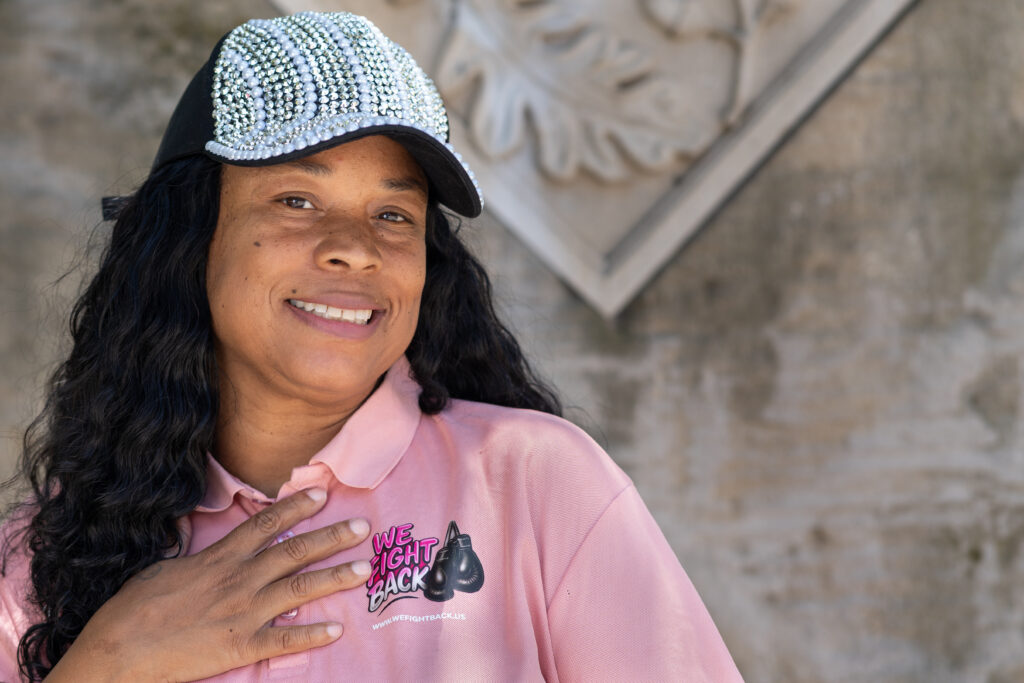
Crystal Lambert, creator and executive director of the We Fight Back Organization, started out of a need to learn more about diabetes on behalf of her granddaughter. Now she is looking to spread her organization to the valley, on Friday, June 6, 2026 Photo by Solomon O. Smith/ California Black Media
An Information Gap Fuels the Crisis
For Rock, part of the solution is diagnosis. He says the medical and public health systems are failing Black Californians by the absence of information designed for them.
“That is the bottom line. We need good information. Information that is culturally specific,” said Rock.
Telling people to eat healthy or exercise, he added, falls short when culturally specific alternatives are not provided, and when many residents of urban communities do not feel safe exercising in some neighborhoods – or outside at night.
Dr. Khadijah Lang, a family medicine physician and president of the Golden State Medical Association, agrees that the roots of the crisis run deeper than individual behavior — and blaming patients misses the point.
“We are not genetically predisposed to diabetes,” Lang said. “But the system under which we live increases the likelihood that we will develop it.”
What the Body Needs — What Communities Are Denied
Type 2 diabetes, which accounts for 90 to 95% of all diabetes cases, according to the CDC, develops when the body can no longer use insulin effectively to regulate blood sugar. Left unmanaged, it damages nerves, kidneys, eyes, and the cardiovascular system. The hemoglobin A1C test is a blood draw that reveals how the body has processed sugar over the previous three months — not just at the moment of the test. It is the standard tool for both diagnosis and ongoing monitoring.
That distinction matters, Lang emphasized, because patients cannot manipulate three months of blood sugar history the way they might fast for a day before a single blood draw.
“The pill is not meant to undo or control a sugar level that’s being constantly stressed,” Lang said. “It’s meant to work in conjunction with a low-carbohydrate diet and exercise.” She recommended at minimum 30 minutes of physical activity five days a week — breakable into 10-minute sessions for those who need it.
Lang stressed that education must be delivered in language people recognize and can relate to. The goal is to inform them of the choices that serve their health best, she said.
But for many Black Californians, even those informed choices remain out of reach, Lambert said.
“They need access to healthy foods and medication, too” she said.
California has made some critical policy advances. The state has expanded access to the Continuous Glucose Monitor (CGM), which has transformed diabetes care for state residents. Assembly Bill 365, introduced in 2024, proposed requiring Medi-Cal to cover the costs of CGM and other related medical equipment but it failed in the State Senate. Since then, the California Department of Health Care Services (DHCS) reports that the core Medi-Cal CGM benefit now available to eligible patients was solidified through previous budget actions and pharmacy policy updates.
These measures, while meaningful, have not closed the gap for the communities most at risk, according to advocates.
Control Through Community
Health care advocates conclude that the solution must be communal, culturally grounded, and sustained — not a fad, not a celebrity moment, not a single clinic visit. For example, observed Lang, lifestyle shaped by shared values and collective accountability can move the needle where individual prescriptions have not.
Rock is building infrastructure to match the urgency, establishing local chapters of the African American Diabetes Association across the country, with California next.
“We have to do for self, period,” he said. “Health is wealth. We have to eat to live.”
And Lambert, whose granddaughter unknowingly started all of this for her, keeps showing up.
“Diabetes advocacy is about dignity, education, prevention, and hope,” she said.
Video: Diabetes Disparity Exposed in California
This article is supported by the California Health Care Foundation
(CHCF). Visit www.chcf.org
Book Reviews
BOOK REVIEW: The Ice Cream Queen: Flavors from Black America’s Past, Present & Future
Sugar is the first ingredient for ice cream, which was first made some 1500 years ago but which didn’t arrive in this country until around 1744. Thirty years after that, America’s first ice cream parlor was opened in New York City, and it was a hit. Take note, though, and stress the word “parlor.” An ice cream shop was a totally unacceptable place for unchaperoned ladies. A parlor was completely fine.

By Terri Schlichenmeyer
Author: Lokelani Alabanza, Copyright: c.2026, Publisher: W.W. Norton, SRP: $29.99, Page Count: 264 pages
Your tongue can barely stay behind your teeth.
Is it Rocky Road that’s tempting you, or Chocolate Chip Cookie Dough? Maybe something with caramel on top, or just plain vanilla, dressed up in a rainbow of sprinkles. Have you ever had a bad ice cream cone on a hot summer’s day? Probably not — so dip into the new book “Ice Cream Queen” by Lokelani Albanza and have a taste.
For nearly three centuries, says Albanza, “African American hands have been touching sugar.” Planting it, harvesting it, processing it, every step was loaded with possible danger, loss of limb, and loss of life.
Sugar is the first ingredient for ice cream, which was first made some 1500 years ago but which didn’t arrive in this country until around 1744. Thirty years after that, America’s first ice cream parlor was opened in New York City, and it was a hit. Take note, though, and stress the word “parlor.” An ice cream shop was a totally unacceptable place for unchaperoned ladies. A parlor was completely fine.
Writing about memories of her grandma’s stash of ice cream, Albanza recalls enjoying it after a good Southern meal cooked by the Tennessean woman. In her career journey, Albanza learned about other Black cooks and Black cookbooks — “And then I found Sarah Estell.”
From roughly 1840 until the Civil War, Estell, a Black woman, owned and ran an ice cream “saloon” in Nashville, serving ice cream she made. Known locally as the “Ice Cream Queen,” Estell seemed to disappear after 1865.
Like her “North Star,” Estell, Albanza makes unusual kinds of ice cream.
In this book, you’ll find a glossary of terms, lists of equipment needed, and directions for different bases to get you started. There are recipes for basic flavors, Parmesan, cream cheese & pepper jelly, burnt almond, and marshmallow. You can have blueberry ice cream, cranberry-cherry vodka, summer corn, and more. But why stop there?
Says Albanza, “I have yet to come across one person who doesn’t like ice cream. Not one.”
So, what’s your preference? A waffle cone, a regular cone, or in a bowl? Sprinkles or not, and okay, now you want some ice cream, but first, check out “Ice Cream Queen.”
The thing you’ll notice about this book is that it’s so happy. From the “birth of ice cream,” to tales of notable people in frozen-concoction history, to recipes for kids and kids-at-heart, this is one of those books that cooks will love, but it’s not just for them. Alabanza satisfies everyone, from historians to foodies, with step-by-step, easy-to-try instructions, so you can create tasty foundations for whatever flavor you might want to try. There’s even some encouragement for a little experimentation of your own. Glossy photos will make your mouth water as you smile big.
Summertime can be a scorcher, and you know what cools you off best? Yep, so find this book, invest in a few tools, and be the hit of the neighborhood. For that, a book like “Ice Cream Queen” can’t be licked.
Activism
California Launches Free Diaper Program for Newborns Statewide
The initiative, called Golden State Start, will provide 400 free diapers to every newborn delivered at participating California hospitals beginning this summer. The state is partnering with Baby2Baby, a California-based nonprofit that distributes essential items to children in need nationwide.

By Bo Tefu, California Black Media
Gov. Gavin Newsom announced Friday that California will launch a first-in-the-nation program providing free diapers to families with newborns, part of a broader effort to lower costs for parents and improve infant health outcomes.
The initiative, called Golden State Start, will provide 400 free diapers to every newborn delivered at participating California hospitals beginning this summer. The state is partnering with Baby2Baby, a California-based nonprofit that distributes essential items to children in need nationwide.
State officials said hospitals participating in the program will give families the diapers when they are discharged after birth, helping parents leave with an immediate supply of newborn essentials.
“Every baby born in California deserves a healthy start in life,” Newsom said in a statement. He said the program is part of California’s broader affordability efforts, which also include free school meals, universal preschool for four-year-olds and expanded after-school programs.
The announcement comes ahead of Mother’s Day and is tied to the administration’s broader CalRx initiative, which aims to reduce costs for essential products and medications. State officials said California is also exploring ways to lower diaper prices by challenging high costs from major brands.
The first year of the program will prioritize hospitals serving large numbers of Medi-Cal patients, with plans to expand to additional hospitals and birthing centers over time. Officials said the effort is intended to reduce financial pressure on low-income families and improve infant and maternal health by ensuring parents have access to clean diapers.

“California families deserve to feel supported during one of life’s more exciting, yet vulnerable transitions,” First Partner Jennifer Siebel Newsom said in a statement. She said the program would allow parents to focus on caring for their newborns instead of worrying about basic supplies.
According to Baby2Baby, one in two families in the United States struggles to afford diapers. The organization has distributed more than half a billion items to children over the past 15 years through partnerships with shelters, hospitals, foster care programs and schools.
State officials said Baby2Baby will oversee diaper purchasing, warehousing and distribution through its existing hospital and community partnerships across California.



Asm. Corey Jackson Announces Launch of 24-Hour Childcare in His District

IN MEMORIAM: The Rev. Leon “Sonny” Clark, Longtime Orange County Pastor and Community Leader, Dies at 72

Poll: Becerra Widens His Lead Over Hilton; Californians Split on Wealth Tax

From Historic Memories to New Possibilities: Oakland Celebrates Coliseum 60

County Office of Education Says OUSD Finances Are Getting Healthier, Materially Stronger

LIVE FREE Sunday Dinner Brings Faith, Fellowship and Civic Conversation to Oakland

Remembering Chauncey Bailey as Student Journalists Face Threats to Truth-Telling

BLACspace Cooperative Invites Bay Area to Experience Oakland’s Black Cultural Ecosystem Through a BLAC Map Tour + Party

In Wake of Death on Doorstep, Williams Chapel Baptist Church Calls for Better Care, Funding for Unhoused

Oakland Centenarian Nuna McKee Honored!

Caribbean Nations Produce Action Plan Calling for UK Reparations Over Slavery

Oakland Post: Week of September 23 – 29, 2026

Doulas Are Helping Black California Moms Navigate Pregnancy–Even as High Mortality Rates Persist

Newsom Signs Addictive Social Media Law to Protect Kids

On Your November Ballot: Prop 38 Would Allocate $8.4 Billion to Immunology and Immunotherapy Funding

Standoff for Justice: Our Homes Are Worth Fighting For

Oakland Post: Week of August 26 – September 1, 2026

Frontier Airlines’ Return to Oakland Airport Brings Flights, Jobs and Opportunity

Gubernatorial Candidate Steve Hilton Blasts California New Tire Rules; Newsom Hits Back

Chef Sharon Lee Blends Culinary Excellence, Education and Empowerment

Jackie Wright Champions Bay Area Stories, Filmmakers and Cultural Institutions

Big City Mayors Ask for “Yes” Vote on Housing Bond Measure; Conservatives Say “No”

Oakland Coliseum Project Opens Door for Small Businesses to Build Bigger

Gov. Newsom’s Latest Appointees Include Sacramento Advocate for Formerly Incarcerated Students; State’s New Tech Chief

Misnamed ‘Parent’ PAC Seeks to Influence Oakland School Board Elections

Longtime BWOPA Member Brendalyn Goodall Appointed to California Workforce Development Board

Gov. Newsom Signs Law Shielding Immigration Aid Workers From Doxing Threats

Secretary of State Shirley N. Weber Urges Californians to Vote Early as Voter ID Battle Intensifies

From Palestine to Oakland: Seeds for Liberation Examines Shared Struggles for Freedom

IN MEMORIAM: Dolly Parton Dead at 80 — How She Built a Legacy of Love and Earned Her Place in Black Culture

The Conversation With Al McFarlane 6/23/26

Media Monday 6/22/26

LIVE! ASK ALMA! — TUES. 6.23.26 7PM EST

Car Buying Secrets: 4 Hidden Checks Before You Sign!

Is This 550 HP Charger Worth YOUR Money? AutoNetwork Review

Celebrating Juneteenth – Frederick Douglass on education and resistance

LIVE! — ASK ALMA! — TUES. 6.19.26 7PM EST

Hyundai Ioniq 5 Parking, Safety, and 360 View #shorts

2025 Ioniq 5 New Wiper & Powerful Performance! #shorts

Electric SUV Range: Is 259 Miles Enough? #shorts

EV Charging: How Fast Can You Charge an Electric Vehicle? #shorts

Biometric Cooling… Messaging Seats…Come on! 2025 Infiniti QX80 Autograph 4WD

Charged Up: Witness the Magic of a Fully Electric Car! #shorts

Range Rover Sport PHEV Included…: See What’s Inside This Luxury SUV! #shorts

Invisible Hood View: Perfect Parking with X-Ray Vision! #shorts
-
 Community2 weeks ago
Misnamed ‘Parent’ PAC Seeks to Influence Oakland School Board Elections
-

 Activism3 weeks ago
Oakland Post: Week of September 2 – 8, 2026
-

 Community2 weeks ago
Richmond Tiny House Village Farm & Garden Set to Open Gates on Sept. 26
-

 Black History2 weeks ago
OPINION: Nolan Wells’ Death One of Several Signifying Racial Terror Lives on in U.S. South
-

 Black History2 weeks ago
Latest Massacre in Haiti Reveals Cruelty U.S. Deportations
-

 Activism2 weeks ago
Oakland Post: Week of September 9 – 15, 2026
-

 Community2 weeks ago
Democratic Clubs Interview Candidates for Oakland School Board
-

 Featured2 weeks ago
‘Ready to See These Bills Become Law’: Sen. Weber’s Package of 15 Bills Advance to Gov. Newsom’s Desk

1 Comment