
Minnesota Spokesman-Recorder
7 wise ways to spend your tax refund
MINNESOTA SPOKESMAN-RECORDER — This year’s tax season seems to be giving taxpayers one big headache.

This year’s tax season seems to be giving taxpayers one big headache. New tax guidelines coupled with the aftermath of the country’s longest-ever government shutdown has led to reduced refunds and even longer wait times.
According to the IRS, refunds are down nearly 17 percent, with the average refund dropping from $3,169 to $2,640 as of Feb. 15. That is a significant drop from 8.4 percent reported just a week prior. The drop is a huge indicator of how the new Tax Cuts and Jobs Act changes are affecting taxpayers who are expecting refunds. Now they are smaller or gone altogether (though an expected one-third will actually receive an increase.
While tax refunds may be down, 80 percent are still projected to receive a little something back from the government this year.
The best steps to mitigate any reductions you may receive this year are by filing early and plotting a game plan for how those dollars will be spent before you get them. That way you can make the most out of it, without it sitting in your bank, primed for an impulse buy or regrettable money decision.
Read on for seven ways to get the most out of your (reduced) refunds.
Start that emergency savings fund
Sure, you may have been talking about it for some time now, but haven’t quite gotten it together. If you’ve received a lump sum, put at least $400 away for an emergency/rainy day fund. But, if you can put more, do so.
Financial coach Jonathan Marcello of Marcello Solutions has previously advised that taxpayers put 50 percent of their refunds into savings.
“Let this be the catalyst to get you contributing to your own safety net,” he said. “This might be the biggest check you see all year, don’t let it go to waste.”
Tip: Look for a high-yield savings account to get a better return on your dollars.
Catch up on bills
This should be a no-brainer, but just in case, this is the time to pay down those looming heating and energy bills. Assess your bills for the year and see what you can get ahead on, especially one-time or infrequent bills like tabs or car insurance.
Pay down that high-interest credit card
Even if you can’t zero out the entire balance, paying down on your highest-interest credit card is a win-win situation. Not only will it reduce your long-term debt, but it will also help increase your credit score (opening the door to better credit card rates).
Make an extra (principal-only) mortgage payment
Another way to beat the interest blues is to make an extra payment on your mortgage. “This alone is one of the best financial decisions to make when it comes to spending your tax money,” said Marcello. “You can reduce the life of your loan by months and even years, by adding a couple of hundred dollars each month. An extra principal-only payment will be a significant boost.”
Just one extra mortgage payment a year can reduce the life of your loan by four years. Two extra payments can reduce it by up to 10 years. And, you’ll save tens of thousands of dollars in interest.
Invest in yourself
Before we even explore investing in any financial opportunities, look at investing in your career, education, and self-care. Use these monies to go back to school, get a new certification or even learn a new language to boost your professional career. You might even want to spend your windfall on that physical trainer who’s been out of budget or a mini health and wellness retreat to help you refocus and realign.
Max out your Roth IRA
Contribute to your retirement life by maxing out your Roth IRA contributions — up to $5,500 or up to your taxable income for 2018. Roth IRAs are flexible, easy to open in minutes and since funded with post-tax dollars, they grow tax-free (as long as you follow guidelines). You can also withdraw during hardships without penalties or additional taxes. And, when you retire, your money (and its earnings) will remain tax-free.
Splurge (a little bit)
Understandably, getting a huge chunk of cash that you can’t have any fun with can seem a little depressing. Instead of putting yourself on total financial restriction, take five or 10 percent of your return and do something fun and frivolous (within reason) for yourself. This could be going out on date night, buying a cool new gadget or adding a piece or two to your wardrobe.
Kay Robinson welcomes reader responses to krobinson@spokesman-recorder.com.
This article originally appeared in the Minnesota Spokesman-Recorder.






#NNPA BlackPress
Coronavirus: Mayo Clinic’s Dr. Joyner Leads COVID-19 Plasma Treatment Research
NNPA NEWSWIRE — We have people from about 40 universities and medical centers all over the country from about 20 states working on this and we are getting cooperation from the Food and Drug Administration. We are trying to get this online right away it’s already started in New York and Houston and we hope the pace is going to pick up throughout April.

By Minnesota Spokesman-Recorder News Service
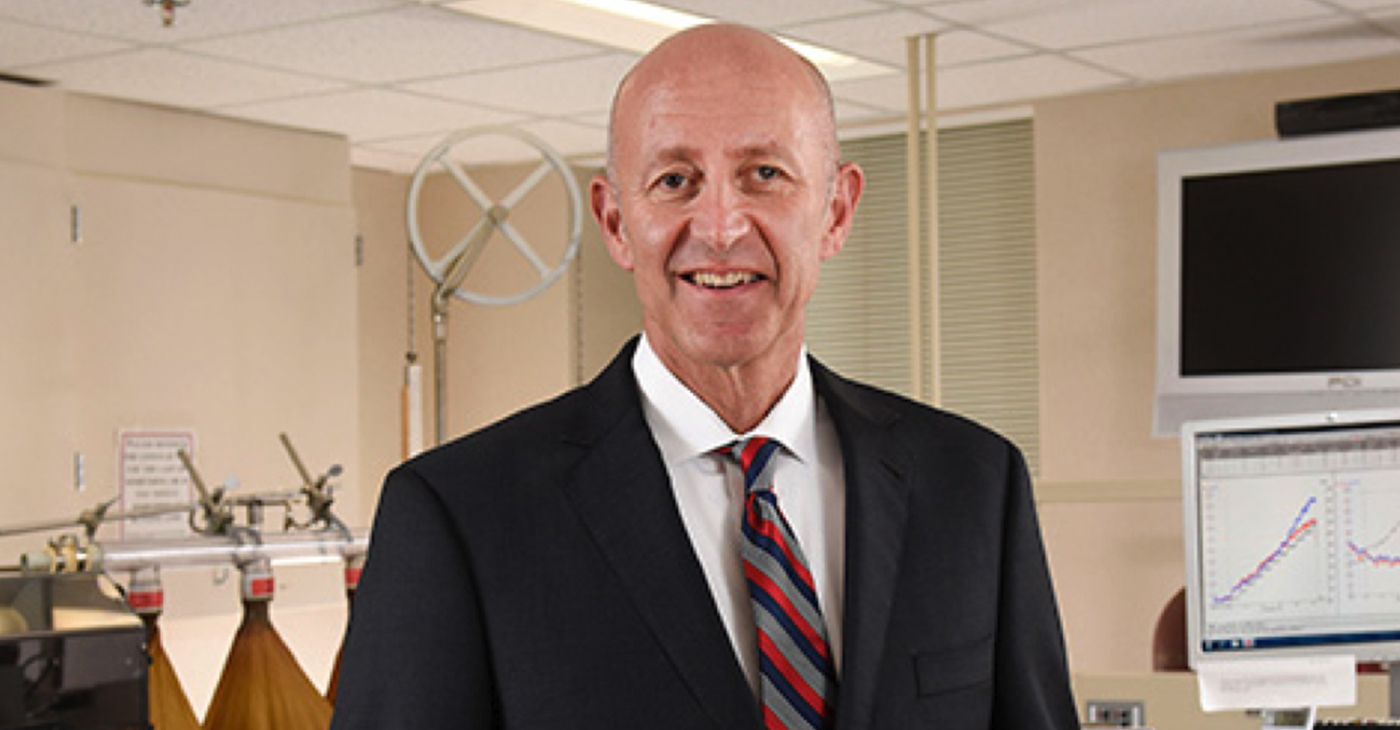
At Mayo Clinic in Rochester, Dr. Michael Joyner of the Mayo Clinic in Rochester is part of a group of experts that are pursuing a unique but time-tested treatment to help patients with COVID-19 fight off the virus. Convalescent plasma treatment has been used historically to treat infectious diseases before the discovery of vaccines.
Dr Michael Joyner (MJ) sat down with MSR for a brief interview
MSR: What is involved in convalescent plasma treatment?
MJ: It involves taking antibody-rich plasma from the blood of patients who have survived COVID-19, then infusing it into those who are ill to help their bodies fight off the disease. The approach is known as “convalescent plasma treatment.”
MSR: Why is it called convalescent plasma treatment?
MJ: It’s called convalescent because the word refers to when people are getting better.
MSR: You spent most of your career as a physiologist how did you get involved in this?
MJ: That’s true and I am also an anesthesiologist. What happened is my friend Dr. Arturo Casadevalle at John Hopkins wrote an editorial in the Wall Street Journal discussing the historical use of convalescent plasma. I reached out to Arturo and since we have a large network of collaborator we reached out to them. This was me repurposing my career for a few months in my lab to help attack this problem, to see if we could find some way to push back. I have thrown in with Arturo and want to help him move this forward. He is our visionary/spiritual leader.
MSR: Tell us who else is involved in this project?
MJ: We have people from about 40 universities and medical centers all over the country from about 20 states working on this and we are getting cooperation from the Food and Drug Administration. We are trying to get this online right away it’s already started in New York and Houston and we hope the pace is going to pick up throughout April.
MSR: The FDA has approved the process but with limitations. Explain the limits?
MJ: You have to get special permission. It’s one off at a time. We are currently working to get an expanded access protocol going so we can begin to collect more [plasma] all over the country and treat more people. It’s going to be a while until the supply is high. Infrastructure is being put in place to collect it at scale distribute it and get it to the people who can benefit from it. And then keep detailed records and make sure we do all the compliance and reporting, get people’s permission and study it while we are actually using it. We want to do it in a rigorous and ethical way.
MSR: When does this treatment date back to?
MJ: Before 1900 it was tried.
MSR: It appears some people have died from heart failure as a result of contracting the virus. How do you explain this?
MJ: One of things that can happen when you have an overwhelming infection is you have a condition called myocarditis meaning the heart becomes inflamed and the efficiency of the pumping action becomes worse. It’s unclear if COVID19 does anything unusual. It appears that when you are septic and when you have critical illness, when you have multi organ failure, typically your heart function goes down as well. It’s unclear if there is any kind of nasty stuff being excreted by this virus. It’s possible it targets the heart, but we don’t know that yet. My guess is it is more of the general phenomena. Time will tell we have to do the research.
MSR: How does COVID-19 attack the body?
MJ: Not clear exactly how covid attacks the body
I think we are 80 percent there. We have the general game plan but the details are still being worked out
MSR: How are you going to get started in Minnesota?
MJ: There are plans to collect it [plasma] and distribute it nationally. Most of the people we will begin to collect [plasma] from will be in the Rochester and southeastern Minnesota region.
MSR: What is plasma?
MJ: When you look at your blood it is red but red cells are about 40 percent the rest is protein containing fluid that if you separate it put it in a centerfuge and spin it around you will get this kind of yellowish material that’s plasma is the part of the blood of the blood that is not the red and white cells the non-cellular part of the blood.
MSR: What are its chances of success?
MJ: It’s too soon to tell. It depends on how sick the patient is. Our best shot is people who are sick but not terribly sick or in the ICU yet. And it may help people in the ICU.
MSR: Is it a panacea?
MJ: No what we are trying to do is bend some curves. We want to stop people deteriorating as they go form sick to the ICU and as they get in the ICU and do worse, we want them to stabilize and get better.

#NNPA BlackPress
Minnesota Doctors on the Cutting Edge Of COVID-19 Fight
NNPA NEWSWIRE — Molecular testing technologies help detect the presence of a virus by identifying a small section of the virus’ genome, then amplifying that portion until there’s enough for detection. This process can cut testing wait time from hours, if not days, to as little as five minutes for positive results and 13 minutes for negative results. They have been using this technique for influenza detection since 2014.

By Mel Reeves, Minnesota Spokesman-Recorder Community Editor
Minnesota doctors and researchers are on the cutting edge leading the fight in the war against COVID-19. Doctors and researchers at the University of Minnesota and Mayo Clinic are searching for medications that help ease the effects of the virus, including a process of plasma transfer, while also working to develop a vaccine.
No ‘new normal’ until August
The MSR interviewed Dr. David Hamlar (DH), assistant professor of the Department of Otolaryngology at the University of Minnesota
MSR: Incredibly, despite the number of cases and deaths, there are some in our community calling the coronavirus a conspiracy or hoax. What do you say to them?
DH: This is no hoax!
MSR: Why has the CDC and others recommended people stay six feet apart?
DH: People who are within six feet of one another may spread the virus through respiratory droplets produced when an infected person coughs or sneezes. These droplets can land in the mouths or noses of those who are nearby or potentially be inhaled into the lungs. The droplets are airborne through aerosolization [producing a fine mist of minute particles].
MSR: How does one actually contract the virus?
DH: The COVID-19 virus can live in any living cell. It is transmitted primarily via the aero-digestive system, meaning airways and oral mucosa.
MSR: Has anything been found to be effective in fighting off the effects of the virus?
DH: Peridex or chlorhexidine has been found to decrease the viral load but not eliminate the virus itself.
MSR: There has been talk about anti-virals being effective in helping those who have contracted the virus to fight it off. Tell us more about that.
DH: Antivirals are the same medications initially utilized in HIV-positive patients who contracted AIDS. These seemed to lessen the symptoms if not reduce the viral load and increase the CD4-T cell count.
MSR: What makes the virus fatal?
DH: COVID-19 deaths are attributed to pulmonary or lung disease progression such as pneumonia. Cardiac events such as heart attacks have not been found to be part of the disease progression and death.
MSR: Why are pre-existing diseases a serious problem for people if they contract the virus?
DH: Pre-existing conditions such as asthma, chronic obstructive pulmonary disease, COPD, diabetes, congestive heart failure, CHF, and autoimmune diseases limit the body’s ability to fight diseases.
MSR: There has been a lot of discussion in the medical community about a vaccine. How soon do you anticipate one being ready for use?
DH: With controlled protocol-based studies, the estimate for a safe vaccine is 9-12 months away.
MSR: There have been problems in the U.S. getting people tested for COVID-19, some reporting long waits for test results. It has been reported that Abbott Labs has come up with a test that can provide results in a matter of minutes. How are they able to do this?
DH: Abbott Labs can detect the COVID-19 virus through a technique called molecular point-of-care testing for COVID-19, which offers healthcare workers rapid results in more settings where people show up for care.
Molecular testing technologies help detect the presence of a virus by identifying a small section of the virus’ genome, then amplifying that portion until there’s enough for detection. This process can cut testing wait time from hours, if not days, to as little as five minutes for positive results and 13 minutes for negative results. They have been using this technique for influenza detection since 2014.
MSR: There has been some discussion around Vitamin C that it can help stave off the disease. What is your professional opinion about its effectiveness?
DH: Vitamin C is a potent antioxidant, helping to reduce the damage caused by free radicals and thereby helping prevent the development of conditions like heart disease and cancer. Severe vitamin C deficiency is a serious condition, known for centuries as the sometimes-fatal disease scurvy. It helps in wound healing. It is a part of a healthy diet. It is not a specific inhibitor of contracting COVID-19.
MSR: When do you expect the virus to peak? When do you think the country can get back to normal?
DH: I personally feel that this is a virus that will be with us for prolonged periods until a vaccine is found. If the virus mutates or recurs in different forms, then even vaccines will be limiting disease agents like with influenza.
Once we get control or flatten the curve, we can start to realize a “new normal.” I predict August.
MSR: Any advice to our readers on how to stay safe during this pandemic?
DH: Stay healthy. Eat right, get rest, don’t smoke, limit alcohol use, and do all of the things your mother told you to do but you neglected!
Push for plasma treatment underway
At Mayo Clinic in Rochester, Dr. Michael Joyner (MJ) is part of a group of experts who are pursuing a unique but time-tested treatment to help patients with COVID-19 fight off the virus. Convalescent plasma treatment has been used historically to treat infectious diseases before the discovery of vaccines.
MSR: What is involved in convalescent plasma treatment?
MJ: It involves taking antibody-rich plasma from the blood of patients who have survived COVID-19, then infusing it into those who are ill to help their bodies fight off the disease. The approach is known as “convalescent plasma treatment.”
MSR: Why is it called convalescent plasma treatment?
MJ: It’s called convalescent because the word refers to when people are getting better.
MSR: You spent most of your career as a physiologist. How did you get involved in this?
MJ: That’s true, and I am also an anesthesiologist. What happened is my friend Dr. Arturo Casadevalle at John Hopkins wrote an editorial in the Wall Street Journal discussing the historical use of convalescent plasma.
I reached out to Arturo, and since we have a large network of collaborators, we reached out to them. This was me repurposing my career for a few months in my lab to help attack this problem, to see if we could find some way to push back.
I have thrown in with Arturo and want to help him move this forward. He is our visionary and spiritual leader.
MSR: Tell us who else is involved in this project.
MJ: We have people from about 40 universities and medical centers all over the country from about 20 states working on this, and we are getting cooperation from the Food and Drug Administration. We are trying to get this online right away. It’s already started in New York and Houston, and we hope the pace is going to pick up throughout April.
MSR: The FDA has approved the process but with limitations. Can you explain the limits?
DJ: You have to get special permission. It’s one off at a time. We are currently working to get an expanded access protocol going so we can begin to collect more [plasma] all over the country and treat more people.
It’s going to be a while until the supply is high. Infrastructure is being put in place to collect it at scale, distribute it, and get it to the people who can benefit from it. And then keep detailed records and make sure we do all the compliance and reporting, get people’s permission, and study it while we are actually using it. We want to do it in a rigorous and ethical way.
MSR: When does this treatment date back from?
MJ: Before 1900 it was tried.
MSR: It appears some people have died from heart failure as a result of contracting the virus. How do you explain this?
MJ: One of things that can happen when you have an overwhelming infection is you have a condition called myocarditis, meaning the heart becomes inflamed and the efficiency of the pumping action becomes worse. It’s unclear if COVID-19 does anything unusual.
It appears that when you are septic and when you have critical illness, when you have multi-organ failure, typically your heart function goes down as well. It’s unclear if there is any kind of nasty stuff being excreted by this virus.
It’s possible it targets the heart, but we don’t know that yet. My guess is it is more of the general phenomena. Time will tell. We have to do the research.
MSR: How does COVID-19 attack the body?
MJ: It’s not clear exactly how COVID attacks the body. I think we are 80 percent there. We have the general game plan, but the details are still being worked out.
MSR: How are you going to get started in Minnesota?
MJ: There are plans to collect it [plasma] and distribute it nationally. Most of the people we will begin to collect [plasma] from will be in the Rochester and southeastern Minnesota region.
MSR: What is plasma?
MJ: When you look at your blood it is red, but red cells are about 40 percent. The rest is protein-containing fluid that, if you separate it, put it in a centrifuge and spin it around, you will get this kind of yellowish material. That’s plasma. It is the part of the blood that is not the red and white cells, the non-cellular part of the blood.
MSR: What are this treatment’s chances of success?
MJ: It’s too soon to tell. It depends on how sick the patient is. Our best shot is people who are sick but not terribly sick or in the ICU yet. And it may help people in the ICU.
What we are trying to do is bend some curves. We want to stop people deteriorating as they go from sick to the ICU, and as they get in the ICU and do worse, we want them to stabilize and get better.
#NNPA BlackPress
COMMENTARY: Dying to Work — Amazon, Other Frontline Workers Bear Brunt Of COVID-19
NNPA NEWSWIRE — Nationally, workers have voiced… complaints about a lack of protective equipment such as masks, inefficient sanitizing of workspaces, and failure by some employers to honor the social distancing as recommended by the CDC to protect themselves from contracting the coronavirus.
Many Forced to Choose Between Safety and Paying the Bills
By Mel Reeves, Community Editor, Minnesota Spokesman-Recorder
“The organizer’s conduct was immoral, unacceptable, and arguably illegal,” is how an Amazon official sought to frame the efforts of one of its workers who was fired by the company. The worker, Christian Smalls, had tried to bring attention to unsafe working conditions at an Amazon warehouse in New York City.
Smalls had complained about the lack of gloves and masks and that the company had not been forthcoming in sharing with workers that others in the warehouse had contracted the virus, putting everyone at risk.
The official Amazon general counsel David Zapolsky also wrote in notes during a company meeting that included Amazon head Jeff Bezos, that Smalls who is Black, was not “smart or articulate.” Ironically, Smalls has told his story to several national news outlets, including a major news network.
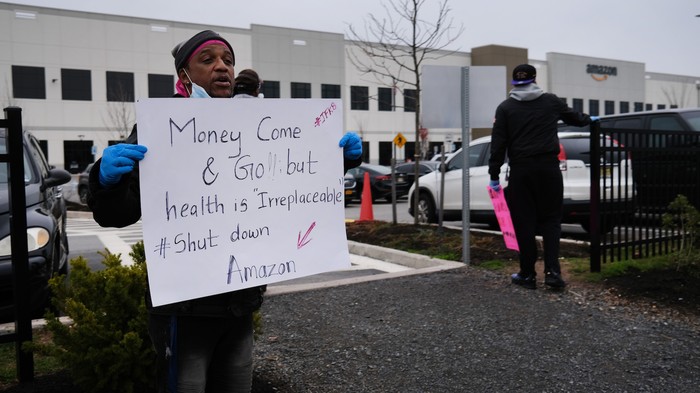
Nationally, workers have voiced similar complaints about a lack of protective equipment such as masks, inefficient sanitizing of workspaces, and failure by some employers to honor the social distancing as recommended by the CDC to protect themselves from contracting the coronavirus.
Many have expressed anxiety about facing a kind of “Sophie’s Choice,” that is, forced to choose between going to work and possibly risk being exposed to the coronavirus or staying at home and not being able to put food on the table or pay bills.

The MSR last weekend asked a few employees at one of the local Minneapolis Cub stores why they were not wearing masks. Two of them said management had told them they didn’t want them to wear masks. They said management cited the CDC as declaring people do not need to wear masks to be safe from contracting COVID-19.
Asked if management had been informed that the CDC has since changed its guidelines, they said they were not sure. “I hope it changes,” said one employee who wished to remain anonymous.” I definitely want to protect myself.”
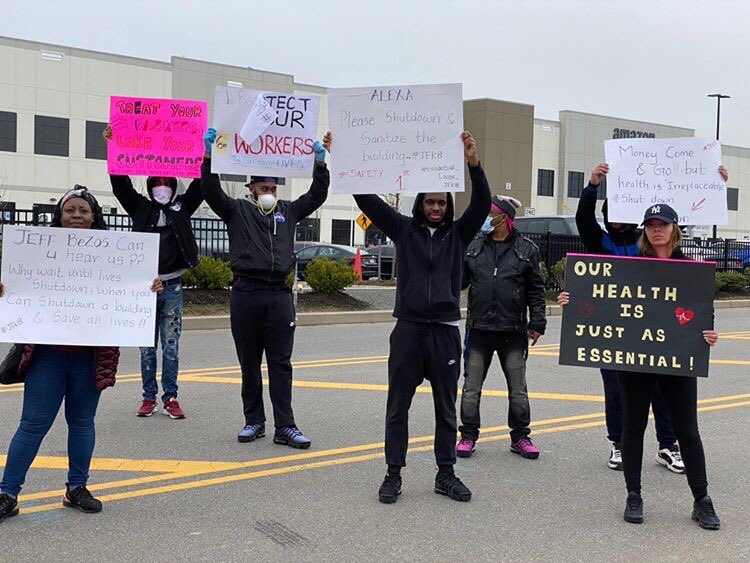
Amazon fired Smalls last week after he led a walkout by a number of employees at a Staten Island distribution warehouse. Amazon says he was fired for violating a company-imposed 14-day quarantine after he came into contact with an employee who tested positive for the coronavirus.
Smalls disputes this, saying the employee who tested positive came into contact with many other workers for longer periods of time before their test came back. He said he was singled out because he wanted the company to sanitize the work area and be forthright about the numbers of fellow workers who had contracted the virus.
Amazon workers have been particularly vocal across the country as social media has shared protests by workers holding signs denouncing their working conditions. “This disease is killing people on a daily basis,” one worker who wished to remain anonymous told Business Insider. “As people are testing positive for it where I work, they still expect for us to come there.”
The U.S. Postal Service has confirmed that 259 employees have tested positive for the virus in its workforce of 630,000. To date, two letter carriers in New York City, one in Montgomery, Alabama and one in Detroit have died after contracting the virus.
The Postal Service has sought to make gloves and masks available in all of its work stations, but employees still say basic items are not available. More than 85,000 workers have signed a petition asking for better protections.
The Washington Post recently reported that four grocery store workers have died after contracting the novel coronavirus. Two were Walmart workers who worked at the Evergreen Park Walmart in Chicago, one was a worker at Trader Joes in Scarsdale, New York, and another was a grocery greeter at a Giant store in Largo, Maryland.
A Detroit bus driver Jason Hargrove, whose Facebook rant warned people to be careful and be responsible died from the virus only weeks after posting the video. A bus driver in King County, Washington also succumbed to the disease last week; he too had been vocal about having his transit company provide better protection for him and his fellow drivers.
According to the Daily Mail, 22 New York City transit workers have died after contracting COVID-19.
Four workers at New York’s Shop Rite stores have come down with the disease. Frontline healthcare workers have also been contracting the virus in increasing numbers. A number of them have died.
Workers for American Airlines have reported that a few of their co-workers have come down with confirmed cases of COVID-19. A worker for an American Airlines regional carrier in Boston said, “Since my co-workers have come down with it, you would expect that they would at least investigate who the worker has been in contact with and have them quarantined.
“They are basically saying they don’t care if it spreads to our families or the general public. No serious measures have been taken to do anything about exposures.”
Eddie Ortiz, an assistant manager at the New York store Gristedes, described his staff as tireless frontline warriors. “They didn’t hesitate for one minute to stay and meet the needs of the public,” he said.
Several of the country’s most prominent union leaders and a number of New York political leaders have demanded that Amazon rescind Smalls’ dismissal. New York State Attorney General Letitia James and Mayor Bill de Blasio called for an investigation into Smalls’ firing. James called Smalls’ firing “immoral.”
“At the height of a global pandemic, Chris Smalls and his colleagues publicly protested the lack of precautions that Amazon was taking to protect them from COVID-19,” James said in a statement. “In New York, the right to organize is codified into law, and any retaliatory action by management related thereto is strictly prohibited. At a time when so many New Yorkers are struggling and are deeply concerned about their safety, this action was also immoral and inhumane.”
According to Amazon their workers are heroes: “The truth is the vast majority of employees continue to show up and do the heroic work of delivering for customers every day,” said a company spokesperson.
“Amazon would rather fire workers than face up to its total failure to do what it should to keep us, our families, and our communities safe,” said Smalls. “…We won’t stop until Amazon provides real protections for our health and safety and clarity for everybody about what it is doing to keep people safe in the middle of the worst pandemic of our lifetimes.”
Smalls told the MSR that it was important for him to express solidarity with fellow Amazon workers in Minnesota and the rest of the country and urged them to, “take the power back. We are the power. If they are not caring about your well-being, then walk out! Without us they are nothing.”
Mel Reeves welcomes reader responses to mreeves@spokesman-recorder.com.



Asm. Corey Jackson Announces Launch of 24-Hour Childcare in His District

IN MEMORIAM: The Rev. Leon “Sonny” Clark, Longtime Orange County Pastor and Community Leader, Dies at 72

Poll: Becerra Widens His Lead Over Hilton; Californians Split on Wealth Tax

From Historic Memories to New Possibilities: Oakland Celebrates Coliseum 60

County Office of Education Says OUSD Finances Are Getting Healthier, Materially Stronger

LIVE FREE Sunday Dinner Brings Faith, Fellowship and Civic Conversation to Oakland

Remembering Chauncey Bailey as Student Journalists Face Threats to Truth-Telling

BLACspace Cooperative Invites Bay Area to Experience Oakland’s Black Cultural Ecosystem Through a BLAC Map Tour + Party

In Wake of Death on Doorstep, Williams Chapel Baptist Church Calls for Better Care, Funding for Unhoused

Oakland Centenarian Nuna McKee Honored!

Caribbean Nations Produce Action Plan Calling for UK Reparations Over Slavery

Oakland Post: Week of September 23 – 29, 2026

Doulas Are Helping Black California Moms Navigate Pregnancy–Even as High Mortality Rates Persist

Newsom Signs Addictive Social Media Law to Protect Kids

On Your November Ballot: Prop 38 Would Allocate $8.4 Billion to Immunology and Immunotherapy Funding

Standoff for Justice: Our Homes Are Worth Fighting For

Oakland Post: Week of August 26 – September 1, 2026

Frontier Airlines’ Return to Oakland Airport Brings Flights, Jobs and Opportunity

Gubernatorial Candidate Steve Hilton Blasts California New Tire Rules; Newsom Hits Back

Chef Sharon Lee Blends Culinary Excellence, Education and Empowerment

Jackie Wright Champions Bay Area Stories, Filmmakers and Cultural Institutions

Big City Mayors Ask for “Yes” Vote on Housing Bond Measure; Conservatives Say “No”

Oakland Coliseum Project Opens Door for Small Businesses to Build Bigger

Gov. Newsom’s Latest Appointees Include Sacramento Advocate for Formerly Incarcerated Students; State’s New Tech Chief

Misnamed ‘Parent’ PAC Seeks to Influence Oakland School Board Elections

Longtime BWOPA Member Brendalyn Goodall Appointed to California Workforce Development Board

Gov. Newsom Signs Law Shielding Immigration Aid Workers From Doxing Threats

Secretary of State Shirley N. Weber Urges Californians to Vote Early as Voter ID Battle Intensifies

From Palestine to Oakland: Seeds for Liberation Examines Shared Struggles for Freedom

IN MEMORIAM: Dolly Parton Dead at 80 — How She Built a Legacy of Love and Earned Her Place in Black Culture

The Conversation With Al McFarlane 6/23/26

Media Monday 6/22/26

LIVE! ASK ALMA! — TUES. 6.23.26 7PM EST

Car Buying Secrets: 4 Hidden Checks Before You Sign!

Is This 550 HP Charger Worth YOUR Money? AutoNetwork Review

Celebrating Juneteenth – Frederick Douglass on education and resistance

LIVE! — ASK ALMA! — TUES. 6.19.26 7PM EST

Hyundai Ioniq 5 Parking, Safety, and 360 View #shorts

2025 Ioniq 5 New Wiper & Powerful Performance! #shorts

Electric SUV Range: Is 259 Miles Enough? #shorts

EV Charging: How Fast Can You Charge an Electric Vehicle? #shorts

Biometric Cooling… Messaging Seats…Come on! 2025 Infiniti QX80 Autograph 4WD

Charged Up: Witness the Magic of a Fully Electric Car! #shorts

Range Rover Sport PHEV Included…: See What’s Inside This Luxury SUV! #shorts

Invisible Hood View: Perfect Parking with X-Ray Vision! #shorts
-
 Community2 weeks ago
Misnamed ‘Parent’ PAC Seeks to Influence Oakland School Board Elections
-

 Activism3 weeks ago
Oakland Post: Week of September 2 – 8, 2026
-

 Community2 weeks ago
Richmond Tiny House Village Farm & Garden Set to Open Gates on Sept. 26
-

 Black History2 weeks ago
OPINION: Nolan Wells’ Death One of Several Signifying Racial Terror Lives on in U.S. South
-

 Black History2 weeks ago
Latest Massacre in Haiti Reveals Cruelty U.S. Deportations
-

 Activism2 weeks ago
Oakland Post: Week of September 9 – 15, 2026
-

 Community2 weeks ago
Democratic Clubs Interview Candidates for Oakland School Board
-

 Featured2 weeks ago
‘Ready to See These Bills Become Law’: Sen. Weber’s Package of 15 Bills Advance to Gov. Newsom’s Desk
