
Commentary
Tyler Perry’s Madea’s Farewell – The Play Tour
NNPA NEWSWIRE — “He’s giving her the boot the way he introduced her, on the stage. There will be a movie too (Tyler Perry’s A Madea Family Funeral—opens March 1, 2019). But, if you want to watch the big man/woman sweat through her Lane Bryant dresses in person, one more time, you’ll have to see her live in this play.”

By Dwight Brown NNPA News Wire Film Critic
He has his fans. He has his detractors. Yet for 25 years, Tyler Perry has entertained audiences with Madea, his doppelganger, in theaters and on screens. For reasons known only to him, Perry has decided to hang up Madea’s heavy-duty bra, hausfrau flowered dresses and blue-rinse white powdered wigs.
He’s giving her the boot the way he introduced her, on the stage. There will be a movie too (Tyler Perry’s A Madea Family Funeral—opens March 1, 2019). But, if you want to watch the big man/woman sweat through her Lane Bryant dresses in person, one more time, you’ll have to see her live in this play.
Tyler Perry’s Madea’s Farewell, a traveling show, pulled into town at the James L. Knight Center in downtown Miami. Folks who came to witness the end of a tradition were as interesting to watch as the actors onstage. Blue, orange, platinum blonde and pink hair could be spotted everywhere. Ladies in leopard print hot pants and matching shoes strutted around with their men in tow.
African American theatergoers dominated the space, though white and Latino fans were in the crowd too. And, if you had a penny for everyone over 80 years old, some with walkers and motorized wheel chairs, you’d be rich. Showtime.
A character named Darlene stands stage front, male dancers gyrate behind her as she sings Ann Peebles soul classic, “I Can’t Stand the Rain.” The stage splits open, revealing her living room. Darlene expects family and friends to stop by to help her celebrate her twentysomething-year-old son Malik’s graduation from medical school. Malik, his extremely tall transgender sister Ti-Ti, his best friend Devin and others show up too. The audience is engaged, respectful and watching the family dynamics unfold.
The temperature in the room heats up when stars from Perry’s TV show Meet the Browns enter. Hot-blooded and elderly Aunt Bam (Cassie Davis) takes a seat at the dinette table. She’s perfectly cordial and lecherous as she ogles the handsome and much younger Devin. Mr. Brown (David Mann) walks in wearing a white suit patterned with loud neon-color shapes that look like narrow road signs. And, Cora Jean Simmons-Brown (Tamela Mann) comes in too. As each of the legendary actors enter, the crowd claps and oos and ahs.
With rapid fire, the characters exchange funny lines, accuse each other of all sorts of misdeeds and let their feelings be known (“I betcha you sweat prune juice”). The trumped-up drama and petty arguments escalate as Madea makes her entrance and the fans go wild. The big lady acknowledges members of her family and the audience, some of whom she heckles: “You know the show started at 8! Why are you late? Turn off that camera!” She engages the audience, harasses a few and the place is reeling with laughter as Perry breaks the fourth wall.
What ensues is a steady stream of comic putdowns, infidelity, betrayals and rivalries that build and build until Madea pulls a large silver object out of her purse and slams it on the table to gain control of the hysteria. The actors looked shocked. The audience too. It’s a gun. Chuckles turn into group laughing fits that are so forceful a few bladders must have lost control. As the first act ends, the tattered family heads out to attend the graduation ceremony.
Knee-deep into the second act there is shocking revelation about two lovers who have kept their dalliances a secret. Their affair announcement provokes audible gasps from the cast (fake) and the fans (real).
Finally, it is Madea who calms the family, assuring them that if they express their true feelings and trust in God, they will all be fine. As in most Perry productions, there is a spiritual aspect to the story, and that’s an element audiences expect. They come from afar for the humor and stay for the soul-cleansing. Madea: “When you build walls to keep people out, you can’t get out.”
At points in the play, actors walk to the front of the stage to perform pop, soul or gospel songs that advance the plot. Toward the end of the second and final act, this shtick becomes an over-abundantly used crutch. It’s as if Perry ran out of ideas or had no faith in the three-act play format and decided that one and a-half acts will do.
The drama ends abruptly and actors break into songs that have no connection to the proceedings, though they’re fun to watch. The most interesting musical performances are the male cast crooning and dancing to Bell Biv Devoe’s “Poison” and the superb Tamela Mann singing her heart out with “Take Me to the King.” Minus the frustrating ending, what’s on view could have a solid shot as a Broadway comedy, even though that may not be part of the plan.
The play is a great way for Perry’s fans and naysayers to have a fun night out and laugh together. After 25 years of Madea being front, center and all up in your face, she’s about to bow out gracefully. The wigs, falsies and plus-size dresses will gather dust in a closet or be periodically refreshed in a museum showcase. She’ll be history.
Regardless of what you think of Perry, his humor and crew, the big lady is an indelible part of black culture. Something like Flip Wilson’s Geraldine—only on steroids and able to tackle Odell Beckham Jr. or body-slam Hulk Hogan.
The national tour of Tyler Perry’s Madea’s Farewell is scheduled to end in Atlanta, GA at the end of May. Until then, Perry and his gypsy troupers will portray the iconic characters that have surrounded the well-known matriarch until they run her into the ground. Literally.
Visit NNPA News Wire Film Critic Dwight Brown at DwightBrownInk.com and BlackPressUSA.com.





Activism
Oakland Museum Presents Landmark Retrospective Celebrating Beloved Bay Area Artist Mildred Howard
“Poetics of Memory” coincides with a year of major recognition for Howard. In 2026, she received the California Arts Council’s 50th Anniversary Award, honoring artists whose work has shaped California’s cultural and civic life, as well as the Museum of the African Diaspora’s Artist Impact Award. In 2025, she was awarded a prestigious Guggenheim Fellowship in recognition of her transformative contributions to American cultural life.
Special to The Post
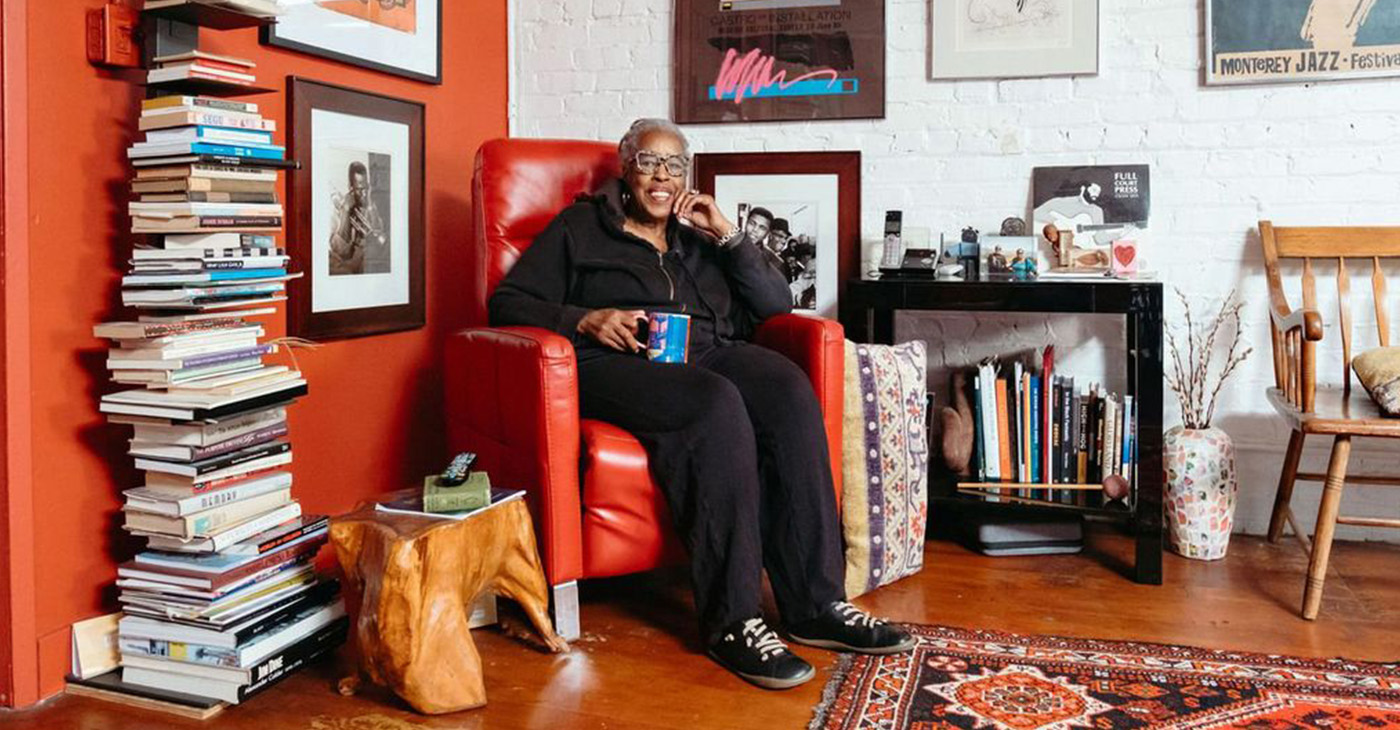
The Oakland Museum of California (OMCA) opened “Mildred Howard: Poetics of Memory,” the first major museum survey of Bay Area artist Mildred Howard, on June 12.
The exhibition spans five decades of Howard’s influential work, bringing together immersive installations, found-object sculptures, archival materials, and new commissions that explore memory, identity, and power in American life.
“Poetics of Memory” coincides with a year of major recognition for Howard. In 2026, she received the California Arts Council’s 50th Anniversary Award, honoring artists whose work has shaped California’s cultural and civic life, as well as the Museum of the African Diaspora’s Artist Impact Award. In 2025, she was awarded a prestigious Guggenheim Fellowship in recognition of her transformative contributions to American cultural life.
Howard was born in San Francisco in 1945 and raised in the East Bay, where she went on to study Afro-Haitian dance, make and sell clothing, and experiment with collage and sculpture.
Her multimedia art practice emerged from these experiences, later becoming associated with West Coast conceptual art, San Francisco funk, and a vibrant community of artists like Oliver Jackson, Betye Saar, and Raymond Saunders. Since the 1970s, she has used found materials and family stories to explore memory—both individual and collective.
At OMCA, visitors enter “Poetics of Memory” through a series of intimate galleries featuring Howard’s early mixed-media pieces and sculptures, along with a large video projection of a number of her public artworks.
Together, they emphasize Howard’s interest in everyday objects as powerful carriers of individual and shared stories. Highlights include collages that remix images of the artist herself; found-object sculptures like The History of the United States with a few Parts Missing (2007) that address omissions in dominant narratives; and public works like “Locks and Keys for Harry Bridges” (2001) that transform urban space into a meditation on access and labor.
This culminates in a richly detailed “studio” environment, where works in progress, archival exhibition flyers, historic photographs of Howard and her community, postcards from fellow artists, and other materials offer insight into her creative process and daily life.
The exhibition then opens into a high-ceilinged, dramatically lit space that brings together Howard’s signature immersive installations. On one end, “Crossings” (1997/2026) – a field of hundreds of ceramic eggs leading to an ornate mirror – suggests cycles of birth, motherhood, and transition, while drawing on the emotional echoes of the Middle Passage. On the other end, “Blackbird in a Red Sky” (a.k.a. “Fall of the Blood House”) (2002) – a red glass shack bordered by a pond – also uses reflection and transparency to draw viewers into the work and prompt consideration of themes of identity and home.
Howard’s newest video installation, “Moving Stills” (2026), repurposes never-before-seen family footage she took as a teenager on a train trip to the American South. Projected onto cascading layers of translucent fabric that stretch across an entire gallery wall, the piece immerses viewers in a layered meditation on memory, migration, and time.
The “Mildred Howard: Poetics of Memory” exhibit will be on display through Oct. 11 at the Oakland Museum of California, 1000 Oak St., Oakland, CA 94612. Museum hours are Wednesday through Sunday, 11 a.m. to 5 p.m., with extended hours on Fridays to 9 p.m.
This story is sourced from the Oakland Museum of California press office.
Activism
Stop the Hate Symposium Brings Oakland Together Through Dialogue, Partnership, and Community Healing
More than a meeting and panel discussion, the annual symposium serves as a powerful example of what can happen when neighbors, community leaders, and organizations choose conversation over division, and unity over silence.

By Dr. Maritony Jones, Special to The Post
With the purpose of creating safer, stronger, and more inclusive communities, and in partnership with the Oakland Private Industry Council and other community organizations, the Oakland Chinatown Improvement Council (OCIC) hosted the ‘Stop the Hate Symposium’ on June 13 at the Oakland Asian Cultural Center.
More than a meeting and panel discussion, the annual symposium serves as a powerful example of what can happen when neighbors, community leaders, and organizations choose conversation over division, and unity over silence.
The free event featured keynote speakers, breakout sessions, cultural programming, creating a space where people from many backgrounds sat together with a shared purpose.
The turnout itself reflected the urgency and importance of the topic. The room was packed with community members eager not only to listen, but also to participate. Throughout the event, speakers shared data, personal experiences, research, and practical solutions designed to address hate, violence, social inequity, and community safety.
The keynote panel featured respected leaders and advocates, including Ray Bobbitt, founder of the African American Sports & Entertainment Group (AASEG); Ryan Takemiya from RAMA; Caheri Gutierrez from the Unity Council; honorary guest speaker Oakland City Councilmember at-Large Rowena Brown and City Councilmember Charlene Wang; representatives for Oakland Mayor Barbara Lee and U.S. Rep. Lateefah Simon, with Gia Vang of NBC serving as moderator.
The symposium also offered multiple breakout sessions that addressed issues affecting communities across Oakland and Alameda County:
- Session 1, 2, 3: Building Safer and More Inclusive Communities, led by Pastor Raymond Lankfort, CEO of Oakland Private Industry Council (OPIC), Jessica Kang, research manager for Stop AAPI Hate, Kara Guerra of The Unity Council, and Gabriela delaRiva of the Spanish Speaking Citizens Foundation
- Session 4: Talk Story: Collective Healing and Relationship Repair, presented by Ryan Takemiya, executive director of RAMA
- Session 5: Sexual Violence Prevention, presented by Tunisia Owens, interim deputy director of Realized Potential
- Session 6: Violent Attacks on Teens, presented by MaryAnn Alvarado, program manager of Youth Alive
Every session contributed to an important truth: meaningful change begins within communities, through honest dialogue and a willingness to work together.
One of the strongest themes to emerge from the day was the need to create more conversations and stronger partnerships—not just during times of crisis, but consistently and intentionally. Relationships among organizations, neighborhoods, and community leaders often operate behind the scenes but are not always highlighted or celebrated.
Bobbitt spoke powerfully about this issue, noting that partnerships and relationships often go unrecognized despite being essential to community progress. He pointed to examples such as the partnership between OPIC and OCHIC, emphasizing that these collaborations deserve more visibility, investment, and expansion.
Perhaps his most memorable message resonated deeply throughout the room. Bobbitt explained that when a grandparent is attacked or harmed, the impact extends beyond race or ethnicity because today’s families and communities are increasingly multicultural and interconnected.
“We are not going to see our grandparents as just Latino, Asian, Caucasian, or African American,” he shared in essence. “We are going to see them simply as our grandparents.”
Those words reflected the heart of the symposium. Hate may target one group, but pain and loss are felt by everyone. Likewise, healing and progress are shared responsibilities.
For more information about the Stop The Hate Program visit the website: https://www.oaklandchinatownchamber.org/stop-the-hate (or) https://oaklandpic.or
Activism
Six Months in, Probate Reform Coalition Marks Progress in Protecting Elders From Financial Abuse
Despite the cited obstacles, NPRC has made some promising inroads towards their mission. NPRC has identified that nationwide the Attorneys General must be engaged and encouraged to implement oversight, protection and enforcement of the law; members find support from each other as they advocate for redress via “letters of compassion” sent to judges, nursing facilities and law enforcement agencies and members are instructed on their rights, how to take constructive action to protect those rights through access to resources that allow them to intelligently represent themselves in court.
By Tanya Dennis
The National Probate Reform Coalition, a loose-knit national coalition of advocates, victims, and families dedicated to protecting elder rights, especially within the probate court system, was formed by the Post Newspaper Group (PNG) after more than a decade of reporting on the mistreatment of elders and the plunder of their estates.
In response, PNG Publisher Paul Cobb set in motion a series of monthly town halls to address the problem and propose workable solutions, designating it a “year of action.”
At six months, the coalition has attracted families, advocates, and experts across the nation whose strategies have proven effective in their respective states, and who are moving forward collectively with the mission of engaging judicial, legislative, and enforcement agencies to ensure elders are not exploited or abused.
“The issue of elder abuse is multi-layered”, says NPRC planning committee member Venus Gist. “Elders are our most vulnerable population, next to children, and they are easily exploited by strangers, their own family members, and the judicial system designed to protect them.”
Since January, NPRC has, via monthly virtual meetings held on the first Thursday of each month, clearly defined the issues and formulated workable solutions that can be implemented nationwide.
“There are amazing laws on the books that protect elders and their assets,” said NPRC member Zakiya Jendayi. “The problem is they are ignored, and that lack of oversight has led to systemic abuse in the Probate Court system, not just in Alameda County, but nationwide.
“The scary part is the collusion and wall of silence NPRC has encountered when reaching out to the Judicial Council, legislators, and the State Bar for assistance. It’s so obvious that one hand is washing the other, that they’re protecting each other, that it’s difficult to initiate any type of meaningful reform much less dialogue.”
Despite the cited obstacles, NPRC has made some promising inroads towards their mission. NPRC has identified that nationwide the Attorneys General must be engaged and encouraged to implement oversight, protection and enforcement of the law; members find support from each other as they advocate for redress via “letters of compassion” sent to judges, nursing facilities and law enforcement agencies and members are instructed on their rights, how to take constructive action to protect those rights through access to resources that allow them to intelligently represent themselves in court.
Stacy Drake, a Texas member, says, “I’ve been looking for help for over 10 years with my situation, and I finally found it within the NPRC coalition. God answered my prayers.”
Broadening its reach within Alameda County, NPRC has invited Oakland Mayor Barbara Lee to assist with outreach, education, and resolution.
“We hope to host an elder abuse/elder protection symposium annually, if not twice a year, to let our elders know that Alameda County and the City of Oakland are a safe place, a place where in their golden years they have no worries regarding exploitation and abuse,” said Cobb. “Society is defined by how the care for its children and elders.”

WORK FROM HOME
Home-based business with potential monthly income of $10K+ per month. A proven training system and website provided to maximize business effectiveness. Perfect job to earn side and primary income. Contact Lynne for more details: Lynne4npusa@gmail.com 800-334-0540



Oakland Museum Presents Landmark Retrospective Celebrating Beloved Bay Area Artist Mildred Howard

Ferry Fares to Increase July 1 as Ridership Hits Record Highs

Stop the Hate Symposium Brings Oakland Together Through Dialogue, Partnership, and Community Healing

Six Months in, Probate Reform Coalition Marks Progress in Protecting Elders From Financial Abuse

A Long Time Coming: School District Kicks Off Massive $97 Million Renovation of West Oakland’s McClymonds High School

IN MEMORIAM: Oakland Dance Legend Reginald Ray-Savage, 67

UC Berkeley Named Top Public University in the U.S. and No. 7 in the World by ‘U.S. News’

NCBW-OBAC Champions Black Women Entrepreneurs at Business en Blaque Expo

Lock In Car Price: Avoid Dealer Payment Traps!

Sell Your Car: Get Offers BEFORE Visiting Dealerships!

The Conversation With Al McFarlane 6/23/26

Media Monday 6/22/26

LIVE! ASK ALMA! — TUES. 6.23.26 7PM EST

Car Buying Secrets: 4 Hidden Checks Before You Sign!

Book Review: Books for College-Bound Students

Q&A with Steven Bradford: Why He Wants Your Vote for California Insurance Commissioner

Oakland Mayor Pushes Charter Overhaul to Clarify Roles in City Government, Increase Accountability and Improve Service Delivery

The Ladies of Delta Sigma Theta Hold Day of Advocacy at the Capitol in Sacramento

OPINION: The Fire of Oakland’s Justin Jones

How Is AI Affecting California? The State Wants You to Share Your Story

California Launches Free Diaper Program for Newborns Statewide

Rep. Kamlager-Dove Introduces Bill to Protect Women in Custody After Reports Detailing Miscarriages and Neglect

More and More, Black Californians Are Worried About Rising Costs of Housing, Energy, Food and Gas

After 10-Year Wait, Fillmore Heritage Center Reopens in San Francisco

Asm. Jackson Bill Requiring Anti-Hate Speech Training for Calif. Public Officials Sent to “Suspense File”

Oakland Post: Week of May 20 – 26, 2026

Oakland Post: Week of May 27 – June 2, 2026

Oakland Post: Week of June 3 – 9, 2026

Advocates Rally at State Capitol to Demand Heat Protections for Incarcerated People; More Funding for DV Survivors
The Conversation With Al McFarlane 6/23/26
Media Monday 6/22/26
LIVE! ASK ALMA! — TUES. 6.23.26 7PM EST
Car Buying Secrets: 4 Hidden Checks Before You Sign!

Is This 550 HP Charger Worth YOUR Money? AutoNetwork Review

Celebrating Juneteenth – Frederick Douglass on education and resistance

LIVE! — ASK ALMA! — TUES. 6.19.26 7PM EST

Hyundai Ioniq 5 Parking, Safety, and 360 View #shorts

2025 Ioniq 5 New Wiper & Powerful Performance! #shorts

Electric SUV Range: Is 259 Miles Enough? #shorts

EV Charging: How Fast Can You Charge an Electric Vehicle? #shorts

Biometric Cooling… Messaging Seats…Come on! 2025 Infiniti QX80 Autograph 4WD

Charged Up: Witness the Magic of a Fully Electric Car! #shorts

Range Rover Sport PHEV Included…: See What’s Inside This Luxury SUV! #shorts

Invisible Hood View: Perfect Parking with X-Ray Vision! #shorts
-
 Art3 weeks ago
After 10-Year Wait, Fillmore Heritage Center Reopens in San Francisco
-
 Activism3 weeks ago
Oakland Post: Week of June 3 – 9, 2026
-

 #NNPA BlackPress3 weeks ago
5 Cleveland Police Officers Injured, Gunfire Erupts During East Side Pursuit
-

 #NNPA BlackPress3 weeks ago
2026 World Cup is Here and Atlanta is Ready For It
-

 Arts and Culture3 weeks ago
COMMENTARY: Black Music is the Sound of Black Freedom: Let Us Reclaim Both This Juneteenth
-

 Art3 weeks ago
Oakland Director Boots Dazzles Once Again in ‘I Love Boosters’
-

 #NNPA BlackPress3 weeks ago
COMMENTARY: Using Art, Healing, And Community to Transform Mental Health Dialogue
-

 #NNPA BlackPress3 weeks ago
Venus Williams Calls a Sabalenka Exit a Tragedy
