
Religion
U.S. Catholics Lead in Concern about Climate Change: Yale Study


Pope Francis talks with reporters during his flight from Sri Lanka to Manila, Philippines Thursday, Jan. 15, 2015. (AP Photo/Alessandra Tarantino, Pool)
VATICAN (Reuters)—Pope Francis might be preaching to the choir on climate change when he releases his environmental- and sustainability-focused encyclical later this year.
A study released by the Yale Project on Climate Change Communication has found that more Catholics in the United States are worried about global warming than other Christian groups and they are more supportive of policy action to reduce the effects of climate change.
The findings come as Pope Francis has taken a strong stance backing action on climate change, saying it is largely a man-made problem and that it risks the lives of the world’s most vulnerable.
He criticised negotiators at U.N. climate talks in Peru last December, saying they had displayed “a lack of courage” in failing to push for stronger action.
“Pope Francis has become the most admired man in America and when he speaks, he speaks with a loud megaphone, one that reaches all people, Catholics and non-Catholics alike,” said Anthony Leiserowitz, director of the Yale Project.
###




Community
Allen Temple Baptist Church Hosts Free Prostate Cancer Screenings on Oct. 17
The summit’s mission is to reduce the impact of prostate cancer through education, early detection, research, and support. It is presented in partnership with The Oakland Institute of Health, Inc., SCAN, Brotherhood of Elders Network, UCSF Helen Diller Family Comprehensive Cancer Center, Alameda County Public Health Department, Stanford Medicine Cancer Center, Impact Oakland Now, Bay Area Umoja Health, Bay Area Black Nurses Association, Inc., and 100 Black Men of the Bay Area, Inc.

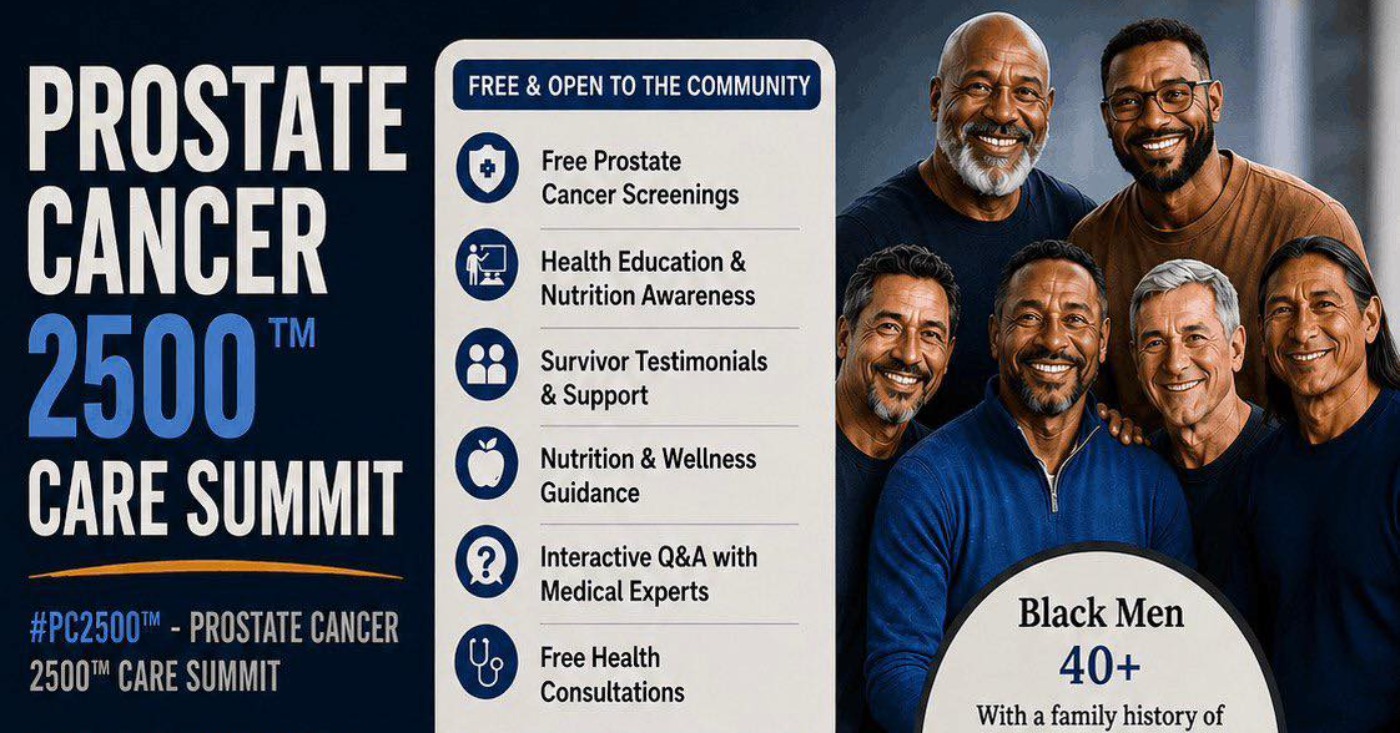

The Prostate Cancer 2500™ Care Summit brings together health systems, community organizations, and survivors to put early detection within reach
Black men in America are diagnosed with prostate cancer more often than other men and are about twice as likely to die from it. Early detection changes that outcome.
On Saturday, Oct. 17 from 10 a.m. to 2 p.m., Allen Temple Baptist Church will host the Prostate Cancer 2500™ Care Summit (#PC2500), a free event open to the entire community.
. Attendees can receive prostate cancer screenings and health consultations on site, learn about prevention and nutrition, ask medical experts questions in an interactive Q&A, and hear from survivors who will share their stories and offer support.
Screening is recommended beginning at age 45, and at age 40 for Black men with a family history of prostate cancer. All men are welcome, and families are encouraged to attend.
The summit’s mission is to reduce the impact of prostate cancer through education, early detection, research, and support. It is presented in partnership with The Oakland Institute of Health, Inc., SCAN, Brotherhood of Elders Network, UCSF Helen Diller Family Comprehensive Cancer Center, Alameda County Public Health Department, Stanford Medicine Cancer Center, Impact Oakland Now, Bay Area Umoja Health, Bay Area Black Nurses Association, Inc., and 100 Black Men of the Bay Area, Inc.

For more information prior to the event, reach out to Rev. Charlotte Y. Williams at (510) 604-5242 | cwilliams@allen-temple.org
For more information on the day of the event, reach out to Deacon Dwight Williams (510) 501-1650 dwight.williams@allen-temple.org. The church is located at 8501 International Blvd., Oakland, CA 94621 The service is free and free parking and refreshments will be provided. The site is accessible to persons with disabilities. To pre-register, go to Allen-Temple.org
Allen Temple Baptist Church was organized in 1919 in Oakland. For 107 years, ATBC has served as a bright beacon of faith, hope, and love beyond its’ four walls. Allen Temple is committed to sharing the love of God and the message of Good News throughout the world. We welcome people of all ages and cultural backgrounds as we joyfully celebrate worship and fellowship, and carry out ministries of evangelism, discipleship, education, community outreach, and global missions. Allen Temple’s holistic, prophetic and social justice ministries address the needs of the whole person as well as the whole community. Dr. Jacqueline A. Thompson.
Rev. Charlotte Y. Williams is the minister and director of Communications at Allen Temple Baptist Church.

Black History
Ghana’s Ministry of Foreign Affairs Publishes Global Circle’s Vatican Reparations Call in Special Edition Alongside Heads of State
GLOBAL CIRCLE FOR REPARATIONS AND HEALING — Ghana’s Ministry of Foreign Affairs has published the Global Circle for Reparations and Healing’s submission, “From Accra to the Vatican,” in a special edition of The Ghanaian Envoy. This marks the first time a sovereign state has incorporated the Reparations Presentment to the Holy See into its official record. The 175-page edition, titled “Creating A New World,” also documents Ghana’s campaign that led to UN Resolution A/RES/80/250, which recognized the trafficking and enslavement of Africans as the gravest crime against humanity.
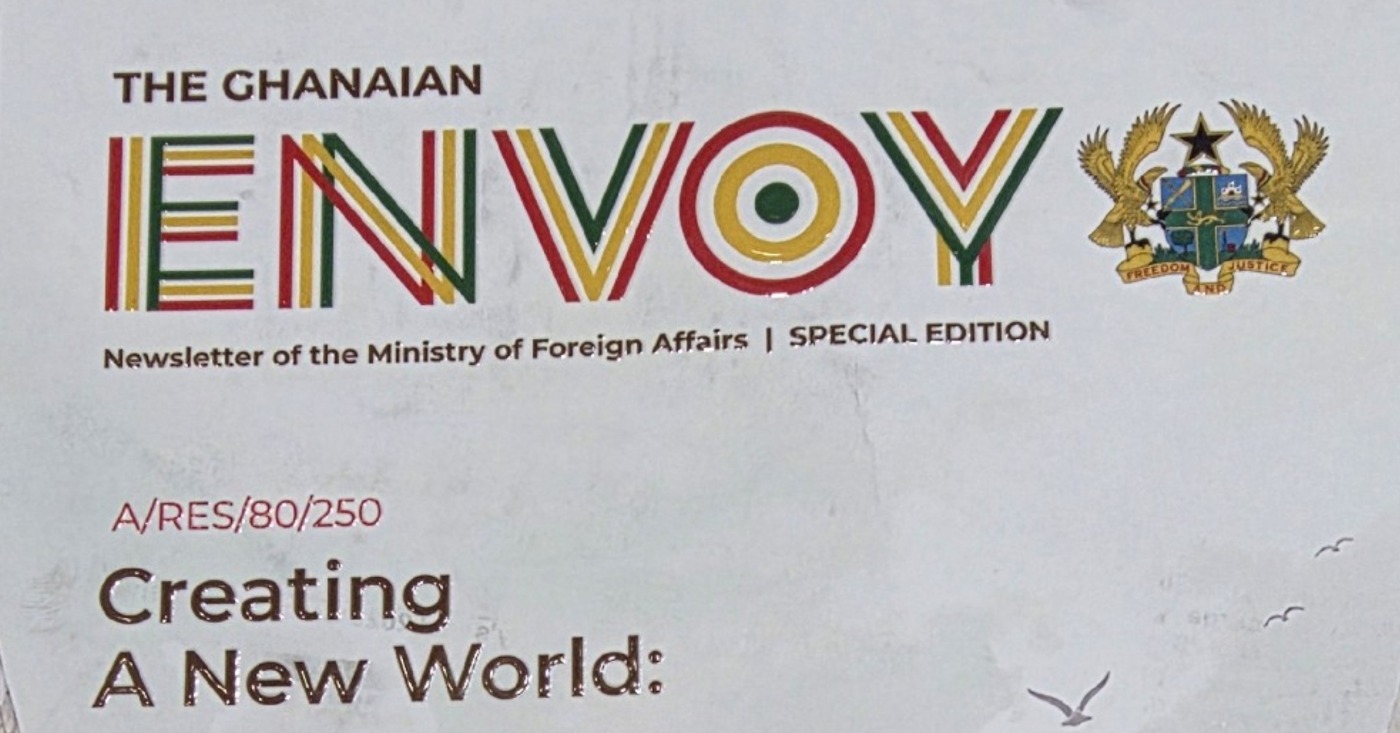
“From Accra to the Vatican” appears in The Ghanaian Envoy Special Edition on UN Resolution A/RES/80/250 — the first time a sovereign state has carried the Reparations Presentment to the Holy See into its official record
ACCRA, Ghana / CHICAGO, Illinois — October 7, 2026 — The Global Circle for Reparations and Healing today announced that its submission to Ghana’s Ministry of Foreign Affairs, “From Accra to the Vatican: A Call for a Global Plan of Action on Catholic Church Redress”, has been published in the Special Edition of The Ghanaian Envoy, the official newsletter of the Ministry of Foreign Affairs of the Republic of Ghana. The 175-page edition, titled “Creating A New World,” documents the Ghana-led campaign that culminated on March 25, 2026, in United Nations General Assembly Resolution A/RES/80/250, which declared the trafficking of enslaved Africans and the racialized chattel enslavement of Africans the gravest crime against humanity.
The Global Circle’s submission, authored by Co-Convener Kamm Howard, appears in Part V of the edition, “What Repair Must Now Mean,” at page 161. It shares the volume with statements by President John Dramani Mahama of Ghana, President Joseph Nyuma Boakai Sr. of Liberia, President Netumbo Nandi-Ndaitwah of Namibia, President Bassirou Diomaye Diakhar Faye of Senegal, President Carlos Manuel Vila Nova of São Tomé and Príncipe, President Emmanuel Macron of France, Prime Minister Mia Amor Mottley of Barbados, United Nations Secretary-General António Guterres, Foreign Minister Samuel Okudzeto Ablakwa, African Union Commissioner Amma Twum-Amoah, CARICOM Reparations Commission Chair Sir Hilary Beckles, Nobel Laureate Wole Soyinka, Dr. Julius Garvey, and Congressional Black Caucus Executive Director Vincent Evans, among others.
The submission traces the Global Circle’s delivery of the Reparations Presentment to the Holy See in Vatican City on July 18, 2022, the document’s subsequent use by the former Vice President of Costa Rica and the Vice President of Colombia in their engagements with Pope Francis, and the partial response contained in Pope Leo XIV’s May 2026 encyclical Magnifica Humanitas. It argues that while three of the Presentment’s seven demands have entered the Church’s official language in diluted form, four remain wholly unmet: rescission of the papal bulls that authorized African enslavement, the Church’s call upon other offending Western nations to make redress, the establishment of a joint Vatican–African Diaspora–African Papal Commission on Reparations and Healing, and a substantial financial commitment to repair. The submission asks Ghana to adopt the Presentment as the reference instrument for a Vatican track within the Accra Next Steps Commitments and to convene a first meeting of Global African reparationists toward a collective response.
“For four years the Presentment has been a civil society document carried by civil society hands,” said Kamm Howard, Co-Convener of the Global Circle and Commissioner of the National African American Reparations Commission. “Ghana has now placed it in the official record of a sovereign state, in a volume that opens with a President’s address to the General Assembly and closes by asking what repair must mean. That is not a courtesy. It is a signal to every government, every reparations commission, and every African Catholic that the claim against the Holy See belongs on the state agenda, and that the state which broke the deadlock at the United Nations is prepared to see it there.”
The significance of the publication extends beyond the Vatican file. The Presentment was created as a legal claims instrument by Howard in 2014 and first delivered to corporations and institutions in the United States, where it secured significant concessions. Its appearance in a foreign ministry’s official publication, translated and distributed in English, French, Portuguese, Spanish, and Italian, establishes the reparations presentment as a recognized instrument of international reparatory diplomacy, one that other states and descendant communities can adopt without drafting a new framework of their own. The Global Circle has described this catalytic potential as the “N’namba Effect,” after the Evanston, Illinois, reparations initiative – led by N’nanba Robin Rue Simmons – that gave municipalities across the United States the model, permission, and courage to act.
“The Vatican told us in 2022 that it moves in fifteen-year increments,” Howard added. “Ghana has just demonstrated at the United Nations that a determined state can compress that timeline to a single vote. We are asking Ghana to do for the Church what it did for the General Assembly, and we are asking Global Africa to organize behind that ask with one document, one voice, and one set of demands.”
The Global Circle has written to President Mahama and Foreign Minister Ablakwa to express its gratitude and to propose that its Vatican and Interreligious Actors Working Group lead the first meeting on a collective Vatican response under the auspices of the Government of Ghana. The Global Circle has also formally advised the Congressional Black Caucus of the publication in connection with its pending request that the Caucus recognize the Presentment as the foundational document for reparations engagement with the Roman Catholic Church and join the Government of Ghana in this global call to action.
###
About the Global Circle for Reparations and Healing
The Global Circle for Reparations and Healing was convened in 2022 to help build united global reparations front across Africa and its worldwide diaspora. In July 2022 the Global Circle delivered the Reparations Presentment to the Holy See in Vatican City. It co-organized Accra Summit I in August 2022 with the Government of Ghana and the Africa Transitional Justice Legacy Fund, and led the organization of Accra Summit II: Centering Healing Across Global Africa in March 2025 in partnership with the African Union. The Reparations Presentment to the Holy See is available in English, French, Italian, Portuguese, and Spanish at gcrh.org.
Media Contact
Global Circle for Reparations and Healing
Kamm Howard, Co-Convenor
Kammh369@gmail.com 773 520 0369
gcrh.org
Black History
IN MEMORIAM: The Rev. Leon “Sonny” Clark, Longtime Orange County Pastor and Community Leader, Dies at 72
Rev. Leon William “Sonny” Clark, the longtime pastor of New Spirit Baptist Church in Santa Ana and a prominent faith and community leader in Orange County, passed away on September 9 at the age of 72. Born in Bennettsville, South Carolina, Clark was a U.S. Navy veteran who dedicated his life to service. He served various Southern California churches before leading New Spirit Baptist Church for over 22 years, extending his work into counseling, mentoring, and civic engagement, and supporting the African American community. To learn more about his life and contributions, read more.
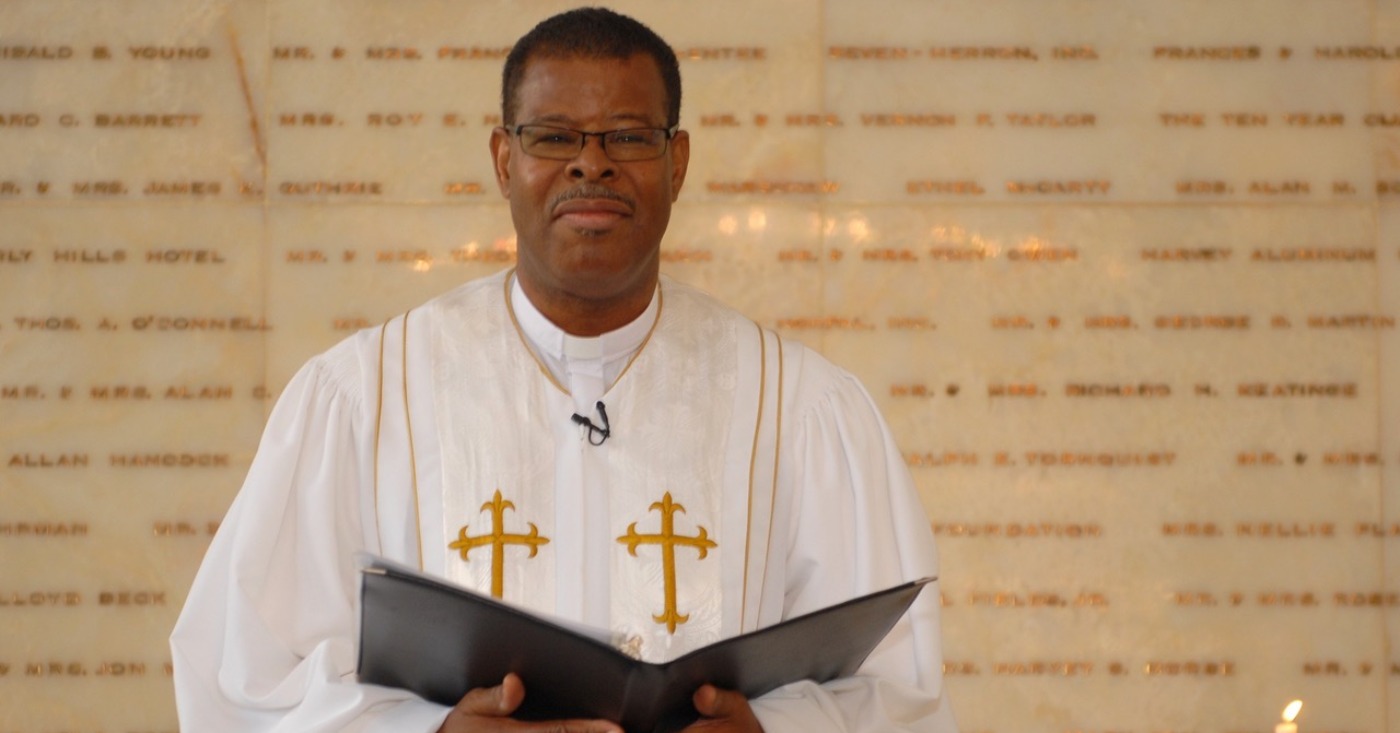
Rev. Leon William “Sonny” Clark, longtime pastor of New Spirit Baptist Church in Santa Ana and a respected faith and community leader in Orange County, died Sept. 9. He was 72.
Born Oct. 2, 1953, in Bennettsville, South Carolina, Clark was a U.S. Navy veteran who later built a life of service centered on family, faith, ministry, and community.
Clark began his formal ministry at Metropolitan Baptist Church in Altadena in 1978. After acknowledging his call to ministry in 1980, he preached his first sermon and went on to serve churches throughout Southern California, including Second Baptist Church in Riverside, Mount Vernon Baptist Church in Rubidoux, Antioch Missionary Baptist Church in Pomona, and Friendship Baptist Church in Yorba Linda.
In November 2003, Clark was called to lead New Spirit Baptist Church in Santa Ana, where he served as pastor for more than 22 years. His work extended beyond the pulpit through counseling, mentoring, civic engagement, and efforts to strengthen Orange County’s African American community.
Clark served on the Orange County Heritage Council and supported efforts to preserve and celebrate African American history and culture. He helped organize the Orange County Black History Parade and Unity Festival, served on the Interfaith Committee and the Orange County Transit Authority, and served as president of the Orange County Ministers Conference.
In 2024, the City of Santa Ana recognized Clark for his contributions to the community. He also received the Orange County Southern Baptist Association Hall of Faith Award and was previously honored as Pastor of the Year by the Orange County Heritage Council.
Clark is survived by his wife, Andrea Joyles Clark; six children, Shawn Williams, Le Ondra Clark Harvey, Kyla Coward, Joshua Clark, Marissa Clark and Ashley Clark; grandchildren and great-grandchildren; siblings; extended family; and the New Spirit Baptist Church congregation.
A wake will be held Thursday, Oct. 1, from 4 to 8 p.m. at New Spirit Baptist Church, 701 S. Sullivan St. in Santa Ana, with a remembrance service from 5 to 6:30 p.m.
A Celebration of Life will be held Friday, Oct. 2, at Friendship Baptist Church, 17145 Bastanchury Road in Yorba Linda. Viewing begins at noon, followed by the service at 1 p.m.
Burial will take place Monday, Oct. 5, at 10:15 a.m. at Riverside National Cemetery.
Clark often shared a guiding principle that shaped his ministry: “Start where you are. Use what you have. Do what you can.”


WCCUSD Joins Statewide Organic School Food Purchasing Cooperative

Democrats, Community Groups Back Measure EE to Change How Oakland Is Governed

Four Tips to Help You Plan a Holiday “Staycation”

Veterans Housing Project Proposed for South Richmond
PRESS ROOM: Transformative Justice Coalition 2026 Voting Rights Champion Awards Reception ‘Yesterday Is Today: The Battle For Voting Rights

Mayor Lee Delivers 2026 State of the City Address: ‘Oakland Continues to Be on the Move’

Oakland Awarded More than $14 Million in State Funding

Jendayi Arrest Raises Community Concerns Regarding Sheriff’s Chain of Command

Marin County Supes Expand Small Business Options with Home Kitchen Pilot Program

Allen Temple Baptist Church Hosts Free Prostate Cancer Screenings on Oct. 17

AC Transit Labor Unions Back Director Joel Young

Locals Can Get Locally Grown Produce Delivered Through Urban Tilth

‘ICE-Free Marin’ Supporters Press Supervisors as County Drafts Enforcement Restrictions

Oakland Post: Week of October 7 – 13, 2026

Ghana’s Ministry of Foreign Affairs Publishes Global Circle’s Vatican Reparations Call in Special Edition Alongside Heads of State

Misnamed ‘Parent’ PAC Seeks to Influence Oakland School Board Elections

Oakland Post: Week of September 2 – 8, 2026

Oakland Post: Week of September 9 – 15, 2026

Richmond Tiny House Village Farm & Garden Set to Open Gates on Sept. 26

Latest Massacre in Haiti Reveals Cruelty U.S. Deportations

OPINION: Nolan Wells’ Death One of Several Signifying Racial Terror Lives on in U.S. South

Poll: Becerra Widens His Lead Over Hilton; Californians Split on Wealth Tax

Mayor Lee Announces $1 Million Kaiser Permanente Grant for Pilot Program to Address Homelessness, Clean Up Public Spaces throughout Oakland

County Office of Education Says OUSD Finances Are Getting Healthier, Materially Stronger

Democratic Clubs Interview Candidates for Oakland School Board

Oakland People’s Arms Embargo Coalition Demands End to Military Shipments Thru Oakland

Oakland Post: Week of September 16 – 22, 2026

BLACspace Cooperative Invites Bay Area to Experience Oakland’s Black Cultural Ecosystem Through a BLAC Map Tour + Party

Two Looming Threats Every Alameda County Elder Should Know About

Zakiya Jendayi Arrested, Locked Out of Home by Sheriff’s Deputies

The Conversation With Al McFarlane 6/23/26

Media Monday 6/22/26

LIVE! ASK ALMA! — TUES. 6.23.26 7PM EST

Car Buying Secrets: 4 Hidden Checks Before You Sign!

Is This 550 HP Charger Worth YOUR Money? AutoNetwork Review

Celebrating Juneteenth – Frederick Douglass on education and resistance

LIVE! — ASK ALMA! — TUES. 6.19.26 7PM EST

Hyundai Ioniq 5 Parking, Safety, and 360 View #shorts

2025 Ioniq 5 New Wiper & Powerful Performance! #shorts

Electric SUV Range: Is 259 Miles Enough? #shorts

EV Charging: How Fast Can You Charge an Electric Vehicle? #shorts

Biometric Cooling… Messaging Seats…Come on! 2025 Infiniti QX80 Autograph 4WD

Charged Up: Witness the Magic of a Fully Electric Car! #shorts

Range Rover Sport PHEV Included…: See What’s Inside This Luxury SUV! #shorts

Invisible Hood View: Perfect Parking with X-Ray Vision! #shorts
-
 Economy3 weeks ago
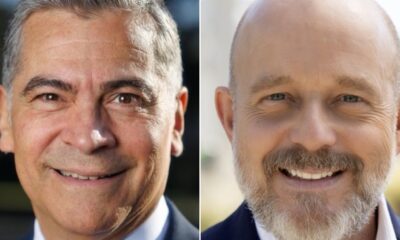
Poll: Becerra Widens His Lead Over Hilton; Californians Split on Wealth Tax
-
 Business3 weeks ago
Mayor Lee Announces $1 Million Kaiser Permanente Grant for Pilot Program to Address Homelessness, Clean Up Public Spaces throughout Oakland
-
 Business3 weeks ago
County Office of Education Says OUSD Finances Are Getting Healthier, Materially Stronger
-
 Uncategorized3 weeks ago
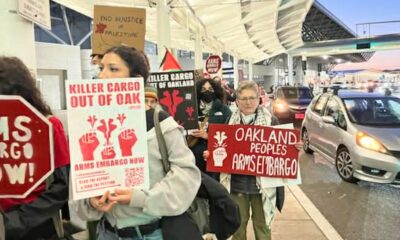
Oakland People’s Arms Embargo Coalition Demands End to Military Shipments Thru Oakland
-
 Activism3 weeks ago
Oakland Post: Week of September 16 – 22, 2026
-
 Art3 weeks ago
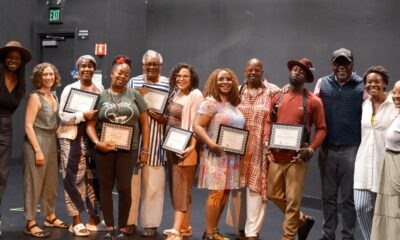
BLACspace Cooperative Invites Bay Area to Experience Oakland’s Black Cultural Ecosystem Through a BLAC Map Tour + Party
-
 Community3 weeks ago
Two Looming Threats Every Alameda County Elder Should Know About
-
 Lead Story2 weeks ago
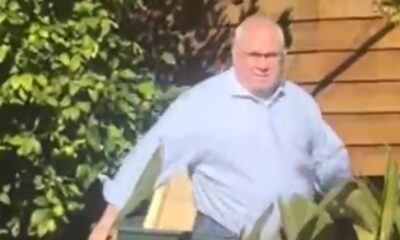
Zakiya Jendayi Arrested, Locked Out of Home by Sheriff’s Deputies
