Connect with us

Health

Impact of Roe v. Wade on Black Community an Ongoing Debate

Published

on

Women’s History Month

“This is the first in a series of articles about laws that have significantly impacted Black women in America.”

Protestors of all races at a pro-choice rally in Washington, D.C., January 2012. (Debra Sweet/Flickr/CreativeCommons)

Protestors of all races at a pro-choice rally in Washington, D.C., January 2012. (Debra Sweet/Flickr/Creative Commons)

In 1967, Dr. Dorothy Lavinia Brown, the first African-American woman surgeon in the South and a Tennessee state assemblywoman, was the first American lawmaker to sponsor a proposed bill to fully legalize abortion. The proposal failed. But, in 1970, pregnant Dallas-area resident Norma L. McCorvey (“Jane Roe”) sued then-District Attorney Henry Wade, claiming that a Texas law criminalizing most abortions violated McCorvey’s constitutional rights. On Jan. 22, 1973, the Supreme Court ruled 7-2 in Roe’s favour, asserting that the “right of privacy, whether it be founded in the Fourteenth Amendment’s concept of personal liberty and restrictions upon state action…or… in the Ninth Amendment’s reservation of rights to the people, is broad enough to encompass a woman’s decision whether or not to terminate her pregnancy.”

The high court’s controversial ruling in Roe v. Wade, which allowed women to have an abortion in the early stages of her pregnancy without government interference, has reverberated throughout the nation and across the decades. Divisive in nature, it has spawned acrimonious debate, sharp political partisanship and even violence.

Undoubtedly, however, Roe v. Wade has had an undeniable impact on American women, particularly African-American women—though the nature of the effect is, as expected, a source of debate. “This was a landmark case that absolutely changed the game for women of color in this country,” said Monica Simpson, executive director, Sistersong Women of Color Reproductive Justice Collective.

“This is the first case that really helped alleviate reproductive oppression and allowed women to make their own decisions over their body.”

On the other hand, pro-life advocates say the death of millions through abortion, rather than being a source of “justice,” has instead unleashed a “holocaust” and “genocide” in the African-American community.

That idea burst back into the mainstream during 2010’s Black History Month when the Radiance Foundation, a Georgia-based antiabortion group, erected dozens of billboards proclaiming the message, “Black children are an endangered species.” The following year,  the group Life Always sparked outrage with a billboard in lower Manhattan that declared, The most dangerous place for an African-American is the womb.”

Both groups, and other anti-abortion activists, have identified Planned Parenthood – the international non-profit and provider of reproductive health services, including abortion – as the villain in this so-called genocide. For example, in New York, the home of Planned Parenthood, more Black babies are aborted than are born alive (1,223 to 1,000), according to the Radiance Foundation, which cited the state’s health department. Activists say the group targets African Americans, pointing to its founder Margaret Sanger’s connection to the eugenics movement—which sought to cull the population of those considered “unfit,” usually the disabled, poor and minorities—and the location of the group’s clinics in poorer, minority communities.

The AFRO reached out to Planned Parenthood but did not receive a statement by deadline.

“As someone who is Black and has worked in the community all my life, I think Roe v. Wade has had a devastating impact on the Black community,” Ryan Scott Bomberger, chief creative officer and founder of the Radiance Foundation, told the AFRO. He added, “If you go off of the United Nations’ definition of genocide, it is exactly what has happened in the Black community.”

Fuelling these claims is the long-held fact: the comparatively high abortion rates among Black women. According to the Centers for Disease Control and Prevention, in 2008 (the last year for which information is available), White women accounted for 37.2 percent of abortions, Black women for 35.5 percent, Hispanic women for 21.1 percent and other races for 6.3 percent. But, Black women have the highest rates and ratios of abortion – almost four times that of White women: 33.5 abortions per 1,000 women aged 15-44 years and 472 abortions per 1,000 live births compared to 8.7 abortions per 1,000 women aged 15-44 years and 140 abortions per 1,000 live births. Reproductive rights and health advocates attribute the disproportionate number of abortions among Black women to the higher number of unintended pregnancy rates within the group. These higher unintended pregnancy rates reflect the challenge faced by many women of color in accessing high-quality contraceptive services and in using them consistently, they say, and also reflect the broader realities of racial and ethnic disparities in health care access and outcomes. For example, it was only when President Obama passed the Affordable Care Act that health insurance companies were required to offer free birth control coverage, and Medicaid—the source of health coverage for many low-income, minorities—is still not required to offer free contraceptives. Sonya Michel, an expert in women’s history, University of Maryland—College Park and senior scholar, Woodrow Wilson International Center for Scholars, said because of their relatively low incomes and lack of access to quality health care, AfricanAmerican women did not always have the full reproductive freedom other groups enjoyed.

“One of the ironies when you look across the political spectrum, the people who are the most opposed to abortion are also opposed to providing affordable birth control and welfare benefits to African-American people,” Michel said, adding that such detractors are basically saying Black people shouldn’t have sex.

The abortion-as-genocide supporters however, decry those claims, seeing abortion as another in a set of attempts—some government-sponsored—to decimate the Black community. Such fears are grounded in a history of medical—including reproductive health—abuses within the Black community.

“We’ve been accused of promoting conspiracy theories, but it is not conspiracy, it’s history,” Bomberger said.

In her book, Killing the Black Body author Dorothy Roberts outlines the history of the control and manipulation of the Black woman’s womb as a tool of racial oppression in the United States.

“The systematic, institutionalized denial of reproductive freedom has uniquely marked Black women’s history in America,” she wrote. “Considering this history—from slave masters’ economic stake in bonded women’s fertility to the racist strains of early birth control policy to sterilization abuse of Black women in the 1960s and 1970s to the current campaign to inject Norplant and Depo-Provera in the arms of Black teenagers and welfare mothers—paints a powerful picture of the powerful link between race and reproductive freedom in America.”

That tainted history prompted several within the Civil Rights and Black Nationalist movements to view birth control and abortion as a form of “race suicide,” and encouraged Black fertility as a means of empowering the Black race.

Bomberger echoes those sentiments, which—for him—is grounded in a deep personal history. The product of rape—which has long been accepted as a rationale for abortion—Bomberger was instead given up for adoption and raised in a Christian family of 15 children—10 of whom were adopted. He is, himself, the parent of two adopted children.

“It is a huge blow to Black voting power” and to other aspects of the Black community, he said of the “epidemic” of abortions.

“We’ve heard the term #BlackLivesMatter, but when do they matter?” Bomberger questioned, later adding, “We want to stop the destruction of beautiful possibility in the Black community, not only of the unborn children who are killed, but of potential mothers and fathers…. For a people who have overcome such a heinous past to believe killing our future is something to celebrate baffles me.”

Conversely, pro-choice advocates see the nation’s history of abuse against the Black woman and the costs of involuntary motherhood as even more reason why Roe v Wade is a matter of justice.

Among African female slaves, abortion and birth control methods were part of their heritage—used as part of their basic health care but also as a form of self-determination, protection of potential children from the horrors of slavery and protest against enslavers that viewed them as mere brood mares.

In an 1856 medical essay, Dr. E.M. Pendleton noted complaints by plantation owners that their slaves seemed to be “possessed of a secret by which they destroy the foetus at an early age of gestation.”

But the indigenous knowledge of those African slaves were lost as the gap between the generations grew wider–and as modern-day Black women began to lean more heavily on institutionalized medical care, Simpson said. And, then-illegal abortion became dangerous.

“Women were taking extreme measures to rid themselves of unwanted pregnancies,” the reproductive justice activist said. “Most of the women who lost their lives before Roe v. Wade were women of color.”

Given those and other socio-political realities, Simpson said it is “completely ridiculous” to “pressure” Black women with these abortion-as-genocide memes void of further discussion about the role of Black men who abandon their families, void of discussions about the economic inequalities Black women face, void of social issues such as police violence against young Black men, void of discussions about the lack of comprehensive sex education for Black boys and girls, etc.

“It is absolutely absurd and cruel to shame Black women in this way because at the end of the day, we don’t know why a woman may choose not to have a child,” she said. “What trips me out is people think women are making these choices lightly. This is never an easy decision for any person to make.”

Continue Reading
Click to comment

Leave a Reply

Your email address will not be published. Required fields are marked *

Black History

Doulas Are Helping Black California Moms Navigate Pregnancy–Even as High Mortality Rates Persist

In California, Black women experience the highest pregnancy-related mortality rate — about four times greater than other women, according to statistics. From 2021 to 2023, the leading causes of pregnancy-related deaths included cardiovascular disease, COVID-19, hemorrhage, sepsis, amniotic fluid embolism, and pulmonary embolism.

Published

on

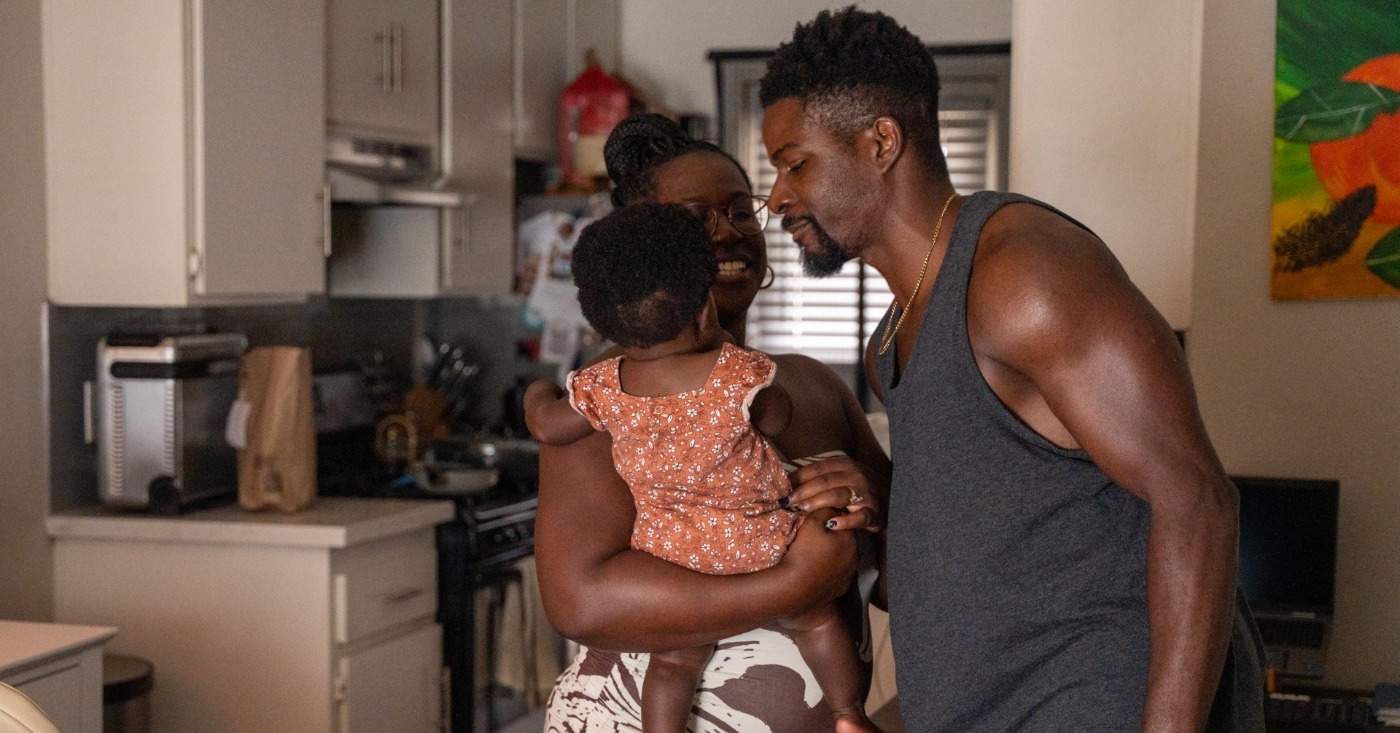
Long Beach resident Cassandra Carter approached the birth of her daughter, Nyomi (pictured), last November with anxiety after losing twins. She is pictured here with her husband.

After losing twins, Long Beach resident Cassandra Carter approached the birth of her daughter, Nyomi, last November with anxiety. She wanted support for herself and her husband, Adewole, that extended beyond routine medical care. 

“Getting pregnant as a Black woman, I wanted a team around me that made me feel safe,” she said. “I know all about the mishaps that Black women experience.”  

Carter, a therapist and self-described hippie, hired Yvette Perry, a doula and co-founder of Divine Birthing Services LLC in Lancaster. Perry helped Cassandra craft a detailed birth plan. 

“I was worried about postpartum depression. Mrs. Yvette knows a lot about how postpartum affects men as well,” Carter explained. 

Perry was present the day Nyomi was born. She held the baby when Carter or her husband needed a moment and even set up candles in the birthing suite.  

“Whatever I needed for my comfort, she was there,” Carter said of Perry. “She was there as an advocate and voice. I had a really serene birthing experience because I had someone extra who wasn’t tied to me as my family.”  

Perry, a doula for nearly six years, said preexisting conditions, poor communication and dismissive hospital care heighten health risks for Black mothers. 

“Sometimes, Black mommies are not being heard. They don’t know they have rights. They don’t know they can say, ‘no,’” Perry explained. “Doulas empower them. We are there to educate them.” 

Perry’s concerns reflect a broader public health crisis. According to the Centers for Disease Control and Prevention’s 2024 maternal mortality report, non-Hispanic Black women in the U.S. died from pregnancy-related causes at a rate of 44.8 deaths per 100,000 live births. 

In California, Black women experience the highest pregnancy-related mortality rate — about four times greater than other women, according to statistics. From 2021 to 2023, the leading causes of pregnancy-related deaths included cardiovascular disease, COVID-19, hemorrhage, sepsis, amniotic fluid embolism, and pulmonary embolism. 

The Centering Black Mothers in California report found that structural racism — including barriers to high-quality health care, and chronic stress— disproportionately harms Black women. 

In a statement to California Black Media (CBM), the California Department of Public Health (CDPH) said maternal mortality disparities stem from multiple factors. The department said addressing structural racism, listening to Black women’s experiences and reducing provider bias are key to closing the gap. 

California began covering doula care as a Medi-Cal benefit in 2023, providing eligible patients with support during pregnancy, childbirth and the postpartum period, according to CDPH.  

Whitney Dotson of Inglewood wanted an expert on pregnancy, labor, and delivery to guide her and her husband, Anthony, through the birth of their son, Anthony III. So, she hired Perry for doula support. 

“It’s always more comfortable when you can have a second opinion,” she said. “Knowing she was better versed in what the options were, made me more comfortable.” 

Dotson, 39, had a healthy pregnancy but faced recommendations common for expectant mothers over 35. Her doctor advised inducing labor at 39 weeks, but she hoped to carry to full term. 

“I wasn’t comfortable with that,” she admitted. 

Perry provided Dotson with information about induction guidelines and alternatives, helping her understand her options and communicate her preferences.  

Then, Dotson returned to her doctor. 

“I said, ‘I don’t want to — and this is why,’” she recalled. “He agreed and pushed the induction date back a week.” 

Perry also advised Anthony on how he could support his wife during and after the pregnancy and during Anthony III’s birth. She also reminded Dotson to change birthing positions — from her back to her hands and knees.  

Before Saveneh Martinez became a doula with Fierce Advocates in Contra Costa County, she was a new mom, uneducated on aspects of birth, which led to her first child, Colton, being placed in a Neonatal Intensive Care Unit. 

“I didn’t know my choices,” she said.   

Martinez called it “lifesaving” for expecting moms to have a doula.  

“It should be a medical right,” she said.  

California Perinatal Quality Care Collaborative (CPQCC) Senior Associate Medical Director Kimberly D. Gregory said research suggests that doulas decrease the pre-term birth rate and the likelihood of a C-section.  

“Having a doula is a proactive thing to do,” she said.  

Efforts are being made across the state to reduce maternal deaths.  

CDPH’s Title V Action Plan aims to reduce pregnancy-related deaths among Black birthing mothers from 49.7 to 42.3 per 100,000 live births by 2030 through improvements in patient-centered care, expanding community-based perinatal teams, and addressing the social factors that contribute to poor maternal health outcomes. 

CDPH’s Black Infant Health (BIH) Program and Perinatal Equity Initiative (PEI) have already begun to make headway.  

“BIH’s prenatal group model improves key intermediate outcomes for participants, including increased social support and empowerment, better stress management, reduced depressive symptoms and gains in health knowledge and behaviors such as safe sleep practices and reduced smoking,” the CDPH told CBM.  

“PEI’s early implementation results show progress across several participant-reported areas, such as improved birth experiences, breastfeeding initiation, and coparenting skills among fathers and partners,” the CDPH statement continued.  

Gregory said the California Pregnancy Associated Review Committee examines maternal deaths and develops guidelines to help hospitals improve care. One of its main recommendations focuses on how hospitals respond to hemorrhaging, a leading cause of pregnancy-related deaths. 

Gregory said CMQCC also created standard clinic care practices for cardiovascular disease and sepsis, two more drivers of maternal mortality, but widespread implementation across the state is pending.  

She noted that although there are 800 maternal deaths a year in the U.S., there are also 3.6 million births.  

“Most people will do well,” she said. “But you should know about complications like preterm birth. You should know about complications like diabetes, preeclampsia and postpartum depression.” 

Martinez said doulas help to make birthing the transformative experience that it is, instead of a routine clinical transaction. 

“Being able to feel heard, seen, safe, respected, and just being able to create spaces for them to be held as well,” she said.  

Supported by the California Health Care Foundation (CHCF), which works to ensure that people have access to the care they need, when they need it, at a price they can afford. Visit www.chcf.org to learn more.

Continue Reading

Featured

On Your November Ballot: Prop 38 Would Allocate $8.4 Billion to Immunology and Immunotherapy Funding

“Yes on 38”, with the tagline “Californians for Life-Saving Immunology Research and Cures,” is leading the campaign for the support side of the proposition.

Published

on

Shutterstock

California voters will decide in November whether Proposition (Prop) 38 should authorize substantial state funding for immunology and immunotherapy research.

The initiative would fund immunology and immunotherapy research aimed at harnessing the body’s immune system to develop new treatments, medical procedures and potential cures for diseases such as cancer, Alzheimer’s disease and heart disease.

More specifically, Prop 38, titled the Immunology and Immunotherapy Research Funding Initiative, is split into three main components that would go into effect if passed.

First, the initiative would authorize the state to issue $8.4 billion in general obligation bonds to support immunology and immunotherapy research. At least half of the bond proceeds, or $4.2 billion, would be dedicated exclusively to research.

Additionally, Prop 38 would make it mandatory for the state to enter into an agreement with a qualified nonprofit institute focused and dedicated to researching immunology and immunotherapy within 90 days of the initiative’s effective date. The research institute must be affiliated with the University of California. 

The third component mandates that the remaining bond revenue must be directed to California-based public and nonprofit medical institutions through a peer-reviewed grant process.  

“Yes on 38”, with the tagline “Californians for Life-Saving Immunology Research and Cures,” is leading the campaign for the support side of the proposition. 

Along with the campaign, organizations that have publicly supported the ballot initiative include the California Democratic Party, The ALS Association, Alzheimer’s treatment and advocacy organizations, California Black Health Network, Parkinson Association of Northern California and Reform California among others.

“California has an opportunity to accelerate lifesaving medical breakthroughs. Immunotherapies work differently than traditional treatments. Instead of attacking cells directly, they empower the body’s own immune system to recognize and stop disease. Today, these therapies are already treating certain cancers and chronic conditions — and researchers continue to expand what’s possible. This initiative invests in proven science so cures can move from the lab to patients faster,” said the campaign.

No on Proposition 38 is leading the campaign against the measure, with support from the League of Women Voters of California. Opponents argue that California cannot afford to assume $8.4 billion in debt for medical research that may not produce definitive results. They also object to directing more than half of the bond proceeds — $4.2 billion — to a single qualifying nonprofit research institute, arguing that funding decisions of this magnitude should be made through the state’s regular budget process.

“Medical research can save lives, but Prop 38 is the wrong way to fund it. It would authorize $8.4 billion in borrowing for immunology and immunotherapy research and require the state to make $500 million to $600 million in annual debt payments for about 20 years. Those payments would come from the General Fund, which also pays for schools, health care, and other public services,” the League of Women Voters of California said.

A “yes” vote would authorize $8.4 billion in state bonds to fund immunology and immunotherapy medical research.

A “no” vote would reject the proposed bond funding.

Continue Reading

Community

Two Looming Threats Every Alameda County Elder Should Know About

Federal changes enacted under H.R. 1 are bringing new eligibility, reporting, and coverage rules beginning in 2027. Although Californians age 65 and older and people with disabilities are exempt from the new 80-hour-per-month work requirement and will continue with annual rather than six-month renewals, that does not mean elders can ignore the coming changes.

Published

on

iStock.

Alameda County elders are urged to attend the Elder Justice Symposium at Oakland City Hall on Sept. 25, from 9 a.m. to 5 p.m., for information that could profoundly affect both their health care and the legacy they hope to leave their families.

For many older adults, a lifetime of hard work has produced two things they understandably want to protect: access to health care while they are living and the home, savings, and other assets they hope to pass to loved ones when they die.

Changes already underway in California make understanding how to protect both increasingly urgent.

The first threat involves Medi-Cal.

Federal changes enacted under H.R. 1 are bringing new eligibility, reporting, and coverage rules beginning in 2027. Although Californians age 65 and older and people with disabilities are exempt from the new 80-hour-per-month work requirement and will continue with annual rather than six-month renewals, that does not mean elders can ignore the coming changes.

California has already reinstated an asset test for certain Medi-Cal recipients age 65 and older, people with disabilities and those needing long-term care. Assets must be reported when applying or renewing coverage.

And another significant change is coming.

Beginning July 1, 2027, California says the Medi-Cal asset limit for affected beneficiaries will fall from $130,000 for one person to just $21,000, and to $31,000 for two people, with certain assets excluded and special rules applying in some circumstances.

There is more. Beginning Jan. 1, 2027, Medi-Cal’s retroactive coverage period will also shrink. For most beneficiaries outside the ACA expansion adult group, coverage of qualifying medical expenses incurred before application will be reduced from three months to two.

For an elder facing hospitalization, long-term care or an unexpected medical crisis, misunderstanding these rules could have enormous financial consequences.

The second threat concerns what happens to everything you worked so hard to acquire.

Many people believe, “I have a will and a living trust, so my family is protected.”

It may not be that simple.

An estate plan is only as effective as the way it has been structured, maintained and implemented. How assets are titled, whether a trust has actually been funded, beneficiary designations, Medi-Cal eligibility and long-term-care planning can all affect whether a person’s wishes are ultimately carried out.

A will by itself does not automatically avoid probate, and simply possessing trust documents does not mean every asset has been properly protected or positioned to pass as intended.

That is why elders should learn the rules before a medical crisis, incapacity or death makes planning far more difficult.

At the Elder Justice Symposium, experts will explain these changes in understandable language and discuss steps that elders and their families should consider now.

Attendees will have an opportunity to learn what questions to ask about Medi-Cal eligibility and renewals, asset limits, estate planning and protecting the legacy they intend for their families.

Do not assume the rules you learned years ago are still the rules governing you today.

Come to Oakland City Hall on Sept. 25, from 9 a.m. to 5 p.m.

Bring your questions. Bring your family. Most importantly, bring a willingness to prepare.

The decisions you make before these changes take full effect could profoundly affect your health care, your financial security, and what remains for the people you love.

Continue Reading

Subscribe to receive news and updates from the Oakland Post

* indicates required

CHECK OUT THE LATEST ISSUE OF THE OAKLAND POST

ADVERTISEMENT

Facebook

Assemblymember Corey Jackson (D-Moreno Valley). File photo.
Community2 days ago

Asm. Corey Jackson Announces Launch of 24-Hour Childcare in His District

The Rev. Leon “Sonny” Clark. File photo.
Black History2 days ago

IN MEMORIAM: The Rev. Leon “Sonny” Clark, Longtime Orange County Pastor and Community Leader, Dies at 72

Democrat Xavier Becerra and Republican Steve Hilton.
Economy2 days ago

Poll: Becerra Widens His Lead Over Hilton; Californians Split on Wealth Tax

Quixote Atkins of VillageGIVE moderates a panel discussion at the Coliseum 60 celebration at Youth UpRising featuring Keith Brown, a member of IATSE Local 107; author, historian and former Black Panther Party member Tareka Lewis; and African American Sports and Entertainment Group President Ray Bobbitt.
Business2 days ago

From Historic Memories to New Possibilities: Oakland Celebrates Coliseum 60

ACOE Supt. Alysse Castro; OUSD Supt. Dr. Denise Saddler. File photos.
Business2 days ago

County Office of Education Says OUSD Finances Are Getting Healthier, Materially Stronger

Imani Social Justice Team (left to right): Angela Noel, Zakiya Jendayi and Diane Doss. Patty Hallm, Susan Burns, Diane Lewis, Pastor Michael McBride, Theresa ???, Jean Moses and Diana Bell. Front: Sloane Johnson and (man whose name I'm getting to complete the identification). Photo by Octavian Kelly.
Community2 days ago

LIVE FREE Sunday Dinner Brings Faith, Fellowship and Civic Conversation to Oakland

Chancey Bailey. File photo.
Black History2 days ago

Remembering Chauncey Bailey as Student Journalists Face Threats to Truth-Telling

The first cohort of BLACspace participants with awards in August. Courtesy photo.
Art2 days ago

BLACspace Cooperative Invites Bay Area to Experience Oakland’s Black Cultural Ecosystem Through a BLAC Map Tour + Party

Oakland Police and emergency vehicle arrive to Williams Chapel Monday morning. Courtesy photo.
Black History2 days ago

In Wake of Death on Doorstep, Williams Chapel Baptist Church Calls for Better Care, Funding for Unhoused

Standing by her birthday cake, Nuna McKee waves to family and friends who came from far and near to celebrate her birthday. Courtesy photo.
Community2 days ago

Oakland Centenarian Nuna McKee Honored!

Bussa Emancipation Statue in Bridgetown, Barbados. Photo courtesy Wikimedia Commons.
Black History2 days ago

Caribbean Nations Produce Action Plan Calling for UK Reparations Over Slavery

Activism2 days ago

Oakland Post: Week of September 23 – 29, 2026

Long Beach resident Cassandra Carter approached the birth of her daughter, Nyomi (pictured), last November with anxiety after losing twins. She is pictured here with her husband.
Black History6 days ago

Doulas Are Helping Black California Moms Navigate Pregnancy–Even as High Mortality Rates Persist

iStock
Business1 week ago

Newsom Signs Addictive Social Media Law to Protect Kids

Shutterstock
Featured1 week ago

On Your November Ballot: Prop 38 Would Allocate $8.4 Billion to Immunology and Immunotherapy Funding

Commentary1 month ago

Standoff for Justice: Our Homes Are Worth Fighting For

Activism1 month ago

Oakland Post: Week of August 26 – September 1, 2026

Ribbon cutting ceremony and celebration at Terminal 1, Gate 3 of Frontier Airlines at Oakland San Francisco Bay Airport. (L-R) Port of Oakland Executive Director Kristi McKenney, U.S. Representative Congresswoman Lateefah Simon (D-CA-12), Oakland Mayor Barbara Lee, Frontier Airlines Vice President of Public and Consumer Affairs Tyri Squyres, Oakland Metropolitan Chamber of Commerce president Barbara Leslie, and Port of Oakland Board President Stephanie Dominguez Walton. Photo by Carla Thomas
Business1 month ago

Frontier Airlines’ Return to Oakland Airport Brings Flights, Jobs and Opportunity

Gubernatorial Candidate Steve Hilton. File photo.
Business1 month ago

Gubernatorial Candidate Steve Hilton Blasts California New Tire Rules; Newsom Hits Back

San Francisco Chef Sharon Lee, culinary educator and owner of The Spot! Photo courtesy of Chef Sharon Lee.
Business1 month ago

Chef Sharon Lee Blends Culinary Excellence, Education and Empowerment

Jackie Wright of Wright Enterprises. Photo courtesy of Wright Enterprises.
Black History1 month ago

Jackie Wright Champions Bay Area Stories, Filmmakers and Cultural Institutions

Local and state officials gathered at the State Capitol on Aug. 18 to discuss Proposition 1, a statewide bond measure that would fund housing and homelessness programs. Oakland Mayor Barbara Lee urged voters to approve the measure on the November ballot. Pictured to Lee’s right are Assemblymember Buffy Wicks (D-Oakland), Sacramento Mayor Kevin McCarty and Sen. Christopher Cabaldon (D-West Sacramento). CBM photo by Antonio Ray Harvey.
Community1 month ago

Big City Mayors Ask for “Yes” Vote on Housing Bond Measure; Conservatives Say “No”

Business1 month ago

Oakland Coliseum Project Opens Door for Small Businesses to Build Bigger

Michael Love. File photo.
Education1 month ago

Gov. Newsom’s Latest Appointees Include Sacramento Advocate for Formerly Incarcerated Students; State’s New Tech Chief

Parents, students, and teachers fought to save Roots International Academy, an East Oakland middle school that was closed in 2019 despite broad community opposition. Photo courtesy of Oakland North.
Community2 weeks ago

Misnamed ‘Parent’ PAC Seeks to Influence Oakland School Board Elections

Post Co-Publisher Gay Plair Cobb with Brendalynn Goodall. Courtesy photo.
Business1 month ago

Longtime BWOPA Member Brendalyn Goodall Appointed to California Workforce Development Board 

Asm. Mia Bonta (D-Oakland)
Community1 month ago

Gov. Newsom Signs Law Shielding Immigration Aid Workers From Doxing Threats

California Secretary of State Shirley Weber’s appearance at the UC Student and Policy Center drew a diverse audience. Weber, California’s chief elections officer, discussed election administration, voting by mail and national debates over election integrity. CBM photo by Antonio Ray Harvey.
Community1 month ago

Secretary of State Shirley N. Weber Urges Californians to Vote Early as Voter ID Battle Intensifies

Documentary film, "Seeds for Liberation," highlights the Palestinian struggle and the shared fight for freedom and liberation in the United States and abroad. Graphic courtesy of www.seedsforliberationmovie.com
Commentary1 month ago

From Palestine to Oakland: Seeds for Liberation Examines Shared Struggles for Freedom

Black History1 month ago

IN MEMORIAM: Dolly Parton Dead at 80 — How She Built a Legacy of Love and Earned Her Place in Black Culture

Trending

Copyright ©2021 Post News Group, Inc. All Rights Reserved.