
Op-Ed
Will the Supreme Court Evict Fair Housing Law?


By Charlene Crowell
NNPA Columnist
Although a series of civil rights laws were enacted in the 1960s, in the 21st Century many of these victories continue to face legal challenges. On January 21, one such challenge was heard by the United States Supreme Court. By the time the Justices rule in the case of Texas Department of Housing v. Inclusive Communities Project, the nation’s Fair Housing Act of 1968 will either be gutted or strengthened.
Lawyers argued whether the Fair Housing Act was intended to apply only to intentional discrimination or whether policies and practices that lead to exclusionary racial patterns are within the scope of the law, causing “disparate impact.”
In 2008, The Inclusive Project, a nonprofit organization that advocates fair and affordable housing in the Dallas metro area, sued the Texas Department of Housing and Community Affairs. It charged the state agency with perpetuating racial disparities violating fair housing by the way it used an indirect federal subsidy called Low-Income Housing Tax Credits (LIHTCs). The tax credits, used across the country to support permanently affordable rental housing options for low-income families, were alleged in Texas to target minority areas while excluding them in predominantly White ones.
In March 2014, the U.S. Federal Fifth Circuit of Appeals agreed with The Project. Undaunted by the appellate decision, in May 2014, the Texas agency petitioned the U.S. Supreme Court.
Since then, amicus or “friend of the court” briefs have been filed by a number of diverse organizations that include AARP, Hope Enterprise Corporation, Howard University School of Law Housing Clinic, Judicial Watch, Lawyers’ Committee for Civil Rights Under Law, NAACP Legal Defense and Education Fund, National Black Law Students Association, the National Fair Housing Alliance and the Center for Responsible Lending (CRL).
Fair housing advocates have raised their voices and organized protests to mount pressure that conveys just how important fair housing is to the nation’s citizens and its economy.
Speaking at a January 21 midday rally organized by the National Fair Housing Alliance and held on the steps of the U.S. Supreme Court, Nikitra Bailey, senior vice-president with CRL said, “Today the question before the Supreme Court is a simple one: Will the court stand on the side of justice and fairness by upholding disparate impact as a critical tool under the Fair Housing Act, or will it take a step backwards in our nation’s storied history and allow rampant discrimination in housing and finance markets to go unchecked?”
“The answer for the court should be easy,” continued Bailey. “Disparate impact is a longstanding safeguard for fairness – it simply requires that policymakers, banks and other housing service providers pick the fairest option to avoid discrimination.”
Myron Orfield, a professor of law and director of the Institute on Metropolitan Opportunity at the University of Minnesota, was equally direct on the issue in a recent blog.
“If the Supreme Court holds that there is no disparate impact cause of action under the Fair Housing Act, it will remove the single most effective tool available to fight discrimination and segregation,” concluded Orfield.
In recent years, two other cases with essentially the same arguments were settled before the Roberts Court could rule. In this third case, the likelihood of a settlement appears remote.
Key federal agencies have fully embraced disparate impact as central to their work. For example, in a 2012 address before the National Community Reinvestment Coalition, Richard Cordray, director of the Consumer Financial Protection Bureau, said, “We cannot afford to tolerate practices, intentional or not, that unlawfully price out or cut off segments of the population from credit markets.”
Less than a year later in February 2013, HUD issued its own disparate impact rule holding that housing discrimination and lending occurs not only by intent; but also by effect. At the time, HUD Secretary Shaun Donovan said, “Through the issuance of this Rule, HUD is reaffirming its commitment to enforcing the Fair Housing Act in a consistent and uniform manner. This will ensure the continued strength of one of the most important tools for exposing and ending housing discrimination.”
Earlier mortgage research by CRL found that racial disparities really meant that communities of color bore a disproportionately large share of foreclosures, lost wealth, and deteriorating quality of life. African-American and Latino borrowers were, respectively, 2.8 and 2.3 times as likely to receive a mortgage loan with a prepayment penalty – even though many of these borrowers could have qualified for more affordable and sustainable loans. At the height of the foreclosure crisis, borrowers of color were also foreclosed at rates nearly double that experienced by Whites.
With such broad and strong support for disparate impact and research revealing its harms, if the Supreme Court takes the more narrow approach of intentional discrimination as it relates to the Fair Housing Act, the multiple and rippling effects may reverse fair housing’s hard-fought gains.
As Marc Morial, president and CEO of the National Urban League recently wrote, “I think all fair-minded people would agree that we should not allow these types of discriminatory outcomes to persist. Private civil rights attorneys, state Attorney Generals, federal enforcement agencies and others continue to work diligently to ensure that those practices are a part of the past – and not our future.”
Charlene Crowell is a communications manager with the Center for Responsible Lending. She can be reached at Charlene.crowell@responsiblelending.org.
###













#NNPA BlackPress
COMMENTARY: Jim Crow 2.0 at the Pentagon
BLACKPRESSUSA NEWSWIRE — The American people are expected to believe that one extraordinary officer after another suddenly fails to meet some undefined standard of excellence. We are expected to ignore impeccable service records while accepting that political appointees alone possess the wisdom to determine who is worthy of advancement.


Pete Hegseth insists that he is restoring “merit” to the United States military. But after months of dismissals, blocked promotions, and ideological purges, the evidence tells a different story. His campaign against so-called “diversity, equity, and inclusion” has become something far more dangerous: an assault on equal opportunity that falls with particular force on African Americans, while also targeting women, Latinos, gay Americans, and transgender service members.
The latest example is both troubling and infuriating.
Once again, Defense Secretary Pete Hegseth has reportedly blocked the promotion of an exceptionally qualified woman—Rear Admiral Amy Bauernschmidt. Bauernschmidt is no ordinary officer. She became the Navy’s first woman to command a nuclear-powered aircraft carrier, one of the most demanding leadership assignments in the world. Her career reflects decades of exemplary performance, operational excellence, and leadership under extraordinary pressure.
Yet once again, a distinguished military career appears to have been subordinated to an ideological agenda masquerading as “merit.”
I call BS!
The American people are expected to believe that one extraordinary officer after another suddenly fails to meet some undefined standard of excellence. We are expected to ignore impeccable service records while accepting that political appointees alone possess the wisdom to determine who is worthy of advancement.

The pattern has become impossible to ignore.
General Charles Q. Brown Jr., only the second African American to serve as Chairman of the Joint Chiefs of Staff, was dismissed despite a career that placed him among the most accomplished military leaders of his generation.
Admiral Lisa Franchetti, the first woman ever to serve as Chief of Naval Operations, was removed despite decades of distinguished command experience.
Reports have documented interventions that blocked or delayed the promotions of Black officers and women selected through the military’s rigorous promotion system.
Now Rear Admiral Amy Bauernschmidt joins the growing list of highly accomplished officers whose careers have been derailed for reasons that have never been persuasively explained.
Where is Congress?
Its silence has become deafening.
Congress has an independent constitutional responsibility to oversee the armed forces. Instead, too many lawmakers have watched silently while one of the nation’s most respected institutions is subjected to ideological litmus tests and political interference.
This is not military reform. It is testosterone-fueled performative masculinity disguised as a philosophy of military excellence.
The irony is impossible to miss. Hegseth repeatedly invokes “merit,” yet his rhetoric begins with the assumption that Black officers, women, and other historically excluded Americans must somehow justify their achievements in ways that white male officers are rarely required to do.
That is not meritocracy. It is prejudice wrapped in patriotic language.
No one is asking that anyone be promoted because of race or gender. Americans simply expect that promotions be based on demonstrated competence, leadership, integrity, and service. The officers being targeted have already proven themselves repeatedly under one of the world’s most demanding evaluation systems.
Their records speak for themselves.
The attack on African American military leadership has been especially pernicious.
For generations, Black Americans fought in segregated units, earned decorations while denied equal treatment, and repeatedly demonstrated loyalty to a nation that often failed to extend them full citizenship. They broke barriers not because standards were lowered but because excellence finally overcame institutional discrimination.
Today’s campaign against “diversity” threatens to revive old assumptions under new slogans.
The implication that Black generals and admirals somehow owe their success to affirmative action rather than extraordinary performance echoes some of the ugliest stereotypes of the Jim Crow era. Yesterday’s segregationists claimed Black Americans were inherently less qualified. Today’s culture warriors simply employ more politically acceptable language while inviting the same suspicion about Black achievement.
That is why Hegseth’s campaign increasingly resembles Jim Crow 2.0.
The targets may now wear stars on their shoulders instead of military patches on segregated uniforms, but the underlying message is hauntingly familiar: Black excellence is presumed suspect, while white excellence is presumed earned.
America’s military became the finest fighting force in history because it opened its doors to talent wherever it could be found. It grew stronger after President Truman desegregated the armed forces. It became stronger when women assumed greater command responsibilities. It became stronger when every qualified American was given the opportunity to serve to the fullest extent of their abilities.
Diversity is not a concession. It is a strategic advantage.
The nation’s adversaries do not fear an American military because it is racially homogeneous. They fear it because it draws upon the talents of more than 340 million Americans whose diverse experiences, perspectives, and abilities make our armed forces unmatched anywhere in the world.
Every politically motivated dismissal of a distinguished officer sends a chilling message throughout the ranks: excellence alone may no longer be enough if you belong to the wrong demographic group.
That weakens morale. It weakens recruitment. It weakens retention.
And ultimately, it weakens national security.
Pete Hegseth has every right to pursue military readiness. He has no right to redefine merit in ways that repeatedly cast suspicion upon the accomplishments of Black officers, women, and others who have devoted their lives to defending this nation.
America deserves better. The men and women who wear the uniform deserve better. The Constitution deserves better.
And unless Congress finds the courage to exercise meaningful oversight, history may well remember this period not as a restoration of military excellence, but as the moment political ideology attempted to resurrect, in modern form, the old poison of exclusion.
Jim Crow did not strengthen America. Jim Crow 2.0 will not strengthen America’s military. It will only diminish it
Wade Henderson
Strategic Advisor
Civil and Human Rights
wade@wadejhenderson.com

Activism
Alameda County Makes History: Board of Supervisors Unanimously Adopts Reparations Action Plan
The Final Action Plan addresses disparities in housing, economic opportunity, education, health, environmental justice, public safety, arts and culture, land use, and other areas where historical government policies have contributed to inequitable outcomes for Black residents.

Landmark 5–0 Vote Advances One of the Nation’s Most Comprehensive County-Led Reparative Justice Efforts
Special to The Post
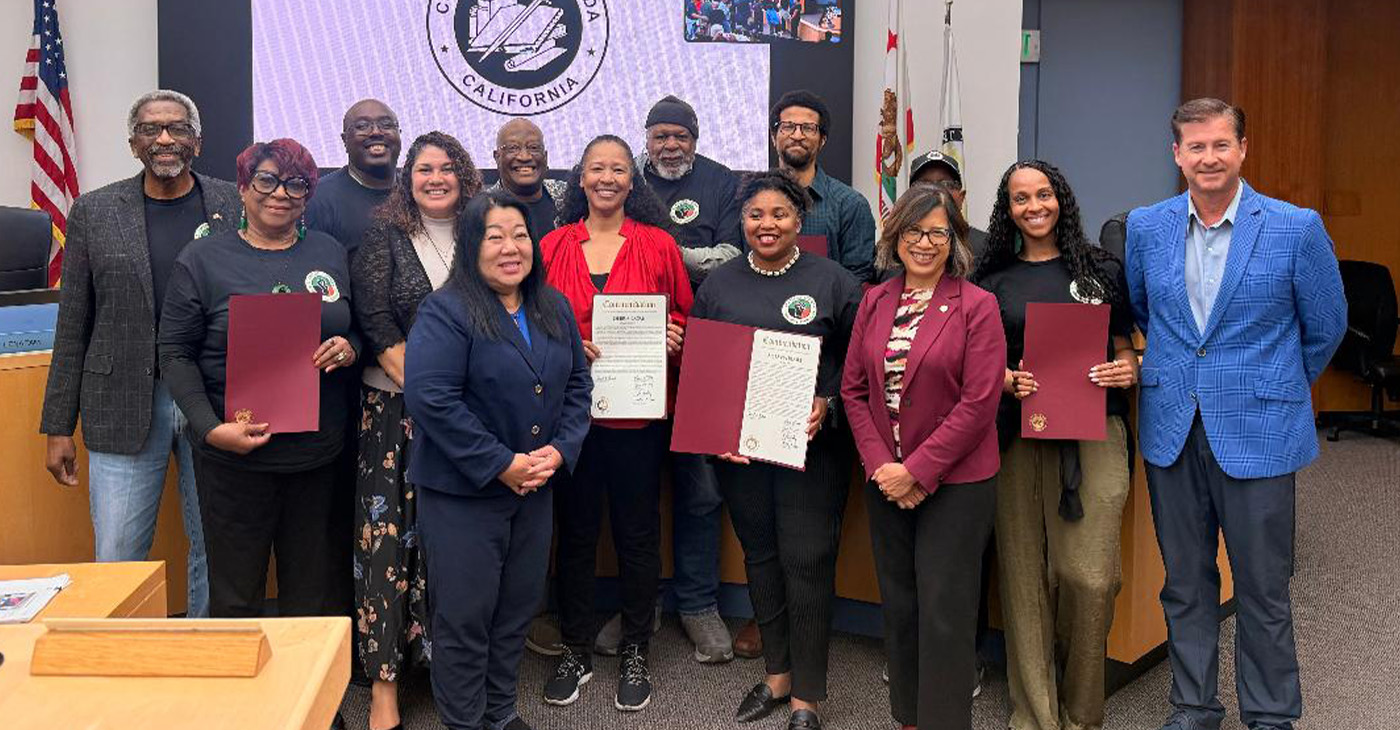
The Alameda County Board of Supervisors unanimously voted 5–0 on Tuesday to adopt the Final Action Plan of the Alameda County Reparations Commission, marking a historic milestone in the County’s commitment to advancing reparative justice for Black residents.
The vote follows nearly three years of work by the Alameda County Reparations Commission, which was seated in July 2023. Through extensive historical research, analysis of County data, public listening sessions, expert testimony, and community engagement, the Commission developed a comprehensive roadmap for addressing documented harms and expanding opportunity for future generations.
The Final Action Plan addresses disparities in housing, economic opportunity, education, health, environmental justice, public safety, arts and culture, land use, and other areas where historical government policies have contributed to inequitable outcomes for Black residents.
“This vote represents more than the adoption of a report,” said Debra Gore, Chair of the Alameda County Reparations Commission. “It is a commitment to truth, accountability, and action. Reparations are not about guilt or charity. They are about government’s responsibility to address documented harms created by its own policies and to build a more just future.”
During the Board meeting, Gore delivered a keynote address entitled “Redress as Constitutional First Principle,” presenting reparations as a constitutional principle rooted in the First Amendment’s guarantee of the right “to petition the Government for a redress of grievances.” Her remarks connected the nation’s founding ideals with Alameda County’s own data documenting continuing racial disparities.

At the conclusion of her address, Gore received a standing ovation from all five members of the Alameda County Board of Supervisors, recognizing both the Commission’s work and the significance of the Board’s action.
Grounded in County data and community testimony, the Commission’s recommendations reflect nearly three years of research and engagement with residents, historians, policy experts, advocates, and County staff. Together, they offer a roadmap for repairing documented harms while strengthening opportunity, accountability, and equity for future generations.
The Board’s action also includes a commitment to establish a standing committee to oversee implementation of the Action Plan, signaling that reparative justice will remain an ongoing County priority.
“History will remember this moment not because Alameda County acknowledged injustice,” Gore said. “History will remember that our County chose action. This vote demonstrates that government can confront difficult truths, listen to its residents, and take meaningful steps toward repair.”
Reached in an interview on July 1, Gore said she felt a sense of “joyfulness and reverence” for the ancestors and survivors of the harms of slavery through Jim Crow. “We might be the first in the country to pass an action plan with the commitment to ‘operationalize’ reparations.”
Gore is grateful to former Alameda County Supervisor Keith Carson, who asked her to serve on the commission, and current Supervisor Nate Miley, who asked her to be the chairperson.
Among the many who helped create and inspire the report, Gore pointed to former Oakland City Councilmember Leo Bazile, who has been calling for reparations since the 1960s, and the late Reparations Committee member Jesse Clyde Burleson, who provided insight on incarceration as an ongoing harm to the Black community. The report was dedicated to the memory of Burleson, who passed away on March 6 and who had been imprisoned from 1987-2018.
Gore also pointed to their avenue of approach on reparations, which was as much about the impact of slavery as it was about constitutional rights that had been systematically denied to Black people.
Members of the committee were: Cathy Adams, president and CEO of the Oakland African American Chamber of Commerce (OAAOCC) issued a statement supporting the reparations milestone.
OAACC “is grateful to former Supervisor Keith Carson, Supervisor Nate Miley, and the entire Alameda County Reparations Commission for their tireless efforts to develop a comprehensive action plan to address and repair the documented harms experienced by our local Black community,” Adams said.
“As an organization deeply committed to advancing workforce development, expanding access to capital, and creating opportunities for Black-owned businesses in Oakland and throughout Alameda County, we look forward to working alongside the steering committee to help deliver meaningful economic justice to those impacted by generations of systemic inequities.”
The Alameda County Reparations Commission extends its gratitude to the hundreds of residents who shared their experiences, the Commissioners who dedicated nearly three years of service, County staff, researchers, historians, and community partners whose work made this milestone possible.
With adoption of the Final Action Plan, Alameda County now begins the next phase of implementation in partnership with County leadership, community organizations, and residents. The commission will be dissolved, Gore says, and she looks forward to the next steps, one of which is the appointment of committee members.
Besides, Burleson, Gore and Bazile, members of the commission included: Natasha Triplett, Shenita Hurskin, Brandon T. Sass, Artavia Berry, Tiega N. Varlack, James Knowles, Vickie Stephens, Dr. Philip S. Gardiner, Dee Johnson, Larry McClendon (vice chair) , Carolyn (CJ) Johnson, Alan E. Dones, Jennifer A. Gayden, Lori Cox (vice chair), and Shadrick A. Small.
About the Alameda County Reparations Commission
Established by the Alameda County Board of Supervisors in July 2023, the Alameda County Reparations Commission was charged with examining the historical and ongoing harms experienced by Black residents resulting from government policies and practices and developing recommendations for repair. The Commission’s Final Action Plan provides a comprehensive framework for advancing equity, accountability, and opportunity throughout Alameda County.

Activism
OPINION: Unfair Media Attacks on OUSD Leadership for Not Closing Schools
Dr. Denise Saddler is a respected educator who leads with integrity, honesty, and decades of experience in service to OUSD. Since stepping into the role of interim superintendent, she has worked tirelessly alongside the Senior Leadership Team and fiscal consultants to address one of the most difficult financial situations our district has faced.

The school district has achieved ‘significant milestones that reflect disciplined leadership and a renewed commitment to fiscal responsibility,’ said Board President Jennifer Brouhard
By Jennifer Brouhard, Special to The Post
I am not going to directly respond to or amplify the personal attacks on the Oakland Unified School District’s dedicated leaders who are working every day on behalf of Oakland’s students.
Dr. Denise Saddler is a respected educator who leads with integrity, honesty, and decades of experience in service to OUSD. Since stepping into the role of interim superintendent, she has worked tirelessly alongside the Senior Leadership Team and fiscal consultants to address one of the most difficult financial situations our district has faced.
In December, the Board gave clear direction: bring forward a budget proposal that did not include a state loan and did not include school closures. Saddler and her team did exactly what the Board asked them to do.
There were differing opinions about how to address the district’s fiscal challenges. The two former employees referenced in a news article supported a different approach that included pursuing a state loan and exploring school closures. Those proposals were presented to the Board alongside Saddler’s proposal.
The Board adopted Saddler’s recommendation because it reflected the direction we had established. Since I joined the Board in 2023, the majority of the Board has consistently opposed school closures and has worked to preserve local control by avoiding a state loan whenever possible.

The public records cited in the article demonstrate the countless hours Saddler, the Senior Leadership Team, and our consultants devoted to developing a responsible financial plan. Difficult decisions were made, ideas were debated, and ultimately the Board selected the proposal that best aligned with our priorities.
As a result of that collaborative work, OUSD has adopted its first balanced budget in 22 years, achieved a qualified Second Interim Certification, and submitted a positive Third Interim Report.
These are significant milestones that reflect disciplined leadership and a renewed commitment to fiscal responsibility.
While there is still important work ahead, I believe the relationship between the Board, Dr. Saddler, and the Senior Leadership Team has become stronger and more collaborative throughout this process. We are moving in the right direction—with honesty, integrity, and a focus on the needs of OUSD’s 34,000 students.
Jennifer Brouhard, a retired OUSD teacher was elected in 2023 to represent District 2 and has been Board president since 2025.



Asm. Corey Jackson Announces Launch of 24-Hour Childcare in His District

IN MEMORIAM: The Rev. Leon “Sonny” Clark, Longtime Orange County Pastor and Community Leader, Dies at 72

Poll: Becerra Widens His Lead Over Hilton; Californians Split on Wealth Tax

From Historic Memories to New Possibilities: Oakland Celebrates Coliseum 60

County Office of Education Says OUSD Finances Are Getting Healthier, Materially Stronger

LIVE FREE Sunday Dinner Brings Faith, Fellowship and Civic Conversation to Oakland

Remembering Chauncey Bailey as Student Journalists Face Threats to Truth-Telling

BLACspace Cooperative Invites Bay Area to Experience Oakland’s Black Cultural Ecosystem Through a BLAC Map Tour + Party

In Wake of Death on Doorstep, Williams Chapel Baptist Church Calls for Better Care, Funding for Unhoused

Oakland Centenarian Nuna McKee Honored!

Caribbean Nations Produce Action Plan Calling for UK Reparations Over Slavery

Oakland Post: Week of September 23 – 29, 2026

Doulas Are Helping Black California Moms Navigate Pregnancy–Even as High Mortality Rates Persist

Newsom Signs Addictive Social Media Law to Protect Kids

On Your November Ballot: Prop 38 Would Allocate $8.4 Billion to Immunology and Immunotherapy Funding

Standoff for Justice: Our Homes Are Worth Fighting For

Oakland Post: Week of August 26 – September 1, 2026

Frontier Airlines’ Return to Oakland Airport Brings Flights, Jobs and Opportunity

Gubernatorial Candidate Steve Hilton Blasts California New Tire Rules; Newsom Hits Back

Chef Sharon Lee Blends Culinary Excellence, Education and Empowerment

Jackie Wright Champions Bay Area Stories, Filmmakers and Cultural Institutions

Big City Mayors Ask for “Yes” Vote on Housing Bond Measure; Conservatives Say “No”

Oakland Coliseum Project Opens Door for Small Businesses to Build Bigger

Gov. Newsom’s Latest Appointees Include Sacramento Advocate for Formerly Incarcerated Students; State’s New Tech Chief

Misnamed ‘Parent’ PAC Seeks to Influence Oakland School Board Elections

Longtime BWOPA Member Brendalyn Goodall Appointed to California Workforce Development Board

Gov. Newsom Signs Law Shielding Immigration Aid Workers From Doxing Threats

Secretary of State Shirley N. Weber Urges Californians to Vote Early as Voter ID Battle Intensifies

From Palestine to Oakland: Seeds for Liberation Examines Shared Struggles for Freedom

IN MEMORIAM: Dolly Parton Dead at 80 — How She Built a Legacy of Love and Earned Her Place in Black Culture

The Conversation With Al McFarlane 6/23/26

Media Monday 6/22/26

LIVE! ASK ALMA! — TUES. 6.23.26 7PM EST

Car Buying Secrets: 4 Hidden Checks Before You Sign!

Is This 550 HP Charger Worth YOUR Money? AutoNetwork Review

Celebrating Juneteenth – Frederick Douglass on education and resistance

LIVE! — ASK ALMA! — TUES. 6.19.26 7PM EST

Hyundai Ioniq 5 Parking, Safety, and 360 View #shorts

2025 Ioniq 5 New Wiper & Powerful Performance! #shorts

Electric SUV Range: Is 259 Miles Enough? #shorts

EV Charging: How Fast Can You Charge an Electric Vehicle? #shorts

Biometric Cooling… Messaging Seats…Come on! 2025 Infiniti QX80 Autograph 4WD

Charged Up: Witness the Magic of a Fully Electric Car! #shorts

Range Rover Sport PHEV Included…: See What’s Inside This Luxury SUV! #shorts

Invisible Hood View: Perfect Parking with X-Ray Vision! #shorts
-
 Community3 weeks ago
Misnamed ‘Parent’ PAC Seeks to Influence Oakland School Board Elections
-

 Activism4 weeks ago
Oakland Post: Week of September 2 – 8, 2026
-

 Community3 weeks ago
Richmond Tiny House Village Farm & Garden Set to Open Gates on Sept. 26
-

 Activism3 weeks ago
Oakland Post: Week of September 9 – 15, 2026
-

 Black History3 weeks ago
Latest Massacre in Haiti Reveals Cruelty U.S. Deportations
-

 Black History3 weeks ago
OPINION: Nolan Wells’ Death One of Several Signifying Racial Terror Lives on in U.S. South
-

 Community3 weeks ago
Democratic Clubs Interview Candidates for Oakland School Board
-

 Business2 weeks ago
Mayor Lee Announces $1 Million Kaiser Permanente Grant for Pilot Program to Address Homelessness, Clean Up Public Spaces throughout Oakland
