Activism
Up to the Job: How San Francisco’s PRC Is Providing Work Opportunities That Turn Into Lasting Stability
Each year, PRC serves more than 5,000 clients through a wide range of programs. These include housing navigation, legal advocacy to ensure access to health and public benefits, supportive housing, job and life-skills training, and residential treatment programs.

Joe Kocurek | California Black Media

Seville Christian arrived in San Francisco in the 1990s from Kansas City, Mo., a transgender woman coming from a time and place still hostile to who she was.
San Francisco offered a deeper LGBTQ+ history and a more visible community of people like her, but even in a city known for acceptance, building a stable life from scratch was no small task.
After arriving in the city, she turned to Positive Resource Center (PRC) looking for work — and for a foothold — in a new place.
“PRC gave me my first job,” Christian said. “A simple gig — passing out magazines at the San Francisco Pride Parade.”
That first opportunity marked the beginning of a decades-long relationship with PRC, one that has seen Christian grow from client to valued employee, and eventually to policy fellow.
“Today, I’ve been with PRC for 27 years, going on 28,” she said.
Helping people access employment and build sustainable careers has been a cornerstone of PRC’s mission since its inception nearly four decades ago. In its most recent annual impact report, PRC served 443 clients through workforce development services, including career counseling, educational programs, hands-on training, and job search assistance. The average wage earned by PRC clients is $26.48 per hour — approximately 38% above San Francisco’s minimum wage.
To advance this work, organizations like PRC have benefited from funding through California’s Stop the Hate Program, which provides direct support to community-based organizations leading anti-hate initiatives.
Christian’s path was not without challenges. During some rocky years, she experienced periods of housing instability and struggled with addiction. Through PRC, she enrolled in a life-skills program that emphasized using her own lived experience as a means of helping others. The program helped set her on a path toward completing an associate’s degree and ultimately launching a career in case management.
“Today, whether someone is new to the city or has lived here their whole life, I know how to help them navigate to where they need to be,” Christian said.

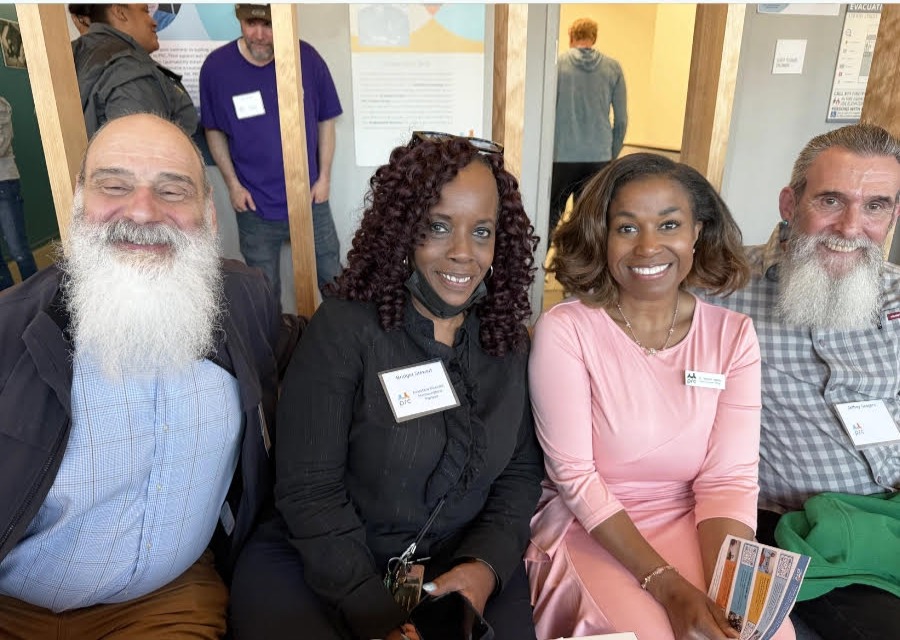
PRC welcomed guests to their annual Open House in April, an evening dedicated to connection, reflection, and learning more about the programs and people working every day to support San Franciscans experiencing housing instability, unemployment, and behavioral health challenges.
Each year, PRC serves more than 5,000 clients through a wide range of programs. These include housing navigation, legal advocacy to ensure access to health and public benefits, supportive housing, job and life-skills training, and residential treatment programs.
While PRC was founded to serve people living with HIV, its mission has expanded over the decades to meet the needs of people with disabilities, individuals experiencing homelessness, and those facing mental health and substance use challenges.
According to PRC’s Chief of Public Policy and Public Affairs, Tasha Henneman, some of the organization’s earliest programs remain as vital today as they were at the start.
“Our emergency financial assistance program helped more than 1,200 people this year pay rent, cover medical bills, and keep the lights on,” Henneman said. “And over 1,400 people reached out for legal advocacy, resulting in more than $2.5 million in retroactive benefits unlocked.”
Beyond direct services, PRC is deeply committed to community empowerment and policy change. Programs such as the Black Leadership Council support community leaders in advocating for systemic reform, while the Black Trans Initiative focuses on addressing the unique challenges faced by Black transgender individuals.
A recent study from the Williams Institute highlighted findings that 71% of transgender homicide victims in the U.S. between 2010 and 2021 were Black and that nearly a third of the transgender homicides during that period were confirmed or suspected hate crimes.
PRC’s direct and indirect services can be a lifeline for people experiencing hate and are an example of the resources people can get connected with through the state’s CA vs Hate hotline.
PRC is now also producing a film project that centers the lived experiences of Black trans clients, including individuals like Christian.
“Our film highlights the health journeys and lived experiences of some of PRC’s Black trans clients,” Henneman said. “Our goal is to give voice, visibility, and agency to the participants — and to bring their stories, both harrowing and inspirational, to policymakers and the broader public.”
The film, expected to be released later this year, is directed by Yule Caise, with assistant director Zarina Codes, a Black transgender San Francisco resident.
Today, Christian continues her relationship with PRC as an ambassador, reflecting on a journey that began with a single job opportunity and grew into a lifelong commitment to service.
“Sometimes I’ll be riding the bus or standing in a grocery store, and someone will come up to me from a women’s shelter,” she said. “They’ll say, ‘Oh, Miss Seville, I just want to thank you. You really helped me with what I was dealing with.’”
She paused, smiling.
“And in those moments,” Christian said, “I think to myself, “Well!.”
A single word that sums up pride in a journey to find the best in herself.
Get Support After Hate:
California vs Hate is a non-emergency, multilingual hotline and online portal offering confidential support for hate crimes and incidents. Victims and witnesses can get help anonymously by calling 833-8-NO-HATE (833-866-4283), Monday to Friday, 9 a.m.–6 p.m. PT, or online at any time. Anonymous. Confidential. No Police. No ICE.This story was produced in partnership with CA vs Hate. Join them for the first-ever CA Civil Rights Summit on May 11, 2026. More information at www.cavshate.org/summit.

