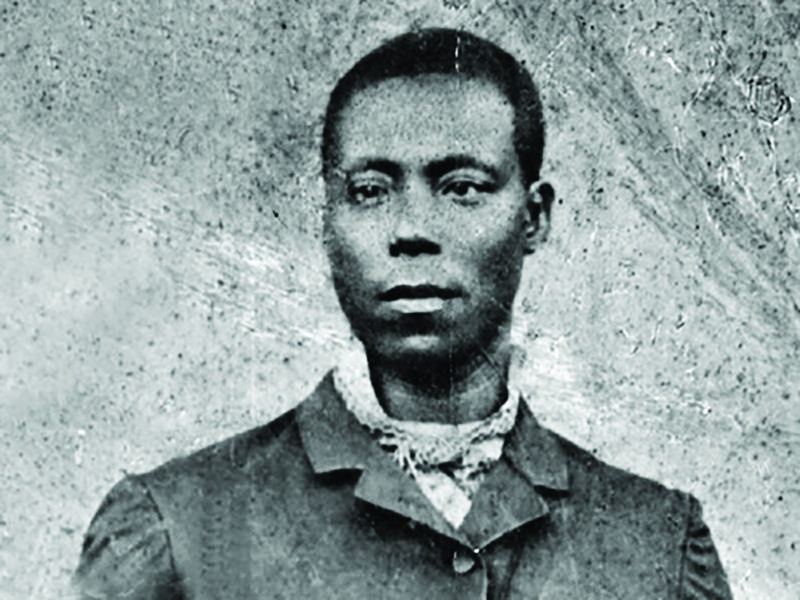
Patents are important official documents as they are used to safeguard one’s inventions. The first U.S. patent was issued in 1790. But it wasn’t until March 3, 1821, that a patent was issued to an African American: Thomas L. Jennings.
Jennings, born free in 1791, was awarded the patent for his discovery of a process called dry scouring, also known as dry cleaning. While working as a tailor, he discovered that customers needed a solution for soiled clothing, as certain fabrics were difficult to clean. After experimenting with various cleaning agents and solutions, Jennings soon discovered the successful blend for treatment.
Jennings’ patent however, was not without controversy. He was a free man and thus was able to gain exclusive rights to his invention and profit from it. But slaves during this time could not patent their own inventions; creations automatically became property of their owners. This regulation in 1793 patent law was based on the legal presumption: “the master is the owner of the fruits of the labor of the slave both manual and intellectual.” Slaves were not citizens and therefore could not own rights to their inventions.
While there were provisions through which an enslaved person could enjoy patent protection, their ability to seek out, receive, and defend a patent was unlikely.
It wasn’t until 1861 that patent rights were extended to enslaved people.
Pat Sluby, a retired U.S. patent examiner and author of “The Inventive Spirit of African Americans,” wrote of Jennings: “He is the earliest [African American receiver of a patent] that we have recorded … This is 44 years before the end of slavery.”
Sluby also described Jennings as: “A very good entrepreneur and businessman.”
It was during his early 20s that Jennings became a tailor. His skills were so admired that people near and far visited his shop to have their clothing altered or custom tailored. This response eventually allowed Jennings to open his own store on Church Street in lower Manhattan, which grew into one of the largest clothing stores in New York City.
Jennings earned a large amount of money as a tailor, and even more with his dry scouring invention. Most of the money funded his abolitionist activities as well as free the rest of his family from slavery.
He became a leader in the abolitionist and civil rights movement in New York City, was a founder and trustee of the Abyssinian Baptist Church, assistant secretary for the First Annual Convention of the People of Color in Philadelphia in 1831, and helped organize the Legal Rights Association in 1855, raising challenges to discrimination, and funding and organizing legal defenses for court cases.
Jennings died in New York City in 1856. Frederick Douglass wrote about his death, noting the importance of the patent Jennings received and that the patent recognized him as a “citizen of the United States,” a designation at the time that shocked many.
Tamara Shiloh
About Tamara Shiloh
Tamara Shiloh has published the first two books in her historical fiction chapter book series, Just Imagine…What If There Were No Black People in the World is about African American inventors, scientists and other notable Black people in history. The two books are Jaxon’s Magical Adventure with Black Inventors and Scientistsand Jaxon and Kevin’s Black History Trip Downtown. Tamara Shiloh has also written a book a picture book for Scholastic, Cameron Teaches Black History, that will be available in June, 2022.
Tamara Shiloh’s other writing experiences include: writing the Black History column for the Post Newspaper in the Bay area, Creator and Instruction of the black History Class for Educators a professional development class for teachers and her non-profit offers a free Black History literacy/STEM/Podcast class for kids 3d – 8th grade which also includes the Let’s Go Learn Reading and Essence and tutorial program. She is also the owner of the Multicultural Bookstore and Gifts, in Richmond, California,
Previously in her early life she was the /Editor-in-Chief of Desert Diamonds Magazine, highlighting the accomplishments of minority women in Nevada; assisting with the creation, design and writing of a Los Angeles-based, herbal magazine entitled Herbal Essence; editorial contribution to Homes of Color; Editor-in-Chief of Black Insight Magazine, the first digital, interactive magazine for African Americans; profile creations for sports figures on the now defunct PublicFigure.com; newsletters for various businesses and organizations; and her own Las Vegas community newsletter, Tween Time News, a monthly publication highlighting music entertainment in the various venues of Las Vegas.
She is a member of:
Society of Children’s Book Writers and Illustrators (SCBWI)
Richmond Chamber of Commerce
Point Richmond Business Association
National Association of Professional Women (NAPW)
Independent Book Publishers Association (IPBA)
California Writers Club-Berkeley & Marin
Richmond CA Kiwanis
Richmond CA Rotary
Bay Area Girls Club
Tamara Shiloh, a native of Northern California, has two adult children, one grandson and four great-grand sons. She resides in Point Richmond, CA with her husband, Ernest.