
Politics
N.C. NAACP Will Seek to Get Voter Restrictions Lifted


Rev. William Barber II is fighting “extreme agenda” in North Carolina.
By Freddie Allen
Senior Washington Correspondent
WASHINGTON (NNPA) – In less than a week, a voting rights trial is expected to begin that will challenge North Carolina’s restrictive voting law. Whatever the verdict, experts expect the ruling to have a ripple effect in states that have passed similar laws in the wake of a recent Supreme Court decision that weakened the Voting Rights Act.
Shortly after the Supreme Court invalidated Section 4 of the Voting Rights Act in the Shelby v. Holder decision two years ago, a number of states rushed to pass voting laws that civil rights groups say discriminate against people of color and poor people.
In its decision, the Supreme Court voted to annihilate the Voting Rights Act that required jurisdictions with a demonstrated history of racial discrimination to pre-clear any election law change with the U.S. Attorney General or a district federal judge in Washington, D.C.
Rev. William Barber II, the head of the North Carolina branch of the NAACP and co-founder of the Moral Mondays Movement, said that the deliberate, race-based voter suppression law passed by the North Carolina state legislature and signed by North Carolina’s Gov. Pat McCrory is a sin.
“[House Bill 589] violates our deepest constitutional values and our deepest moral and religious values, which demand equal protection under the law and the establishment of justice,” said Barber.
The Advancement Project, a multi-racial civil rights group, called H.B. 589 a “monster” bill that shortens the early voting period by a full week, eliminates same-day registration and requires strict forms of voter ID, changes that disproportionately affect minority and low-income voters.
The bill also blocks out-of-precinct voting, expands the role of voter challengers at the polls, and ends a pre-registration program for 16- and 17-year olds, according to the advocacy group.
“The number of voters silenced because of the new law likely exceeds 30,000 and could reach 50,000 or more,” according to analysis by Democracy North Carolina, a watchdog group that monitors elections.
The report said that the repeal of same-day registration, out-of-precinct voting, and straight party voting “which created backlogs inside the voting enclosure and longer lines outside as voters took longer to mark each contest on their ballot,” created the most problems for voters during the 2014 general election in North Carolina.
As the nation mourns the mass murder of the nine members of Emanuel African Methodist Episcopal Church in Charleston S.C., Barber said that Americans are in “the middle of a serious season about race” and that it’s not just about symbols like the Confederate flag it’s also about the substance of public policy and the racially disparate impact of that the public policy.
“The fact that the extreme agenda around voter suppression has been so racialized and framed by the suppressors as somehow saving the country and saving the democracy is the reason that, not only must flags come down, but the opposition to voting rights and these suppressive laws must come down,” said Barber. “Racialized rhetoric and policy rooted in untruth creates a climate in which we can say, ‘the perpetrator of race-based terror has been arrested, but the killer, racism and race-driven policies and rhetoric, is still at large.’”
Donita Judge, a senior attorney for Advancement Project, said that group will also show that the North Carolina general assembly knew that the law would discriminate against African American voters, making it harder for them to participate in the electoral process, but passed it anyway.
Judge said that the lawyers representing the North Carolina branch of NAACP in the lawsuit against Gov. McCrory plan to use Section 2 of the Voting Rights Act that prohibits voting laws that result in the denial or abridgement of voting on the basis of race to challenge H.B. 589.
“The outcome of this trial will have national implications for voting rights,” said Judge, adding that dozens of states have passed similar legislation after Shelby v. Holder decision. “The solvency of the Voting Rights Act to stop these discriminatory voting practices hangs in the balance and that battle will be waged in Winston-Salem starting July 13.”
In June, less than a month before the trial, North Carolina legislators eased restrictions on the photo ID requirements in the state’s contentious voting law. The changes, if approved by Gov. McCrory, would allow voters to sign an affidavit acknowledging hardships that they encountered in obtaining a photo ID. Voters could then present other forms of identification.
Barber noted that the last ditch effort by state lawmakers to soften the blow of the photo ID statute, only addressed one part of the 2013 law, leaving the cuts to early voting days, same day registration and pre-registration for some teenagers intact.
The same day that the trial is set to begin, the Moral Mondays movement will also host a march and rally for voting rights in Winston-Salem, N.C., Barber said, to show the world that North Carolina residents plan to fight for their right to vote.
“This is our Selma, and we implore all who care about voting rights to join us,” said Barber.
“Selma is not just something that happened 50 years ago. Selma is not just a movie that you can go see to be nostalgic about the fight that was. Our Selma is the fight that is. The fight against voter suppression right now, right here, today.”
###





Activism
Oakland Post: Week of March 18 – 24, 2026
The printed Weekly Edition of the Oakland Post: Week of March 18 – 24, 2026
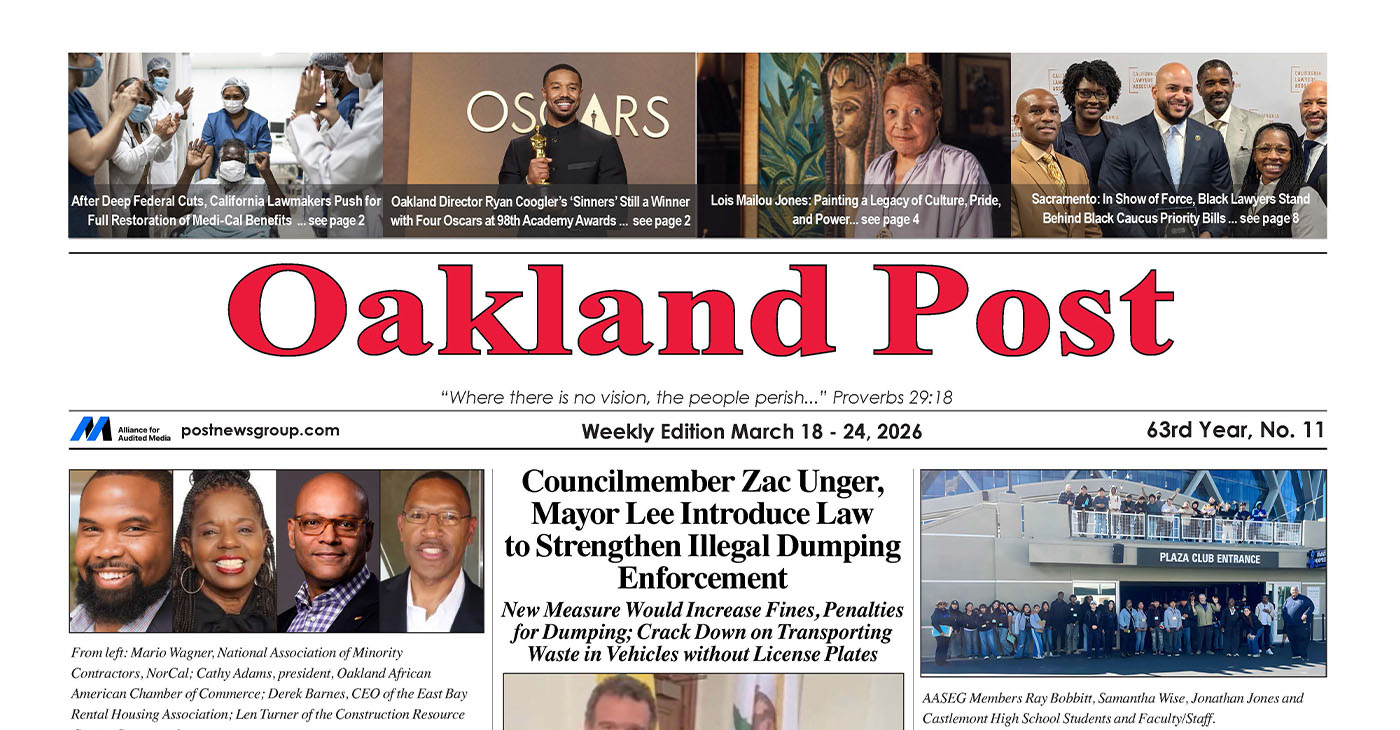
To enlarge your view of this issue, use the slider, magnifying glass icon or full page icon in the lower right corner of the browser window.
Activism
Oakland Post: Week of March 11 -17, 2026
The printed Weekly Edition of the Oakland Post: Week of March 11 – 17, 2026
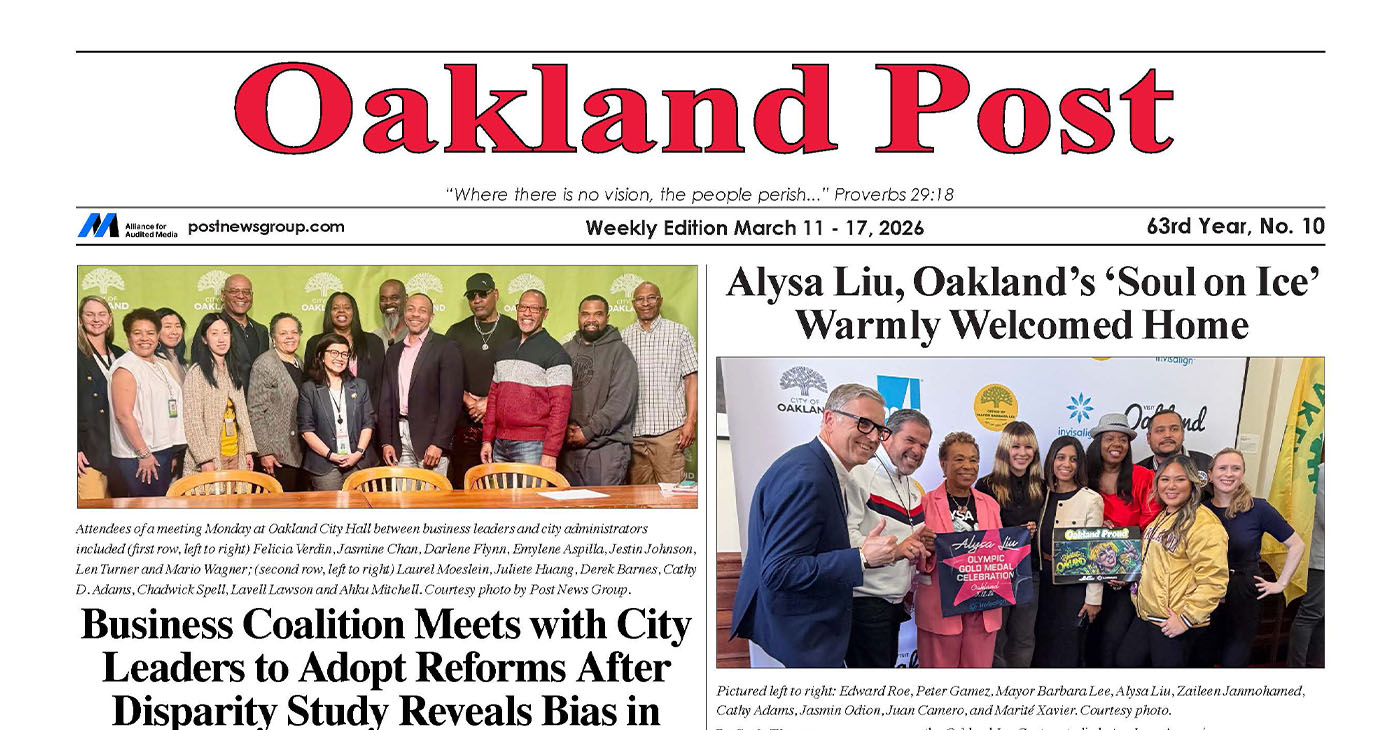
To enlarge your view of this issue, use the slider, magnifying glass icon or full page icon in the lower right corner of the browser window.
Activism
Oakland Post: Week of March 4 – 10, 2026
The printed Weekly Edition of the Oakland Post: Week of March 4 – 10, 2026

To enlarge your view of this issue, use the slider, magnifying glass icon or full page icon in the lower right corner of the browser window.


WORK FROM HOME
Home-based business with potential monthly income of $10K+ per month. A proven training system and website provided to maximize business effectiveness. Perfect job to earn side and primary income. Contact Lynne for more details: Lynne4npusa@gmail.com 800-334-0540


Black Artists in America, Installation Three Wraps at the Dixon Gallery and Gardens

Grief, Advocacy, and Education: A Counselor Reflects on Black Maternal Health

Future of Florida’s Black History Museum in Limbo

New Research Shows the Many Benefits of Early Learning

South Hampton K-8 Students Among Top 10 Finalists for Samsung’s ‘Solve for Tomorrow’ Competition

Cuba: No Negotiation with US on the President or Political System

Brooklyn Academy of Music Names Jamaican-Born Tamara McCaw as President

Trinidad & Tobego – U.S. Launches WhatsApp Channel for American Citizens in the Country

Oakland Post: Week of March 18 – 24, 2026

AI Innovation vs. Ethics and Environmental Impact

AI, Web3, and Digital Reparations

What If You Owned Your AI Agent?

Season 7, Episode 3 – January Reporter’s Roundtable 📱

Season 7, Episode 3 – January Reporter’s Roundtable

AI, Media, and Power | Part 2, Real-World Impacts and Tradeoffs

Book Review: Books on Black History and Black Life for Kids

Community Celebrates Turner Group Construction Company as Collins Drive Becomes Turner Group Drive

California Launches Study on Mileage Tax to Potentially Replace Gas Tax as Republicans Push Back

Discrimination in City Contracts

COMMENTARY: The Biases We Don’t See — Preventing AI-Driven Inequality in Health Care

Post Newspaper Invites NNPA to Join Nationwide Probate Reform Initiative

Black History Events in the East Bay

Art of the African Diaspora Celebrates Legacy and Community at Richmond Art Center

New Bill, the RIDER Safety Act, Would Support Transit Ambassadors and Safety on Public Transit

COMMENTARY: The National Protest Must Be Accompanied with Our Votes

Oakland Post: Week of February 11 – 17, 2026

Dorothy Lee Bolden: Uniting Domestic Workers

Reflecting on Black History Milestones in Birmingham AL

After Don Lemon’s Arrest, Black Officials Raise Concerns About Independent Black Media

Rising Optimism Among Small And Middle Market Business Leaders Suggests Growth for California

Hyundai Ioniq 5 Parking, Safety, and 360 View #shorts

2025 Ioniq 5 New Wiper & Powerful Performance! #shorts

Electric SUV Range: Is 259 Miles Enough? #shorts

EV Charging: How Fast Can You Charge an Electric Vehicle? #shorts

Biometric Cooling… Messaging Seats…Come on! 2025 Infiniti QX80 Autograph 4WD

Charged Up: Witness the Magic of a Fully Electric Car! #shorts

Range Rover Sport PHEV Included…: See What’s Inside This Luxury SUV! #shorts

Invisible Hood View: Perfect Parking with X-Ray Vision! #shorts

AI Is Reshaping Black Healthcare: Promise, Peril, and the Push for Improved Results in California

ESSAY: Technology and Medicine, a Primary Care Point of View

Sanctuary Cities

The RESISTANCE – FREEDOM NOW

STATE OF THE PEOPLE: Freddie

ECONOMIC BOYCOTT DAY!!!!!

I told You So
-
 #NNPA BlackPress4 weeks ago
Reflecting on Black History Milestones in Birmingham AL
-
 #NNPA BlackPress4 weeks ago
PRESS ROOM: NBA Hall of Fame Nominee Terry Cummings Joins 100 Black Men of DeKalb County to Launch Victory & Values Initiative
-

 #NNPA BlackPress4 weeks ago
U.S. manufacturing rebounds – how foundry services are adapting to rising demand
-

 Activism4 weeks ago
Oakland Post: Week of February 25 – March 3, 2026
-
 #NNPA BlackPress4 weeks ago
Trump’s MAGA Allies are Creating Executive Order Plan to Steal the 2026 Midterms
-

 #NNPA BlackPress4 weeks ago
OP-ED: One Hundred Years of Black Workers Telling the Truth
-

 #NNPA BlackPress4 weeks ago
Advancements in solar technology that are changing the way we power the world
-
 #NNPA BlackPress4 weeks ago
PRESS ROOM: Civil Rights TV Launches in Selma as the World’s First 24/7 Civil Rights Television Network
