
Religion
Indiana, Arkansas Pass Revised Religious Objection Proposals


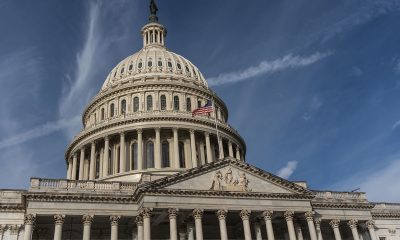
Arkansas Gov. Asa Hutchinson signs a reworked religious freedom bill into law after it passed in the House at the Arkansas state Capitol in Little Rock, Ark., Thursday, April 2, 2015. (AP Photo/Brian Chilson)
ANDREW DeMILLO, Associated Press
TOM DAVIES, Associated Press
LITTLE ROCK, Ark. (AP) — Lawmakers in Arkansas and Indiana passed legislation Thursday that they hoped would quiet the national uproar over new religious objections laws that opponents say are designed to offer a legal defense for anti-gay discrimination.
The Arkansas House voted 76-17 to adopt a revised bill after Republican Gov. Asa Hutchinson asked for changes in the wake of mounting criticism. Hutchinson signed it only moments after the vote, saying the new version recognizes that “we have a diverse workforce and a diverse culture.”
A parallel process played out at the Indiana Capitol as the House and Senate passed changes to a law signed last week by GOP Gov. Mike Pence, who quickly approved the revisions.
“Over the past week, this law has become a subject of great misunderstanding and controversy across our state and nation,” Pence said in a statement. “However we got here, we are where we are, and it is important that our state take action to address the concerns that have been raised and move forward.”
The new legislation marks the first time sexual orientation and gender identity have been mentioned in Indiana law.
The Arkansas measure is similar to a bill sent to the governor earlier this week, but Hutchinson said he wanted it revised to more closely mirror a 1993 federal law.
The Indiana amendment prohibits service providers from using the law as a legal defense for refusing to provide goods, services, facilities or accommodations. It also bars discrimination based on race, color, religion, ancestry, age, national origin, disability, sex, sexual orientation, gender identity or U.S. military service.
The measure exempts churches and affiliated schools, along with nonprofit religious organizations.
Business leaders, many of whom had opposed the law or canceled travel to the state because of it, called the amendment a good first step but said more work needs to be done. Gay-rights groups noted that Indiana’s civil-rights law still does not include LGBT people as a protected class.
Former Indianapolis Mayor Bart Peterson, now a senior vice president at drugmaker Eli Lilly, praised the changes but said the state’s image must still be mended.
“The healing needs to begin right now,” he said.
Democratic leaders said the amendment did not go far enough and repeated their calls to repeal the law.
“I want to hear somebody say we made a grave mistake, and we caused the state tremendous embarrassment that will take months, if not years, to repair,” House Minority Leader Scott Pelath said.
The lawmaker behind the original Arkansas proposal backed the changes, saying he believed the law would still protect religious beliefs.
“We’re going to allow a person to believe what they want to believe without the state coming in and burdening that unless they’ve got a good reason to do so,” Republican Rep. Bob Ballinger told the House Judiciary Committee.
Like Pence, Hutchinson faced pressure from the state’s largest employers, including retail giant Wal-Mart. Businesses said the bill would hurt Arkansas’ image. Hutchinson noted that his own son had signed a petition urging him to veto the bill.
After Hutchinson signed the compromise bill, the House voted to recall the original proposal from his desk. Conservative groups said they would have preferred Hutchinson sign the first bill, but they grudgingly backed the revamped measure.
“The bill that’s on the governor’s desk is the Rolls Royce of religious freedom bills. It is a very good bill,” said Jerry Cox, head of the Arkansas Family Council. “The bill that just passed … is a Cadillac.”
The revised Arkansas measure only addresses actions by the government, not by businesses or individuals. Supporters said that would prevent businesses from using it to deny services to individuals. Opponents said they believed the measure still needs explicit anti-discrimination language.
The original bill “gave us a black eye. This bill ices it,” said Rita Sklar, executive director of the American Civil Liberties Union of Arkansas. “We still need some Tylenol.”
The Human Rights Campaign, the nation’s largest lesbian, gay, bisexual and transgender rights group, called the new law an improvement but said it could still be used be used to discriminate based on sexual orientation.
The revised bill also faced opposition from Republicans frustrated over the governor’s request for changes to a proposal he had initially planned to sign.
“I, for one, do not appreciate someone hiding behind this body when they’re unwilling to take a stand one way or the other,” Republican Rep. Josh Miller of Heber Springs said.
Similar proposals have been introduced this year in more than a dozen states, patterned after the federal Religious Freedom Restoration Act of 1993, with some differences. Twenty-one states now have comparable laws on the books, including Indiana and Arkansas.
The backlash gave pause to lawmakers in other states considering their own religious freedom proposals.
A divisive bill in Georgia stalled Thursday as the end of the 2015 session approached. Atlanta-based Coca-Cola warned lawmakers against approving “any legislation that discriminates.”
In North Carolina, the House speaker said deliberations over a bill would be slowed to give lawmakers time to determine if the legislation would harm the state’s economy.
A proposed amendment to the Texas Constitution would prohibit the government or any other entity from imposing burdens on religious freedom, potentially opening the door for businesses to refuse to serve gay people on religious grounds.
___
Davies reported from Indianapolis.
___
Associated Press Writer Allen Reed in Little Rock, Arkansas, contributed to this report.
___
Follow Andrew DeMillo on Twitter at www.twitter.com/ademillo.
Copyright 2015 The Associated Press. All rights reserved. This material may not be published, broadcast, rewritten or redistributed.




Activism
OP-ED: AB 1349 Puts Corporate Power Over Community
Since Ticketmaster and Live Nation merged in 2010, ticket prices have jumped more than 150 percent. Activities that once fit a family’s budget now take significant disposable income that most working families simply don’t have. The problem is compounded by a system that has tilted access toward the wealthy and white-collar workers. If you have a fancy credit card, you get “presale access,” and if you work in an office instead of a warehouse, you might be able to wait in an online queue to buy a ticket. Access now means privilege.

By Bishop Joseph Simmons, Senior Pastor, Greater St. Paul Baptist Church, Oakland
As a pastor, I believe in the power that a sense of community can have on improving people’s lives. Live events are one of the few places where people from different backgrounds and ages can share the same space and experience – where construction workers sit next to lawyers at a concert, and teenagers enjoy a basketball game with their grandparents. Yet, over the past decade, I’ve witnessed these experiences – the concerts, games, and cultural events where we gather – become increasingly unaffordable, and it is a shame.
These moments of connection matter as they form part of the fabric that holds communities together. But that fabric is fraying because of Ticketmaster/Live Nation’s unchecked control over access to live events. Unfortunately, AB 1349 would only further entrench their corporate power over our spaces.
Since Ticketmaster and Live Nation merged in 2010, ticket prices have jumped more than 150 percent. Activities that once fit a family’s budget now take significant disposable income that most working families simply don’t have. The problem is compounded by a system that has tilted access toward the wealthy and white-collar workers. If you have a fancy credit card, you get “presale access,” and if you work in an office instead of a warehouse, you might be able to wait in an online queue to buy a ticket. Access now means privilege.
Power over live events is concentrated in a single corporate entity, and this regime operates without transparency or accountability – much like a dictator. Ticketmaster controls 80 percent of first-sale tickets and nearly a third of resale tickets, but they still want more. More power, more control for Ticketmaster means higher prices and less access for consumers. It’s the agenda they are pushing nationally, with the help of former Trump political operatives, who are quietly trying to undo the antitrust lawsuit launched against Ticketmaster/Live Nation under President Biden’s DOJ.
That’s why I’m deeply concerned about AB 1349 in its current form. Rather than reining in Ticketmaster’s power, the bill risks strengthening it, aligning with Trump. AB 1349 gives Ticketmaster the ability to control a consumer’s ticket forever by granting Ticketmaster’s regime new powers in state law to prevent consumers from reselling or giving away their tickets. It also creates new pathways for Ticketmaster to discriminate and retaliate against consumers who choose to shop around for the best service and fees on resale platforms that aren’t yet controlled by Ticketmaster. These provisions are anti-consumer and anti-democratic.
California has an opportunity to stand with consumers, to demand transparency, and to restore genuine competition in this industry. But that requires legislation developed with input from the community and faith leaders, not proposals backed by the very company causing the harm.
Will our laws reflect fairness, inclusion, and accountability? Or will we let corporate interests tighten their grip on spaces that should belong to everyone? I, for one, support the former and encourage the California Legislature to reject AB 1349 outright or amend it to remove any provisions that expand Ticketmaster’s control. I also urge community members to contact their representatives and advocate for accessible, inclusive live events for all Californians. Let’s work together to ensure these gathering spaces remain open and welcoming to everyone, regardless of income or background.
Activism
Tribute to Allen Temple Baptist Church Pastor Emeritus Rev. Dr. J. Alfred Smith Sr., 94
Dr. Smith did not set out to become famous; however, he became a renowned, celebrated pastor, preacher, professor, prophet, author, and theologian. He has been honored as one of the top Black preachers of America, earned and received countless awards, and was the recipient of hundreds of honoree acknowledgements that would be a small book in itself.

“I decided early to give my life to something eternal and absolute. Not too little gods…. but to God who is the same yesterday, today, and tomorrow.” J. Alfred Smith Sr.
By Rev. Dr. Martha C. Taylor, Allen Temple Baptist Church Historian
Most tributes are written from the writer’s personal perspective of the deceased. My intent is to expand this tribute so that readers feel a sense of shared experiences and admiration. Pastor Smith had a unique gift of making each person feel as if their relationship with him was deep and personal; making every single one of us feel like the most important person he knew. To that extent this tribute is written as shared experiences and admiration for a man who was exceptional in his ministry, his mission and his life. To pay tribute to this giant of a man is a high privilege and honor.
The Rev. Dr. J. Alfred Smith Sr., lived a life beyond himself. Using his famous quote, “I wish I could make it plain,” my desire is to make this tribute plain so that the reader can feel Dr. Smith’s compassion, wisdom, his love for the other, his faithful service while he traveled the Jericho Road.
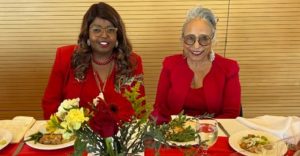
His deep faith was a powerful example to others; affirming a shared hope in God as we recall his lasting legacy. We celebrate his life, his love for the other, and a legacy that few will attain.
Alfred Smith was born May 19, 1931, in Kansas City, Missouri. He was raised by his loving mother, Amy Gates Smith, and his grandmother, Mrs. Martha Henry. He obtained his early education in Kansas City and graduated in 1948 from the R. T. Coles High School. That same year, he was licensed to preach, and in 1951 he was ordained at Pilgrim Rest Baptist Church in Kansas City where he served as assistant pastor for three years.
In 1950, Pastor Smith married the love of his life, Joanna Goodwin. To this union, five beautiful children were added to the family bringing even more joy and happiness. Their marriage lasted until she was called home to be with the Lord on Aug. 12, 2007. Later, The Lord blessed Dr. Smith and Rev. Bernestine Farley in marriage. Together they were powerful ministry partners with a blended family. Rev. Bernie, as she is fondly called, is an ordained minister having served at the Allen Temple Arms I and II.
During the 1950s to ’60s, Dr. Smith pastured various small churches in Missouri He also served for three years as principal of Lincoln Elementary School at Keyesville, Missouri, over a period of 20 years. With a heart to excel, and knowing that God wants his leaders properly equipped to serve the people, he burned the midnight oil and enrolled in several colleges and universities and earned four degrees; a Bachelor of Science in elementary education (1952), Bachelor of Divinity (1959), Masters of Theology in Church and Community (1966), Master’s in American Church History (1972), and a Doctor of Ministry (1975).
In 1971, Dr. Smith was elected senior pastor of Allen Temple Baptist Church. He was elected president of the Progressive Baptist State Convention of California in 1979, and president of the Progressive National Baptist Convention in 1986. Smith joined the teaching faculty at the American Baptist Seminary of the West as professor of Christian Ministries in 1992.
The question that arises at this time is what were some of the human qualities, God-given gifts, his dedication to his calling that impacted his ministry locally and beyond? Pastor Smith loved to pray; he knew his power and strength came from a deep prayer life with God. His meetings started with prayer, his phone calls ended in prayer, and amazingly, he often would make phone calls and say, “I was just thinking of you, let’s have a word of prayer.”
Dr. Smith did not set out to become famous; however, he became a renowned, celebrated pastor, preacher, professor, prophet, author, and theologian. He has been honored as one of the top Black preachers of America, earned and received countless awards, and was the recipient of hundreds of honoree acknowledgements that would be a small book in itself.
He addressed the United Nations to oppose South African apartheid and preached in pulpits worldwide, never shying away from controversial issues that represent the marginalized. Dr. Smith had a way of attracting people; he led marches that galvanized communities and people of varying nationalities to the steps of City Hall to speak on issues that plague communities. One of his favorite quotes: “To get to the sweet bye and bye you have to deal with the nasty now and now.” Dr. Smith fuels his passionate, prophetic preaching and praying power from his dependence upon God, which started at his mother’s knee, Amy Gates Smith.
Pastor Smith served everyone – from the lonely to high-ranking officials. Like Jesus, he walked with the marginalized with an open-door policy, all were welcome. The powerful often sought wise counsel from him. Pastor Smith preached and taught all over the universe.
Life has many turns; the Rev. Dr. Jacqueline A. Thompson – Allen Temple’s senior pastor – was licensed and ordained by Dr. Smith; she was his daughter in the ministry who became his pastor. They shared a close relationship.
James Ella James said it like this “He was one of the most important people in my life. He was a real friend, brother, trustworthy and very caring person. It is so hard to describe James Alfred Smith. I don’t know anybody like him.”
I believe we all share James Ella James thoughts and feelings about Dr Smith.
He was never too busy to listen; he had a compassionate heart that comforted others. Most of us know he could shed tears at the drop of a hat. He was a wonderful counselor who offered grace and perspective.
After Sunday morning worship, he always went to the narthex, shook hands, and personally greeted people. He told me when you are greeting the people don’t forget to pat the little children on the head and tell them how much they are growing.
The Rev Dr. Otis Moss Jr said Pastor Smith’s preaching, teaching, and leadership commitments did not take him away from human rights struggles. ‘They take him deeper and deeper into the human rights struggles.”
Perhaps one of the outstanding contributions Pastor Smith made in his ministry was not only housing for seniors and HIV AIDS, but he also ensured that women were ordained and preached in the pulpit and elsewhere.
Among those he ordained early on was Rev. Dr. Ella Mitchell. Women from the four corners of America, there are numerous women who owe Dr. Smith a debt of gratitude for embracing them into the ministry.
When Dr. Smith’s health was challenged with a stroke, crippling him, he then preached from a wheelchair. His last sermon at Allen Temple was on Father’s Day, June 15: “A Good Daddy and his two sons.”
On Sept. 19, 2025, the Lord said, “Well Done, Good and Faithful Servant.”
Dr. Smith’s legacy of faith will live on.
All Services will be held on the Allen Temple Baptist Church Campus and will be livestreamed on Thursday, Oct. 9, 2025, lying in repose from 2 p.m. to 5 p.m., followed by an evening of worship and witness on Friday, Oct. 10, Celebration of Life – 11 a.m.
Activism
Juneteenth: Celebrating Our History, Honoring Our Shared Spaces
It’s been empowering to watch Juneteenth blossom into a widely celebrated holiday, filled with vibrant outdoor events like cookouts, festivals, parades, and more. It’s inspiring to see the community embrace our history—showing up in droves to celebrate freedom, a freedom delayed for some enslaved Americans more than two years after the Emancipation Proclamation was signed.

By Wayne Wilson, Public Affairs Campaign Manager, Caltrans
Juneteenth marks an important moment in our shared history—a time to reflect on the legacy of our ancestors who, even in the face of injustice, chose freedom, unity, and community over fear, anger, and hopelessness. We honor their resilience and the paths they paved so future generations can continue to walk with pride.
It’s been empowering to watch Juneteenth blossom into a widely celebrated holiday, filled with vibrant outdoor events like cookouts, festivals, parades, and more. It’s inspiring to see the community embrace our history—showing up in droves to celebrate freedom, a freedom delayed for some enslaved Americans more than two years after the Emancipation Proclamation was signed.
As we head into the weekend full of festivities and summer celebrations, I want to offer a friendly reminder about who is not invited to the cookout: litter.
At Clean California, we believe the places where we gather—parks, parade routes, street corners, and church lots—should reflect the pride and beauty of the people who fill them. Our mission is to restore and beautify public spaces, transforming areas impacted by trash and neglect into spaces that reflect the strength and spirit of the communities who use them.
Too often, after the music fades and the grills cool, our public spaces are left littered with trash. Just as our ancestors took pride in their communities, we honor their legacy when we clean up after ourselves, teach our children to do the same, and care for our shared spaces.
Small acts can inspire big change. Since 2021, Clean California and its partners have collected and removed over 2.9 million cubic yards of litter. We did this by partnering with local nonprofits and community organizations to organize grassroots cleanup events and beautification projects across California.
Now, we invite all California communities to continue the incredible momentum and take the pledge toward building a cleaner community through our Clean California Community Designation Program. This recognizes cities and neighborhoods committed to long-term cleanliness and civic pride.
This Juneteenth, let’s not only celebrate our history—but also contribute to its legacy. By picking up after ourselves and by leaving no litter behind after celebrations, we have an opportunity to honor our past and shape a cleaner, safer, more vibrant future.
Visit CleanCA.com to learn more about Clean California.

WORK FROM HOME
Home-based business with potential monthly income of $10K+ per month. A proven training system and website provided to maximize business effectiveness. Perfect job to earn side and primary income. Contact Lynne for more details: Lynne4npusa@gmail.com 800-334-0540


Financial Wellness and Mental Health: Managing Money Stress in College

Oakland Post: Week of March 11 -17, 2026

Women & Wealth: Tips for Navigating Your Lifelong Financial Journey

COMMENTARY: Women of Color Shape Our Past and Future

Woman’s Search for Family’s Roots Leads to Ancestor John T. Ward – A Successful Entrepreneur and Conductor on the Underground Railroad

Advocates Raise Alarm Over ICE Operation, MOU and Detention Risks in Baltimore County

Pete Buttigieg to Join Mayor Randall Woodfin for Community Town Hall in Birmingham

WATCH: Week One – NNPA’s “Leadership Matters” Video Series

Oakland Post: Week of March 4 – 10, 2026

OP-ED: NNPA Launches 2026 “Leadership Matters” Video Series

PRESS ROOM: PMG and Cranbrook Horizons-Upward Bound Launch Journey Fellowship Cohort 2

Los Angeles Summit Brings Together Leaders to Tackle Poverty and Affordability

Civil Rights TV Launches 24/7 Network Focused on Black History, Education and Equity

REVIEW: The Ultimate Hot Girl Summer Getaway: Sunseeker Resort Florida

COMMENTARY: How You Stop a Prescription Medicine is as Important as How You Start

Book Review: Books on Black History and Black Life for Kids

Community Celebrates Turner Group Construction Company as Collins Drive Becomes Turner Group Drive

California Launches Study on Mileage Tax to Potentially Replace Gas Tax as Republicans Push Back

Discrimination in City Contracts

COMMENTARY: The Biases We Don’t See — Preventing AI-Driven Inequality in Health Care

Black History Events in the East Bay

Post Newspaper Invites NNPA to Join Nationwide Probate Reform Initiative

Art of the African Diaspora Celebrates Legacy and Community at Richmond Art Center

New Bill, the RIDER Safety Act, Would Support Transit Ambassadors and Safety on Public Transit

COMMENTARY: The National Protest Must Be Accompanied with Our Votes

Oakland Post: Week of February 4 – 10, 2026

Oakland Post: Week of February 11 – 17, 2026

Dorothy Lee Bolden: Uniting Domestic Workers

After Don Lemon’s Arrest, Black Officials Raise Concerns About Independent Black Media

Reflecting on Black History Milestones in Birmingham AL

Hyundai Ioniq 5 Parking, Safety, and 360 View #shorts

2025 Ioniq 5 New Wiper & Powerful Performance! #shorts

Electric SUV Range: Is 259 Miles Enough? #shorts

EV Charging: How Fast Can You Charge an Electric Vehicle? #shorts

Biometric Cooling… Messaging Seats…Come on! 2025 Infiniti QX80 Autograph 4WD

Charged Up: Witness the Magic of a Fully Electric Car! #shorts

Range Rover Sport PHEV Included…: See What’s Inside This Luxury SUV! #shorts

Invisible Hood View: Perfect Parking with X-Ray Vision! #shorts

AI Is Reshaping Black Healthcare: Promise, Peril, and the Push for Improved Results in California

ESSAY: Technology and Medicine, a Primary Care Point of View

Sanctuary Cities

The RESISTANCE – FREEDOM NOW

STATE OF THE PEOPLE: Freddie

ECONOMIC BOYCOTT DAY!!!!!

I told You So
-
 #NNPA BlackPress4 weeks ago
Reflecting on Black History Milestones in Birmingham AL
-
 #NNPA BlackPress4 weeks ago
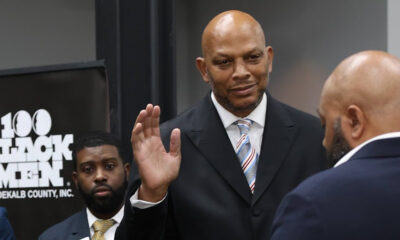
PRESS ROOM: NBA Hall of Fame Nominee Terry Cummings Joins 100 Black Men of DeKalb County to Launch Victory & Values Initiative
-

 #NNPA BlackPress4 weeks ago
U.S. manufacturing rebounds – how foundry services are adapting to rising demand
-
 Activism3 weeks ago
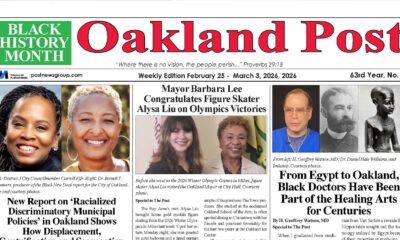
Oakland Post: Week of February 25 – March 3, 2026
-

 #NNPA BlackPress4 weeks ago
OP-ED: One Hundred Years of Black Workers Telling the Truth
-

 #NNPA BlackPress4 weeks ago
Advancements in solar technology that are changing the way we power the world
-
 #NNPA BlackPress4 weeks ago
Trump’s MAGA Allies are Creating Executive Order Plan to Steal the 2026 Midterms
-
 #NNPA BlackPress4 weeks ago
PRESS ROOM: Civil Rights TV Launches in Selma as the World’s First 24/7 Civil Rights Television Network
