Activism
Essay: A Survivor Relives “The Strike,” a Moving Film Capturing Injustices at Pelican Bay State Prison
It was a privilege to be invited to be part of the panel for the October 9th screening of the documentary “The Strike” at Sonoma State University.
Students from Caitlin Henry’s Criminology and Justice Studies class attended, and their engagement during the event was inspiring.

By Richard “Razor” Johnson


It was a privilege to be invited to be part of the panel for the October 9th screening of the documentary “The Strike” at Sonoma State University.
Students from Caitlin Henry’s Criminology and Justice Studies class attended, and their engagement during the event was inspiring.
After the screening, many students were deeply moved and had the opportunity to ask questions of the Director and Producer, JoeBill Muñoz and Lucas Guilkey, as well as myself, Richard Johnson, one of the hunger strike survivors and a panel speaker. I was one of the ten plaintiffs against the California Department of Corrections, a case that garnered the attention of the United Nations.
Some students lingered after the Q&A, expressing gratitude for raising awareness about the realities faced by those incarcerated. Their emotional responses highlighted the personal connections many have with the prison system, with some sharing experiences of relatives enduring similar conditions. It became clear that there was a significant lack of understanding about the Security Housing Units (SHU) and the stark differences between general population inmates and those confined in Pelican Bay.
On Oct. 23, the Grand Lake Theater will screen “The Strike,” a compelling documentary about Pelican Bay State Prison and the SHU. This film has received numerous accolades, including nominations for “Best Documentary” at the Imagen Awards and the Hot Docs Student Choice Award.

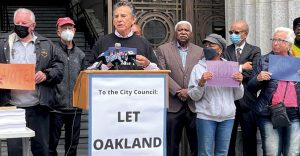
“The Strike” chronicles the harrowing experiences of California men subjected to decades of solitary confinement, culminating in the largest hunger strike in U.S. history. It will also be broadcast nationally on PBS’s Independent Lens in spring 2025.
This documentary is essential viewing, as it critically examines the failures of our judicial system in administering justice and the societal implications of our penal practices. It delves into the psychological torment endured by those held in isolation — many without any rule infractions — and exposes the broader victimization of individuals both inside and outside prison walls.
With over 33,000 inmates participating in the hunger strikes, the film provides an intimate exploration of the power dynamics at play, from the highest levels of state governance to the guards overseeing the units. It reveals the oppressive policies that perpetuate control and abuse within the prison system, ultimately leading to legal interventions to address these injustices.
Don’t miss this powerful documentary that challenges our perceptions of crime and punishment and highlights the resilience of those who fought for justice.
Join us on October 23 at the Grand Lake Theater at 6:30 PM. We will have Q&A at 8:00 PM after the screening with myself and some of the survivors. We look forward to your support and Tickets can be purchased online at www.renaissancerialto.com/TheStrike.php. For more information about the film, visit www.thestrikefilm.com.

