Activism
COMMENTARY: Based on My Reading of Ethnic History, Jan. 6 ‘Insurrectionists’ Unworthy of Name
Maybe if all those subpoenaed comply, Congress will get to the bottom of what happened that day — that some Republicans loyal to an ex-president who lost the November election were considering a coup. Now there’s a word that doesn’t belong in American democracy.

By Emil Guillermo
It’s been a year since the Jan. 6th Capitol Riots of 2021. Please don’t call the perps “insurrectionists.”
Call them what they are.
Lawless, unprincipled rioters. Right-wing political looters. Deluded Trump supporters.
Insurrectionists take down authoritarians like Trump in the name of democracy. They don’t put authoritarians in. They usually take them out. Insurrectionists are serious people, not armed lunatics lured by the smell of burnt gunpowder and the sound of broken glass.
But the Jan. 6, 2021 rioters were anti-democracy which disqualifies them from the “I” word.
So, leave the term “insurrectionist” for the history most people don’t even know. It’s the Filipinos, who, after the Spanish American War, stood up to the American imperialists and established a new Philippine republic, said to be the first democracy in Asia. It was so significant that the revolt became known as the Philippine American War.
By that standard, the Jan. 6th rioters just don’t measure up.
Maybe if all those subpoenaed comply, Congress will get to the bottom of what happened that day — that some Republicans loyal to an ex-president who lost the November election were considering a coup. Now there’s a word that doesn’t belong in American democracy.
And to appreciate it all, it was handy to know a little Filipino American ethnic history.

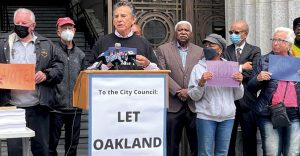
New Laws for Ethnic History in California
You may have known it if you were taught much about the Philippine American War in high school. Or maybe community college. As of Jan. 1, the framework is in place to make it required in community colleges by 2024, taught at high schools by 2025, and a graduation requirement by 2029.
That still gives seven years for ignorance to fester, but that’s the law.
It’s all too late for one former Skyline grad, Eleanor Wikstrom, who two years ago went east to Harvard.
There she discovered her Filipino-ness. She wanted to know why her mother’s language, Tagalog, wasn’t taught there. There’s no good answer.
Good to see things haven’t changed much from when I was there nearly 50 years ago.
This year, Wikstrom wanted to learn more about what happened after the Philippine American War when the U.S. colonial period began. Simply, they re-educated the Filipinos, seen as illiterate savages or as infantile and unfit for self-rule. So, they taught them all English. The person in charge of education was Fred W. Atkinson. A Harvard man.
That was an emotional moment for Wikstrom, who, like many Filipino Americans, understand colonialism is in our historical DNA. But then to discover it in the library how Harvard had a role in the “racialized subjugation” took an emotional toll.
In an essay for the Harvard Crimson she wrote, “Of the jagged wound that is U.S. colonization in the Philippines, a gun is smoking in Harvard’s hands.”
She also realized it was a history buried so deep in the archives that it’s a history no one really wants anyone to know or see.
But as I mentioned to her in my podcast conversation (“Emil Amok’s Takeout, Show 104 on Spotify, Apple, etc) once you see it, you can’t “unsee it.”
Of course, who knows if this bit of American Filipino history will be part of the state’s new curriculum. But it does show the value of new laws requiring some exposure to ethnic history.
This isn’t critical race theory, mind you. It’s just history — the things that are hidden in the past but can begin to explain the present.
History can do that. But only if we take the time and responsibility to learn from it.
Emil Guillermo is a veteran Bay Area journalist and commentator. See more at www.amok.com Twitter @emilamok

