Art
‘Black Woman is God’ is Back for the Fourth Year
The Black Woman is God (TBWIG) opened its yearly art exhibit with a reception in downtown San Francisco on June 29. The event featured food, music, and community, and plenty of space to admire the art on display. This year’s theme is Motherhood and the pieces exploring the ways Black mothers show up, as well as the ways they don’t, but honoring it all.

By Daisha Williams
The Black Woman is God (TBWIG) opened its yearly art exhibit with a reception in downtown San Francisco on June 29.
The event featured food, music, and community, and plenty of space to admire the art on display. This year’s theme is Motherhood and the pieces exploring the ways Black mothers show up, as well as the ways they don’t, but honoring it all.
In line with the theme, mothers were encouraged to bring their children to the event, emphasizing that this space was for everyone. One of the artists, Marissa Atterberry, said, “It felt amazing to create with motherhood in mind and create something that was inclusive of myself as a whole person and inclusive of my children and then to step into a space that was inclusive of children. But for Karen Seneferu [the founder] to say ‘bring the children, honor the children,’ it felt really good.”
Seneferu, the founder of TBWIG had also ensured that the event was spiritual in nature, with attendees performing a ritual and stating intentions upon entering, and opened with a prayer and a blessing, setting up positive energy that lasted the whole evening.

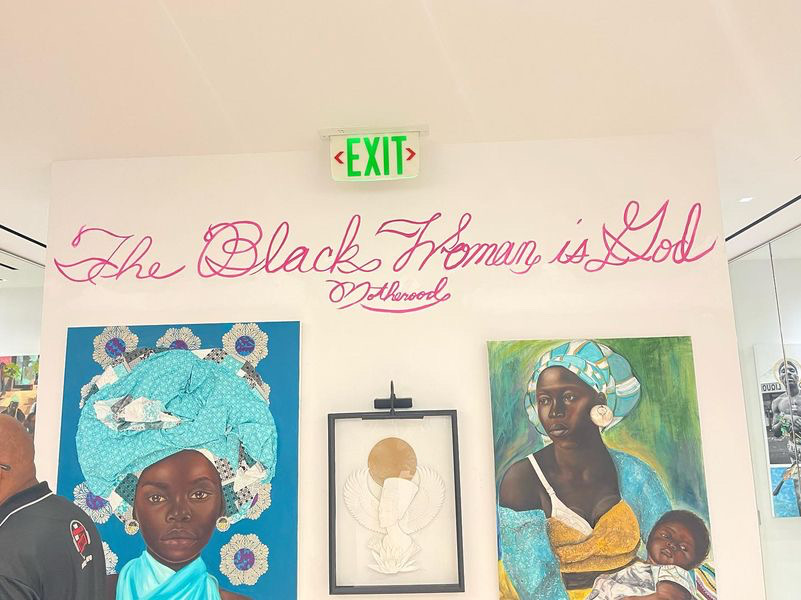
Entry to The Black Woman Is God exhibit in downtown San Francisco on June 29. Photo by Daisha Williams.
TBWIG celebrates Black women and their art through this annual exhibit. The intent of these events is to show that they are moving past embattled ideologies and reclaiming the legacy of Black women artists.
Black women have contributed so much to society, yet they are often not celebrated openly, which is why events like this, seeing them as art and artists, celebrating their beauty, grace, and influence, is so important.
The venue at 231 Grant St. was smaller than in previous years — this is the event’s second year since the pandemic — which made the environment cozy and welcoming, like a family atmosphere.
This doesn’t mean that there wasn’t a good turnout though, as the room filled up within an hour after opening. Zoe Jung talked about the strong sense of community he felt as an attendee. “There was a sense of camaraderie between the musicians and the artists and even the people walking through.”
Seneferu is an artist herself. She says she hopes that she can transform the meaning of space for Black women by creating one that belongs to them.
She intentionally puts artists of different experience levels in the exhibit to show the historical legacy of Black women artists. “I just felt so deeply honored and humbled, and I have a lot of family photos in the altar that I created, and I just loved seeing people go up and see my family and hopefully see some of their own family in my family.”
The reception was a lively space. From the minute of opening, people mingled while still taking the time and space to appreciate the art.
The art, the people and the music together made for a beautiful experience.
Harpist Destiny Muhammad and violinist Tarika Lewis played duets shifting the focus and spotlight away from the walls.

