
Commentary
The Head of Household Illusion: the Tax Break That Skips the Mothers It Was Built For
WASHINGTON INFORMER — The head of household filing status, created in 1951, was intended to ease the tax burden for unmarried taxpayers supporting dependents. Although 79% of filers are women, its design benefits higher earners disproportionately, with a taxpayer at the 75th percentile saving significantly more than one at the 25th percentile.


The head of household filing status is popularly understood as a tax break for single mothers, a modest acknowledgment that raising children alone costs more than doing it with a partner. That image is not wrong exactly. Roughly 79% of head of household filers are women, and the status was created in 1951 specifically to ease the tax burden on unmarried taxpayers supporting dependents. Roughly 21 million tax returns claim the status, about 1 in every 7 filed. But the way head of household is designed contradicts the way it is perceived. Rather than targeting need, it distributes its largest benefits to the filers who need it least. And the mismatch is no longer academic, because the status itself is now a target.

Consider income. Drawing on IRS Statistics of Income microdata, researchers found that in 2011 a taxpayer at the 25th percentile of the income distribution filing as head of household saved about $23 a year, while a taxpayer at the 75th percentile saved $1,573, a 68-fold gap. The mechanism is structural rather than incidental. Head of household status works by raising the income thresholds at which higher tax brackets apply, so the benefit accrues only after a filer’s income has climbed above them. Low earners have crossed few or none. The Tax Policy Center estimates that only about 8% of the lowest-income families with children benefit from the status at all, since many owe no federal income tax to offset in the first place.
Race and gender compound this mismatch. The IRS collects no information on filers’ race or sex, which is why this dimension has rarely been measured directly rather than inferred. Census data that simulates tax filing status closes that gap. Black people constitute 25.5% of all head of household filers, roughly 1.8 times their 14% share of the general population. Black filers claiming the status are 84.5% female. Black women alone make up 21.6% of every head of household filer in the country. The group most associated with the policy’s image is overrepresented among its filers, while the design ensures the smallest benefits flow to those with the least income.
This pattern is not new to tax scholarship. In 1996, Moran and Whitford showed that seemingly race-neutral provisions rest on household patterns that are demographically more common among White married couples than Black ones, so a nominally neutral rule produces racially disparate outcomes without ever mentioning race. The pattern begins with marriage itself. As of 2024, 48% of Black adults had never married, compared with 29% of non-Black adults, so a code in which marriage frequently delivers a tax bonus averaging more than $3,000 while the unmarried head of household receives $23 at the bottom of the income scale is not neutral in effect. For Black women raising families on a single income, it is double jeopardy. They are penalized once by a benefit structure that pays the most to the highest earners, and again by a code built around a household form they are statistically least likely to occupy.
Head of household adds a further design flaw to that lineage. Its benefit does not scale with the number of dependents a filer supports. A parent raising 1 child receives the same benefit as a parent raising 4, unlike the Child Tax Credit or the Earned Income Tax Credit. Family size determines how far a household’s income must stretch, and any analysis of how the tax code treats Black families that fails to account for it will get the story wrong.
The political stakes are current rather than historical. Project 2025 called for eliminating the status outright, and a Senate bill drafted by the Niskanen Center would raise taxes on roughly two-thirds of single-parent households to help fund an expanded Child Tax Credit. That trade deserves scrutiny, because the credit as currently designed already leaves out many children in the lowest-income families, whose parents earn too little to receive the full amount. Head of household survived last year’s One Big Beautiful Bill Act, but the Earned Income Tax Credit shows how little that guarantees. A precertification requirement aimed at the credit was stripped from that same law on procedural grounds, and it is already back on the target list as the next reconciliation package takes shape. Unmarried taxpayers, filing head of household or single, receive roughly three-quarters of all Earned Income Tax Credit dollars, so the credit crackdown and the repeal proposals converge on the same families. Provisions that support single parents do not leave the chopping block. They wait on it.
None of this argues for preserving head of household as it stands. The scholars who documented its regressive design have proposed replacing the status with a flat per-child credit, a reform that would produce net gains for roughly the bottom 4 income deciles. A redesigned benefit should grow with the number of children a parent raises and reach families whose earnings are too low to owe much income tax. The real choice is between redesigning this benefit so that it reaches the single mothers it was named for, and quietly raising taxes on those same women while pointing to a tax break most of them barely receive. Repeal without redesign would fall hardest on Black women, who are 1 in 5 of the filers this status touches. A policy whose image and whose design point in opposite directions cannot be defended by its image alone.
Beverly Moran is professor emerita of law at Vanderbilt University. LaToya B. Parker, PhD, directs the Tax Policy and Wealth Program at the Joint Center for Political and Economic Studies.
Based on reporting by Washington Informer.













To enlarge your view of this issue, use the slider, magnifying glass icon or full page icon in the lower right corner of the browser window.


To enlarge your view of this issue, use the slider, magnifying glass icon or full page icon in the lower right corner of the browser window.
Commentary
OPINION: Mario Juarez’s Courtroom Admissions Raise Questions About Allegations That Fueled Recall of Pamela Price
POST NEWS GROUP — Juarez’ claims became a significant part of the political narrative surrounding the recall campaign that removed me from office. Even though I denied the allegations, for two years, Juarez’s allegation was repeated across news outlets and used as political ammunition against me. His former local criminal defense attorney Ernest Castillo proclaimed Juarez’ innocence and claimed that the charges were politically motivated. Castillo is now a judge in the Alameda County Superior Co
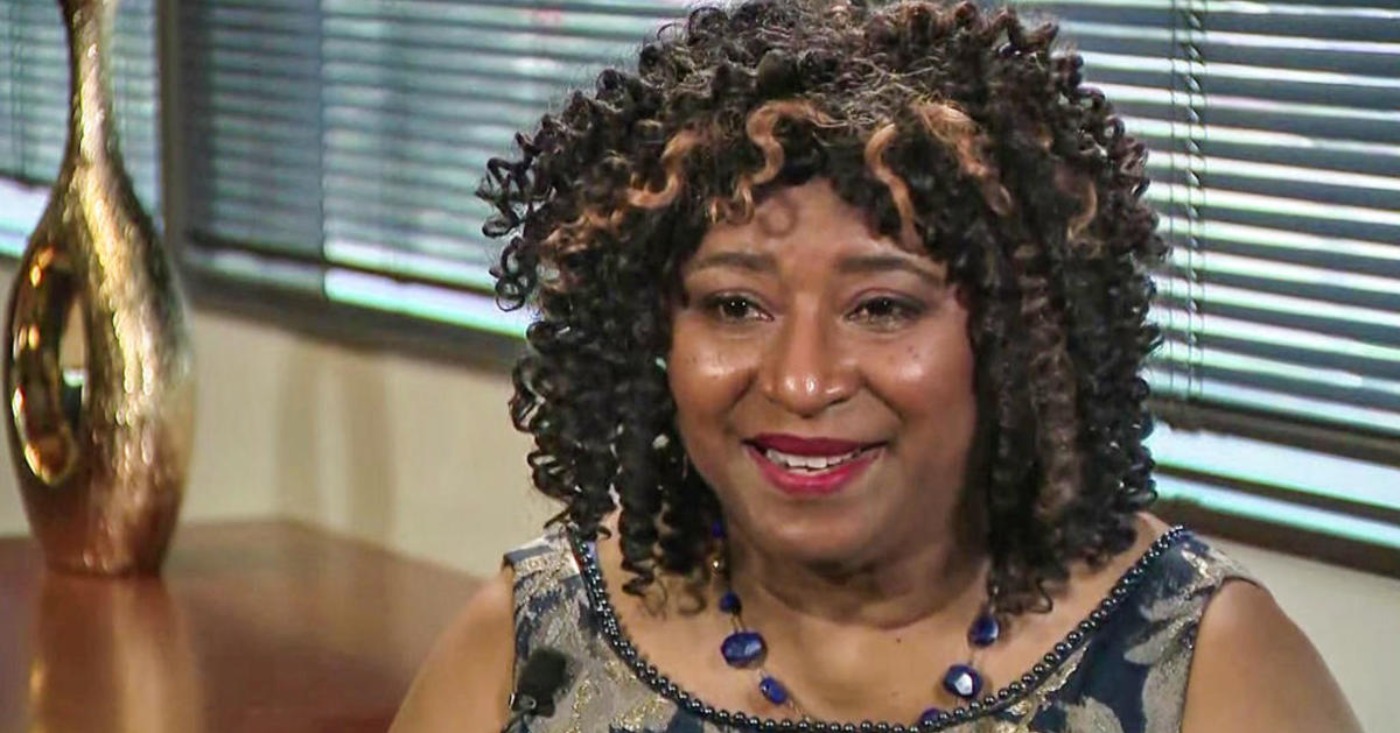
Former Alameda County District Attorney says it may take time, but ‘the truth will always catch up to the lie.’
In 2024, Mario Juarez, the U.S. government’s star witness in former Oakland Mayor Sheng Thao’s bribery case, steadfastly proclaimed his innocence of charges filed by the Alameda County District Attorney’s office under my leadership for allegedly passing tens of thousands of dollars in bad checks.
After he was charged in January 2024, Juarez fabricated a story claiming that I tried to extort $25,000 in cash from him for the anti-recall campaign.
In his recent courtroom testimony at Sheng’s trial, Juarez admitted that he knew the checks he wrote to print brokers Butterfly Direct Marketing were bad and would bounce. He also testified that he took money intended to pay the printer for himself. Juarez has a long, documented history of making false accusations and scamming business partners and acquaintances.
I denied Juarez’s allegation from the beginning. I never solicited a $25,000 payment from Juarez in exchange for dismissing criminal charges. It did not happen.
Now, in open court, the public is hearing Juarez admit that he knew the checks he wrote would bounce and that he took money intended to pay Butterfly for himself.

Juarez’ claims became a significant part of the political narrative surrounding the recall campaign that removed me from office. Even though I denied the allegations, for two years, Juarez’s allegations were repeated across news outlets and used as political ammunition against me. His former local criminal defense attorney, Ernest Castillo, proclaimed Juarez’ innocence and claimed that the charges were politically motivated. Castillo is now a judge in the Alameda County Superior Court.
Juarez’ false allegations against me had political consequences. The media and local bloggers were quick to amplify his allegations. Now they each have an obligation to give the public the same level of attention to the facts that have emerged in court. Anyone who repeated those allegations has a responsibility to revisit them now that Juarez admits he was guilty of the charges.
Juarez’s admissions also raise serious questions about why current District Attorney Ursula Jones Dickson chose to dismiss the charges against him rather than pursue accountability for the criminal conduct he has now admitted under oath. One of Jones Dickson’s first acts in February 2025 was to dismiss the charges against Juarez, despite the victim’s objections.
Political opponents should not be able to turn an unverified accusation into a public verdict. My reputation, my career, and the confidence of voters were all affected by an accusation that was never established as true.
The press should never confuse an allegation with proof and mislead the public about the veracity of a claim. And the current district attorney should not make prosecution decisions based on politics.
About Hon. Pamela Price
Pamela Price earned her B.A. from Yale College and a J.D. and M.A. from the Berkeley School of Law. She was admitted to practice law in California in 1983 and has specialized in federal civil rights litigation since 1991. She has successfully prosecuted civil and criminal cases in Bay area courts and is one of the few Black women to ever argue a case in the U.S. Supreme Court. She served as the elected District Attorney of Alameda County from 2023 to 2024.



Native American Health Center Connects 140 Community Members to Career Opportunities During Native American Heritage Month

Oakland Chamber of Commerce Faces $42,000 Ethics Fine for Campaign Violation

Attorney General Bonta Serves Investigative Subpoena on Nvidia

A Record 216 Firearms Collected at East Oakland Gun Buy-Back Event

City Council Hearing Shines a Light on Failures of City’s Prompt Payment Policy

IN MEMORIAM: Claude T. Everhart, San Francisco’s First Black Deputy Mayor, Dies at 73

UC Doctors, Nurses and Community Rally to Demand ICE Out of UC Hospitals

Hypertension and Heart Disease: Doctors, Advocates and Patients Are Tackling the Leading Cause of Death for Black Californians

Marin City Is Especially Vulnerable to El Niño High Tides, Strong Winds, Flooding and Power Outages

‘We’re Committed to Delivering the Change that the American People Deserve’

Staying Ready: What Every Californian Should Know About Preparing for El Niño

Oakland Post: Week of November 18 – 24, 2026

Oakland Post: Week of November 11 -17, 2026

Alameda County Supervisor Miley to Propose Illegal Dumping Ordinance

Oakland City Council Extends AI Data Center Moratorium for 10 Months.

COMMENTARY: Valarie Bachelor and Jennifer Brouhard are Excellent School Board Members and Deserve to Be Reelected

OUSD Receives State Review of District Finances; Outlines Progress Since January

HISTORY MADE: Keisha Lance Bottoms Becomes First Black Woman Elected Governor in American History

SEIU Local 1000 and State of California Will Continue to Negotiate New Labor Contract

Golden State Valkyries Become Bay Area Legends Winning WNBA Championship on Halloween Night

Fate of Bay Area Public Transit Hinges on Regional Transit Measure

COMMENTARY: Your California Living Trust Could Be Next: When Evidence Isn’t Enough

Chase Launches Fraud & Scam Prevention Month

Mayor Barbara Lee Holds Special State of the City Address in Deep East Oakland

Democrats, Community Groups Back Measure EE to Change How Oakland Is Governed

Post News Group Nov. 3 Election Endorsements

It’s Time to Lose Weight Before the Holidays

Richmond Neighbors Put Pantry Power on the Map

From Backyard Grilling to Jack London Square: Jamale Carlyle’s Chicken Wing Success Story

21st Annual Taste of Soul: California’s Largest Black Street Festival Comes Alive With Culture, Music and Connections

The Conversation With Al McFarlane 6/23/26

Media Monday 6/22/26

LIVE! ASK ALMA! — TUES. 6.23.26 7PM EST

Car Buying Secrets: 4 Hidden Checks Before You Sign!

Is This 550 HP Charger Worth YOUR Money? AutoNetwork Review

Celebrating Juneteenth – Frederick Douglass on education and resistance

LIVE! — ASK ALMA! — TUES. 6.19.26 7PM EST

Hyundai Ioniq 5 Parking, Safety, and 360 View #shorts

2025 Ioniq 5 New Wiper & Powerful Performance! #shorts

Electric SUV Range: Is 259 Miles Enough? #shorts

EV Charging: How Fast Can You Charge an Electric Vehicle? #shorts

Biometric Cooling… Messaging Seats…Come on! 2025 Infiniti QX80 Autograph 4WD

Charged Up: Witness the Magic of a Fully Electric Car! #shorts

Range Rover Sport PHEV Included…: See What’s Inside This Luxury SUV! #shorts

Invisible Hood View: Perfect Parking with X-Ray Vision! #shorts
-
 Commentary3 weeks ago
COMMENTARY: Valarie Bachelor and Jennifer Brouhard are Excellent School Board Members and Deserve to Be Reelected
-
 Education3 weeks ago
OUSD Receives State Review of District Finances; Outlines Progress Since January
-
 Black History3 weeks ago
HISTORY MADE: Keisha Lance Bottoms Becomes First Black Woman Elected Governor in American History
-
 Business3 weeks ago
SEIU Local 1000 and State of California Will Continue to Negotiate New Labor Contract
-
 Community3 weeks ago
Golden State Valkyries Become Bay Area Legends Winning WNBA Championship on Halloween Night
-
 Business4 weeks ago
Fate of Bay Area Public Transit Hinges on Regional Transit Measure
-
 Business3 weeks ago
COMMENTARY: Your California Living Trust Could Be Next: When Evidence Isn’t Enough
-
 Business4 weeks ago
Chase Launches Fraud & Scam Prevention Month
