
Activism
50 Years Later, ‘Wake Up Everybody!’ Still Resonates During Black Music
The words of the song, “Wake Up Everybody,” debuted by Harold Melvin & The Blue Notes in 1975, still resonate today as those words are just as relevant more than a half century later.

By Hazel Trice Edney, Special to The Post

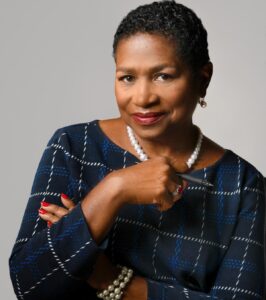
Hazel Trice Edney
“Wake up, everybody, No more sleepin’ in bed
No more backward thinkin’. Time for thinkin’ ahead
The world has changed so very much from what it used to be.
There is so much hatred, war, and poverty.
“The world won’t get no better If we just let it be.
Naw, naw, naw, naw, naw, naw, naw.
The world won’t get no better. We gotta change it, yeah– just you and me.”
The words of the song, “Wake Up Everybody,” debuted by Harold Melvin & The Blue Notes in 1975, still resonate today as those words are just as relevant more than a half century later.
In a rare, nearly somber moment, the group’s celebrated lead singer, Teddy Pendergrass, introduced the song on Soul Train, the weekly dance and live performance TV show that aired roughly between 1971 and 2006. Pendergrass told the attentive live audience and thousands watching by television that Wake Up Everybody, the title tune of their most recent album, was intended to inspire people to take action with a goal to change America for the better.
“I’m sure that you will all agree that there are things that need to be done in this country today,” he said. “So, what I’d like for you to do is listen very carefully to see what you can do to lend a hand.”
The song’s appeal worked.
“I played that song over and over and over again because it was a constant warning to keep ourselves prepared for the society that we were living in,” says A. Peter Bailey, then a 37-year-old former aide to Malcolm X.
When “Wake Up Everybody” hit the airwaves, Bailey was working as an associate editor of Ebony Magazine. “It was a call to be aware of what we were dealing with in the country that we lived in, the world we lived in, the neighborhood we lived in, the cities that we lived in,” Bailey said in an interview with the Trice Edney News Wire.
He concluded that during Black Music Month 2026, such songs should be recalled and celebrated as a key to changes for the good across America; especially because such songs successfully encouraged people to deal with the issues that might otherwise denigrate the promises of America, including the promise that “All men are created equal,”as stated in the Declaration of Independence.
“The rhythms and blues expressed our joys, our sorrows and our fears,” Bailey recalls. “It was those songs and the singing of those songs by our people that attracted us to the campaigns for justice.”
With his life inspired by that song and others, Bailey, now 88, went on to establish and teach a Black Press class at Virginia Commonwealth University. Also, he has since written three books, including a memoir, “Witnessing Brother Malcolm X, the Master Teacher,” in which he expounded upon successful principles of social justice, some of which are reflected in “Wake Up Everybody.”
Long before the term “woke” became associated with campaigns for justice, Pendergrass led the song that reverberated across America and still holds deep meaning.
The ‘wake up’ call exhorts teachers to ‘teach a new way,’ doctors to heal elders, and builders to ‘build a new land… we can do it if we all lend a hand.”
The song concludes:
“The world won’t get no better if we just let it be. Naw, naw, naw, naw, naw, naw, naw. The world won’t get no better. We gotta change it, yeah – just you and me.”
Hazel Trice Edney wrote this story as part of a four-part series powered by AARP in commemoration of Black Music Month, June 2026.











Activism
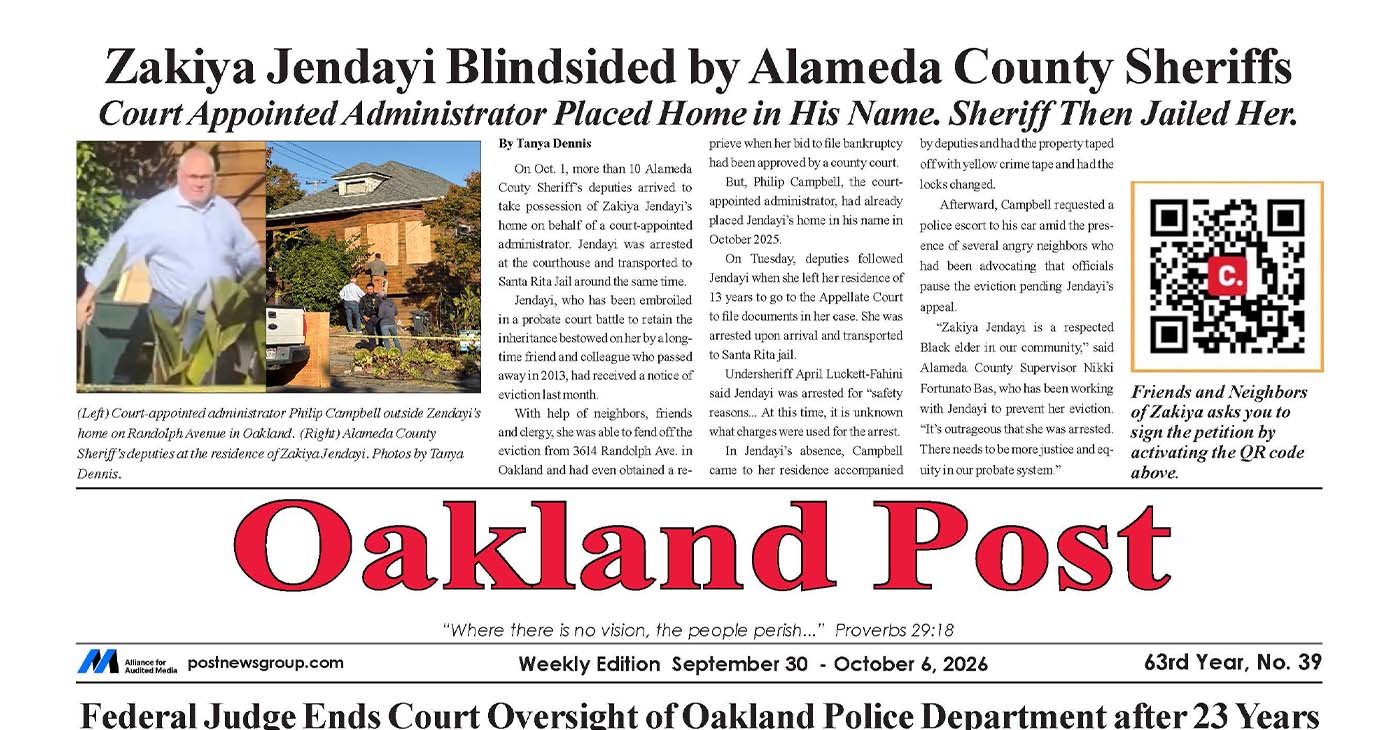
Oakland Post: Week of September 30 – October 6, 2026
The printed Weekly Edition of the Oakland Post: Week of September 30 – October 6, 2026
To enlarge your view of this issue, use the slider, magnifying glass icon or full page icon in the lower right corner of the browser window.
Activism
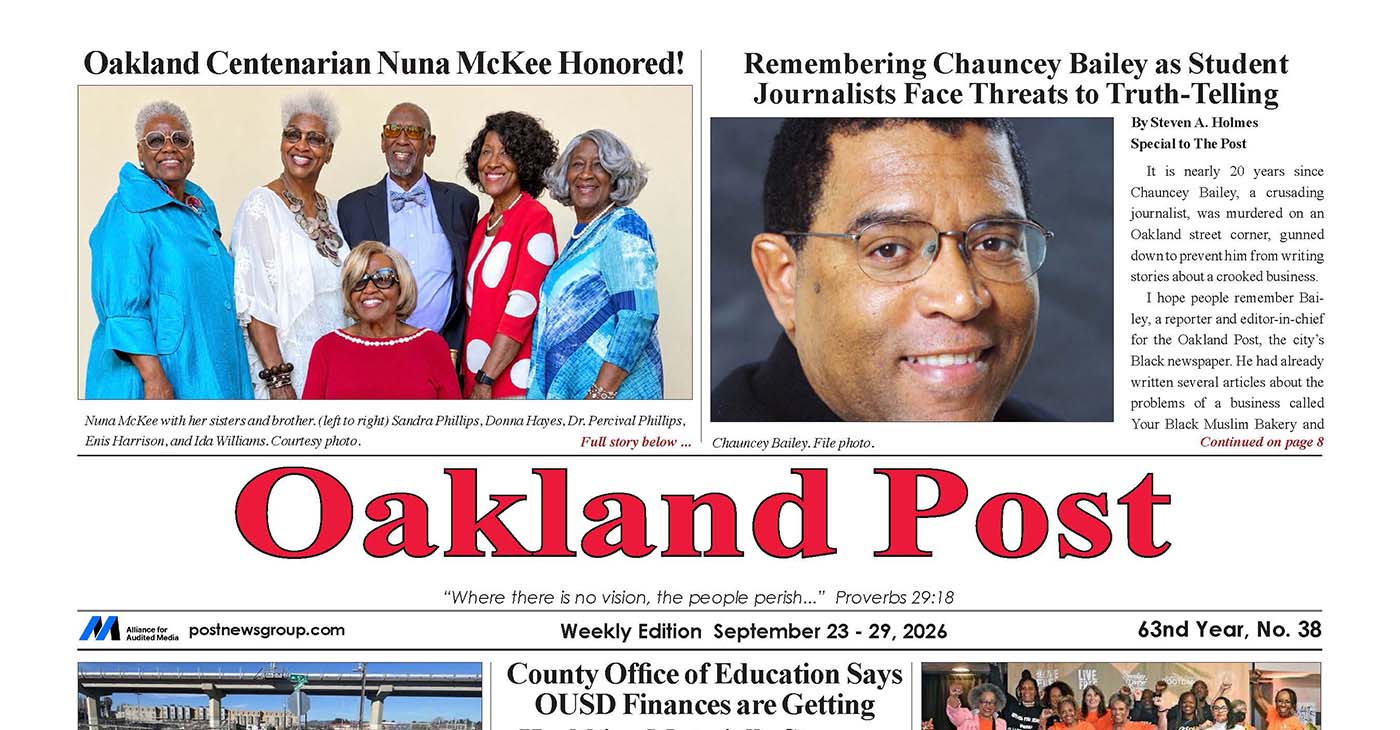
Oakland Post: Week of September 23 – 29, 2026
The printed Weekly Edition of the Oakland Post: Week of September 23 – 29, 2026
To enlarge your view of this issue, use the slider, magnifying glass icon or full page icon in the lower right corner of the browser window.
Activism
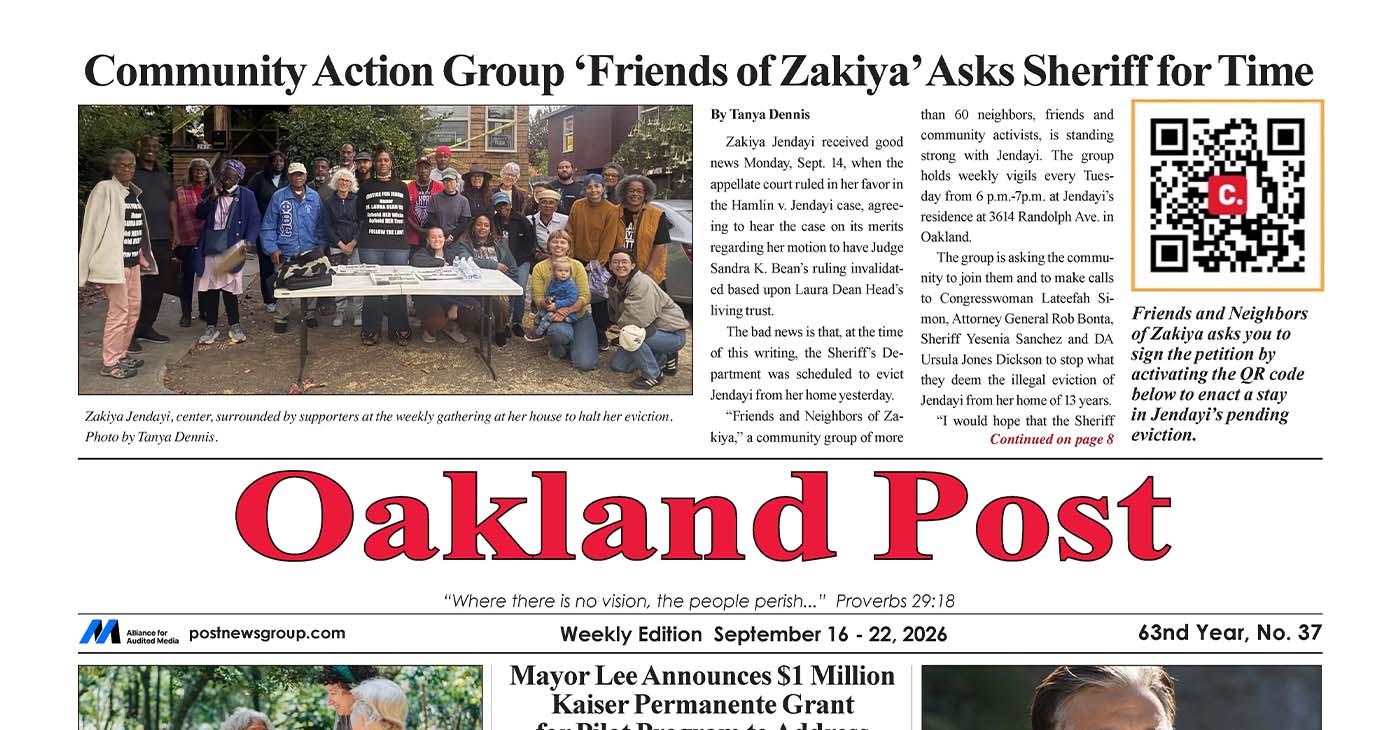
Oakland Post: Week of September 16 – 22, 2026
The printed Weekly Edition of the Oakland Post: Week of September 16 – 22, 2026
To enlarge your view of this issue, use the slider, magnifying glass icon or full page icon in the lower right corner of the browser window.



Listening as a Lifeline: A Doula’s Witness to Black Maternal Health

New Protections for Ticket Buyers: Gov. Newsom Signs Assemblymember Isaac Bryan’s Bill

‘We Don’t Talk Trash — We Pick Up Trash!’

Zakiya Jendayi Arrested, Locked Out of Home by Sheriff’s Deputies

Oakland Post: Week of September 30 – October 6, 2026

Asm. Corey Jackson Announces Launch of 24-Hour Childcare in His District

IN MEMORIAM: The Rev. Leon “Sonny” Clark, Longtime Orange County Pastor and Community Leader, Dies at 72

Poll: Becerra Widens His Lead Over Hilton; Californians Split on Wealth Tax

From Historic Memories to New Possibilities: Oakland Celebrates Coliseum 60

County Office of Education Says OUSD Finances Are Getting Healthier, Materially Stronger

LIVE FREE Sunday Dinner Brings Faith, Fellowship and Civic Conversation to Oakland

Remembering Chauncey Bailey as Student Journalists Face Threats to Truth-Telling

BLACspace Cooperative Invites Bay Area to Experience Oakland’s Black Cultural Ecosystem Through a BLAC Map Tour + Party

In Wake of Death on Doorstep, Williams Chapel Baptist Church Calls for Better Care, Funding for Unhoused

Oakland Centenarian Nuna McKee Honored!

Standoff for Justice: Our Homes Are Worth Fighting For

Oakland Post: Week of August 26 – September 1, 2026

Frontier Airlines’ Return to Oakland Airport Brings Flights, Jobs and Opportunity

Gubernatorial Candidate Steve Hilton Blasts California New Tire Rules; Newsom Hits Back

Chef Sharon Lee Blends Culinary Excellence, Education and Empowerment

Jackie Wright Champions Bay Area Stories, Filmmakers and Cultural Institutions

Oakland Coliseum Project Opens Door for Small Businesses to Build Bigger

Big City Mayors Ask for “Yes” Vote on Housing Bond Measure; Conservatives Say “No”

Misnamed ‘Parent’ PAC Seeks to Influence Oakland School Board Elections

Gov. Newsom’s Latest Appointees Include Sacramento Advocate for Formerly Incarcerated Students; State’s New Tech Chief

Longtime BWOPA Member Brendalyn Goodall Appointed to California Workforce Development Board

Gov. Newsom Signs Law Shielding Immigration Aid Workers From Doxing Threats

Secretary of State Shirley N. Weber Urges Californians to Vote Early as Voter ID Battle Intensifies

Oakland Post: Week of September 2 – 8, 2026

IN MEMORIAM: Dolly Parton Dead at 80 — How She Built a Legacy of Love and Earned Her Place in Black Culture

The Conversation With Al McFarlane 6/23/26

Media Monday 6/22/26

LIVE! ASK ALMA! — TUES. 6.23.26 7PM EST

Car Buying Secrets: 4 Hidden Checks Before You Sign!

Is This 550 HP Charger Worth YOUR Money? AutoNetwork Review

Celebrating Juneteenth – Frederick Douglass on education and resistance

LIVE! — ASK ALMA! — TUES. 6.19.26 7PM EST

Hyundai Ioniq 5 Parking, Safety, and 360 View #shorts

2025 Ioniq 5 New Wiper & Powerful Performance! #shorts

Electric SUV Range: Is 259 Miles Enough? #shorts

EV Charging: How Fast Can You Charge an Electric Vehicle? #shorts

Biometric Cooling… Messaging Seats…Come on! 2025 Infiniti QX80 Autograph 4WD

Charged Up: Witness the Magic of a Fully Electric Car! #shorts

Range Rover Sport PHEV Included…: See What’s Inside This Luxury SUV! #shorts

Invisible Hood View: Perfect Parking with X-Ray Vision! #shorts
-
 Community3 weeks ago
Misnamed ‘Parent’ PAC Seeks to Influence Oakland School Board Elections
-
 Activism4 weeks ago
Oakland Post: Week of September 2 – 8, 2026
-

 Community3 weeks ago
Richmond Tiny House Village Farm & Garden Set to Open Gates on Sept. 26
-

 Activism3 weeks ago
Oakland Post: Week of September 9 – 15, 2026
-

 Black History3 weeks ago
Latest Massacre in Haiti Reveals Cruelty U.S. Deportations
-

 Black History3 weeks ago
OPINION: Nolan Wells’ Death One of Several Signifying Racial Terror Lives on in U.S. South
-

 Community3 weeks ago
Democratic Clubs Interview Candidates for Oakland School Board
-

 Business2 weeks ago
Mayor Lee Announces $1 Million Kaiser Permanente Grant for Pilot Program to Address Homelessness, Clean Up Public Spaces throughout Oakland
