
Activism
Richmond Community Leaders Advocate for Accountability and Equity in Chevron Settlement Funds
“Now is the time for our community to have funding to solve the many problems that have been created over time,” said community advocate Antwon Cloird. “We now have no time to see politicians and the system get paid, while our community, year after year gets played.”

By Carla Thomas

Richmond’s historic $550 million settlement with Chevron is considered a major victory by local officials, environmental justice advocates, and union representatives to remedy the harm caused by the refinery’s long-term air pollution in the city.
However, still unresolved is how the money will be allocated to reach community members who need the most support.
“Now is the time for our community to have funding to solve the many problems that have been created over time,” said community advocate Antwon Cloird. “We now have no time to see politicians and the system get paid, while our community, year after year gets played.”
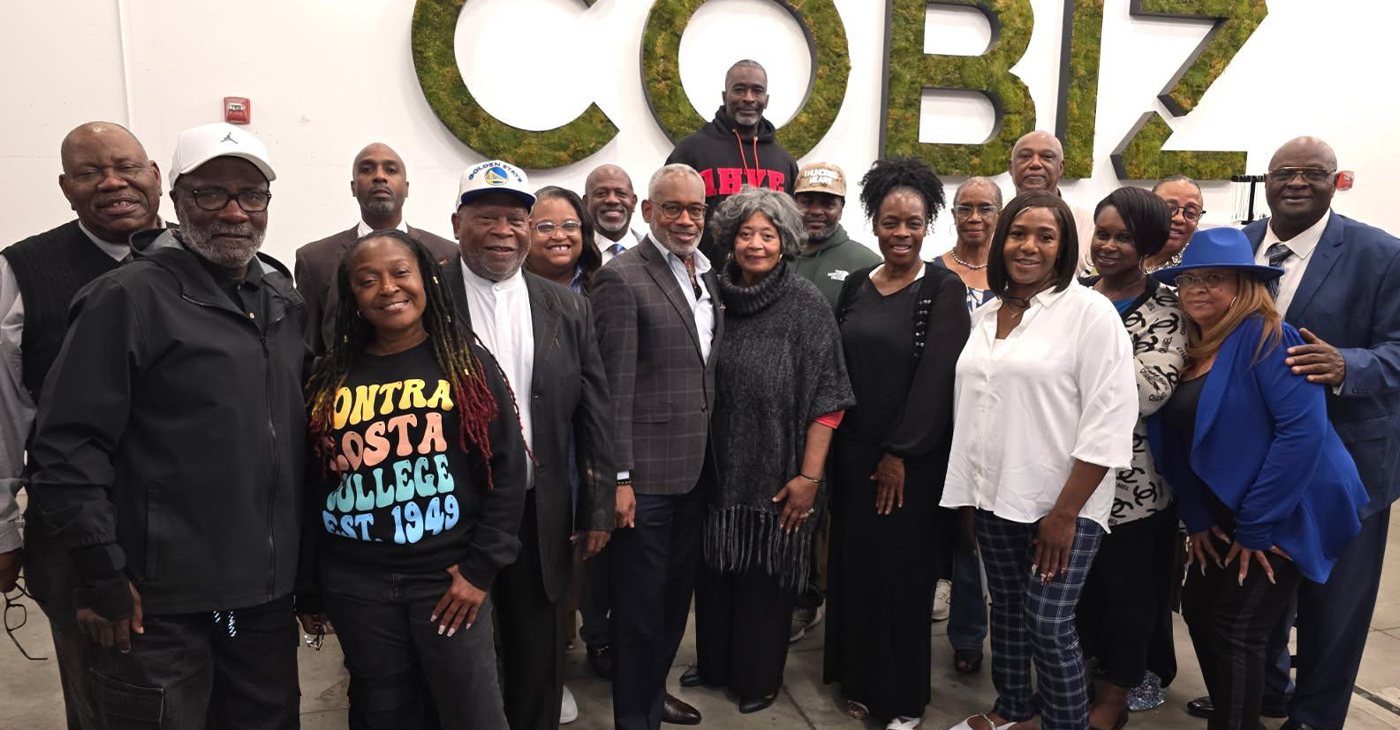
Cloird says he has formed a new coalition of 25 long-term residents who are all professionals and contributors to the community. Along with his newly formed group, which held a meeting at CoBiz, he demands transparency, equity, and fairness in the distribution of the settlement funds.
Cloird says the city wants to hire a consultant for $1.5 million to assess the Black community’s needs.
But Cloird says Black communities in Richmond have undergone so many rounds of gentrification abuse that an assessment is wasted money and time on reparations that can be more clearly defined by community members.
Cloird is outraged by the City of Richmond’s history of harm toward its Black community. Since the 1980s, the community has suffered from racism, redlining, gentrification, and marginalization, he said, arguing that the manipulation of the city’s finances has sidelined the Black community for too long.
Cloird’s career and life experiences have led him to share how the Crack Epidemic, the prison to pipeline syndrome, and the many ways systemic racism has forced an outmigration of the City’s Black community to the more northern suburbs of Pittsburgh and Antioch, which are connected to the mismanagement of city funds and the marginalization of several Black neighborhoods in Richmond.
Mayor Eduardo Martinez has proposed plans to rectify city finances and expand public services. He says the money will be placed into the city’s general fund and be allocated through open budget meetings, with public participation.
Council members Claudia Jimenez, Doria Robinson, and Sue Wilson support using the settlement to transform the city’s finances and redirect millions in annual pension payments toward services like safety, road repairs, and staffing.
Local advocacy groups, including the Asian Pacific Environmental Network (APEN) and Communities for a Better Environment (CBE), had rallied for the now-rescinded “Make Polluters Pay” measure, but are now focusing on environmental justice and investment in community-led programs.
At present, residents and organizers remain cautious, wanting to ensure the funds are fairly allocated while Richmond faces a delicate balance of supporting those who have suffered most from the impacts of refinery pollution.
Cloird says he does not trust the proposed plans to direct the money into the general fund.
“There has been a pattern of money not reaching the communities that have suffered the most when money goes into the general fund. Our coalition will fight for our community, and I want ensure we will have a viable community moving forward.”
The $550 million settlement with Chevron Corporation ended a high-profile campaign to impose new taxes on the oil giant’s local refinery. Approved by the Richmond City Council in August 2024, the agreement provides the city with a decade of financial installments, starting in July 2025.
The settlement emerged after a grassroots campaign demanded stronger accountability from Chevron for decades of air pollution linked to increased health risks in Richmond. The 2900-acre Chevron refinery, which processes approximately 240,000 barrels of crude oil daily, has long faced criticism from residents for contributing to elevated rates of respiratory illnesses and cardiovascular disease.
In response, local advocates and city leaders moved forward with a proposed “Make Polluters Pay” ballot measure that would have set a new tax of $1 per barrel of oil refined in the facility. The measure aimed to raise funds directly from Chevron to address public health, infrastructure, and environmental concerns.
To avoid the proposed tax, Chevron agreed to a $550 million payout over the next decade. Chevron will deliver $50 million annually from July 1, 2025, through June 30, 2030, and $60 million annually from July 1, 2030, through June 30, 2035.











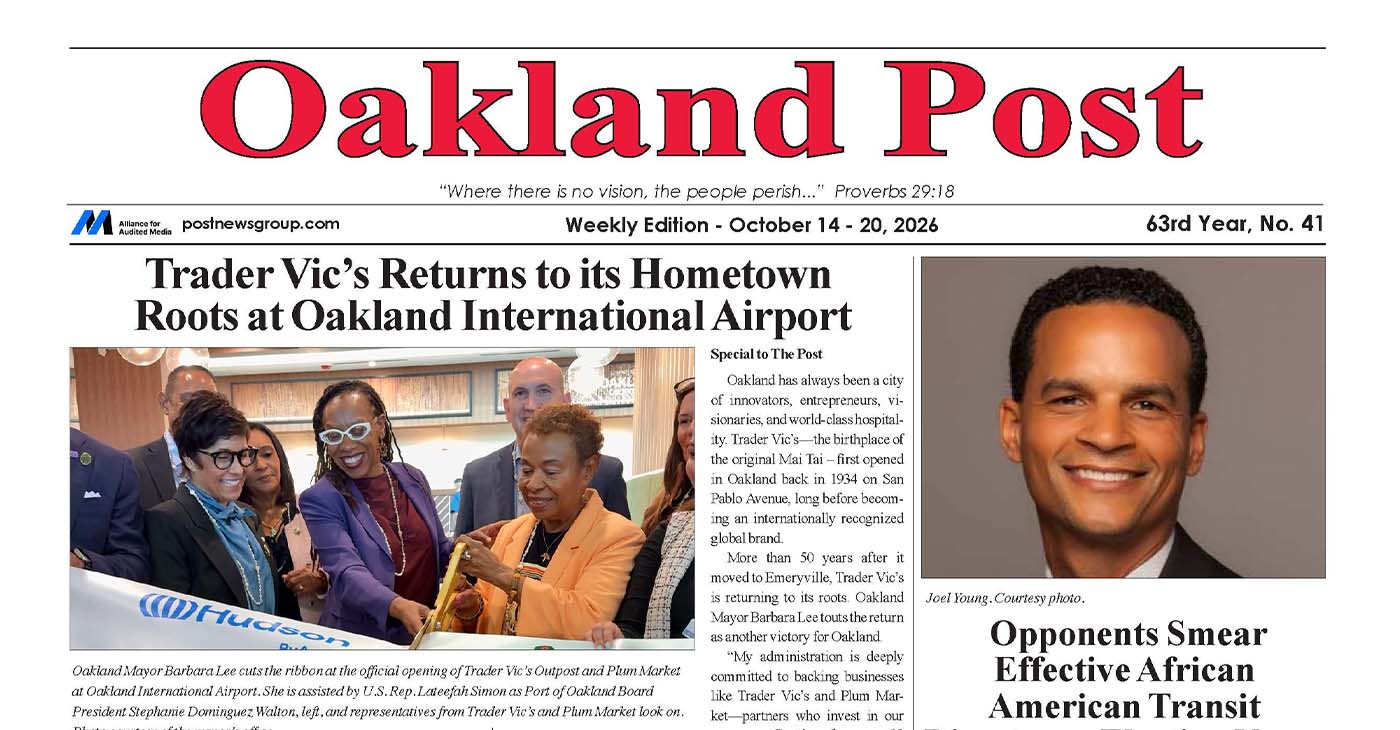
To enlarge your view of this issue, use the slider, magnifying glass icon or full page icon in the lower right corner of the browser window.

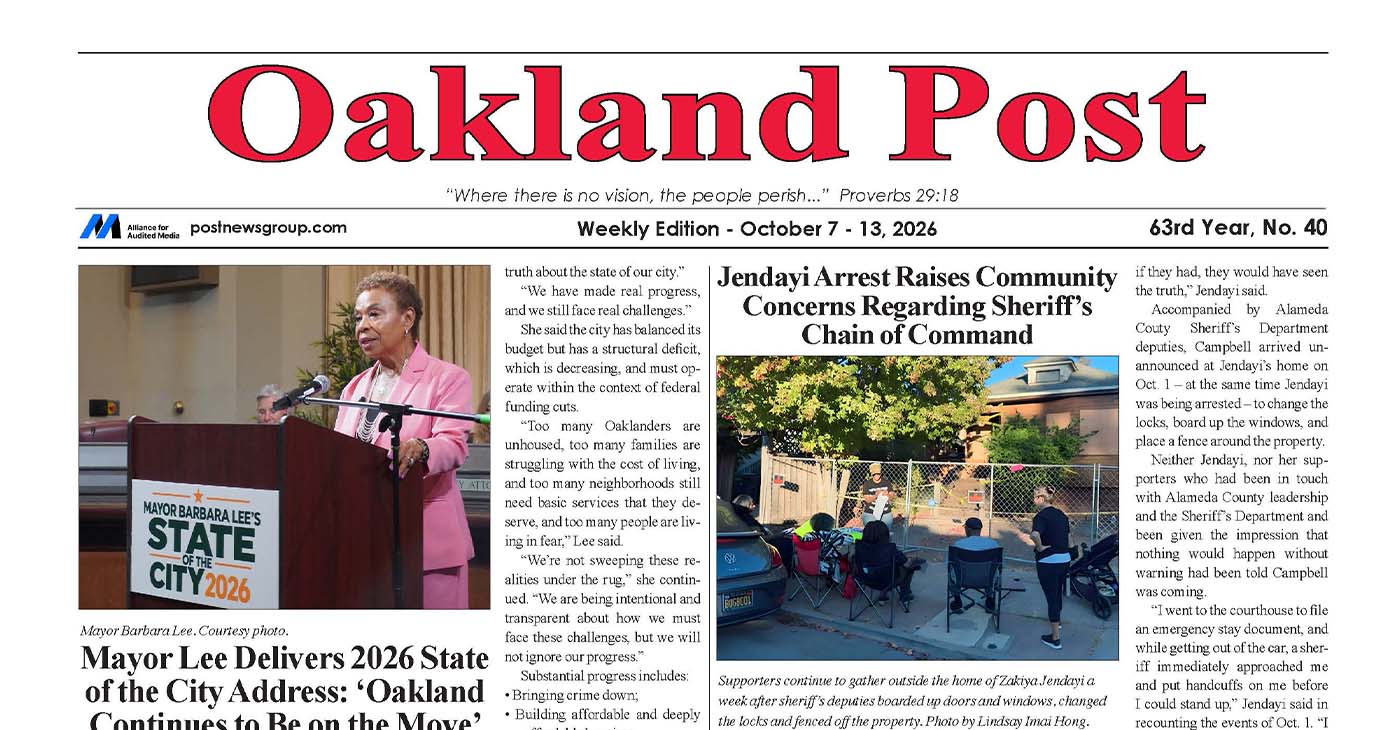
To enlarge your view of this issue, use the slider, magnifying glass icon or full page icon in the lower right corner of the browser window.
Activism
Oakland Post: Week of September 30 – October 6, 2026
The printed Weekly Edition of the Oakland Post: Week of September 30 – October 6, 2026


To enlarge your view of this issue, use the slider, magnifying glass icon or full page icon in the lower right corner of the browser window.


Mayor Barbara Lee Holds Special State of the City Address in Deep East Oakland

Practitioners of African Traditional Spirituality Offer Ancestral Reverence Ritual Oct. 31

It’s Time to Lose Weight Before the Holidays

Trader Vic’s Returns to Its Oakland Roots

Oakland Coal Terminal Backed by Trump Would Be Bigger, Dirtier Than Promised, Says Report

Opponents Smear Effective African American Transit Director as Election Nears

Oakland Post: Week of October 14 – 20, 2026

OP-ED: The Black Church Writes AI’s Next Chapter

OP-ED: The Black Church Writes AI’s Next Chapter

WCCUSD Joins Statewide Organic School Food Purchasing Cooperative

Democrats, Community Groups Back Measure EE to Change How Oakland Is Governed

Four Tips to Help You Plan a Holiday “Staycation”

Veterans Housing Project Proposed for South Richmond
PRESS ROOM: Transformative Justice Coalition 2026 Voting Rights Champion Awards Reception ‘Yesterday Is Today: The Battle For Voting Rights

Mayor Lee Delivers 2026 State of the City Address: ‘Oakland Continues to Be on the Move’

Misnamed ‘Parent’ PAC Seeks to Influence Oakland School Board Elections

Oakland Post: Week of September 2 – 8, 2026

Oakland Post: Week of September 9 – 15, 2026

Poll: Becerra Widens His Lead Over Hilton; Californians Split on Wealth Tax

County Office of Education Says OUSD Finances Are Getting Healthier, Materially Stronger

Richmond Tiny House Village Farm & Garden Set to Open Gates on Sept. 26

Latest Massacre in Haiti Reveals Cruelty U.S. Deportations

Mayor Lee Announces $1 Million Kaiser Permanente Grant for Pilot Program to Address Homelessness, Clean Up Public Spaces throughout Oakland

OPINION: Nolan Wells’ Death One of Several Signifying Racial Terror Lives on in U.S. South

Listening as a Lifeline: A Doula’s Witness to Black Maternal Health

Zakiya Jendayi Arrested, Locked Out of Home by Sheriff’s Deputies

BLACspace Cooperative Invites Bay Area to Experience Oakland’s Black Cultural Ecosystem Through a BLAC Map Tour + Party

Oakland Post: Week of September 16 – 22, 2026

Democratic Clubs Interview Candidates for Oakland School Board

Oakland People’s Arms Embargo Coalition Demands End to Military Shipments Thru Oakland

The Conversation With Al McFarlane 6/23/26

Media Monday 6/22/26

LIVE! ASK ALMA! — TUES. 6.23.26 7PM EST

Car Buying Secrets: 4 Hidden Checks Before You Sign!

Is This 550 HP Charger Worth YOUR Money? AutoNetwork Review

Celebrating Juneteenth – Frederick Douglass on education and resistance

LIVE! — ASK ALMA! — TUES. 6.19.26 7PM EST

Hyundai Ioniq 5 Parking, Safety, and 360 View #shorts

2025 Ioniq 5 New Wiper & Powerful Performance! #shorts

Electric SUV Range: Is 259 Miles Enough? #shorts

EV Charging: How Fast Can You Charge an Electric Vehicle? #shorts

Biometric Cooling… Messaging Seats…Come on! 2025 Infiniti QX80 Autograph 4WD

Charged Up: Witness the Magic of a Fully Electric Car! #shorts

Range Rover Sport PHEV Included…: See What’s Inside This Luxury SUV! #shorts

Invisible Hood View: Perfect Parking with X-Ray Vision! #shorts
-
 Economy3 weeks ago
Poll: Becerra Widens His Lead Over Hilton; Californians Split on Wealth Tax
-
 Business3 weeks ago
County Office of Education Says OUSD Finances Are Getting Healthier, Materially Stronger
-
 Business4 weeks ago
Mayor Lee Announces $1 Million Kaiser Permanente Grant for Pilot Program to Address Homelessness, Clean Up Public Spaces throughout Oakland
-
 Black History2 weeks ago
Listening as a Lifeline: A Doula’s Witness to Black Maternal Health
-
 Lead Story2 weeks ago
Zakiya Jendayi Arrested, Locked Out of Home by Sheriff’s Deputies
-
 Art3 weeks ago
BLACspace Cooperative Invites Bay Area to Experience Oakland’s Black Cultural Ecosystem Through a BLAC Map Tour + Party
-
 Activism4 weeks ago
Oakland Post: Week of September 16 – 22, 2026
-
 Uncategorized4 weeks ago
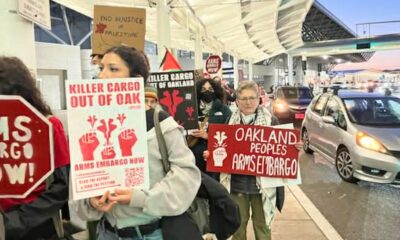
Oakland People’s Arms Embargo Coalition Demands End to Military Shipments Thru Oakland
