
Community
Black, Latinx Californians Face Highest Exposure to Oil and Gas Wells
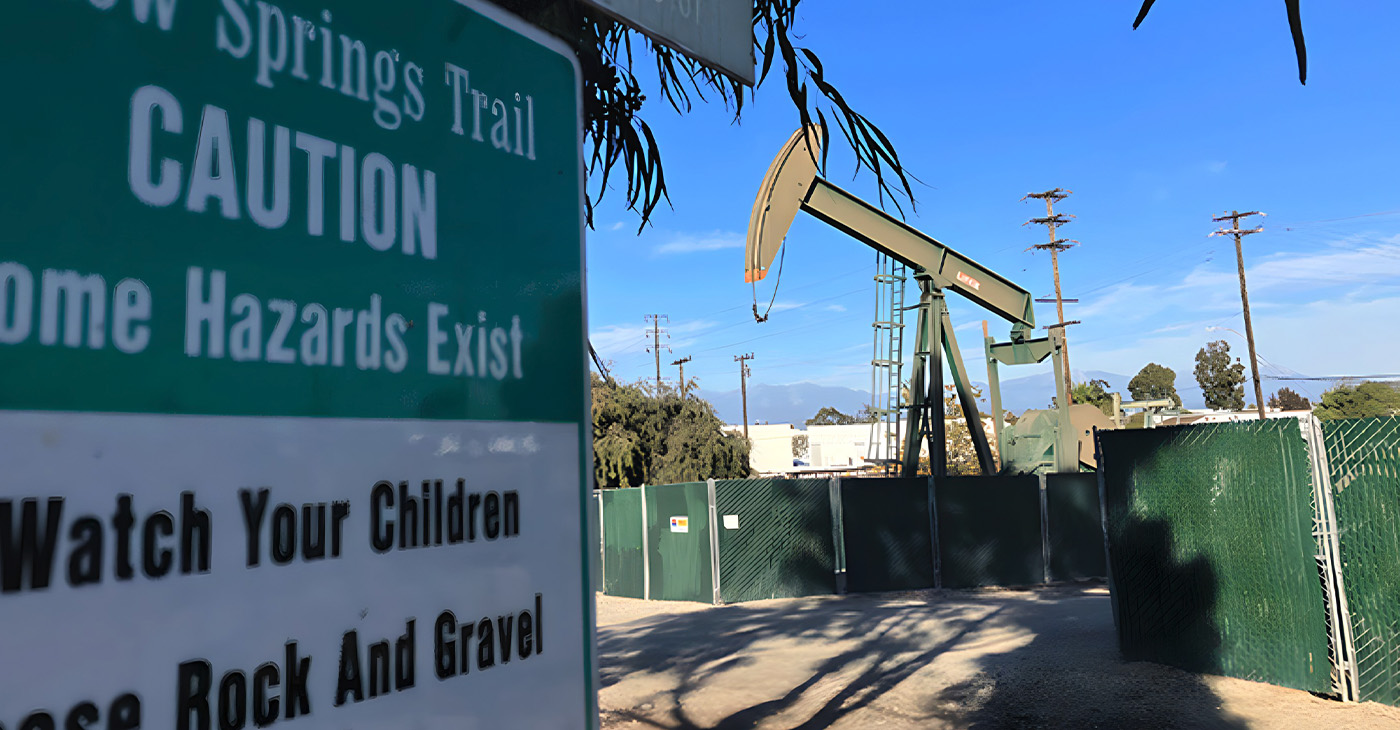
More than 1 million Californians live near active oil or gas wells, potentially exposing them to drilling-related pollution that can contribute to asthma, preterm births and a variety of other health problems. A new study appearing in the March 23 edition of the journal GeoHealth finds that these Californians are disproportionately Black, Latinx or low-income, and Black Californians are more likely to live near the most intensive oil and gas operations.

By Kara Manke

More than 1 million Californians live near active oil or gas wells, potentially exposing them to drilling-related pollution that can contribute to asthma, preterm births and a variety of other health problems.
A new study appearing in the March 23 edition of the journal GeoHealth finds that these Californians are disproportionately Black, Latinx or low-income, and Black Californians are more likely to live near the most intensive oil and gas operations.
“When we look across the state of California over the past 15 years, Black, Latinx and low-income people consistently were more likely to live near oil and gas wells,” said study first author David González, a President’s Postdoctoral Fellow at the University of California, Berkeley. “Black people, in particular, were more likely to be in places that had the most intensive oil and gas production, which can lead to more exposure to harmful chemicals.”
The study also found that while oil and gas production in California has declined over the past 15 years, the rate of decrease has been slower near racially marginalized communities.
Earlier work led by González found that disparities in exposure to oil and gas wells can be traced back to the 1930s in Los Angeles and linked to the historical policy of redlining.
“What’s emerging is that oil and gas wells have been disproportionately impacting racially marginalized and low-income communities in California for generations,” González said.
“We found that redlining was strongly associated with the disproportionate siting of oil and gas wells in historically racially marginalized communities, and we’re still seeing disproportionate siting and production of oil and gas infrastructure in many of these same neighborhoods today.”
Oil and gas production is a complex process that can release an array of hazardous pollutants: Drilling rigs and other heavy machinery emit diesel exhaust, active wells can release toxic volatile organic compounds, and in some cases, the chemicals that are used to extract oil from underground reservoirs can seep into the water supply, endangering those who rely on groundwater for drinking.
Operating heavy drilling machinery in residential areas can also create other stressors, like light and sound pollution.
Mounting evidence suggests that these pollutants pose a variety of health risks to those who live close to wells — that distance usually is defined as living within 1 kilometer (km), or a little over half a mile.
The California climate measures signed into law last September by Gov. Gavin Newsom contained provisions that would ban new drilling within approximately 1 km of homes, schools, hospitals and parks and provide protections for those living near existing wells.
But in early February, oil companies succeeded in putting the law on hold until voters decide its fate in a November 2024 ballot referendum.
“The weight of scientific evidence clearly demonstrates that people living near oil and gas development have a greater risk of respiratory problems and adverse birth outcomes,” said Seth B.C. Shonkoff, executive director of PSE Healthy Energy and an associate researcher at UC Berkeley’s School of Public Health. “Attempts to undermine or delay California’s landmark setback law contradict the science and increase public health risks, particularly for Black and brown communities.”
Given the complexity of oil and gas operations, many studies only consider proximity to wells when investigating the health risks of oil and gas production. However, this focus on proximity may mask additional disparities in the hazards posed by more intensive production, the researchers said.
The current study, which found that Black Californians are more likely to be exposed to more intensive oil productions, might help explain why some studies have found that the health risks associated with living near wells are higher for racially and socioeconomically marginalized people.
Rachel Morello-Frosch, professor at UC Berkeley’s School of Public Health and in the Department of Environmental Science, Policy and Management and the study’s senior author, said she hopes the paper makes clear the health equity implications of the oil and gas industry in California.
“This study advances scientific understanding about the origins and persistence of racialized inequities in exposure to oil and gas extraction in California, which in turn has significant implications for regulatory interventions that center environmental justice in protecting community health from this well-documented environmental hazard,” Morello-Frosch said.
In addition to the 1 million Californians who live near active or retired wells, nearly 9 million — 20% of the population — live close to wells that have been plugged and abandoned, some as early as the 1800s. While wells that have been plugged in recent years are held to rigorous environmental standards, other studies have found that some of these older wells may still be emitting toxic chemicals that could be harmful to those living nearby.
“The most common exposure to oil and gas infrastructure in California was to plugged and abandoned wells,” González said. “From a public health perspective, it’s not clear how worried we should be about plugged wells. But given how many people live near them, I think it’s important to ask more questions and take care when we retire wells so we don’t create problems down the road.”
Additional study co-authors include Claire M. Morton of Stanford University; Lee Ann L. Hill, Drew R. Michanowicz and Robert J. Rossi of PSE Healthy Energy; and Joan A. Casey of the University of Washington. This study was supported by the California Air Resources Board (#18RD018) and National Institute of Environmental Health Sciences (R00 ES027023)











Community
A Record 216 Firearms Collected at East Oakland Gun Buy-Back Event
The Oakland Police Department and community partners recently hosted the “Guns to Gardens” buyback event, collecting a record 216 firearms. This total marks the largest collection in more than a decade, surpassing the previous high of 130 guns set in 2022. Participants received a total of $18,000 in gift cards for surrendering weapons ranging from compact pistols to military-style assault rifles and ghost gun kits. Officials confirmed that every weapon collected will eventually be repurposed to serve a new community function. Read more.

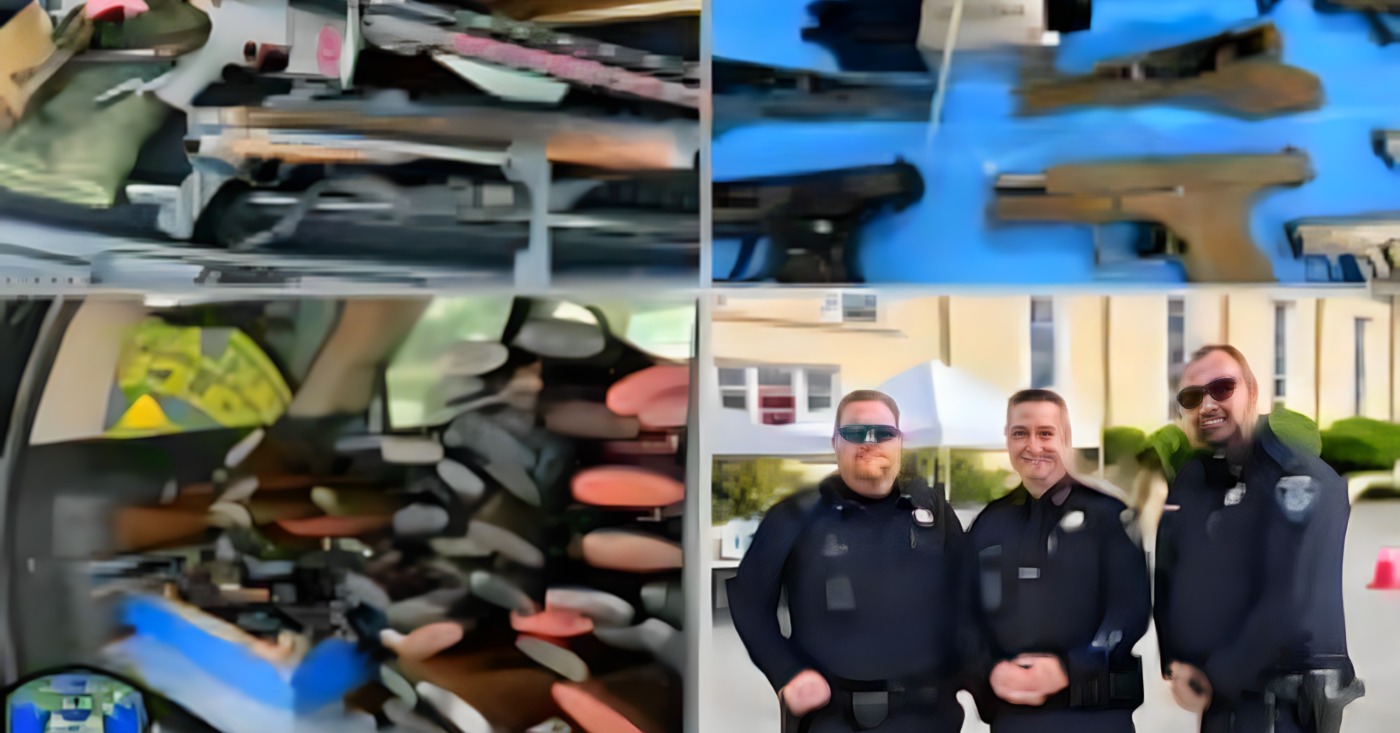
Over the weekend, the Oakland Police Department (OPD) and community partners hosted “Guns to Gardens,” a gun buyback event with strong community participation. OPD collected a record 216 firearms, exceeding the previous high of more than 130 in 2022 and marking the largest collection in more than a decade.
“Thanks to the generosity of our faith-based coalition, the Kaiser Foundation, and local partners, we distributed $18,000 in gift cards to community members who turned in their firearms,” said Oakland Mayor Barbara Lee.
The buyback follows the graduation of the 197th academy of Oakland Police Department (OPD) cadets on Nov. 6. The nine cadets are already making their mark connecting with residents, honoring the department’s history, and supporting department events.
In their first month, the Cadets helped clean the Remember Them monument at Henry J. Kaiser Memorial Park. They learned about Oakland Police Officer John Grubensky, who died in the line of duty while guiding community members to safety during the Oakland Hills Fire and is honored on the monument.
The Cadets handed out candy at OPD’s annual Trunk or Treat celebration and helped with the 197th Police Academy graduation ceremony.

Most recently, the Cadets participated in an inspection and pinning ceremony, marking another milestone in their development and service to our community.
OPD thanks Kaiser Permanente and PG&E for their donations, which led to the reinstatement of the Cadet Program. This program offers young people ages 15½ to 20½ opportunities to engage with their community, gain experience, and explore careers in public safety.
But it was the veteran officers that handled the buyback at St. Benedict’s Catholic Church at 2245 82nd Ave.in East Oakland.
The weapons collected on Nov. 14 ranged from compact pistols to assault weapons. One participant also surrendered equipment used to create homemade firearms, commonly known as “ghost guns.”
“I was shocked to see the number of assault weapons, military-style firearms, and ghost guns turned in,” said Oakland Police Chief James Beere. “Every firearm removed from our streets is one less that could be used in a shooting or other act of violence. By choosing to turn in unwanted guns, we help protect our neighborhoods and ultimately save lives.”
OPD and Lee thanked the community partners, volunteers, and participants for their continued support in this effort.
“Every single gun collected will be transformed into garden tools and given back to the community at future events,” said Lee. “A huge thank you to everyone who participated, our dedicated partners, and OPD for making Oakland safer.”
Paul Chambers is the strategic communications manager for the Oakland Police Department.

Black History
IN MEMORIAM: Claude T. Everhart, San Francisco’s First Black Deputy Mayor, Dies at 73
Claude T. Everhart, the first African American deputy mayor of San Francisco and a dedicated community advocate for five decades, passed away on October 27 at the age of 73. A former member of the Black Panther Party, Everhart rose from community organizing to serve as chief of staff for Mayor Art Agnos, where he helped lead the city through the aftermath of the 1989 Loma Prieta earthquake. His career spanned significant roles in youth development and municipal policy. Visit BlackPressUSA.com to read more.
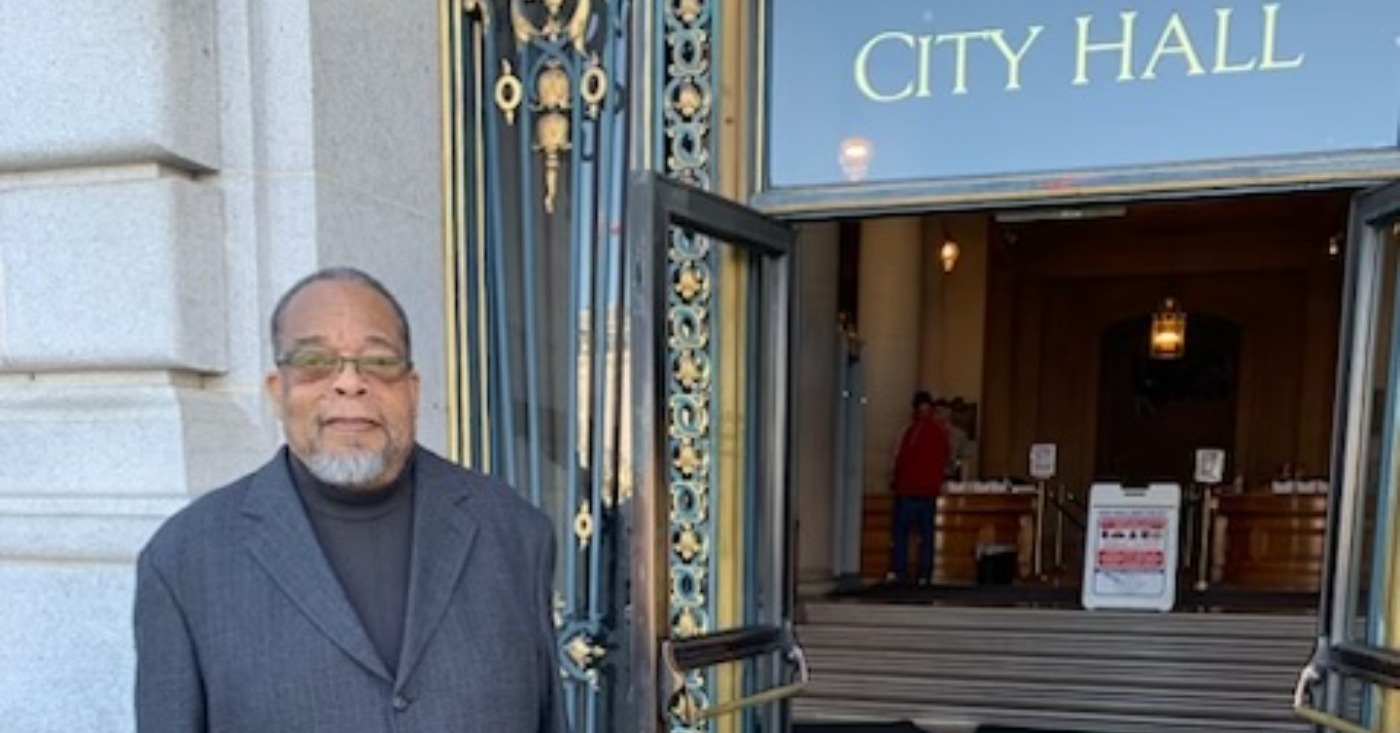
Claude T. Everhart, first African American deputy mayor and chief of staff to former San Francisco Mayor Art Agnos who served working families and communities of color for 50 years, died on Oct 27 in Oakland. He was 73.
“Claude Everhart was… He was the engine room of our administration’s most significant efforts to improve the lives of our city’s most underserved populations San Francisco has lost a true champion of the people, and I have lost a very dear friend and a trusted partner,” Agnos said in a statement.
Born in San Francisco in 1952, Everhart graduated from Lowell High in ’70. As a student, he was involved in the Black Panther Party, participating in various demonstrations, the San Francisco State College strike, and the Party’s Free Breakfast Program.
As a teen, he led the Oceanview–Merced–Ingleside Community Organization, created summer jobs for youth, and opened a group home as an alternative to incarceration.
In 1974, he became the first executive director of Young Community Developers (YCD) The program was founded by a group of young Black activists who pushed City Hall for funding to train residents for jobs at the Hunters Point Naval Shipyard.

More than 50 years later, YCD is still providing job readiness training, reentry services for formerly incarcerated adults, and youth programming, and Everhart remained on the board into recent years.
Everhart joined Agnos’ staff in 1976, became his chief of staff and then executive deputy mayor when Agnos was elected mayor in 1988.
In that role, he was part of the leadership team that led San Francisco through the October 17, 1989, Loma Prieta earthquake (the city’s worst since 1906). The administration rebuilt the damaged infrastructure and decided to take down the quake-damaged Embarcadero Freeway, thereby opening the waterfront. They would not move the unhoused people displaced from the damaged shelters until new housing was available, and they created “Beyond Shelter,” which became a nationally recognized network of multi-service centers for the unhoused.
He took a few unpopular stands on behalf of the disadvantaged. He fought against the homeporting of the USS Missouri at Hunters Point on grounds of gentrification, demanded a full clean-up of the yard, and pushed for investigations and redress in the wake of allegations of racial discrimination in both the Police and Fire Departments.
He was instrumental in setting up the Mayor’s Office of Youth and Children’s Services, helped to divest the city’s retirement system from South Africa, brought a supermarket to Hunters Point, and worked to increase city contracting with minority-owned businesses.
He later served as a VP at Waste Management of Alameda County and as a political consultant to several people, including former Oakland Mayor Elihu Harris and San Francisco Assessor Doris Ward.
His legacy lives on through Jelani House (the family recovery and counseling program named for his late son), of which he was a board member and at the Ella Hill Hutch Community Center in the Fillmore, a long-standing youth and community center with a mural on the building in his honor.
Everhart is predeceased by his son Jelani. He is survived by his wife of 51 years, Sandra, and daughter, Maisha.
A memorial service will be held on Nov 23 at 11 a.m. at Jones Memorial UMC, 1975 Post St., San Francisco, CA 94115. In lieu of flowers, the family asks that donations be made to Young Community Developers and Jelani House.
Darolyn Davis is the president and CEO of D&A Communications.

Community
UC Doctors, Nurses and Community Rally to Demand ICE Out of UC Hospitals
A coalition of University of California resident physicians and nurses rallied outside the Board of Regents meeting in San Francisco this week to demand the removal of immigration enforcement from UC hospitals. Supported by organizations including the California Nurses Association and SEIU, the protesters called for systemwide protocols to protect patient privacy and worker safety. Organizers argue that the presence of federal agents undermines medical trust and compromises care for vulnerable populations. The coalition is now urging university leadership to implement specific transparency measures and updated guidelines to read more.
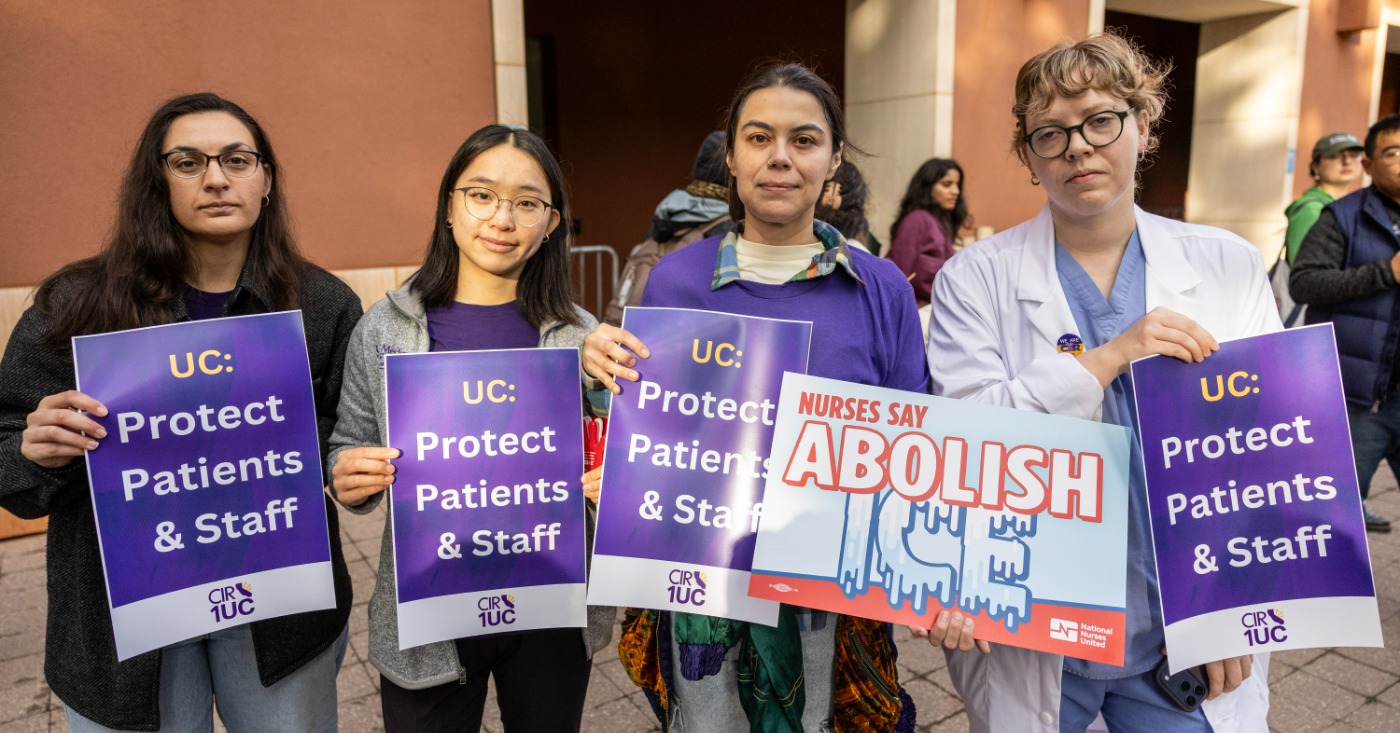
Alongside community members, a coalition of resident physicians and nurses from across the University of California rallied this week outside the Board of Regents meeting in San Francisco demanding that UC get ICE out of its hospitals and establish clear, systemwide protections for patients and healthcare workers.
Hundreds of emails have been sent to the Board of Regents and UC President James Milliken reiterating the need for a comprehensive policy and protocol. The email action is cosponsored by the Committee of Interns/Service Employees International Union (CIR/SEIU), the California Immigrant Policy Center, California Nurses Association, and United Auto Workers 4811, according to a press release issued by protest organizers.
These actions on Tuesday, Nov. 17, were part of a growing campaign to ensure UC hospitals remain places of healing, dignity, and confidential medical care for everyone, regardless of immigration or custody status, the press release said.
Currently, a lack of clear, consistent protocols and staff training for situations involving patients in immigration enforcement custody at UC Health facilities creates confusion, safety risks, and the potential for violations of patients’ rights. Healthcare workers need clear guidance to protect patient privacy, uphold legal rights, and provide appropriate medical care.

“As doctors, the well-being of the people we serve is our utmost priority. The presence of immigration enforcement in our hospitals undermines our ability to provide care and impedes patients from receiving proper, dignified treatment. UC must take action now to protect patients and staff,” said Dr. SatKartar Khalsa, CIR-SEIU regional vice president.
The presence of immigration enforcement officers in healthcare settings can interfere with medical examinations and treatment, compromise patient confidentiality, and undermine trust between patients and providers. Patients in immigration custody may face barriers to contacting family, accessing support services, and participating in decisions about their care. Healthcare workers also report fears of unsafe working conditions, racial profiling, and retaliation for advocating for their patients.
“Nurses demand that our hospitals must be places of healing and safety and completely off limits to any sort of ICE or federal immigration agent presence,” said Jamile Cabacungan, a medical-surgical-telemetry RN at UCSF Stanyan Hospital. “From the start of this cruel and unnecessary deportation program, nurses have been educating ourselves and our patients to know and exercise our rights, and we even sponsored state legislation to keep ICE out of our hospitals. Our employer UC must step up and proactively do everything possible to support us and our ability to provide safe care to our patients and communities.”
The coalition calls on UC leadership to:
- Protect patient privacy and dignity by limiting ICE access to patient care areas and safeguarding confidential patient communications.
- Uphold patients’ rights and continuity of care, including access to certified medical interpreters, family notification, surrogate decisionmakers, social services, legal support, and safe disposition planning.
- Protect healthcare workers from racial profiling and retaliation for advocating for immigrant patients.
- Establish clear protocols and staff training for responding to immigration enforcement activity in hospitals.
- Ensure transparency and accountability, including information about federal immigration agents’ visits to UC hospitals over the past year.
- Meet with union representatives to address healthcare workers’ concerns and develop effective protections.
The coalition is urging – at a minimum – for UC to adopt the updated California Attorney General guidelines, with stronger protections modeled on comprehensive immigrant rights policies. These protections must include practical protocols, staff training, clear lines of responsibility, and accountability for implementation.



Native American Health Center Connects 140 Community Members to Career Opportunities During Native American Heritage Month

Oakland Chamber of Commerce Faces $42,000 Ethics Fine for Campaign Violation

Attorney General Bonta Serves Investigative Subpoena on Nvidia

A Record 216 Firearms Collected at East Oakland Gun Buy-Back Event

City Council Hearing Shines a Light on Failures of City’s Prompt Payment Policy

IN MEMORIAM: Claude T. Everhart, San Francisco’s First Black Deputy Mayor, Dies at 73

UC Doctors, Nurses and Community Rally to Demand ICE Out of UC Hospitals

Hypertension and Heart Disease: Doctors, Advocates and Patients Are Tackling the Leading Cause of Death for Black Californians

Marin City Is Especially Vulnerable to El Niño High Tides, Strong Winds, Flooding and Power Outages

‘We’re Committed to Delivering the Change that the American People Deserve’

Staying Ready: What Every Californian Should Know About Preparing for El Niño

Oakland Post: Week of November 18 – 24, 2026

Oakland Post: Week of November 11 -17, 2026

Alameda County Supervisor Miley to Propose Illegal Dumping Ordinance

Oakland City Council Extends AI Data Center Moratorium for 10 Months.

COMMENTARY: Valarie Bachelor and Jennifer Brouhard are Excellent School Board Members and Deserve to Be Reelected

OUSD Receives State Review of District Finances; Outlines Progress Since January

HISTORY MADE: Keisha Lance Bottoms Becomes First Black Woman Elected Governor in American History

SEIU Local 1000 and State of California Will Continue to Negotiate New Labor Contract

Golden State Valkyries Become Bay Area Legends Winning WNBA Championship on Halloween Night

COMMENTARY: Your California Living Trust Could Be Next: When Evidence Isn’t Enough

Fate of Bay Area Public Transit Hinges on Regional Transit Measure

Chase Launches Fraud & Scam Prevention Month

Mayor Barbara Lee Holds Special State of the City Address in Deep East Oakland

Post News Group Nov. 3 Election Endorsements

Democrats, Community Groups Back Measure EE to Change How Oakland Is Governed

Richmond Neighbors Put Pantry Power on the Map

From Backyard Grilling to Jack London Square: Jamale Carlyle’s Chicken Wing Success Story

It’s Time to Lose Weight Before the Holidays

Hutchinson Concedes: Ballots Still Being Counted in Oakland Board Elections

The Conversation With Al McFarlane 6/23/26

Media Monday 6/22/26

LIVE! ASK ALMA! — TUES. 6.23.26 7PM EST

Car Buying Secrets: 4 Hidden Checks Before You Sign!

Is This 550 HP Charger Worth YOUR Money? AutoNetwork Review

Celebrating Juneteenth – Frederick Douglass on education and resistance

LIVE! — ASK ALMA! — TUES. 6.19.26 7PM EST

Hyundai Ioniq 5 Parking, Safety, and 360 View #shorts

2025 Ioniq 5 New Wiper & Powerful Performance! #shorts

Electric SUV Range: Is 259 Miles Enough? #shorts

EV Charging: How Fast Can You Charge an Electric Vehicle? #shorts

Biometric Cooling… Messaging Seats…Come on! 2025 Infiniti QX80 Autograph 4WD

Charged Up: Witness the Magic of a Fully Electric Car! #shorts

Range Rover Sport PHEV Included…: See What’s Inside This Luxury SUV! #shorts

Invisible Hood View: Perfect Parking with X-Ray Vision! #shorts
-
 Commentary3 weeks ago
COMMENTARY: Valarie Bachelor and Jennifer Brouhard are Excellent School Board Members and Deserve to Be Reelected
-
 Education3 weeks ago
OUSD Receives State Review of District Finances; Outlines Progress Since January
-
 Black History3 weeks ago
HISTORY MADE: Keisha Lance Bottoms Becomes First Black Woman Elected Governor in American History
-
 Business3 weeks ago
SEIU Local 1000 and State of California Will Continue to Negotiate New Labor Contract
-
 Community3 weeks ago
Golden State Valkyries Become Bay Area Legends Winning WNBA Championship on Halloween Night
-
 Business3 weeks ago
COMMENTARY: Your California Living Trust Could Be Next: When Evidence Isn’t Enough
-
 Business4 weeks ago
Fate of Bay Area Public Transit Hinges on Regional Transit Measure
-
 Business4 weeks ago
Chase Launches Fraud & Scam Prevention Month
