
Bay Area
San Francisco Named Host City for 2023 Asia-Pacific Economic Cooperation Leaders’ Summit
Asian Americans account for about a third of San Francisco’s total population, and San Francisco has Sister City relationships with cities throughout the region, including Osaka, Seoul, Ho Chi Minh, Manila, Sydney, and Shanghai. San Francisco’s Chinatown is the first in North America and one of the largest Chinese communities outside of Asia. Additionally, the city currently hosts over 75 consulates, representing the government interests of virtually all major countries around the world. Additionally, many trade commissions have established offices in and around the city.

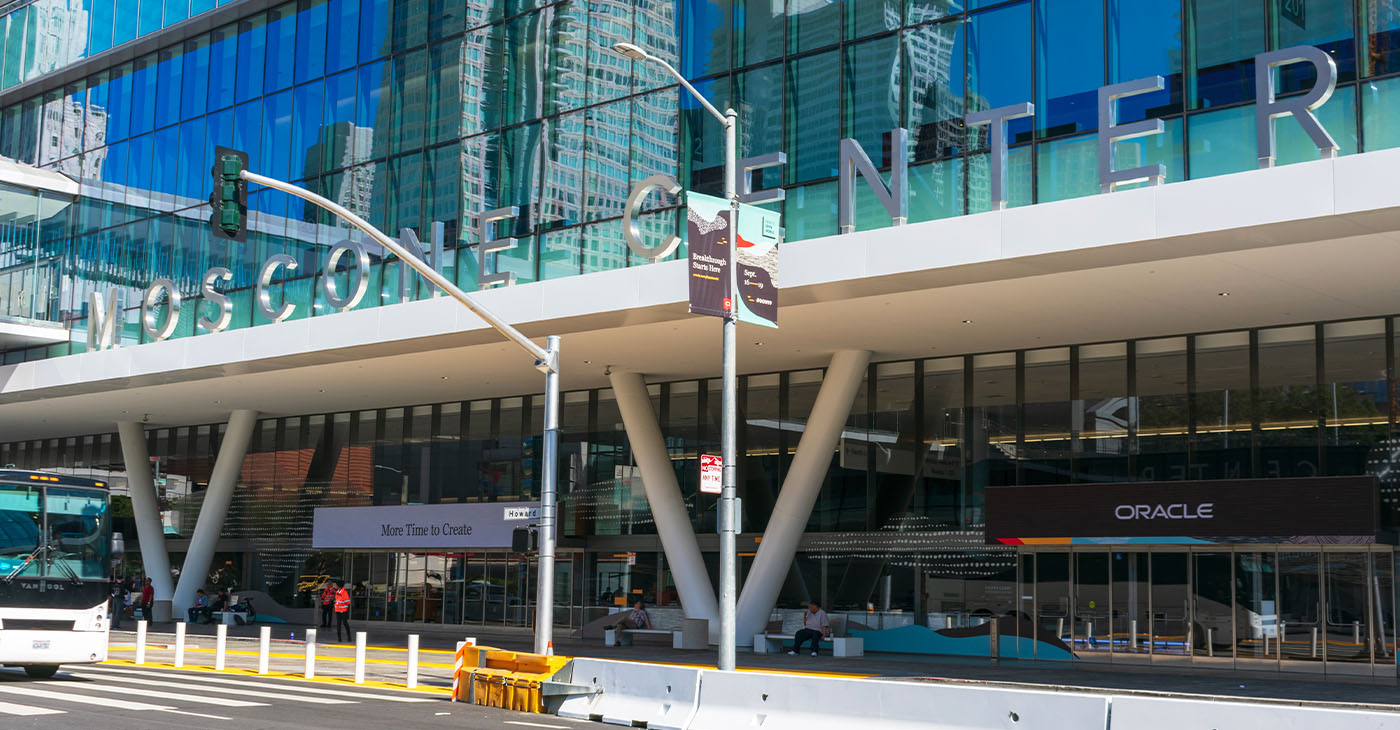
The summit will be held at Moscone Center and is expected to draw thousands of attendees from around the world with an estimated $36.5 million in total economic impact
By S.F. Mayor’s Office

Mayor London N. Breed celebrated news that San Francisco has been named the host city for the 30th Asia-Pacific Economic Cooperation Leaders’ Summit, or APEC, in November of next year.
The announcement was made on Nov. 18 at APEC where Vice President Kamala Harris is attending the Summit in Bangkok, Thailand. San Francisco will welcome President Biden, various chiefs of states, heads of government, and other officials from around the world.
In a letter sent to U.S. Secretary of State Antony Blinken in August, Breed made the request for the City and County of San Francisco to host the 2023 APEC Leaders’ Summit. U.S. Speaker of the House Nancy Pelosi and Senators Dianne Feinstein and Alex Padilla also submitted letters in support of the City winning the bid to host the five-day event.
Breed highlighted San Francisco’s extensive economic, cultural and academic connections to the Asia-Pacific Region, including the City’s recognition as the gateway to the Asia Pacific, which has positioned San Francisco as the primary destination for foreign direct investment from Asia.
Established in 1989, APEC is an intergovernmental forum for 21-member economies in the Pacific Rim that promotes free trade throughout the Asia-Pacific region. The countries that will be represented in next year’s APEC Leaders’ Summit include the United States, Canada, China, the Philippines, Japan, Singapore and Thailand.
“We are honored to be named as next year’s host and ready to welcome leaders from around the world to our beautiful city,” said Breed. “I want to thank President Biden and Vice President Harris for selecting San Francisco to host next year, as well as Speaker Pelosi and Senators Feinstein and Padilla for their unwavering support in this process.”
“San Francisco has the infrastructure already in place to accommodate an event on the scale and scope of the APEC Leaders’ Summit,” said Breed. “Our economic recovery is ongoing, but our footprint is strong with over 34,000 hotel rooms, a newly renovated Moscone Center, iconic sites and cultural experiences, and a world-class culinary scene. This is an exciting opportunity for our City, its residents, workers, and visitors.”
“San Francisco has long been recognized as a gateway to the Asia-Pacific — and thanks to President Biden and Vice President Harris, we are proud to host the Leaders’ Meeting of the 2023 APEC Summit,” Speaker Nancy Pelosi said. “With San Francisco’s deep economic, cultural and academic connections to the region, I was proud to join the chorus in advocating for our city as the perfect host for this critical gathering of Asia-Pacific leaders.”
Each year, the San Francisco Customs District logs $100 billion from two-way shipping with APEC members. Northern California firms sell an estimated $60 billion of goods and services to APEC buyers. The region continues to be a source and destination for massive investment flows.
“I’m thrilled that San Francisco was selected to host APEC next November. As one of the most significant cultural, commercial, and financial hubs in the United States, San Francisco is a great choice for a gathering of economic leaders from throughout the Asia-Pacific region,” stated Dominic Ng, chairman and CEO of East West Bank and President Biden’s appointee as 2023 Chair of the APEC Business Advisory Council (ABAC) stated. “As ABAC Chair, I look forward to working closely with the Biden Administration, the State of California, and the City of San Francisco on a successful APEC in 2023.”
“As the nation’s shining gateway to the Asia-Pacific region, San Francisco and the Bay Area are the ideal choice to host this important leadership summit,” said Jim Wunderman, Bay Area Council President and CEO. “This selection represents a ringing endorsement of San Francisco as a place of unmatched global connections, dynamic economic activity and rich cultural vibrancy. I want to applaud San Francisco Mayor London Breed and her entire Administration for their great work in securing the APEC Summit.”
Asian Americans account for about a third of San Francisco’s total population, and San Francisco has Sister City relationships with cities throughout the region, including Osaka, Seoul, Ho Chi Minh, Manila, Sydney, and Shanghai. San Francisco’s Chinatown is the first in North America and one of the largest Chinese communities outside of Asia. Additionally, the city currently hosts over 75 consulates, representing the government interests of virtually all major countries around the world. Additionally, many trade commissions have established offices in and around the city.
San Francisco is a major destination for business and tourism and leads the world in technology innovation. The city has a long history as a top destination for travel, conferences and seminars. In October, Salesforce brought Dreamforce back to San Francisco in person, attracting more than 40,000 people. The APEC Leaders’ Summit is estimated to generate nearly $37 million in economic benefit to San Francisco.
“This is a big win for San Francisco,” said Joe D’Alessandro, president & CEO of the San Francisco Travel Association. “APEC will bring global attention to the city, as well as thousands of international visitors that will help support our economic recovery and the hundreds of small businesses that depend on visitor dollars.”
This month Travel and Leisure magazine featured San Francisco as one of the 50 best places to travel in 2023 and the Wall Street Journal named San Francisco International Airport (SFO) the best large airport of 2022 thanks in part to the upgrade of its Harvey Milk Terminal 1, reliable flights and top-notch amenities. Virtually every major APEC city has direct or one-stop flights to SFO.
The San Francisco Bay Area has hosted major events in the past including the United Conference of Mayors in 2015, Superbowl 50 in 2016, and the Global Climate Action Summit in 2019. The last time the U.S. hosted APEC was in 2011. Additional details about the 2023 APEC Leaders’ Summit are forthcoming and will be released at a later date.














Activism
Oakland Post: Week of September 30 – October 6, 2026
The printed Weekly Edition of the Oakland Post: Week of September 30 – October 6, 2026

To enlarge your view of this issue, use the slider, magnifying glass icon or full page icon in the lower right corner of the browser window.
Activism
Oakland Post: Week of September 23 – 29, 2026
The printed Weekly Edition of the Oakland Post: Week of September 23 – 29, 2026

To enlarge your view of this issue, use the slider, magnifying glass icon or full page icon in the lower right corner of the browser window.
Activism
Oakland Post: Week of September 16 – 22, 2026
The printed Weekly Edition of the Oakland Post: Week of September 16 – 22, 2026

To enlarge your view of this issue, use the slider, magnifying glass icon or full page icon in the lower right corner of the browser window.



OP-ED: Proposition 44 Would Put a Price on Trust

OP-ED: Proposition 40: It’s Time to Play Chess, Not Checkers

Listening as a Lifeline: A Doula’s Witness to Black Maternal Health

New Protections for Ticket Buyers: Gov. Newsom Signs Assemblymember Isaac Bryan’s Bill

‘We Don’t Talk Trash — We Pick Up Trash!’

Zakiya Jendayi Arrested, Locked Out of Home by Sheriff’s Deputies

Oakland Post: Week of September 30 – October 6, 2026

Asm. Corey Jackson Announces Launch of 24-Hour Childcare in His District

IN MEMORIAM: The Rev. Leon “Sonny” Clark, Longtime Orange County Pastor and Community Leader, Dies at 72

Poll: Becerra Widens His Lead Over Hilton; Californians Split on Wealth Tax

From Historic Memories to New Possibilities: Oakland Celebrates Coliseum 60

County Office of Education Says OUSD Finances Are Getting Healthier, Materially Stronger

LIVE FREE Sunday Dinner Brings Faith, Fellowship and Civic Conversation to Oakland

Remembering Chauncey Bailey as Student Journalists Face Threats to Truth-Telling

BLACspace Cooperative Invites Bay Area to Experience Oakland’s Black Cultural Ecosystem Through a BLAC Map Tour + Party

Standoff for Justice: Our Homes Are Worth Fighting For

Oakland Post: Week of August 26 – September 1, 2026

Frontier Airlines’ Return to Oakland Airport Brings Flights, Jobs and Opportunity

Jackie Wright Champions Bay Area Stories, Filmmakers and Cultural Institutions

Gubernatorial Candidate Steve Hilton Blasts California New Tire Rules; Newsom Hits Back

Chef Sharon Lee Blends Culinary Excellence, Education and Empowerment

Misnamed ‘Parent’ PAC Seeks to Influence Oakland School Board Elections

Oakland Coliseum Project Opens Door for Small Businesses to Build Bigger

Big City Mayors Ask for “Yes” Vote on Housing Bond Measure; Conservatives Say “No”

Gov. Newsom’s Latest Appointees Include Sacramento Advocate for Formerly Incarcerated Students; State’s New Tech Chief

Oakland Post: Week of September 2 – 8, 2026

Longtime BWOPA Member Brendalyn Goodall Appointed to California Workforce Development Board

Gov. Newsom Signs Law Shielding Immigration Aid Workers From Doxing Threats

Secretary of State Shirley N. Weber Urges Californians to Vote Early as Voter ID Battle Intensifies

Oakland Post: Week of September 9 – 15, 2026

The Conversation With Al McFarlane 6/23/26

Media Monday 6/22/26

LIVE! ASK ALMA! — TUES. 6.23.26 7PM EST

Car Buying Secrets: 4 Hidden Checks Before You Sign!

Is This 550 HP Charger Worth YOUR Money? AutoNetwork Review

Celebrating Juneteenth – Frederick Douglass on education and resistance

LIVE! — ASK ALMA! — TUES. 6.19.26 7PM EST

Hyundai Ioniq 5 Parking, Safety, and 360 View #shorts

2025 Ioniq 5 New Wiper & Powerful Performance! #shorts

Electric SUV Range: Is 259 Miles Enough? #shorts

EV Charging: How Fast Can You Charge an Electric Vehicle? #shorts

Biometric Cooling… Messaging Seats…Come on! 2025 Infiniti QX80 Autograph 4WD

Charged Up: Witness the Magic of a Fully Electric Car! #shorts

Range Rover Sport PHEV Included…: See What’s Inside This Luxury SUV! #shorts

Invisible Hood View: Perfect Parking with X-Ray Vision! #shorts
-
 Community4 weeks ago
Misnamed ‘Parent’ PAC Seeks to Influence Oakland School Board Elections
-
 Activism4 weeks ago
Oakland Post: Week of September 9 – 15, 2026
-

 Community4 weeks ago
Richmond Tiny House Village Farm & Garden Set to Open Gates on Sept. 26
-

 Black History4 weeks ago
Latest Massacre in Haiti Reveals Cruelty U.S. Deportations
-

 Black History4 weeks ago
OPINION: Nolan Wells’ Death One of Several Signifying Racial Terror Lives on in U.S. South
-

 Business3 weeks ago
Mayor Lee Announces $1 Million Kaiser Permanente Grant for Pilot Program to Address Homelessness, Clean Up Public Spaces throughout Oakland
-
 Economy2 weeks ago
Poll: Becerra Widens His Lead Over Hilton; Californians Split on Wealth Tax
-
 Business2 weeks ago
County Office of Education Says OUSD Finances Are Getting Healthier, Materially Stronger
