
Bay Area
Gov. Gavin Newsom Breaks Record With Tens-of-Billions Spending Plan for Public Schools and Community Colleges

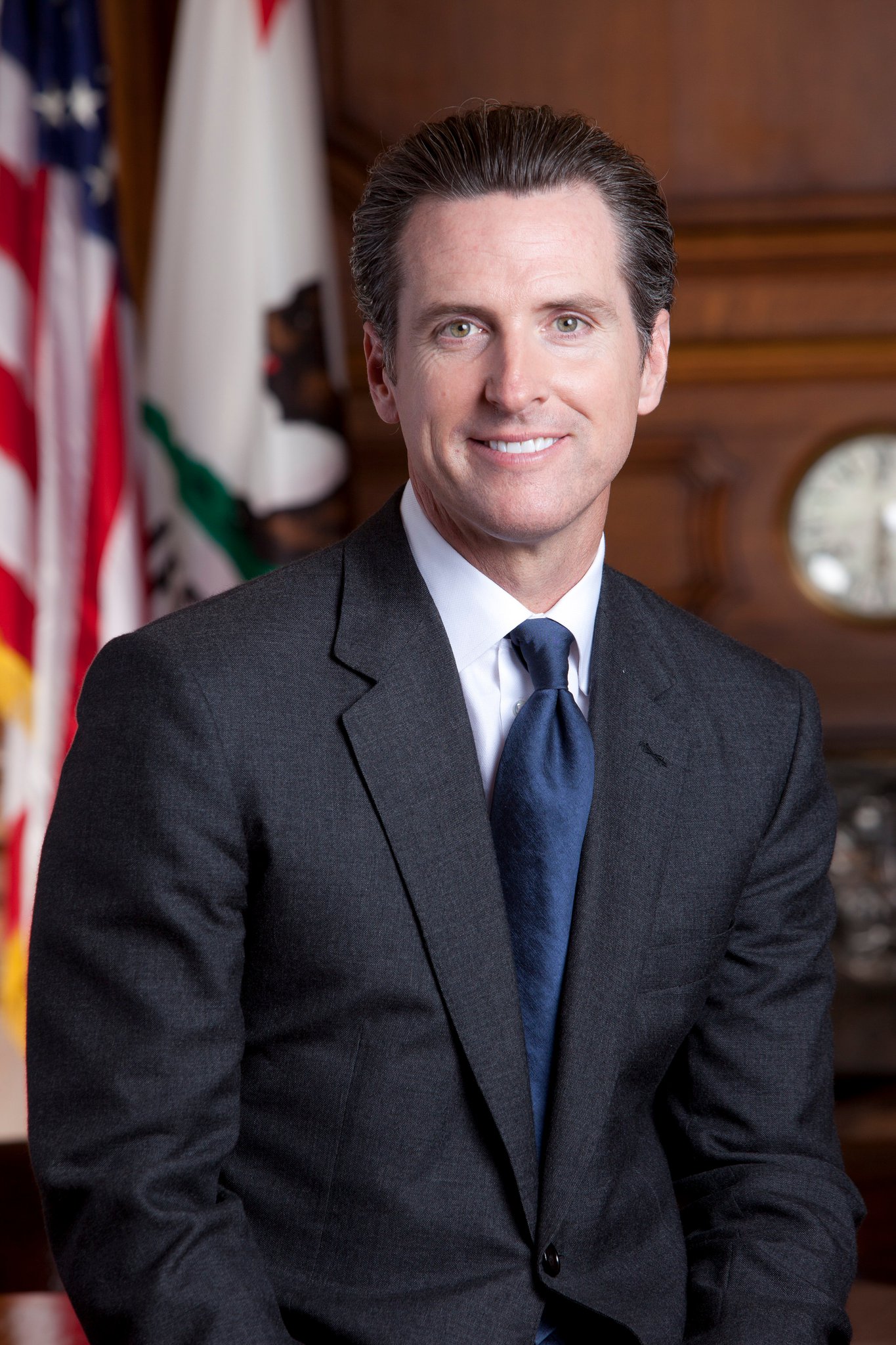
On Jan. 10, Gov. Gavin Newsom unveiled his record $222 Billion state budget for 2020-21. The $84 billion he allocated in it for K-12 schools and community colleges represents a historic high level of funding for education in California.
The proposed investment in K-14 education is 3.03 percent or $3.8 billion more than last year. Total K-12 expenditures from all sources in the budget are projected to be $17,964 per pupil.
While state spending on education is at its highest level numerically, Governor Newsom expressed that none of them are “spiking the ball” because education outcomes for many students are not where they should be
“We are making progress, but it is stubborn and slow. We have disparities that are being closed and disparities that are persistent,” said Newsom.
The achievement gap is being closed for Latinx students, students with disabilities, low income students, and African-American students in some metrics. Latinx students narrowed their gap in English language arts scores and high school graduation rates. Students with disabilities made the greatest gains in math and English language arts. African-American students showed the largest graduation rate gain among student groups.
Where progress has been slow has been with students with disabilities, youth in foster care, homeless youth, and African-American students continuing to score below the state standard on English language arts and math tests.
Newsom was very candid in pointing out that 23 low-performing, high-poverty school districts have an over-representation of African-American students.
“It seems self evident that we should focus and concentrate our efforts in those areas in order to address…the substance of the vexing issue as it relates to academic achievement for African-American students.”
“We have to start getting serious and do something about it. We believe the biggest achievement boost is fully prepared teachers,” Newsom said.
The governor is proposing $900.1 million to be invested in workforce investment grants, professional development grants for existing teachers, and teacher recruitment strategies.
“The plan is to build a diverse teaching workforce of stable, prepared professional teachers, including more teachers that look like their students. That’s incredibly important as related particularly to African-American achievement,” Newsom said.
The budget includes $100 million to fund $20,000 stipends for new teachers who choose to teach in high-need schools. This addresses the stubborn fact that high-poverty schools have three times as many unprepared teachers.
$300 million in grants is being made available to close the academic achievement in the lowest-performing districts.
Another $300 million is proposed to expand community schools to address students’ physical and mental health needs by establishing public-private partnerships with community services. The funds will also be used to promote parent engagement.
Special Education in the state of California is in a crisis, according to Newsom. About $900 million dollars is being allocated to increase base funding for Special Ed students, support specific teacher training, fund early diagnosing and intervention and pay for studies on how districts are delivering services to respond to the learning needs of those students.
The budget calls for establishing a new Department of Early Childhood Development to consolidate under one roof the various efforts to implement the governor’s Master Plan for Early Learning and Care, a policy initiative he announced last year.
Newsom is committed to adding 10,000 full-time preschool slots this year and providing universal preschool for all low-income 4-year-olds by the end of next year.
Education leaders’ reactions to the governor’s 2020-21 state budget presentation has been mixed.
“The Governor mentioned that students should have teachers that look more like them, and we couldn’t agree more. We look forward to having the opportunity to invest in our teacher workforce and the pipeline of future teachers coming into the profession, specifically teachers of color and in the fields of science, math, and special education,” Superintendent of Public Instruction Tony Thurmond said.
State Board of Education President Linda Darling Hammond said, “Some students spend the year in classrooms staffed by highly trained, highly prepared teachers. But many others do not.
These disparities are particularly grievous for low-income students of color. The 2020-21 budget investments in educator recruitment and professional development will help place California on solid footing moving forward as we work to build, train and support the kind of high-quality educator workforce all our students need and deserve.”
California Teachers Association President E. Toby Boyd expresses some cynicism.
“Despite California’s economy consistently expanding – now being ranked fifth-largest in the entire world – we have some of the most underfunded schools in the country,” he said. “We rank 39th in the nation in per-pupil funding. We boast the most overcrowded classrooms in the entire country.”
Los Angeles Unified Superintendent Austin Beutner said, “California’s public schools will remain woefully underfunded, especially when compared with the rest of the nation.”
“This budget proposal does not go far enough in funding supports for our most vulnerable students,” Beutner added. “Including students whose families are experiencing homelessness and students with special needs.”
The governor’s presentation begins the formal state budget process. Over the next several months, the California legislature will hold hearings on the budget and special interest groups and the public will have an opportunity to comment on various budget proposals. In mid-May the Governor will release a revised budget plan reflecting changes to spending. The budget will be finalized by the end of June 2020.


Activism
Oakland Post: Week of September 30 – October 6, 2026
The printed Weekly Edition of the Oakland Post: Week of September 30 – October 6, 2026


To enlarge your view of this issue, use the slider, magnifying glass icon or full page icon in the lower right corner of the browser window.

Activism
Oakland Post: Week of September 23 – 29, 2026
The printed Weekly Edition of the Oakland Post: Week of September 23 – 29, 2026

To enlarge your view of this issue, use the slider, magnifying glass icon or full page icon in the lower right corner of the browser window.

Activism
Oakland Post: Week of September 16 – 22, 2026
The printed Weekly Edition of the Oakland Post: Week of September 16 – 22, 2026

To enlarge your view of this issue, use the slider, magnifying glass icon or full page icon in the lower right corner of the browser window.



OP-ED: Proposition 44 Would Put a Price on Trust

OP-ED: Proposition 40: It’s Time to Play Chess, Not Checkers

Listening as a Lifeline: A Doula’s Witness to Black Maternal Health

New Protections for Ticket Buyers: Gov. Newsom Signs Assemblymember Isaac Bryan’s Bill

‘We Don’t Talk Trash — We Pick Up Trash!’

Zakiya Jendayi Arrested, Locked Out of Home by Sheriff’s Deputies

Oakland Post: Week of September 30 – October 6, 2026

Asm. Corey Jackson Announces Launch of 24-Hour Childcare in His District

IN MEMORIAM: The Rev. Leon “Sonny” Clark, Longtime Orange County Pastor and Community Leader, Dies at 72

Poll: Becerra Widens His Lead Over Hilton; Californians Split on Wealth Tax

From Historic Memories to New Possibilities: Oakland Celebrates Coliseum 60

County Office of Education Says OUSD Finances Are Getting Healthier, Materially Stronger

LIVE FREE Sunday Dinner Brings Faith, Fellowship and Civic Conversation to Oakland

Remembering Chauncey Bailey as Student Journalists Face Threats to Truth-Telling

BLACspace Cooperative Invites Bay Area to Experience Oakland’s Black Cultural Ecosystem Through a BLAC Map Tour + Party

Standoff for Justice: Our Homes Are Worth Fighting For

Oakland Post: Week of August 26 – September 1, 2026

Frontier Airlines’ Return to Oakland Airport Brings Flights, Jobs and Opportunity

Gubernatorial Candidate Steve Hilton Blasts California New Tire Rules; Newsom Hits Back

Chef Sharon Lee Blends Culinary Excellence, Education and Empowerment

Jackie Wright Champions Bay Area Stories, Filmmakers and Cultural Institutions

Misnamed ‘Parent’ PAC Seeks to Influence Oakland School Board Elections

Oakland Coliseum Project Opens Door for Small Businesses to Build Bigger

Gov. Newsom’s Latest Appointees Include Sacramento Advocate for Formerly Incarcerated Students; State’s New Tech Chief

Big City Mayors Ask for “Yes” Vote on Housing Bond Measure; Conservatives Say “No”

Longtime BWOPA Member Brendalyn Goodall Appointed to California Workforce Development Board

Oakland Post: Week of September 2 – 8, 2026

Gov. Newsom Signs Law Shielding Immigration Aid Workers From Doxing Threats

Secretary of State Shirley N. Weber Urges Californians to Vote Early as Voter ID Battle Intensifies

IN MEMORIAM: Dolly Parton Dead at 80 — How She Built a Legacy of Love and Earned Her Place in Black Culture

The Conversation With Al McFarlane 6/23/26

Media Monday 6/22/26

LIVE! ASK ALMA! — TUES. 6.23.26 7PM EST

Car Buying Secrets: 4 Hidden Checks Before You Sign!

Is This 550 HP Charger Worth YOUR Money? AutoNetwork Review

Celebrating Juneteenth – Frederick Douglass on education and resistance

LIVE! — ASK ALMA! — TUES. 6.19.26 7PM EST

Hyundai Ioniq 5 Parking, Safety, and 360 View #shorts

2025 Ioniq 5 New Wiper & Powerful Performance! #shorts

Electric SUV Range: Is 259 Miles Enough? #shorts

EV Charging: How Fast Can You Charge an Electric Vehicle? #shorts

Biometric Cooling… Messaging Seats…Come on! 2025 Infiniti QX80 Autograph 4WD

Charged Up: Witness the Magic of a Fully Electric Car! #shorts

Range Rover Sport PHEV Included…: See What’s Inside This Luxury SUV! #shorts

Invisible Hood View: Perfect Parking with X-Ray Vision! #shorts
-
 Community4 weeks ago
Misnamed ‘Parent’ PAC Seeks to Influence Oakland School Board Elections
-

 Activism4 weeks ago
Oakland Post: Week of September 9 – 15, 2026
-

 Community4 weeks ago
Richmond Tiny House Village Farm & Garden Set to Open Gates on Sept. 26
-

 Black History4 weeks ago
Latest Massacre in Haiti Reveals Cruelty U.S. Deportations
-

 Black History4 weeks ago
OPINION: Nolan Wells’ Death One of Several Signifying Racial Terror Lives on in U.S. South
-

 Business3 weeks ago
Mayor Lee Announces $1 Million Kaiser Permanente Grant for Pilot Program to Address Homelessness, Clean Up Public Spaces throughout Oakland
-

 Community4 weeks ago
Democratic Clubs Interview Candidates for Oakland School Board
-
 Uncategorized2 weeks ago
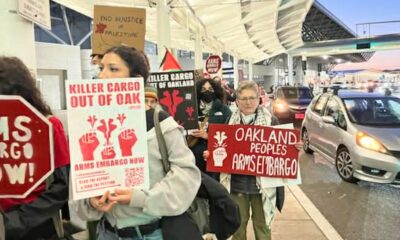
Oakland People’s Arms Embargo Coalition Demands End to Military Shipments Thru Oakland
