
Uncategorized
Student’s protest sparks viral debate on American Indian history

From the Sacramento Bee
By Stephen Magagnini
Sacramento State student Chiitaanibah Johnson has always been passionate about her American Indian heritage and what she sees as attempts to erase that history. A Maidu and Navajo born in an Indian hospital in Arizona, the 19-year-old has now sparked a national debate about how the history should be remembered and taught.
Johnson became an online sensation after speaking out about her confrontation earlier this month with Sacramento State history professor Maury Wiseman on whether the word “genocide” is appropriate to describe what happened to American Indians. Johnson told that story to the national outlet Indian Country Today Media Network, including claims that Wiseman accused her of “hijacking” the class and disenrolled her. That piece has since collected more than 159,000 likes on Facebook.
In an exclusive interview with The Sacramento Bee on Saturday, Johnson defended what she said was her correcting the record on her people’s history. Wiseman has declined to comment to The Bee while the matter is under investigation.
“America is for the truth, and what he said isn’t the truth,” Johnson said. “How many students have gone through his class and not questioned that? Indian kids all over the country get shut down for questioning things like this.”

She added that she is no longer attending Wiseman’s class. “There was a courteous and respectful way to handle this disagreement,” she said.
The author of the Indian Country Today story, Vince Schilling of the St. Regis Mohawk Tribe, said the controversy “has triggered a debate over what Indian people have been talking about for generations. Native people have been treated as less than citizens and disregarded as a race, and we’ve been told time and time again that our opinions don’t matter.
“But I can tell you this: The nation is beginning to listen because we’re not going to take it anymore. Thanks to social media and the ability to come together, native people are able to discuss and bring attention to problems and be recognized instead of suffering in silence.”
California Indian groups are prepared to mobilize behind Johnson, said Sacramento American Indian activist Susan Reece.
“California Indian history is not taught the way it should be taught, and it’s not by accident,” Reece said.
The controversy began in American History 17A on Sept. 2 when, Johnson said, Wiseman “said he didn’t like to use the word ‘genocide’ because he thought it was too strong for what had happened to American Indians; genocide implied it was on purpose, and most native people were wiped out by European diseases.”
Johnson, an English major who runs an open-mic night at the public library near her home in Antelope, said she wanted to speak out then, but was too emotional and instead spent the next two days researching the massacres of native people at Wounded Knee, S.D., in 1890, Sand Creek, Colo., in 1864 and other locations including Northern California.
Johnson said she brought her research to class, which she characterized as devoted to the “brave, courageous Portuguese explorers” who discovered and populated the new world without discussing slavery or giving equal time to what’s considered the Americas’ first democracy, the Iroquois Confederacy.
Johnson said she raised her hand and questioned the emphasis on the Portuguese accomplishments rather than their treatment of slaves and indigenous people, and then asked Wiseman to explain what he’d said about the word “genocide” and how it doesn’t apply to Indians.
“A lot of people are saying I did disrupt and take away from the lesson, and I understand that criticism. But I felt what he was teaching wasn’t entirely truthful or balanced,” she said. “I didn’t understand his historical proof.”
She said Wiseman suggested she talk to him after class, “and I said, ‘Well, no, I don’t think that’s acceptable because this is a very heavy statement you’ve made to your students publicly, and you need to justify it publicly.’
“He said, ‘I’m really starting to resent you because you are hijacking my class,’” Johnson said.
Johnson said the professor told her he was expelling her from the course, an account disputed by the university’s history department, which said professors can’t expel students unilaterally.
Johnson met with Robert S. Nelsen, the president of California State University, Sacramento, for more than an hour Thursday along with one of her mentors, Cindy La Marr, executive director of Capitol Area Indian Resources Inc.
Nelsen said in a statement that he would also be meeting with Wiseman but otherwise couldn’t comment on “an ongoing personnel matter,” other than to reiterate his message that “we at the university believe in academic freedom, and we also believe in civility and rigorous academic research. Our standards must be high, and we must follow the processes that we have put in place to ensure that the rights of students and faculty are protected.”
La Marr, a nationally known Indian educator from California’s Pitt River and Paiute nations, said several academic works based on newspaper articles and letters document attempts to exterminate California Indians, including “Murder State: California’s Native American Genocide, 1846-1873” by Sacramento State professor Brendan C. Lindsay, which reported that California’s native population dropped from an estimated 150,000 in 1848 to 15,377 in the 1900 census.
For Johnson, her people’s history is very much still alive.
“My Maidu people in Northern California were treated very badly,” she said. “Johnson is not the name my tribe had for centuries – that was the name that was given to us by the U.S. government agents who rode into our village to take the census and said our true names are too hard to pronounce.”
One of the California Legislature’s first acts was to authorize bounties on California Indians, “25 cents for a scalp and $5 for a head,” the 19-year-old said.
“I had nightmares about my people being burned alive or drowned after hearing or reading stories like that,” she said. “When I read about Ishi, the last of his tribe, in elementary school, I cried – he lived to see everybody that he ever loved systematically and deliberately murdered.”


Uncategorized
New Protections for Ticket Buyers: Gov. Newsom Signs Assemblymember Isaac Bryan’s Bill
OAKLAND POST — Assembly Bill 1349 expands state regulation of original ticket sellers, resellers and online resale marketplaces. The law targets deceptive sales practices, ticket-buying software and speculative listings — tickets advertised for sale by sellers who do not possess them or have authorization to sell them.

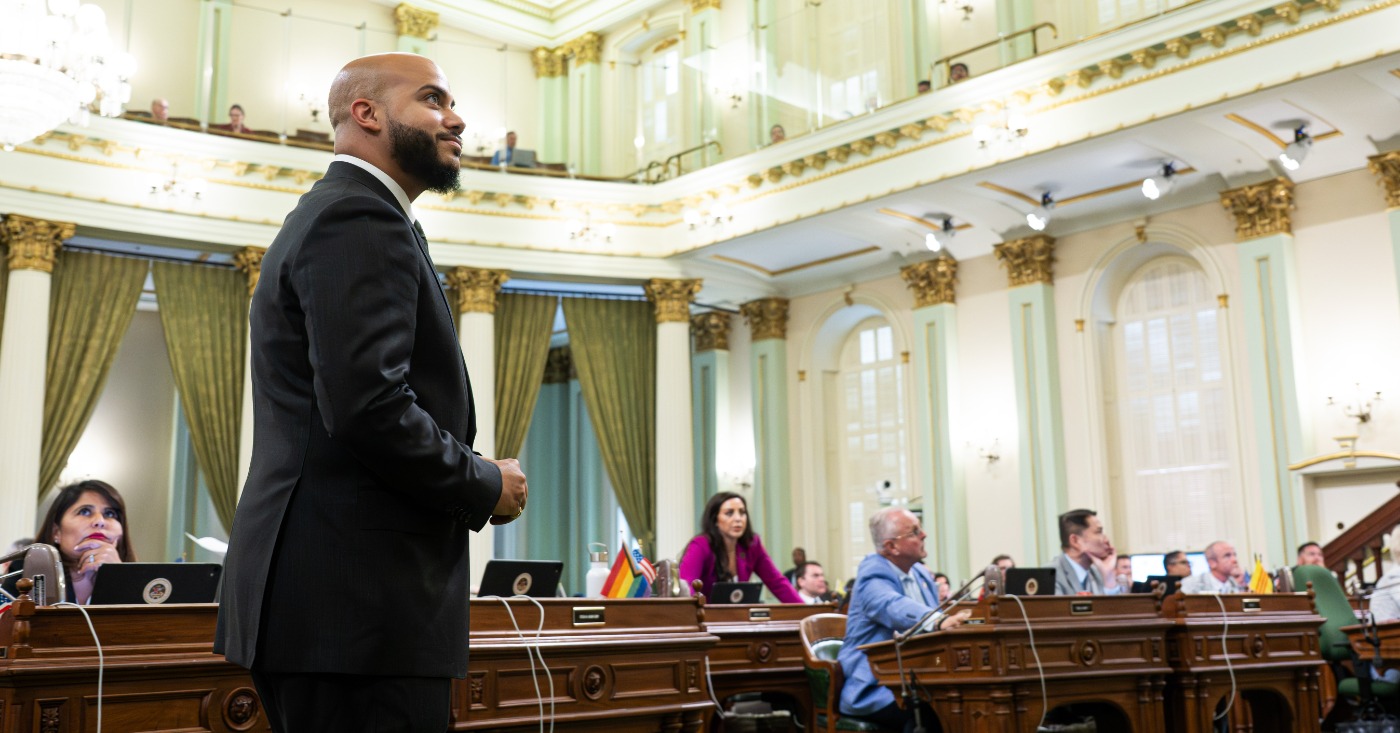

Gov. Gavin Newsom signed legislation on Sept. 27 authored by Assemblymember Isaac Bryan (D-Ladera Heights) that strengthens consumer protections for Californians purchasing tickets to concerts, sporting events and other live entertainment.
Assembly Bill 1349 expands state regulation of original ticket sellers, resellers and online resale marketplaces. The law targets deceptive sales practices, ticket-buying software and speculative listings — tickets advertised for sale by sellers who do not possess them or have authorization to sell them.
“Buying a ticket shouldn’t come with hidden risks or unfair practices,” Newsom wrote on social media after signing the measure.
Under AB 1349, ticket sellers are prohibited from listing tickets before they have been officially released unless they have authorization or a legally enforceable right to receive them. Online marketplaces must also take reasonable steps to prevent speculative ticket sales on their platforms.
The law prohibits sellers from using bots, multiple accounts, email addresses or internet protocol addresses to circumvent ticket limits, presale restrictions, electronic queues and other controls. It also bans websites and advertisements designed to mislead buyers into believing they are purchasing tickets from an authorized seller, venue or event organizer.

Sellers who violate certain provisions and fail to provide a promised ticket may be held liable for twice the ticket’s contracted price. Buyers may also recover nonrefundable expenses incurred while attempting to attend an event, along with reasonable attorney’s fees and court costs.
Pastor Tecoy Porter Sr., president of the National Action Network’s Sacramento chapter, said the law establishes needed accountability.
“Buying a ticket to a concert or show shouldn’t mean entering a marketplace where the rules are stacked against you. This year, we worked with a coalition of consumers, civil rights advocates, community groups, and businesses to make AB 1349 stronger. Consumers deserve enforceable rules that protect them. We thank Assemblymember Bryan for his leadership, and we will keep working to make ticketing fair for every Californian.”
Jose L. Barrera, national vice president for the Far West Region of the League of United Latin American Citizens, also praised the measure.
“Californian families deserve certain protections when they buy tickets. Assemblymember Bryan listened to communities across California and delivered a bill that puts fans first. We thank him and Governor Newsom for making it law.”

Uncategorized
Zakiya Jendayi Arrested, Locked Out of Home by Sheriff’s Deputies
OALAND POST — On Tuesday, deputies followed Jendayi as she left her residence of 13 years to file documents in her case at the Appellate Court. Deputies arrested her upon arrival and transported her to Santa Rita Jail.

Yesterday, more than 10 Alameda County Sheriff’s deputies arrived to take possession of Zakiya Jendayi’s home on behalf of a court-appointed administrator. Jendayi was arrested at the courthouse and transported to Santa Rita Jail around the same time.
Jendayi, who has been embroiled in a probate court battle to retain the inheritance bestowed on her by a longtime friend and colleague who passed away in 2013, had received a notice of eviction last month.
With help from neighbors, friends and clergy, she was able to fend off the eviction from 3614 Randolph Ave. in Oakland and even obtained a reprieve when her bid to file bankruptcy was approved by a county court.
But Philip Campbell, the court-appointed administrator, had already placed Jendayi’s home in his name in October 2025.
On Tuesday, deputies followed Jendayi when she left her residence of 13 years to go to the Appellate Court to file documents in her case. Deputies arrested her upon arrival and transported her to Santa Rita jail.
Undersheriff April Luckett-Fahini said Jendayi was arrested for “safety reasons.” At this time, it is unknown what charges were used for the arrest.
In Jendayi’s absence, Campbell came to her residence accompanied by deputies, had the property taped off with yellow crime tape, and had the locks changed.
Afterward, Campbell requested a police escort to his car amid several angry neighbors who had been advocating that officials pause the eviction pending Jendayi’s appeal.
“Zakiya Jendayi is a respected Black elder in our community,” said Alameda County Supervisor Nikki Fortunato Bas, who has been working with Jendayi to prevent her eviction. “It’s outrageous that she was arrested. There needs to be more justice and equity in our probate system.”
Uncategorized
Ask California: Golden State Releases New AI Chatbot
Gov. Gavin Newsom introduced the prototype as part of the state’s broader effort to use artificial intelligence to make government services easier to access. The launch follows his March 2026 executive order directing state agencies to responsibly implement generative AI while protecting privacy, security and civil liberties.

California has launched AskCA, a new artificial intelligence-powered chatbot designed to help residents find and navigate state and local government services through a single online platform.
Developed by the state’s Office of Data and Innovation, AskCA is designed around major life events rather than individual government agencies. Californians can use the tool to find information about finding a job, starting a business, accessing family services and recovering from disasters.
Gov. Gavin Newsom introduced the prototype as part of the state’s broader effort to use artificial intelligence to make government services easier to access. The launch follows his March 2026 executive order directing state agencies to responsibly implement generative AI while protecting privacy, security and civil liberties.
“When a Californian needs help, they shouldn’t have to become an expert in government to find it,” said Newsom. “We’re using the best technology California has to offer to make the government more efficient, effective, and more engaged.”
The state is now seeking Californians age 18 and older to participate in the pilot and help test and refine AskCA’s responses. Officials said subject matter experts across state governments are helping inform the chatbot’s answers, which are designed to draw from verified government sources and provide actionable information.
The prototype grew out of California’s response to the January 2025 Los Angeles wildfires. Early testing included more than 140 fire recovery leaders and Altadena wildfire survivors, a dozen job seekers and more than 100 general users.
Jeffery Marino, director of the Office of Data and Innovation, said the tool is intended to remove the need for residents to understand how government agencies are organized before they can get help.
“Californians should not have to understand how the government is organized just to get basic help,” Marino said.
AskCA’s technology will also be used in a new job-skills matching feature that the California Department of Human Resources plans to launch Sept. 30 on CalCareers. Job seekers will be able to upload a resume and receive potential matches to state job classifications.
The state said the CalCareers pilot will not store personal information or require users to have a CalCareers account. California plans to continue testing AskCA as officials evaluate its accuracy, performance and usefulness before expanding the system.



OP-ED: Proposition 44 Would Put a Price on Trust

OP-ED: Proposition 40: It’s Time to Play Chess, Not Checkers

Listening as a Lifeline: A Doula’s Witness to Black Maternal Health

New Protections for Ticket Buyers: Gov. Newsom Signs Assemblymember Isaac Bryan’s Bill

‘We Don’t Talk Trash — We Pick Up Trash!’

Zakiya Jendayi Arrested, Locked Out of Home by Sheriff’s Deputies

Oakland Post: Week of September 30 – October 6, 2026

Asm. Corey Jackson Announces Launch of 24-Hour Childcare in His District

IN MEMORIAM: The Rev. Leon “Sonny” Clark, Longtime Orange County Pastor and Community Leader, Dies at 72

Poll: Becerra Widens His Lead Over Hilton; Californians Split on Wealth Tax

From Historic Memories to New Possibilities: Oakland Celebrates Coliseum 60

County Office of Education Says OUSD Finances Are Getting Healthier, Materially Stronger

LIVE FREE Sunday Dinner Brings Faith, Fellowship and Civic Conversation to Oakland

Remembering Chauncey Bailey as Student Journalists Face Threats to Truth-Telling

BLACspace Cooperative Invites Bay Area to Experience Oakland’s Black Cultural Ecosystem Through a BLAC Map Tour + Party

Standoff for Justice: Our Homes Are Worth Fighting For

Oakland Post: Week of August 26 – September 1, 2026

Frontier Airlines’ Return to Oakland Airport Brings Flights, Jobs and Opportunity

Gubernatorial Candidate Steve Hilton Blasts California New Tire Rules; Newsom Hits Back

Jackie Wright Champions Bay Area Stories, Filmmakers and Cultural Institutions

Chef Sharon Lee Blends Culinary Excellence, Education and Empowerment

Misnamed ‘Parent’ PAC Seeks to Influence Oakland School Board Elections

Oakland Coliseum Project Opens Door for Small Businesses to Build Bigger

Gov. Newsom’s Latest Appointees Include Sacramento Advocate for Formerly Incarcerated Students; State’s New Tech Chief

Big City Mayors Ask for “Yes” Vote on Housing Bond Measure; Conservatives Say “No”

Longtime BWOPA Member Brendalyn Goodall Appointed to California Workforce Development Board

Oakland Post: Week of September 2 – 8, 2026

Gov. Newsom Signs Law Shielding Immigration Aid Workers From Doxing Threats

Secretary of State Shirley N. Weber Urges Californians to Vote Early as Voter ID Battle Intensifies

Oakland Post: Week of September 9 – 15, 2026

The Conversation With Al McFarlane 6/23/26

Media Monday 6/22/26

LIVE! ASK ALMA! — TUES. 6.23.26 7PM EST

Car Buying Secrets: 4 Hidden Checks Before You Sign!

Is This 550 HP Charger Worth YOUR Money? AutoNetwork Review

Celebrating Juneteenth – Frederick Douglass on education and resistance

LIVE! — ASK ALMA! — TUES. 6.19.26 7PM EST

Hyundai Ioniq 5 Parking, Safety, and 360 View #shorts

2025 Ioniq 5 New Wiper & Powerful Performance! #shorts

Electric SUV Range: Is 259 Miles Enough? #shorts

EV Charging: How Fast Can You Charge an Electric Vehicle? #shorts

Biometric Cooling… Messaging Seats…Come on! 2025 Infiniti QX80 Autograph 4WD

Charged Up: Witness the Magic of a Fully Electric Car! #shorts

Range Rover Sport PHEV Included…: See What’s Inside This Luxury SUV! #shorts

Invisible Hood View: Perfect Parking with X-Ray Vision! #shorts
-
 Community4 weeks ago
Misnamed ‘Parent’ PAC Seeks to Influence Oakland School Board Elections
-
 Activism4 weeks ago
Oakland Post: Week of September 9 – 15, 2026
-

 Community4 weeks ago
Richmond Tiny House Village Farm & Garden Set to Open Gates on Sept. 26
-

 Black History4 weeks ago
Latest Massacre in Haiti Reveals Cruelty U.S. Deportations
-

 Black History4 weeks ago
OPINION: Nolan Wells’ Death One of Several Signifying Racial Terror Lives on in U.S. South
-

 Business3 weeks ago
Mayor Lee Announces $1 Million Kaiser Permanente Grant for Pilot Program to Address Homelessness, Clean Up Public Spaces throughout Oakland
-

 Community4 weeks ago
Democratic Clubs Interview Candidates for Oakland School Board
-
 Uncategorized3 weeks ago
Oakland People’s Arms Embargo Coalition Demands End to Military Shipments Thru Oakland
