
Politics
Obama Becoming More Outspoken on Race


The men of Omega Psi Phi Fraternity Inc. lead a crowd of people in prayer outside the Emanuel AME Church, Friday, June 19, 2015, after a memorial in Charleston, S.C. Thousands gathered at the College of Charleston TD Arena to bring the community together after nine people where shot to death at the church on Wednesday. (AP Photo/Stephen B. Morton)
By George E. Curry
NNPA Editor-in-Chief
WASHINGTON (NNPA) – When President Obama returns to Emanuel A.M.E. Church in Charleston, S.C. Friday to eulogize Rev. Clementa Pinckney, it will cap a period in which he has become increasingly outspoken on race, even uttering the N-word to make a point about the slow pace of progress in race relations.
Commenting on the Charleston tragedy on June 18, President Obama said, “The fact that this took place in a black church obviously also raises questions about a dark part of our history. This is not the first time that black churches have been attacked. And we know that hatred across races and faiths pose a particular threat to our democracy and our ideals.”
He quoted Dr. Martin Luther King, Jr. following the 1963 bombing of 16th Street Baptist Church in Birmingham, Ala.
“The good news is I am confident that the outpouring of unity and strength and fellowship and love across Charleston today, from all races, from all faiths, from all places of worship indicates the degree to which those old vestiges of hatred can be overcome. That, certainly, was Dr. King’s hope just over 50 years ago, after four little girls were killed in a bombing in a black church in Birmingham, Alabama,” Obama recalled.
“He said they lived meaningful lives, and they died nobly. ‘They say to each of us,’ Dr. King said, ‘black and white alike, that we must substitute courage for caution. They say to us that we must be concerned not merely with [about] who murdered them, but about the system, the way of life, the philosophy which produced the murderers. Their death says to us that we must work passionately and unrelentingly for the realization of the American Dream.
“‘And if one will hold on, he will discover that God walks with him, and that God is able to lift you from the fatigue of despair to the buoyancy of hope, and transform dark and desolate valleys into sunlit paths of inner peace.’”
In many respects, it is surprising that Obama will travel to the church where nine people were murdered during Bible Study. He was harshly criticized for not traveling to Ferguson, Staten Island, North Charleston, S.C. or any of the other venues where an unarmed African American had been slain by a White police officer.
It should be noted that he sent Attorney General Eric H. Holder to Ferguson. Holder’s successor, Loretta Lynch, fresh on the job, visited Baltimore after the death of Freddie Gray in police custody. While that gesture was appreciated, protesters longed for Obama to visit.
Friday’s trip to Charleston is less controversial than had the president chosen to go to Ferguson. He runs no risk of being attacked for being anti-police by the notoriously vocal Fraternal Order of Police. And though some conservatives refuse to acknowledge the racial component of the murders, there is broad public sympathy for the victims of the senseless massacre.
Obama was in the eye of the storm because of his affiliation with his former pastor, Rev. Jeremiah Wright. After distancing himself in 2008 from Wright, the Chicago pastor who led him to Christ, Obama largely shied away from discussing race during his first term.
In fact, Daniel Q. Gillion, an assistant professor of political science at the University of Pennsylvania, produced research showing that in Obama’s first two years in office, he made fewer speeches and authored fewer executive policies on race than any Democratic president since 1961.
But there was a string of deaths of unarmed Blacks – including Trayvon Martin in Sanford, Fla.; Michael Brown in Ferguson, Mo.; Freddie Gray in Baltimore; Natasha McKenna in Fairfax County, Va.; Tamir Rice, Cleveland; Rekia Boyd in Chicago; Walter Scott in North Charleston, S.C.; Eric Gardner in New York and Eric Harris in Tulsa, Okl. – that seems to have aroused a willingness to address race more forcefully.
No-drama-Obama stunned practically everybody recently when he used the N-word.
In a podcast interview with comedian Marc Maron released this week, Obama said, “And it’s not just a matter of it not being polite to say n—-r in public. That’s not the measure of whether racism still exists or not. It’s not just a matter of overt discrimination. Societies don’t, overnight, completely erase everything that happened 200 to 300 years prior.”
Speaking in less graphic terms on June 19, President Obama reminded America of the Black experience in his Juneteenth remarks.
“We don’t have to look far to see that racism and bigotry, hate and intolerance, are still all too alive in our world,” he said. “Just as the slaves of Galveston knew that emancipation is only the first step toward true freedom, just as those who crossed the Edmund Pettus Bridge 50 years ago knew their march was far from finished, our work remains undone.
“For as long as people still hate each other for nothing more than the color of their skin – and so long as it remains far too easy for dangerous people to get their hands on a gun – we cannot honestly say that our country is living up to its highest ideals.”
Earlier in his tenure, Professor Michael Eric Dyson, declared, “This president runs from race like a Black man runs from a cop.” Lately, however, President Obama seems to be running toward the issue of race.
###









Economy
Mayor Lee Delivers 2026 State of the City Address: ‘Oakland Continues to Be on the Move’
To create a police force that better serves and protects Oakland, the city is working toward the goal of reaching 700 sworn police officers, she said. These steps include recruiting from Oakland, holding academies, reinstituting a cadet program, and increasing foot patrols.

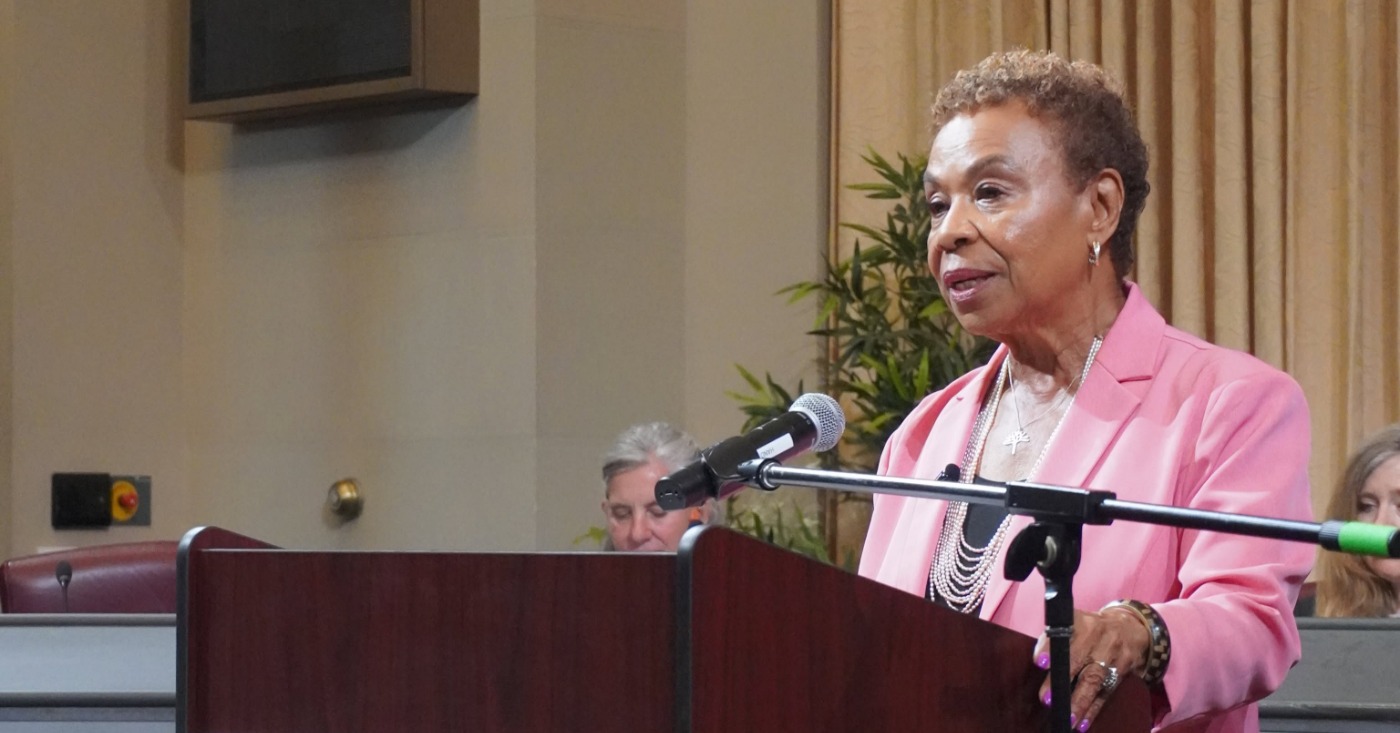

Mayor Barbara Lee, speaking this week to Oakland residents and elected leaders in City Council chambers, delivered the annual mayoral State of the City Address, highlighting the city’s accomplishments as well as the challenges Oakland is facing going forward.
Lee began her remarks praising city workers, who picketed outside City Hall before the meeting, and are currently negotiating with the city for a wage increase and ending understaffing that leaves many departments shorthanded.
“We are working very hard (not) just to get a contract, but to get a fair contract,” she said. “I know that our City Council and myself are working constantly toward that end.”
The mayor also praised Councilmember Carroll Fife for her legislation for a 45-day moratorium on data center construction, which passed unanimously at the council meeting Tuesday following Lee’s presentation.
Speaking bluntly, she said, “Oakland continues to be a city on the move, (but) I want to tell you the truth about the state of our city.”
“We have made real progress, and we still face real challenges.”
She said the city has balanced its budget but has a structural deficit, which is decreasing, and must operate within the context of federal funding cuts.
“Too many Oaklanders are unhoused, too many families are struggling with the cost of living, and too many neighborhoods still need basic services that they deserve, and too many people are living in fear,” Mayor Lee said.
“We’re not sweeping these realities under the rug,” she continued. “We are being intentional and transparent about how we must face these challenges, but we will not ignore our progress.”
Substantial progress includes:
• Bringing crime down;
• Building affordable and deeply affordable housing;
• Cleaning the streets and fixing the roads;
• Helping small businesses.
“We are bringing new investment to Oakland,” she said. “We’re making City Hall work better. There’s more to do, but make no mistake, Oakland is on the move.”
Speaking broadly about the city’s public safety initiatives, she said that crime continues to decline. Burglaries fell by 26%, and violent crime fell by 17%.
In recent years, homicides and shootings have fallen by double digits, and gun violence has dropped by more than 50% in the last 33 months.
“These aren’t just statistics: these are lives. These are families. These are people who never made it home,” Mayor Lee said.
She talked about what to expect now that federal court oversight of the Oakland Police Department ended last week after 23 years. “Ending federal oversight does not mean ending accountability; quite the opposite,” she said. “Accountability and civilian oversight must remain our standard. Community trust must be our standard.”
Mayor Lee also emphasized that Oakland remains a city of refuge.
“We do not work with ICE; we do not cooperate with ICE; our police do not cooperate with ICE; we will not be militarized,” she said.
The mayor also emphasized that investing in youth is a top priority of her administration and should be considered a public safety strategy.
“We advocated for almost $2 million to restore the mayor’s youth summer employment program,” she said. “We connected youth with Oakland businesses to develop skills that will support them for years to come, and that’s a big deal.”
To create a police force that better serves and protects Oakland, the city is working toward the goal of reaching 700 sworn police officers, she said. These steps include recruiting from Oakland, holding academies, reinstituting a cadet program, and increasing foot patrols.
The city also is strengthening other programs, including the Department of Violence Prevention and Ceasefire, she said. “We must have this comprehensive public safety strategy, because we must also prevent violence before it happens.”
Continuing, Lee said public safety is connected to unsanitary conditions in city neighborhoods.
“Illegal dumping is unacceptable, and it’s a moral disgrace,” she said. “No child should have to walk past piles of garbage on their way to school; no senior should have to live next to it; no small business should have to clean it up outside its door.”
She said the city is changing the way it fights illegal dumping, securing a $9.2 million investment to develop a new strategy. “We’re not just cleaning it up; we’re working to stop it before it starts. We have the three E’s – Eradication, enforcement, and education,” she said.
Focusing on the continuing crisis of Oakland’s unhoused residents, she said, “We consider housing a basic human right, and homelessness remains one of Okland’s greatest challenges.”
“There are two things we must do: keep people from becoming unsheltered and help people who are unsheltered get back into housing with services that they need,” Lee said.
Since 2024, homelessness in Oakland has fallen by 20%, she said. In the past year prevention programs helped keep 1,000 families in their homes, and over 1,300 affordable homes opened over the past two years.
Addressing community tensions over encampments, she said, “We should never have to choose between compassion for people experiencing homelessness and the health and safety of our neighborhoods.”
“A strong city has to deliver both,” she said. “That’s the work we’re advancing through Oakland’s new homelessness strategic action plan.”

Featured
Oakland Awarded More than $14 Million in State Funding
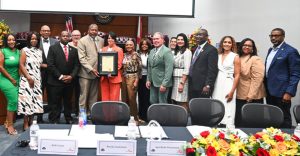
Direct state investments in city programs can revitalize Oakland’s commercial corridors and foster economic growth, strengthen community violence prevention strategies, and expand transitional housing, while supporting cherished community spaces, according to a city media statement.
Money will support small businesses, public safety, transitional housing, and community partners
Mayor Barbara Lee recently announced that the City of Oakland and local community partners will receive more than $14 million in direct investments from California’s new 2026-27 state budget.
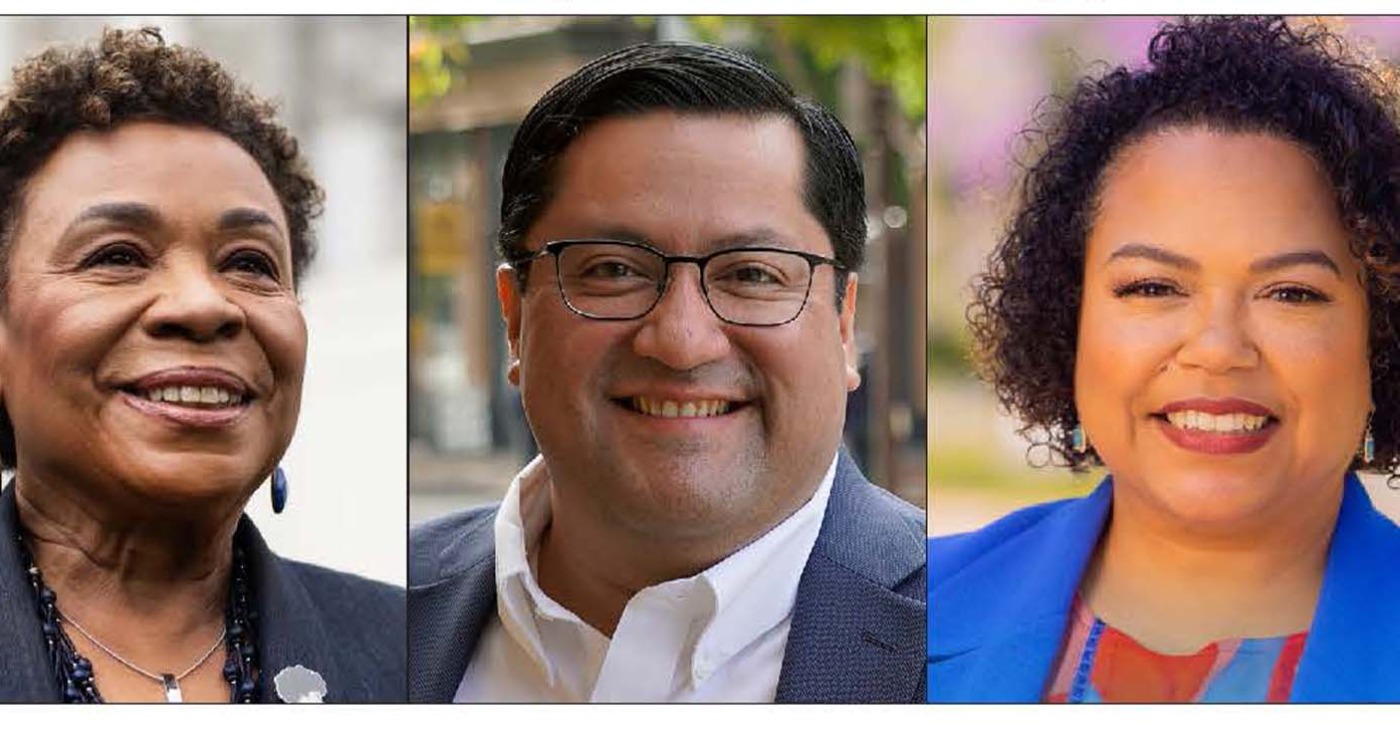
Securing $4.25 million for city programs and $10 million for local community organizations, these state funds were backed by state Senator Jesse Arreguin and Assemblymembers Mia Bonta and Buffy Wicks, with support from Governor Gavin Newsom.
The goal of securing state and federal funding and bringing in outside resources to address the city’s most pressing needs continues to be a top priority for Lee.
Direct state investments in city programs can revitalize Oakland’s commercial corridors and foster economic growth, strengthen community violence prevention strategies, and expand transitional housing, while supporting cherished community spaces, according to a city media statement.
“Thank you so much to Senator Jesse Arreguin, Assemblymember Mia Bonta, Assemblymember Buffy Wicks, and Gov. Gavin Newsom for investing in Oakland,” Lee said.
“We are fortunate to have strong, dedicated leaders representing Oakland in Sacramento who consistently deliver for our residents and businesses,” she said. “This critical funding directly addresses some of our most pressing challenges, including supporting our small businesses, building vibrant neighborhood corridors, advancing violence intervention, and housing our unsheltered neighbors.”
How the $4.25 million will be spent for city projects:
- $2.5 million will be used for the Facade and Tenant Improvement Grant Program to support small businesses;
- $1 million for the Department of Violence Prevention to enhance staffing and program capacity; and
- $750,000 for the Holland transitional housing facility, providing resources to help unhoused residents.
• How the $10 million for Oakland community groups will be spent:
- $5 million for Children’s Fairyland for essential infrastructure, accessibility, and facility upgrades.;
- $3 million for the Juntos Fruitvale Cultural Arts Center to create a multi-use space for performances, exhibitions, workshops, neighborhood meetings in the Fruitvale neighborhood; and
- $2 million for Samuel Merritt University to grow its nationally recognized Human Trafficking Prevention and Response Initiative.
“State investments in Oakland’s nonprofit and educational organizations highlight their deep value not just to our city, but their importance to the entire state,” said Lee. “Oakland has long served as a hub for inclusive arts and culture and as a community that protects its most vulnerable members.”
Said Arreguin, “This investment is a commitment to Oakland’s health, safety, and future. In partnership with my state colleagues, Mayor Lee, and our community partners, we are strengthening our response to human trafficking and gun violence, to create safer neighborhoods, and improve the quality of life of all Oakland residents.”
“Investing in Oakland means investing in California’s future. I’m proud to be a voice for the beautiful people of Oakland in the State Capitol and to deliver real funding wins that ensure our shared safety, expand housing opportunities, and preserve the artistic and cultural legacy of Oakland,” said Bonta.
Business
AC Transit Labor Unions Back Director Joel Young
ATU Local 192 Vice President Nathaniel Arnold stated “our support reflects confidence in Young’s leadership and experience as the longest-serving member of AC Transit’s current Board of Directors. His experience is particularly important as AC Transit confronts serious fiscal challenges while working to preserve and strengthen service.

In the AC Transit Ward 3 election, AC Transit’s labor organizations have recently expressed their endorsement for Director Joel Young, recognizing his longstanding commitment to public transportation, workforce investment, and the employees who keep AC Transit moving every day.
Those unions include the Amalgamated Transit Union Local 192, the International Brotherhood of Electrical Workers Local 1245, and the American Federation of State, County and Municipal Employees Local 3916.
ATU Local 192 Vice President Nathaniel Arnold stated “our support reflects confidence in Young’s leadership and experience as the longest-serving member of AC Transit’s current Board of Directors. His experience is particularly important as AC Transit confronts serious fiscal challenges while working to preserve and strengthen service.
“At a time when difficult decisions lie ahead, Young brings institutional knowledge, longstanding relationships, and a demonstrated commitment to public transportation.
“Since joining the board in 2009, Young has served in key leadership roles, including president and vice president, helping guide AC Transit through periods of growth, innovation, and change.
During his tenure, he helped AC Transit secure more than $600 million in funding to support critical transportation investments. Young has also helped advance workforce development initiatives, support transit technology improvements, expand AC Transit’s zero-emission bus fleet, and strengthen the District’s national presence on transportation policy issues.
His leadership has extended beyond the Bay Area.
Young has represented AC Transit on the national stage, including participation in the White House Roundtable on Clean Bus Manufacturing, where transit leaders and policymakers discussed the future of clean transportation and domestic manufacturing.


Veterans Housing Project Proposed for South Richmond
PRESS ROOM: Transformative Justice Coalition 2026 Voting Rights Champion Awards Reception ‘Yesterday Is Today: The Battle For Voting Rights

Mayor Lee Delivers 2026 State of the City Address: ‘Oakland Continues to Be on the Move’

Oakland Awarded More than $14 Million in State Funding

Jendayi Arrest Raises Community Concerns Regarding Sheriff’s Chain of Command

Marin County Supes Expand Small Business Options with Home Kitchen Pilot Program

Allen Temple Baptist Church Hosts Free Prostate Cancer Screenings on Oct. 17

AC Transit Labor Unions Back Director Joel Young

Locals Can Get Locally Grown Produce Delivered Through Urban Tilth

‘ICE-Free Marin’ Supporters Press Supervisors as County Drafts Enforcement Restrictions

Oakland Post: Week of October 7 – 13, 2026

Ghana’s Ministry of Foreign Affairs Publishes Global Circle’s Vatican Reparations Call in Special Edition Alongside Heads of State

OP-ED: Proposition 44 Would Put a Price on Trust

OP-ED: Proposition 40: It’s Time to Play Chess, Not Checkers

Listening as a Lifeline: A Doula’s Witness to Black Maternal Health

Standoff for Justice: Our Homes Are Worth Fighting For

Oakland Post: Week of August 26 – September 1, 2026

Frontier Airlines’ Return to Oakland Airport Brings Flights, Jobs and Opportunity

Jackie Wright Champions Bay Area Stories, Filmmakers and Cultural Institutions

Gubernatorial Candidate Steve Hilton Blasts California New Tire Rules; Newsom Hits Back

Chef Sharon Lee Blends Culinary Excellence, Education and Empowerment

Misnamed ‘Parent’ PAC Seeks to Influence Oakland School Board Elections

Oakland Coliseum Project Opens Door for Small Businesses to Build Bigger

Big City Mayors Ask for “Yes” Vote on Housing Bond Measure; Conservatives Say “No”

Gov. Newsom’s Latest Appointees Include Sacramento Advocate for Formerly Incarcerated Students; State’s New Tech Chief

Oakland Post: Week of September 2 – 8, 2026

Longtime BWOPA Member Brendalyn Goodall Appointed to California Workforce Development Board

Gov. Newsom Signs Law Shielding Immigration Aid Workers From Doxing Threats

Secretary of State Shirley N. Weber Urges Californians to Vote Early as Voter ID Battle Intensifies

Oakland Post: Week of September 9 – 15, 2026

The Conversation With Al McFarlane 6/23/26

Media Monday 6/22/26

LIVE! ASK ALMA! — TUES. 6.23.26 7PM EST

Car Buying Secrets: 4 Hidden Checks Before You Sign!

Is This 550 HP Charger Worth YOUR Money? AutoNetwork Review

Celebrating Juneteenth – Frederick Douglass on education and resistance

LIVE! — ASK ALMA! — TUES. 6.19.26 7PM EST

Hyundai Ioniq 5 Parking, Safety, and 360 View #shorts

2025 Ioniq 5 New Wiper & Powerful Performance! #shorts

Electric SUV Range: Is 259 Miles Enough? #shorts

EV Charging: How Fast Can You Charge an Electric Vehicle? #shorts

Biometric Cooling… Messaging Seats…Come on! 2025 Infiniti QX80 Autograph 4WD

Charged Up: Witness the Magic of a Fully Electric Car! #shorts

Range Rover Sport PHEV Included…: See What’s Inside This Luxury SUV! #shorts

Invisible Hood View: Perfect Parking with X-Ray Vision! #shorts
-
 Community4 weeks ago
Misnamed ‘Parent’ PAC Seeks to Influence Oakland School Board Elections
-
 Activism4 weeks ago
Oakland Post: Week of September 9 – 15, 2026
-

 Community4 weeks ago
Richmond Tiny House Village Farm & Garden Set to Open Gates on Sept. 26
-

 Black History4 weeks ago
Latest Massacre in Haiti Reveals Cruelty U.S. Deportations
-

 Black History4 weeks ago
OPINION: Nolan Wells’ Death One of Several Signifying Racial Terror Lives on in U.S. South
-

 Business3 weeks ago
Mayor Lee Announces $1 Million Kaiser Permanente Grant for Pilot Program to Address Homelessness, Clean Up Public Spaces throughout Oakland
-

 Economy2 weeks ago
Poll: Becerra Widens His Lead Over Hilton; Californians Split on Wealth Tax
-

 Business2 weeks ago
County Office of Education Says OUSD Finances Are Getting Healthier, Materially Stronger
