Activism
50 Years Later, ‘Wake Up Everybody!’ Still Resonates During Black Music
The words of the song, “Wake Up Everybody,” debuted by Harold Melvin & The Blue Notes in 1975, still resonate today as those words are just as relevant more than a half century later.

By Hazel Trice Edney, Special to The Post

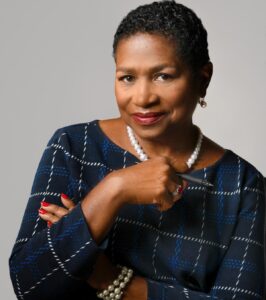
Hazel Trice Edney
“Wake up, everybody, No more sleepin’ in bed
No more backward thinkin’. Time for thinkin’ ahead
The world has changed so very much from what it used to be.
There is so much hatred, war, and poverty.
“The world won’t get no better If we just let it be.
Naw, naw, naw, naw, naw, naw, naw.
The world won’t get no better. We gotta change it, yeah– just you and me.”
The words of the song, “Wake Up Everybody,” debuted by Harold Melvin & The Blue Notes in 1975, still resonate today as those words are just as relevant more than a half century later.
In a rare, nearly somber moment, the group’s celebrated lead singer, Teddy Pendergrass, introduced the song on Soul Train, the weekly dance and live performance TV show that aired roughly between 1971 and 2006. Pendergrass told the attentive live audience and thousands watching by television that Wake Up Everybody, the title tune of their most recent album, was intended to inspire people to take action with a goal to change America for the better.
“I’m sure that you will all agree that there are things that need to be done in this country today,” he said. “So, what I’d like for you to do is listen very carefully to see what you can do to lend a hand.”
The song’s appeal worked.
“I played that song over and over and over again because it was a constant warning to keep ourselves prepared for the society that we were living in,” says A. Peter Bailey, then a 37-year-old former aide to Malcolm X.
When “Wake Up Everybody” hit the airwaves, Bailey was working as an associate editor of Ebony Magazine. “It was a call to be aware of what we were dealing with in the country that we lived in, the world we lived in, the neighborhood we lived in, the cities that we lived in,” Bailey said in an interview with the Trice Edney News Wire.
He concluded that during Black Music Month 2026, such songs should be recalled and celebrated as a key to changes for the good across America; especially because such songs successfully encouraged people to deal with the issues that might otherwise denigrate the promises of America, including the promise that “All men are created equal,”as stated in the Declaration of Independence.
“The rhythms and blues expressed our joys, our sorrows and our fears,” Bailey recalls. “It was those songs and the singing of those songs by our people that attracted us to the campaigns for justice.”
With his life inspired by that song and others, Bailey, now 88, went on to establish and teach a Black Press class at Virginia Commonwealth University. Also, he has since written three books, including a memoir, “Witnessing Brother Malcolm X, the Master Teacher,” in which he expounded upon successful principles of social justice, some of which are reflected in “Wake Up Everybody.”
Long before the term “woke” became associated with campaigns for justice, Pendergrass led the song that reverberated across America and still holds deep meaning.
The ‘wake up’ call exhorts teachers to ‘teach a new way,’ doctors to heal elders, and builders to ‘build a new land… we can do it if we all lend a hand.”
The song concludes:
“The world won’t get no better if we just let it be. Naw, naw, naw, naw, naw, naw, naw. The world won’t get no better. We gotta change it, yeah – just you and me.”
Hazel Trice Edney wrote this story as part of a four-part series powered by AARP in commemoration of Black Music Month, June 2026.

