
Activism
Civil Rights Leaders Demand Results in George Floyd Justice in Policing Act Negotiations
The Democrat-led House has passed the bill twice over the last 12 months, yet, as the deadline passed, the bill continues to be trapped in a holding pattern in the Senate.

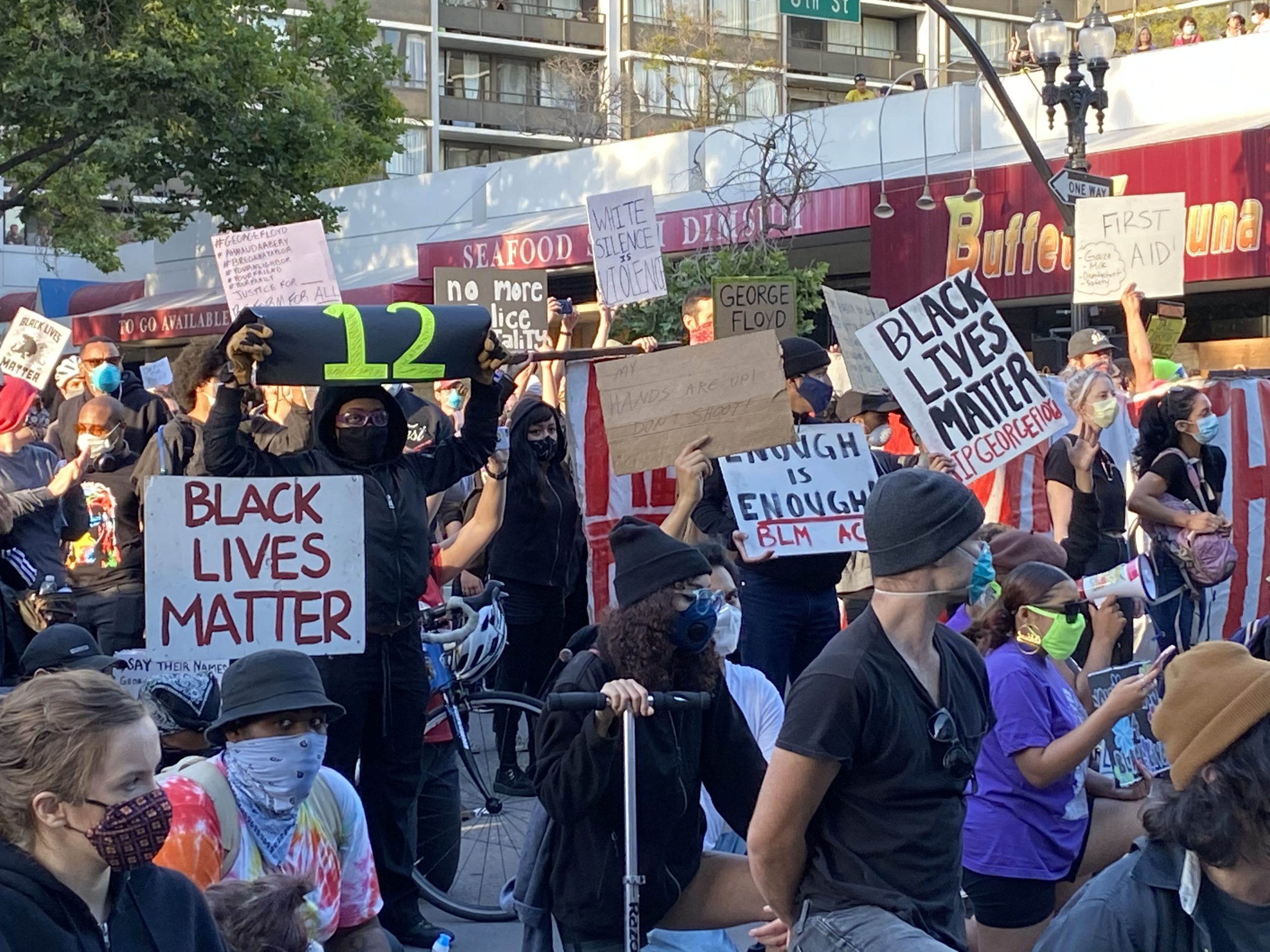
Civil Rights leaders from across the nation are calling for Congress to pass the George Floyd Justice in Policing Act.
In a joint statement released late June 2021, leaders of several Civil Rights agencies demanded that Congress produce a final version of the bill that will pass the House and Senate by the end of June more than one year after George Floyd’s murder and just days following Derek Chauvin’s sentencing.
The Democrat-led House has passed the bill twice over the last 12 months, yet, as the deadline passed, the bill continues to be trapped in a holding pattern in the Senate.
“We collectively demand that Congress honor its commitment to produce a final bill that can pass the House and Senate before the end of June and ensure a strong George Floyd Justice in Policing Act is passed before the August recess,” they said.
“The nation desperately needs a transformation of policing policies and practices — from inner cities to suburban neighborhoods to rural counties. The only way to begin this process is with federal legislation that sets meaningful standards and removes legal impediments to holding officers accountable for unconstitutional policing practices. The George Floyd Justice in Policing Act was conceived and created with a focus on accountability and contains provisions overwhelmingly supported by the American people. This vital civil rights legislation is long overdue.”
Below is some chronology on the George Floyd Justice in Policing Act as it has played out in Congress over the last year.
On June 8, 2020, Congresswoman Karen Bass introduced H.R. 7120, the George Floyd Justice in Policing Act of 2020. The House approved the bill with unanimous support of Democrats and three Republicans by a 236-181 vote.
The bill included provisions to overhaul qualified immunity for law enforcement, prohibitions on racial profiling on the part of law enforcement and a ban on no-knock warrants in federal drug cases. It would ban chokeholds at the federal level—classifying them as a civil rights violation and would establish a national registry of police misconduct maintained by the Department of Justice.
On June 17, 2020, the bill failed to pass the Senate procedural vote needed to advance in the then Republican-controlled Senate.
South Carolina Senator Tim Scott (representing several Republican Senators) proposed alternative legislation that would diminish the use of chokeholds but wouldn’t ban them and called for increased federal reporting requirements for use of force and no-knock warrants.
Senate Democrats responded by rejecting the Senate’s alternative legislation citing its narrow scope and failure to address racial inequality.
On Feb. 24, 2021, Bass reintroduced the bill as H.R. 1280 the George Floyd Justice in Policing Act of 2021. For the second time, the bill passed the House on March 3, 2021, in a near party-line vote of 220-212.
Today, the George Floyd Justice in Policing Act has yet to gain traction in the Senate, although bipartisan discussions between Bass, Scott and Sen. Cory Booker continue.
According to Bass the House-Senate stalemate centers on the two most contentious parts of the bill: (1) qualified immunity (which essentially would allow a citizen to sue a police officer for brutality or worse) and (2) Section 242, which lowers the standard needed to prosecute police officer.
In a March 2021 interview with NPR, when asked if she’d be willing to compromise. these two salient parts of the bill, Bass responded with a no.








Activism
Oakland Post: Week of April 1 – 7, 2026
The printed Weekly Edition of the Oakland Post: Week of April 1 – 7, 2026

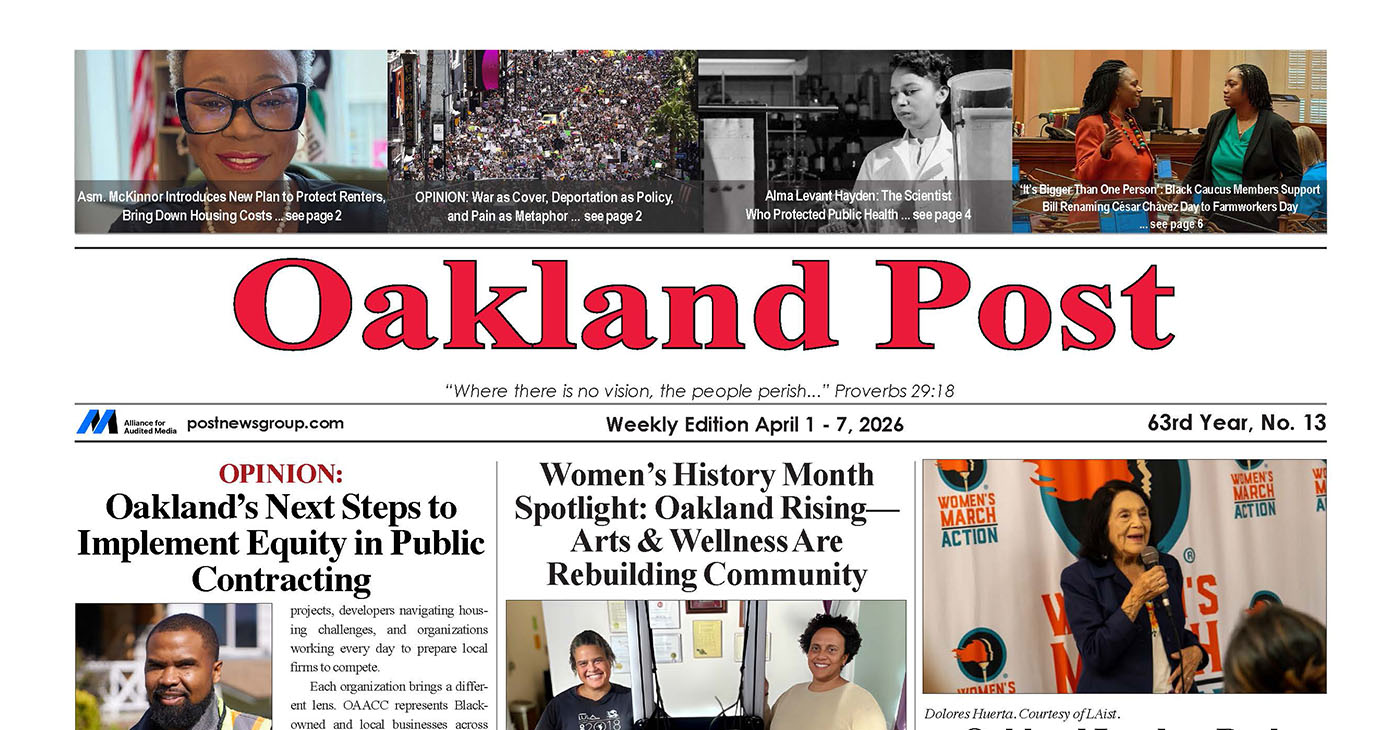
To enlarge your view of this issue, use the slider, magnifying glass icon or full page icon in the lower right corner of the browser window.

Activism
Oakland Post: Week of March 18 – 24, 2026
The printed Weekly Edition of the Oakland Post: Week of March 18 – 24, 2026

To enlarge your view of this issue, use the slider, magnifying glass icon or full page icon in the lower right corner of the browser window.
Activism
Oakland Post: Week of March 11 -17, 2026
The printed Weekly Edition of the Oakland Post: Week of March 11 – 17, 2026
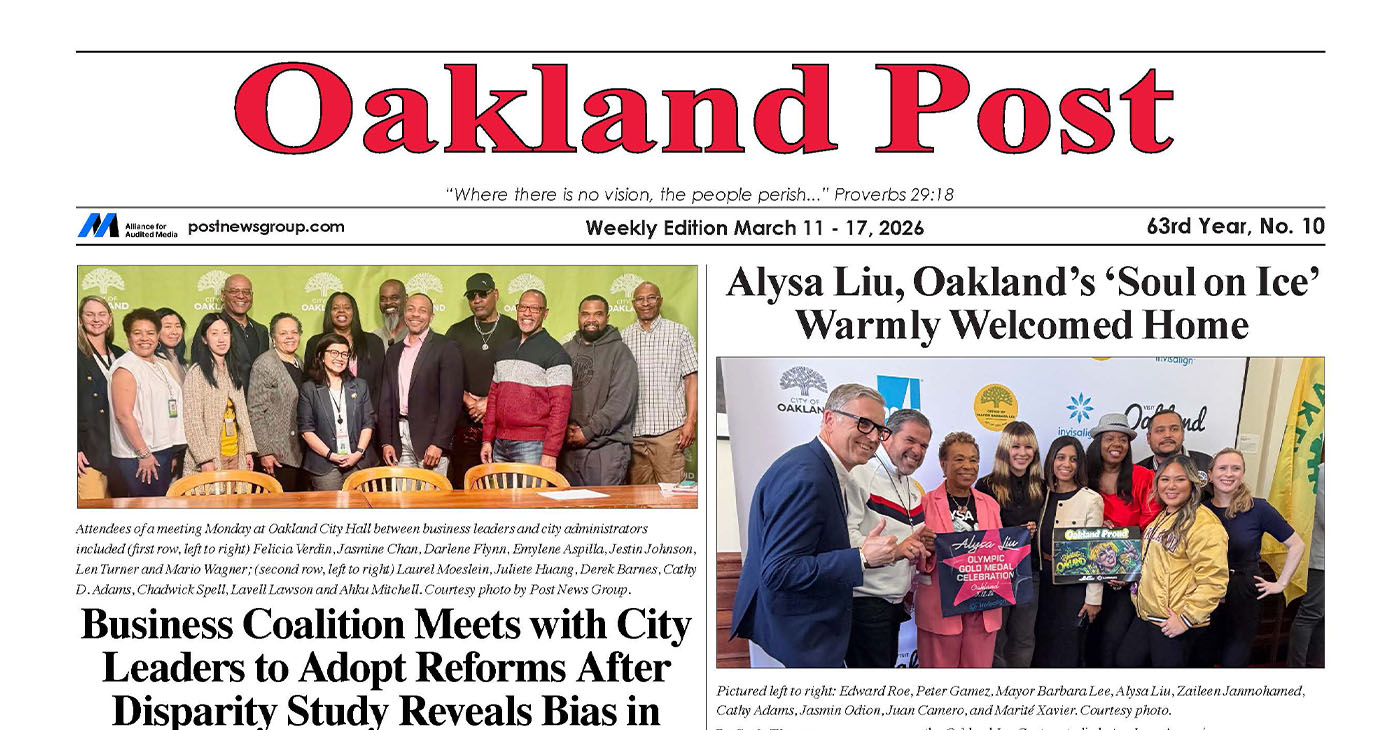
To enlarge your view of this issue, use the slider, magnifying glass icon or full page icon in the lower right corner of the browser window.

WORK FROM HOME
Home-based business with potential monthly income of $10K+ per month. A proven training system and website provided to maximize business effectiveness. Perfect job to earn side and primary income. Contact Lynne for more details: Lynne4npusa@gmail.com 800-334-0540


Oakland Post: Week of April 1 – 7, 2026

Black Artists in America, Installation Three Wraps at the Dixon Gallery and Gardens

Grief, Advocacy, and Education: A Counselor Reflects on Black Maternal Health

Future of Florida’s Black History Museum in Limbo

New Research Shows the Many Benefits of Early Learning

South Hampton K-8 Students Among Top 10 Finalists for Samsung’s ‘Solve for Tomorrow’ Competition

Cuba: No Negotiation with US on the President or Political System

Brooklyn Academy of Music Names Jamaican-Born Tamara McCaw as President

Trinidad & Tobego – U.S. Launches WhatsApp Channel for American Citizens in the Country

Oakland Post: Week of March 18 – 24, 2026

AI Innovation vs. Ethics and Environmental Impact

AI, Web3, and Digital Reparations

What If You Owned Your AI Agent?

Season 7, Episode 3 – January Reporter’s Roundtable 📱

Season 7, Episode 3 – January Reporter’s Roundtable

Reflecting on Black History Milestones in Birmingham AL

Oakland Post: Week of February 25 – March 3, 2026

PRESS ROOM: NBA Hall of Fame Nominee Terry Cummings Joins 100 Black Men of DeKalb County to Launch Victory & Values Initiative

Oakland Post: Week of March 4 – 10, 2026

Trump’s MAGA Allies are Creating Executive Order Plan to Steal the 2026 Midterms

U.S. manufacturing rebounds – how foundry services are adapting to rising demand

Poll Shows Support for Policies That Help Families Afford Child Care

OP-ED: One Hundred Years of Black Workers Telling the Truth

Oakland Post: Week of March 11 -17, 2026

Advancements in solar technology that are changing the way we power the world
Oakland Post: Week of March 18 – 24, 2026

Woman’s Search for Family’s Roots Leads to Ancestor John T. Ward – A Successful Entrepreneur and Conductor on the Underground Railroad

COMMENTARY: Women of Color Shape Our Past and Future

PRESS ROOM: Civil Rights TV Launches in Selma as the World’s First 24/7 Civil Rights Television Network

Financial Wellness and Mental Health: Managing Money Stress in College

Hyundai Ioniq 5 Parking, Safety, and 360 View #shorts

2025 Ioniq 5 New Wiper & Powerful Performance! #shorts

Electric SUV Range: Is 259 Miles Enough? #shorts

EV Charging: How Fast Can You Charge an Electric Vehicle? #shorts

Biometric Cooling… Messaging Seats…Come on! 2025 Infiniti QX80 Autograph 4WD

Charged Up: Witness the Magic of a Fully Electric Car! #shorts

Range Rover Sport PHEV Included…: See What’s Inside This Luxury SUV! #shorts

Invisible Hood View: Perfect Parking with X-Ray Vision! #shorts

AI Is Reshaping Black Healthcare: Promise, Peril, and the Push for Improved Results in California

ESSAY: Technology and Medicine, a Primary Care Point of View

Sanctuary Cities

The RESISTANCE – FREEDOM NOW

STATE OF THE PEOPLE: Freddie

ECONOMIC BOYCOTT DAY!!!!!

I told You So
-
 Activism3 weeks ago
Oakland Post: Week of March 11 -17, 2026
-
 Activism2 weeks ago
Oakland Post: Week of March 18 – 24, 2026
-
 #NNPA BlackPress4 weeks ago
Woman’s Search for Family’s Roots Leads to Ancestor John T. Ward – A Successful Entrepreneur and Conductor on the Underground Railroad
-
 #NNPA BlackPress4 weeks ago
COMMENTARY: Women of Color Shape Our Past and Future
-
 Advice3 weeks ago
Financial Wellness and Mental Health: Managing Money Stress in College
-

 #NNPA BlackPress4 weeks ago
Advocates Raise Alarm Over ICE Operation, MOU and Detention Risks in Baltimore County
-

 #NNPA BlackPress4 weeks ago
Pete Buttigieg to Join Mayor Randall Woodfin for Community Town Hall in Birmingham
-
 #NNPA BlackPress2 weeks ago
Brooklyn Academy of Music Names Jamaican-Born Tamara McCaw as President
