
California Black Media
COMMENTARY: Finding Joy and Justice for Childbearing Black Moms
Black mothers are more likely to die due to complications from pregnancy and childbirth than pregnant women of all other races. This is a shameful injustice plaguing the Black community, one that is over 400 years in the making.

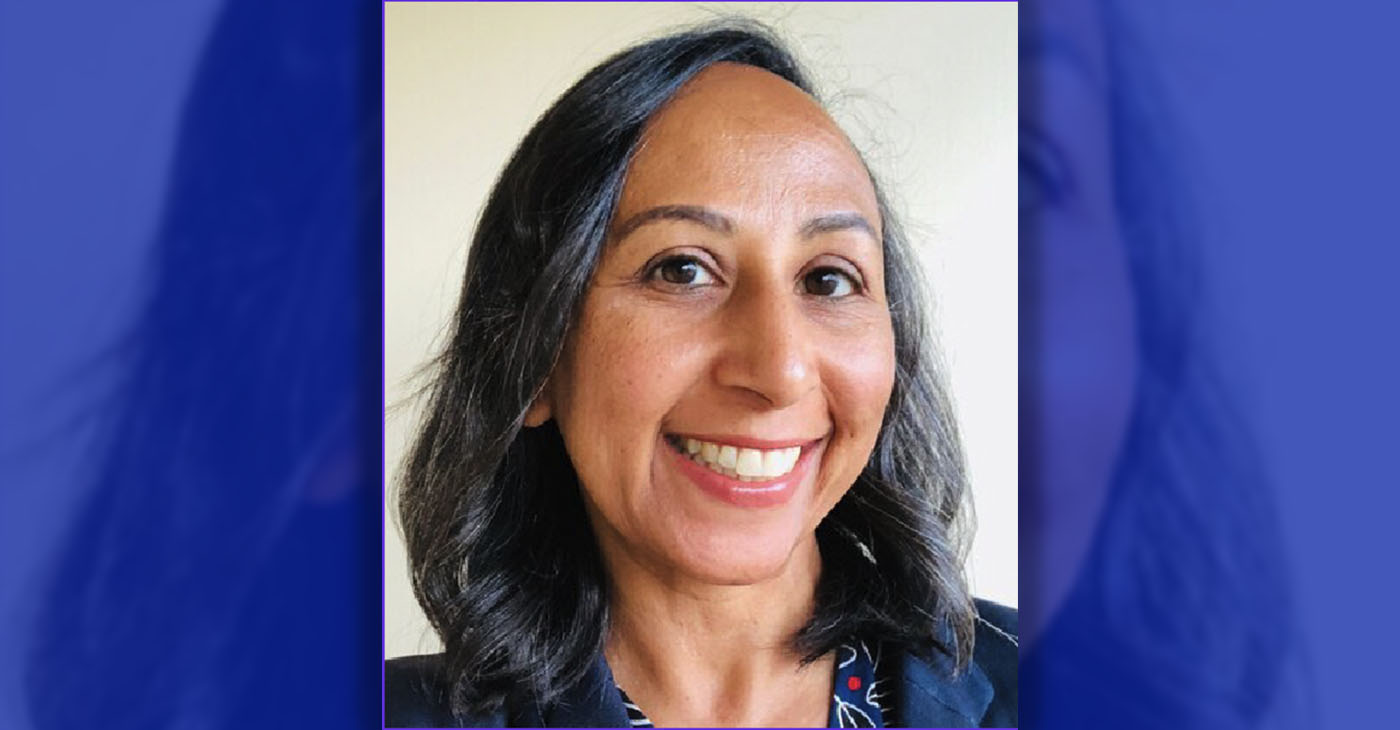
By Dr. Melissa Franklin, Special to California Black Media Partners
Black mothers are more likely to die due to complications from pregnancy and childbirth than pregnant women of all other races. This is a shameful injustice plaguing the Black community, one that is over 400 years in the making.
Black women are 1.6 times more likely to experience more maternal mental health conditions, including prenatal and postpartum anxiety and depression, than women of other races, according to the American Hospital Association Institute for Diversity and Health Equity.
These injustices are killing Black women who are well-resourced and educated like Olympian Tori Bowie, as well as those enduring economic hardship. It is also harming their babies. And although this crisis has attracted national attention, it remains unaddressed.
For Black women, like me, who have experienced premature childbirth, the trauma and guilt of not being able to bring our babies full term can be long-lasting. Those psychological scars exist along with the other physical and mental threats to our health and wellbeing.
Both of my children were born three months early, despite my best efforts. I had a steady job, decent income, post-graduate education, a good bill of health and a stable relationship. Yet, my health and life were threatened in both of their births. One would think that such an experience would place me in a unique category. However, as a Black woman, it does not.
In Los Angeles County, Black women die at three to four times the rate of other races due to pregnancy-related complications, and Black babies die at two to three times the rate of any other race before their first birthday. Black babies are born premature at greater rates than any other ethnic group, which can lead to long-term health and developmental challenges. The Black community is also shouldering a disproportionate amount of the mental burden of tragedy and loss when it comes to pregnancy and childbirth.
To solve this problem, we must acknowledge three truths:
- The problem is not with Black people.
- It’s the system that is failing Black people.
- This problem is solvable, and Black people deserve to have joyous and healthy births.
The data coupled with our lived experiences and history as Black people tells us something is amiss. College educated Black women experience worse birth outcomes (i.e., death, premature birth, health complications for mother and child) than white women with high school diplomas. Black women who are non-smokers have worse birth outcomes than white women who smoke. The root problem is also not “teen pregnancy.”
Black teens have better birth outcomes than older Black individuals.
The root causes of the problem are complex. In short, stress kills.
The stress of generations of racial harm compounded by ongoing, exposure to racist treatment, prejudice and oppression, can be deadly. This stress is especially deadly when it is exacerbated by systems of care that disrespect and withhold quality care from Black people. The social contexts that imperil Black individuals to a greater extent than other races, such as homelessness, criminal justice injustice, education system injustice, and child welfare system injustice create a perfect storm for these root causes to grow.
There is hope for change. There are a number of initiatives underway to address the racism and stress that are at the root of the problem. These initiatives range from legislation such as the Federal Momnibus Act, California Senate Bill (SB) 65 (California Momnibus Act) and California SB 464 (Dignity in Pregnancy Act) to Statewide Initiatives such as the Perinatal Equity Initiative. In Los Angeles County, the Department of Public Health’s African American Infant and Maternal Mortality Initiative (AAIMM) brings together public agencies, community-based organizations, and advocates to raise awareness and transform how systems treat Black people.
But what can a Black woman/person do if they are pregnant or want to become pregnant one day? We can reclaim justice and joy by activating a village to address the stress. Until racism, racial microaggressions and poor treatment by the health care system are resolved, mental health support from multiple places is a powerful tool we can access.
This means building a village to provide social and emotional support, and as well as advocacy during your childbirth journey. Available resources include:
Black Infant Health Program — prenatal groups that bring together Black pregnant folks in a group setting. They offer support, resources, and a coach to help you through your journey.
Doulas — birth partners who provide emotional and physical support during pregnancy, childbirth, and the early postpartum period. Los Angeles County AAIMM Doula program provides doulas services by Black Doulas for Black families.
Group Prenatal — a small prenatal care group of pregnant women with similar due dates led by a clinician.
Home Visitation — assistance to expecting families on their journey through pregnancy and early parenting, delivered by a public health nurse or a parent coach.
Midwives, Maternity Homes and Birth Centers — Important sources of caring, quality support and advocacy.
While agencies and advocates are mounting efforts, we all have an important role. Even if you have no plans of becoming pregnant or parenting in the future, you can still make a difference when it comes to the mental health of childbearing moms.
If you know someone who is pregnant, connect them to a resource to assist them on their journeys. Be a friend and advocate. Take ACTION to show them they have a village —offer to cook/bring a meal, go with them to their appointments, provide a shoulder to lean on when they are exhausted.
While we work to make this world a less traumatizing place for Black people, we can also take steps to prevent the stress of that trauma from killing our mothers and our babies. We deserve to experience joy, abundance, and beautiful, healthy births. It is our birthright.
About the Author
Dr. Melissa Franklin is the Director of maternal, Child and Adolescent Health at the Los Angeles County Department of Public Health.
Related Video
Chelsea, an expectant mom, and Danica, her doula, discuss the delicate connection between mental health and maternal care. Watch the video.









Activism
Oakland Post: Week of August 12 – 18, 2026
The printed Weekly Edition of the Oakland Post: Week of August 12 – 18, 2026
To enlarge your view of this issue, use the slider, magnifying glass icon or full page icon in the lower right corner of the browser window.
Activism
Oakland Post: Week of August 5 – 11, 2026
The printed Weekly Edition of the Oakland Post: Week of August 5 – 11, 2026
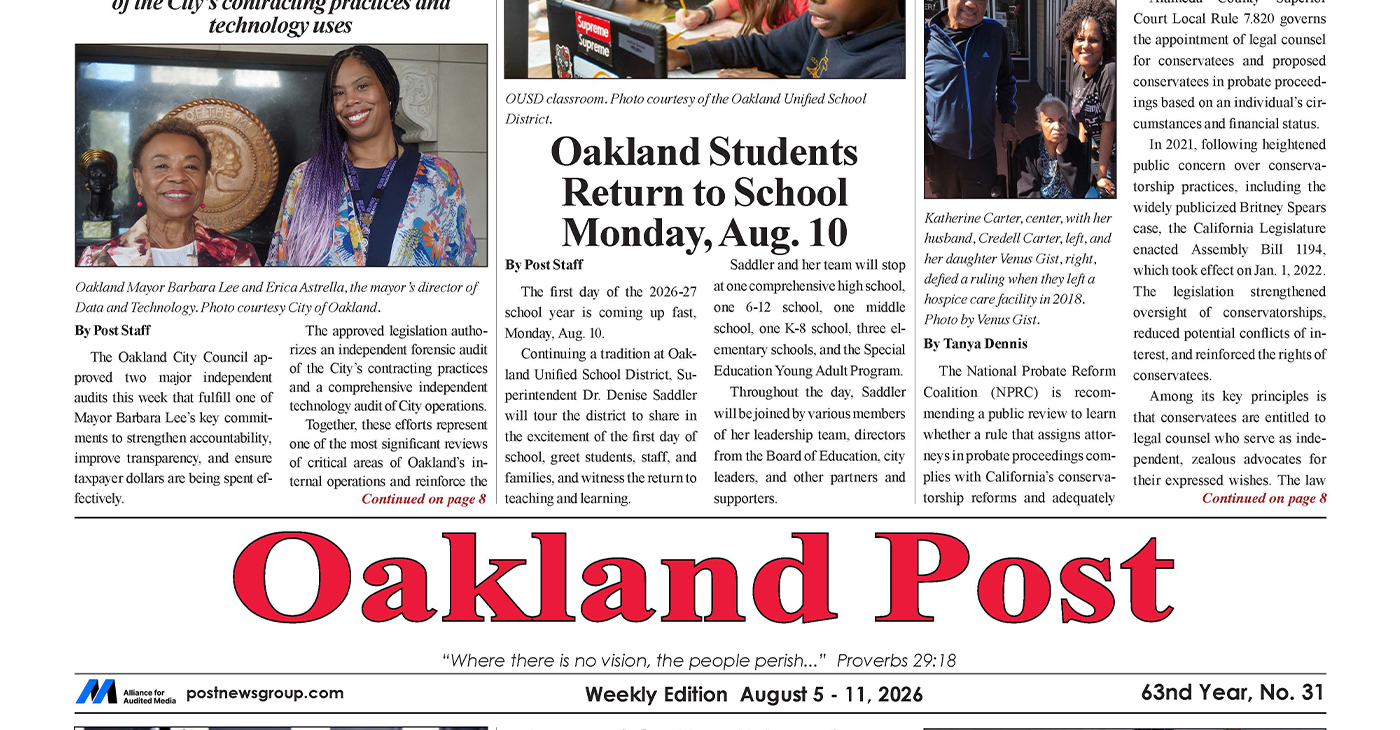
To enlarge your view of this issue, use the slider, magnifying glass icon or full page icon in the lower right corner of the browser window.
Activism
Oakland Post: Week of July 29 – August 4, 2026
The printed Weekly Edition of the Oakland Post: Week of July 29 – August 4, 2026
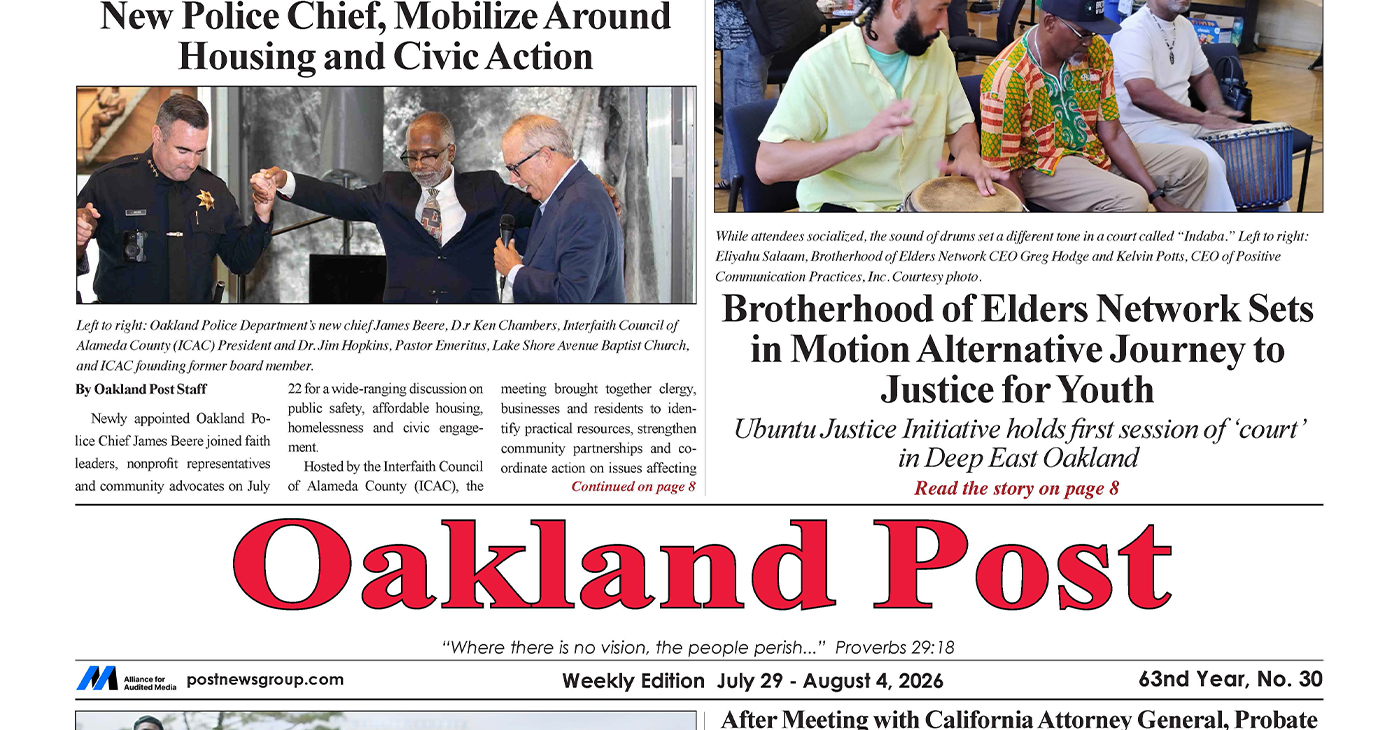
To enlarge your view of this issue, use the slider, magnifying glass icon or full page icon in the lower right corner of the browser window.

WORK FROM HOME
Home-based business with potential monthly income of $10K+ per month. A proven training system and website provided to maximize business effectiveness. Perfect job to earn side and primary income. Contact Lynne for more details: Lynne4npusa@gmail.com 800-334-0540


Four Candidates, Including Incumbent Barbara Lee, Qualify for Oakland Mayor’s Race

Oakland Observes Black August with Block Parties, Film Showings, Workshops

Oakland Post: Week of August 12 – 18, 2026

COMMENTARY: Why Local School Tax Measure G1 Will Not Be on the November Ballot

California Hispanic Chambers of Commerce Unveils: ‘Powering the Future’ Theme for 47th Annual Statewide Convention

Returning to Its Roots, the Oakland Black-Eyed Pea Festival Partners with the Freedom Farmers Market Sept. 12

Less Affluent School Districts, Including Sacramento City, Face Threat of State Takeover

From Blueprint to Breakthrough: Tackling Affordable Housing in Oakland

NPRC Scores First Advocacy Victory: David Shaw Finally Gets His Wish to ‘Go Home’

ESSAY: California Can Close Its Colorectal Cancer Gap

Car Wash Workers Cope with Lingering Impacts of ICE Raids

Misty Copeland Shapes Ballet’s Tomorrow

As Part of Your Back-to- School Checklist, Vaccinate

As Part of Your Back-to- School Checklist, Vaccinate

Congresswoman Simon Demands Investigation into Trump’s Abuse of Emergency Powers for Coal Export Terminal in West Oakland

Department of Homeland Security Demands California Secretary of State Shirley N. Weber Scrub Voter Rolls

Oakland Children’s Hospital Workers and Patients Rally for Pediatric Medical Care

New Judge Could Decide if Karmelo Anthony Gets a New Trial

“The Power to See Threats Sooner”: Gov. Newsom, Safety Officials Showcase California’s Investments in Hi-Tech Wildfire Prevention

Alpha Kappa Alpha Sorority, Inc. Celebrates New North Atlantic Regional Director

Surveillance Pricing Fight: State Senate Debates Bill Banning Retailers from Using AI to Set Prices Based on a Buyer’s Profile

Mount Zion MBC, Church of Jesus Christ of Latter-day Saints Partner to Bring 29,000 Meals to Alameda County

California Sen. Padilla Joins Colleagues to Introduce Bill Imposing Term Limits on Supreme Court Justices
Less Affluent School Districts, Including Sacramento City, Face Threat of State Takeover

Starting This Summer, California Car Buyers Can Get an Instant $3500 Off the Cost of Electric Vehicles

COMMENTARY: You Are Already Paying for the AI Boom
Car Wash Workers Cope with Lingering Impacts of ICE Raids

California Bill Would Let Abuse Victims Use Trauma as Legal Defense for Violent Crime

Fed Court to Decide Landmark First Amendment Case

Gov. Gavin Newsom Signs Law Streamlining Affordable Housing Rules

The Conversation With Al McFarlane 6/23/26

Media Monday 6/22/26

LIVE! ASK ALMA! — TUES. 6.23.26 7PM EST

Car Buying Secrets: 4 Hidden Checks Before You Sign!

Is This 550 HP Charger Worth YOUR Money? AutoNetwork Review

Celebrating Juneteenth – Frederick Douglass on education and resistance

LIVE! — ASK ALMA! — TUES. 6.19.26 7PM EST

Hyundai Ioniq 5 Parking, Safety, and 360 View #shorts

2025 Ioniq 5 New Wiper & Powerful Performance! #shorts

Electric SUV Range: Is 259 Miles Enough? #shorts

EV Charging: How Fast Can You Charge an Electric Vehicle? #shorts

Biometric Cooling… Messaging Seats…Come on! 2025 Infiniti QX80 Autograph 4WD

Charged Up: Witness the Magic of a Fully Electric Car! #shorts

Range Rover Sport PHEV Included…: See What’s Inside This Luxury SUV! #shorts

Invisible Hood View: Perfect Parking with X-Ray Vision! #shorts
-
 Featured1 week ago
Department of Homeland Security Demands California Secretary of State Shirley N. Weber Scrub Voter Rolls
-
 Business3 weeks ago
Oakland Children’s Hospital Workers and Patients Rally for Pediatric Medical Care
-
 #NNPA BlackPress3 weeks ago
New Judge Could Decide if Karmelo Anthony Gets a New Trial
-
 Environment1 week ago
“The Power to See Threats Sooner”: Gov. Newsom, Safety Officials Showcase California’s Investments in Hi-Tech Wildfire Prevention
-
 Black History2 weeks ago
Alpha Kappa Alpha Sorority, Inc. Celebrates New North Atlantic Regional Director
-
 Business3 weeks ago
Surveillance Pricing Fight: State Senate Debates Bill Banning Retailers from Using AI to Set Prices Based on a Buyer’s Profile
-
 Business3 weeks ago
Mount Zion MBC, Church of Jesus Christ of Latter-day Saints Partner to Bring 29,000 Meals to Alameda County
-
 Featured1 week ago
California Sen. Padilla Joins Colleagues to Introduce Bill Imposing Term Limits on Supreme Court Justices
