
Politics
Supreme Court Upholds Nationwide Health Care Law Subsidies


Supporters of the Affordable Care Act hold up signs as the opinion for health care is reported outside of the Supreme Court in Washington, Thursday June 25, 2015. (AP Photo/Jacquelyn Martin)
MARK SHERMAN, Associated Press
WASHINGTON (AP) — The Supreme Court on Thursday upheld the nationwide tax subsidies underpinning President Barack Obama’s health care overhaul, rejecting a major challenge to the landmark law in a ruling that preserves health insurance for millions of Americans.
The justices said in a 6-3 ruling that the subsidies that 8.7 million people currently receive to make insurance affordable do not depend on where they live, as opponents contended.
The outcome was the second major victory for Obama in politically charged Supreme Court tests of his most significant domestic achievement. And it came the same day the court gave him an unexpected victory by preserving a key tool the administration uses to fight housing bias.
Chief Justice John Roberts again voted with his liberal colleagues in support of the health care law. Roberts also was the key vote to uphold it in 2012. Justice Anthony Kennedy, a dissenter in 2012, was part of the majority on Thursday.
“Congress passed the Affordable Care Act to improve health insurance markets, not to destroy them,” Roberts declared in the majority opinion.
Limiting the subsidies only to individuals in states with their own exchanges could well push insurance markets in the other states “into a death spiral,” Roberts wrote.
Justice Antonin Scalia, in a dissent he summarized from the bench, strongly disagreed. “We should start calling this law SCOTUScare,” he said, using an acronym for the Supreme Court and suggesting his colleagues’ ownership by virtue of their twice stepping in to save the law from what he considered worthy challenges.
His comment drew a smile from Roberts, his seatmate and the object of Scala’s ire.
Scalia said that Roberts’ 2012 decision that upheld the law and his opinion on Thursday “will publish forever the discouraging truth that the Supreme Court of the United States favors some laws over others, and is prepared to do whatever it takes to uphold and assist its favorites.”
Justices Samuel Alito and Clarence Thomas joined the dissent, as they did in 2012.
Nationally, 10.2 million people have signed up for health insurance under the Obama health overhaul. That includes the 8.7 million people who are receiving an average subsidy of $272 a month to help pay their insurance premiums.
Of those receiving subsidies, 6.4 million were at risk of losing that aid because they live in states that did not set up their own health insurance exchanges.
The health insurance industry breathed a big sigh of relief, and a national organization representing state regulators from both political parties said the court’s decision will mean stable markets for consumers.
“This decision allows (state officials) to move forward with a level of confidence that their markets will not see significant disruption due to a paradigm shift,” said Ben Nelson, CEO of the National Association of Insurance Commissioners and a former Democratic senator from Nebraska.
Shares of publicly traded hospital operators including HCA Holdings Inc. and Tenet Healthcare Corp. soared after the ruling relieved those companies of the prospect of having to deal with an influx of uninsured people. Investors had worried that many patients would drop their coverage if they no longer had tax credits to help pay.
Republicans said the ruling would not mean the end of the political fight over the law, widely dubbed “Obamacare.”
Sen. Lindsey Graham of South Carolina, a Republican presidential contender, said that for 2016 candidates for Congress or the White House health care will be the “most dominant issue in the country.”
And Senate Majority Leader Mitch McConnell said Democrats who support the law “now have a choice: crow about Obamacare’s latest wobble toward the edge, or work with us to address the ongoing negative impact of a 2,000-page law that continues to make life miserable for too many of the same people it purported to help.”
The challenge devised by die-hard opponents of the law relied on four words — “established by the state” — in the more than 900-page law.
The law’s opponents argued that the vast majority of people who now get help paying for their insurance premiums are ineligible for their federal tax credits. That is because roughly three dozen states opted against creating their own health insurance marketplaces, or exchanges, and instead rely on the federal healthcare.gov to help people find coverage if they don’t get insurance through their jobs or the government.
In the challengers’ view, the phrase “established by the state” demonstrated that subsidies were to be available only to people in states that set up their own exchanges.
The administration, congressional Democrats and 22 states responded that it would make no sense to construct the law the way its opponents suggested. The idea behind the law’s structure was to decrease the number of uninsured. The law prevents insurers from denying coverage because of “pre-existing” health conditions. It requires almost everyone to be insured and provides financial help to consumers who otherwise would spend too much of their paycheck on their premiums.
The point of the last piece, the subsidies, is to keep enough people in the pool of insured to avoid triggering a disastrous decline in enrollment, a growing proportion of less healthy people and premium increases by insurers.
Several portions of the law indicate that consumers can claim tax credits no matter where they live. No member of Congress said that subsidies would be limited, and several states said in a separate brief to the court that they had no inkling they had to set up their own exchange for their residents to get tax credits.
The 2012 case took place in the midst of Obama’s re-election campaign, when Obama touted the largest expansion of the social safety net since the advent of Medicare nearly a half-century earlier. But at the time, the benefits of the Affordable Care Act were mostly in the future. Many of its provisions had yet to take effect.
In 2015, the landscape has changed, although the partisan and ideological divisions remain for a law that passed Congress in 2010 with no Republican votes.
The case is King v. Burwell, 14-114.
___
Associated Press writers Ricardo Alonso-Zaldivar, Connie Cass and Jessica Gresko in Washington and Business Writer Tom Murphy in Indianapolis contributed to this report.
Copyright 2015 The Associated Press. All rights reserved. This material may not be published, broadcast, rewritten or redistributed.











Activism
Oakland Post: Week of April 1 – 7, 2026
The printed Weekly Edition of the Oakland Post: Week of April 1 – 7, 2026
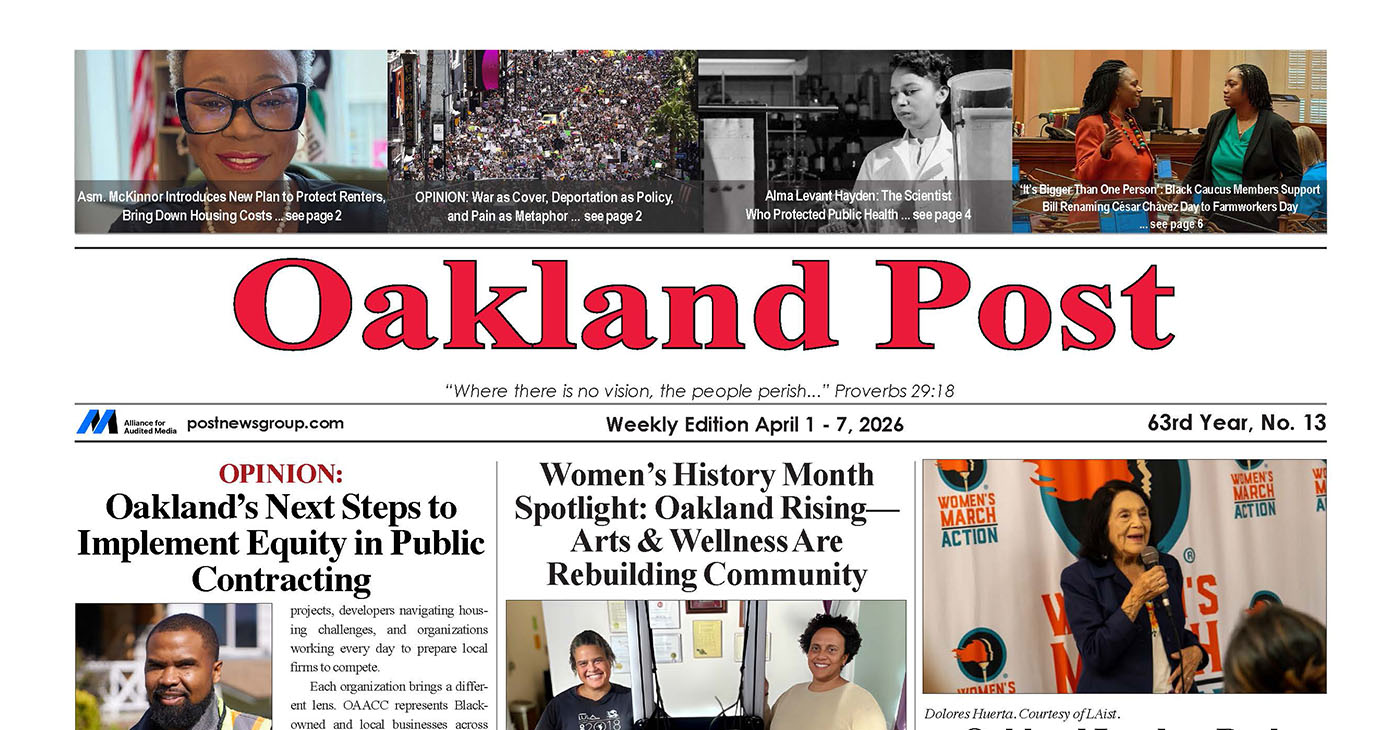
To enlarge your view of this issue, use the slider, magnifying glass icon or full page icon in the lower right corner of the browser window.
Activism
Oakland Post: Week of March 18 – 24, 2026
The printed Weekly Edition of the Oakland Post: Week of March 18 – 24, 2026
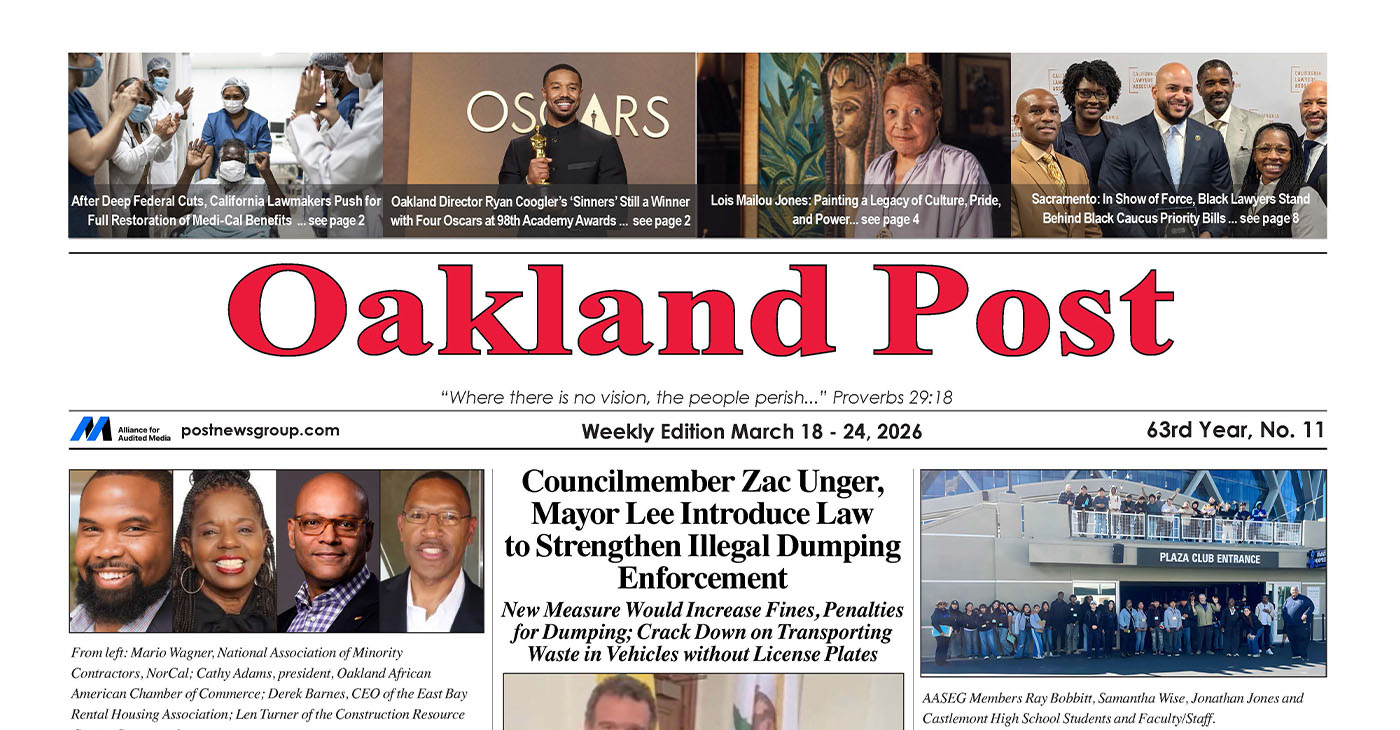
To enlarge your view of this issue, use the slider, magnifying glass icon or full page icon in the lower right corner of the browser window.
Activism
Oakland Post: Week of March 11 -17, 2026
The printed Weekly Edition of the Oakland Post: Week of March 11 – 17, 2026
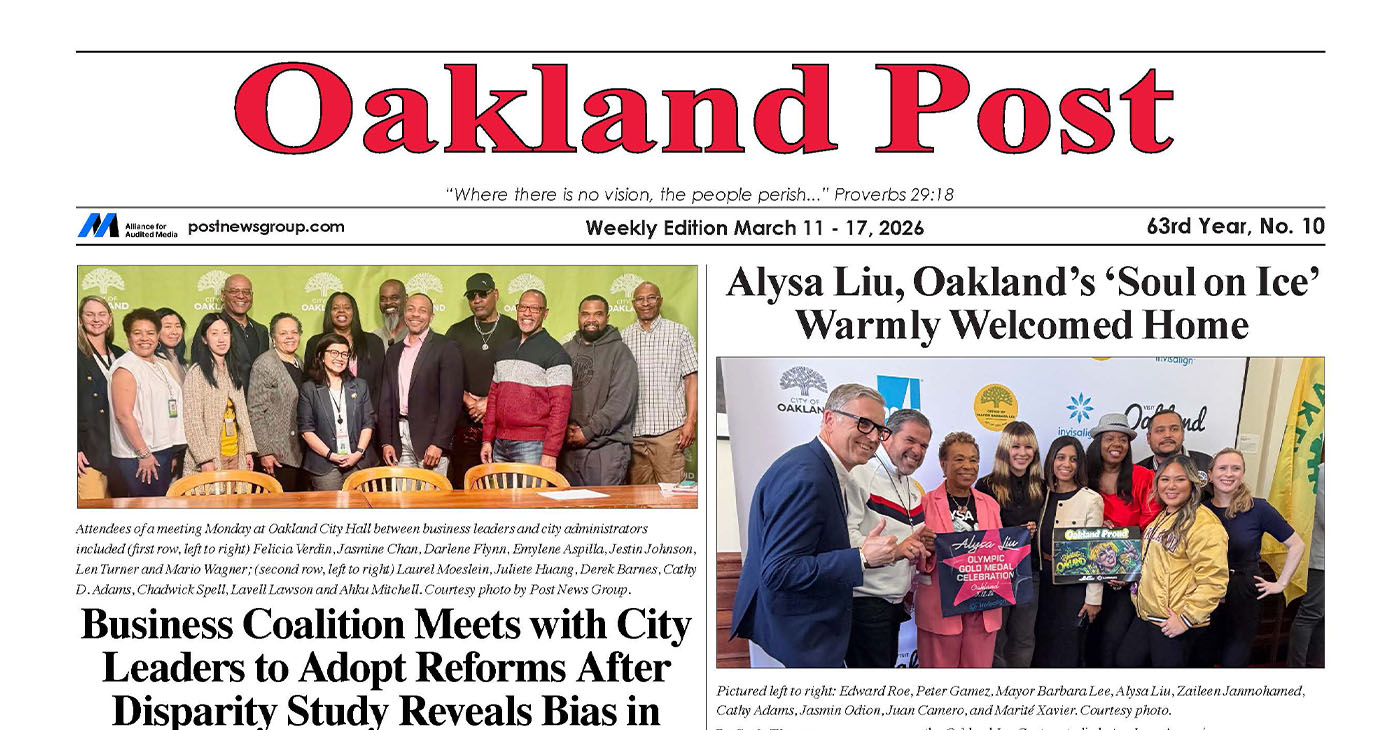
To enlarge your view of this issue, use the slider, magnifying glass icon or full page icon in the lower right corner of the browser window.

WORK FROM HOME
Home-based business with potential monthly income of $10K+ per month. A proven training system and website provided to maximize business effectiveness. Perfect job to earn side and primary income. Contact Lynne for more details: Lynne4npusa@gmail.com 800-334-0540


Oakland Post: Week of April 1 – 7, 2026

Black Artists in America, Installation Three Wraps at the Dixon Gallery and Gardens

Grief, Advocacy, and Education: A Counselor Reflects on Black Maternal Health

Future of Florida’s Black History Museum in Limbo

New Research Shows the Many Benefits of Early Learning

South Hampton K-8 Students Among Top 10 Finalists for Samsung’s ‘Solve for Tomorrow’ Competition

Cuba: No Negotiation with US on the President or Political System

Brooklyn Academy of Music Names Jamaican-Born Tamara McCaw as President

Trinidad & Tobego – U.S. Launches WhatsApp Channel for American Citizens in the Country

Oakland Post: Week of March 18 – 24, 2026

AI Innovation vs. Ethics and Environmental Impact

AI, Web3, and Digital Reparations

What If You Owned Your AI Agent?

Season 7, Episode 3 – January Reporter’s Roundtable 📱

Season 7, Episode 3 – January Reporter’s Roundtable

Reflecting on Black History Milestones in Birmingham AL

CITY OF SAN LEANDRO STATE OF CALIFORNIA PUBLIC WORKS DEPARTMENT ENGINEERING DIVISION NOTICE TO BIDDERS FOR ANNUAL STREET OVERLAY/REHABILITATION 2019-21 – PHASE III

Oakland Post: Week of February 18 – 24, 2026

Oakland Post: Week of February 25 – March 3, 2026

PRESS ROOM: NBA Hall of Fame Nominee Terry Cummings Joins 100 Black Men of DeKalb County to Launch Victory & Values Initiative

Trump’s MAGA Allies are Creating Executive Order Plan to Steal the 2026 Midterms

Oakland Post: Week of March 4 – 10, 2026

Chase Oakland Community Center Hosts Alley-Oop Accelerator Building Community and Opportunity for Bay Area Entrepreneurs

U.S. manufacturing rebounds – how foundry services are adapting to rising demand

Poll Shows Support for Policies That Help Families Afford Child Care

OP-ED: One Hundred Years of Black Workers Telling the Truth

Advancements in solar technology that are changing the way we power the world

Oakland Post: Week of March 11 -17, 2026

Woman’s Search for Family’s Roots Leads to Ancestor John T. Ward – A Successful Entrepreneur and Conductor on the Underground Railroad

COMMENTARY: Women of Color Shape Our Past and Future

Hyundai Ioniq 5 Parking, Safety, and 360 View #shorts

2025 Ioniq 5 New Wiper & Powerful Performance! #shorts

Electric SUV Range: Is 259 Miles Enough? #shorts

EV Charging: How Fast Can You Charge an Electric Vehicle? #shorts

Biometric Cooling… Messaging Seats…Come on! 2025 Infiniti QX80 Autograph 4WD

Charged Up: Witness the Magic of a Fully Electric Car! #shorts

Range Rover Sport PHEV Included…: See What’s Inside This Luxury SUV! #shorts

Invisible Hood View: Perfect Parking with X-Ray Vision! #shorts

AI Is Reshaping Black Healthcare: Promise, Peril, and the Push for Improved Results in California

ESSAY: Technology and Medicine, a Primary Care Point of View

Sanctuary Cities

The RESISTANCE – FREEDOM NOW

STATE OF THE PEOPLE: Freddie

ECONOMIC BOYCOTT DAY!!!!!

I told You So
-
 Activism4 weeks ago
Oakland Post: Week of March 4 – 10, 2026
-
 Activism3 weeks ago
Oakland Post: Week of March 11 -17, 2026
-
 #NNPA BlackPress4 weeks ago
Woman’s Search for Family’s Roots Leads to Ancestor John T. Ward – A Successful Entrepreneur and Conductor on the Underground Railroad
-
 #NNPA BlackPress4 weeks ago
COMMENTARY: Women of Color Shape Our Past and Future
-

 Advice3 weeks ago
Financial Wellness and Mental Health: Managing Money Stress in College
-

 #NNPA BlackPress4 weeks ago
Advocates Raise Alarm Over ICE Operation, MOU and Detention Risks in Baltimore County
-
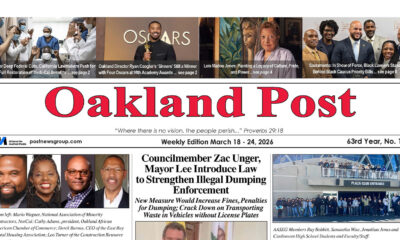 Activism2 weeks ago
Oakland Post: Week of March 18 – 24, 2026
-

 #NNPA BlackPress4 weeks ago
Pete Buttigieg to Join Mayor Randall Woodfin for Community Town Hall in Birmingham
