
World
Nigerian Troops Who Fled Boko Haram Now Have Them on the Run


Women and children rescued by Nigerian soldiers from Boko Haram extremists at Sambisa Forest wait for treatment at at a refugee camp in Yola, Nigeria Monday, May 4, 2015. Even with the crackle of gunfire signaling rescuers were near, the horrors did not end: Boko Haram fighters stoned captives to death, some girls and women were crushed by an armored car and three died when a land mine exploded as they walked to freedom. (AP Photo/Sunday Alamba)
MICHELLE FAUL, Associated Press
YOLA, Nigeria (AP) — A year ago, a dozen Nigerian troops fighting about 200 Boko Haram militants in the town of Chibok exhausted their ammunition and ran, leaving the road open for the abduction of nearly 300 girls.
Today, Nigerian soldiers are rescuing hundreds of kidnapped girls and women from the last forest stronghold of the Islamic insurgents.
The reason for the unimaginably swift shift in fortunes?
In the last three months, military forces from neighboring Chad, Niger and Cameroon have joined the battle. In addition, Nigerian troops are finally receiving better arms and weapons, as well as hazard pay that they had not received until this year.
As a result, Boko Haram’s supply lines are being cut off, creating conditions for the security forces to deliver a potential knockout blow to the extremists who have created havoc in northeastern Nigeria for years.
Nigeria’s military has announced that it has recaptured all major towns seized by the insurgents and that Boko Haram’s main fighting force is hemmed into the Sambisa Forest, where it is being pounded by air raids and attack helicopters. While the government forces are stronger, Boko Haram is growing weaker by the day.
Women rescued in recent days from forest camps said that now it is the insurgents who are running out of ammunition, along with food and fuel. That could explain why — when the captives refused to follow fleeing Boko Haram members last week — the militants did not shoot them. Instead, they stoned the girls and women, killing several of them.
Last year, Boko Haram fighters were able to escape across Nigeria’s borders to evade capture. Now, they are blocked by the troops from Chad, Niger and Cameroon. With Nigeria’s permission, Chad and Niger have even sent their forces inside Nigeria to pursue the extremists.
Routes used by Boko Haram to transport fuel and ammunition have been reclaimed by the military. On Sunday, military intelligence officers arrested a man who allegedly supplied fuel and food to Boko Haram, reported Defense Ministry spokesman Maj. Gen. Chris Olukolade.
Last year’s toll of people killed by Boko Haram was estimated at 10,000 — more than in all the previous four years of the insurgency combined. The group carried out cross-border attacks with impunity, seized a swath of northeastern Nigeria the size of Belgium and created a wave of 1.5 million refugees fleeing the self-declared Islamic caliphate.
President Goodluck Jonathan did not take a strong stand until this year — too late to save him from losing re-election in March as disgusted voters in Africa’s biggest democracy opted instead for Muhammadu Buhari, a former military dictator.
Jonathan also was slow to act when the group last year abducted the more than 200 schoolgirls in Chibok — initially denying it had even happened and losing precious weeks in the mass kidnapping that sparked worldwide outrage and a campaign for their freedom under the hashtag of #BringBackOurGirls. It is still unclear if any of the Chibok girls are among the 700 freed from Boko Haram in the past week.
Buhari had crushed another Islamic uprising in the 1980s, and he has vowed “to rid this nation of terror” after he becomes president on May 29. A retired major general, he describes himself as a convert to democracy, and showed it by taking power through the ballot box.
In the war zone, self-defense civilian groups patrol markets with homemade weapons, looking out for suicide bombers — but also for strangers buying large amounts of food, indicating they could be Boko Haram members or suppliers. While the group still has the ability to carry out bombings and isolated attacks, it would be difficult for it to surpass last year’s carnage.
Nigeria and its African partners say they want to eradicate Boko Haram. A more realistic goal may be to reduce it to what it used to be: a terror group with no control over territory — still able to launch attacks but not on as large a scale as before.
Soldiers on the battlefront around the hills and caves of Gwoza, which Boko Haram had declared the capital of its caliphate, told The Associated Press this week that many improvements have led to the turnaround against the insurgents. Among them:
— Troops this year began receiving the daily hazard pay of 15,000 naira ($75) for the first time.
— Some battle-weary troops who had been on the front lines for two years recently have been allowed to stand down.
— The forces have received new weapons and ammunition. Previously, there were reports that troops going into battle had only 30 rounds of ammunition each, with corrupt commanders diverting resources into their own pockets.
Since democracy was restored in Nigeria in 1999, civilian governments have deliberately kept the armed forces weak to ensure that soldiers could not mount any more of the coups that kept the West African nation subjected to military dictatorships for decades. Boko Haram has forced a change in that strategy.
Africa’s biggest oil producer has bought helicopters, drones, armored personnel carriers, tanks, rocket launchers and other armaments. This includes helicopter gunships that are being used in the Sambisa Forest to scatter the militants and drive them away from their captives, according to video released Monday by PR Nigeria, an agency that disseminates government information.
“What we never had, we now have,” the government spokesman on the insurgency, Mike Omeri, told the AP in a recent interview. “We have drones, we have aircraft, we have APCs, and so on, and we are getting to where we should be to rebuild the armed forces, returning it to its glory.”
Buhari will be tested on whether he can revive the economy in the northeast, which has been decimated by the uprising. Hundreds of thousands of farmers have been driven from their lands, some of the biggest cattle markets on the continent no longer exist and many investors have abandoned the region. Rebuilding the hundreds of thousands of structures razed by Boko Haram will cost many millions of dollars.
The stakes are high for landlocked Chad as well, since many of its trading routes have been closed by the insurgency.
Economic strife has been one of the root causes for the rise of Boko Haram, which has exploited the feelings of exclusion among the unemployed and disaffected men in predominantly Muslim northern Nigeria.
Buhari also has promised to address corruption, another reason for the group’s growth. Corruption sapped the military of its strength and has deprived front-line troops of weapons and vehicles. Unless Buhari can root it out, it will affect the military’s capability to prevent the rise of another group like Boko Haram.
___
Associated Press writer Ibrahim Abdulaziz contributed to this report from Yola, Nigeria.
Copyright 2015 The Associated Press. All rights reserved. This material may not be published, broadcast, rewritten or redistributed.








Activism
African Union Group to Award Rev. Dr. Amos Brown for Bringing Civil Rights Movement to Global Stage
Dr. Macaulay Kalu, secretary general of AU6RG, will present Dr. Brown with the Global Peace Builder Award. Other presenters include Rev. Dr. Freddie Haynes, senior pastor of Friendship West Baptist Church in Dallas; Oakland Mayor Barbara Lee, long-time advocate for appropriations to Africa as a congressmember; Rick Callendar, California-Hawaii president of the NAACP; Dr. Ike Neliaku, president and chairman of the Nigerian Institute of Public Relations; Pastor Ituah Ighodalo, head of the African Leadership Group and Ambassador Thompson and John William Templeton, founder of the Journal of Black Innovation National Black Business Month®.

By Carla Thomas and John William Templeton
On Aug. 31, the Third Baptist Church of San Francisco will mark its 173rd anniversary with an event steeped in history and global significance. This year’s commemoration, themed “Achieving Dr. King’s Promised Land Together,” will honor the lifelong achievements of Dr. Amos C. Brown, Sr.— a towering figure in the Civil Rights Movement — on a day that also observes the International Day for People of African Descent.
Brown will be recognized by the African Union’s organ for Africans abroad for ‘planetizing’ the civil rights movement gains at San Francisco’s Third Baptist Church, 1399 McAllister St., at 3 p.m.
The African Union, made up of 54 countries on the African continent, consists of five regions. It created a sixth region, the African Union Sixth Region Global (AU6RG), for the 400 million Africans living abroad. On Sept. 7, the second AU-Caribbean Community Summit occurs in Addis Ababa, Ethiopia.
Dr. Macaulay Kalu, secretary general of AU6RG, will present Dr. Brown with the Global Peace Builder Award. Other presenters include Rev. Dr. Freddie Haynes, senior pastor of Friendship West Baptist Church in Dallas; Oakland Mayor Barbara Lee, long-time advocate for appropriations to Africa as a congressmember; Rick Callendar, California-Hawaii president of the NAACP; Dr. Ike Neliaku, president and chairman of the Nigerian Institute of Public Relations; Pastor Ituah Ighodalo, head of the African Leadership Group and Ambassador Thompson and John William Templeton, founder of the Journal of Black Innovation National Black Business Month®.
Held during the 173rd anniversary of the church, the event called “Africa-America: Achieving Dr. King’s Promised Land Together” is a Diaspora-wide discussion led by Dr. Brown on what Martin Luther King, Jr. would say today.
Galvanized by the horrific 1955 slaying of Emmett Till, Dr. Brown’s journey in activism began in Jackson, Mississippi, where a neighbor, Medgar Evers, the NAACP’s first field secretary in that state, encouraged Brown to found the Mississippi NAACP Youth Council.
In 1956, Evers personally drove Brown to the NAACP convention in San Francisco, where Brown would first hear Dr. Martin Luther King Jr. speak. Brown became a prominent Freedom Rider, later attending Morehouse College and taking the only class Dr. King ever taught there. Thirteen years after Evers was assassinated in Jackson, Brown arrived at Third Baptist Church in 1976, serving with distinction for 49 years before his recent retirement. Under his stewardship, the church solidified its commitment to social justice and international unity.
His Excellency Rev. Ladi Peter Thompson, deputy secretary general for peace and security of AU6RG, said, “As a mentee of Medgar Evers, Freedom Rider and student of Dr. Martin Luther King Jr., Dr. Brown is the perfect authority for the young people of the Diaspora on achieving the prophetic goal that Dr. King foresaw in Memphis.”
Lady Dentaa Amoateng, founder of Grow, Unite, Build Africa (GUBA), will also announce that Dr. Brown is an honoree at the GUBA Award in Bridgetown, Barbados in November. The popular actress in Ghana and the United Kingdom will attend in person.
Dr. Lezli Baskerville, president/counsel of the National Association for Equal Opportunity in Higher Education, which includes 105 Historically Black Colleges and Universities (HBCUs) and 90 predominantly Black institutions (PBIs), invites its students, faculty, and alumni to attend or join remotely.
“HBCUs produced both Dr. King and Dr. Kwame Nkrumah and are the fountainhead for Diaspora unity,” said Baskerville.
Templeton, author of “ReUNION: State of Black Business, 22d edition,” said “Our movement will advocate the continuance of tariff-free treatment for Africa and the Caribbean; respect for African-American and African elected officials and the 13th, 14th, and 15th Amendments and the strengthening of educational and research connections across the Diaspora.”
Templeton said Black institutions have been at the forefront of defining the image of 1.5 billion Black people globally, a mission that is even more important as African youth will be the majority of the world’s young people in the coming decades.
ABOUT THIRD BAPTIST CHURCH
Founded on West Indian Emancipation Day on Aug.1, 1852, Third Baptist said in its annual report in 1858 that its sole purpose was the elimination of American chattel slavery and took an active role among the California abolitionists who convinced President Abraham Lincoln to issue the Emancipation Proclamation. The current sanctuary is constructed with wood from the Goodall Mansion, where President U.S. Grant stayed after leaving the White House, and is the last place where Dr. W.E.B. DuBois spoke before leaving for Africa in 1958.
Activism
Newsom, Pelosi Welcome Election of First American Pope; Call for Unity and Compassion
“In his first address, he reminded us that God loves each and every person,” said Newsom. “We trust that he will shepherd us through the best of the Church’s teachings: to respect human dignity, care for the poor, and wish for the common good of us all.” Newsom also expressed hope that the pontiff’s leadership would serve as a unifying force in a time of global instability.

By Bo Tefu, California Black Media
Gov. Gavin Newsom and First Partner Jennifer Siebel Newsom on May 8 issued a statement congratulating Pope Leo XIV on his historic election as the first American to lead the Catholic Church.
The announcement has drawn widespread reaction from U.S. leaders, including former House Speaker Nancy Pelosi, who called the moment spiritually significant and aligned with the values of service and social justice.
In their statement, the Newsoms expressed hope that the newly elected pope would guide the Church with a focus on compassion, dignity, and care for the most vulnerable. Newsom said he and the First Partner joined others around the world in celebrating the milestone and were encouraged by the pope’s first message.
“In his first address, he reminded us that God loves each and every person,” said Newsom. “We trust that he will shepherd us through the best of the Church’s teachings: to respect human dignity, care for the poor, and wish for the common good of us all.”
Newsom also expressed hope that the pontiff’s leadership would serve as a unifying force in a time of global instability.
“May he remind us that our better angels are not far away — they’re always within us, waiting to be heard,” he said.
Pelosi, a devout Catholic, also welcomed the pope’s election and noted his symbolic connection to earlier church leaders who championed workers’ rights and social equality.
“It is heartening that His Holiness continued the blessing that Pope Francis gave on Easter Sunday: ‘God loves everyone. Evil will not prevail,’” said Pelosi.
Activism
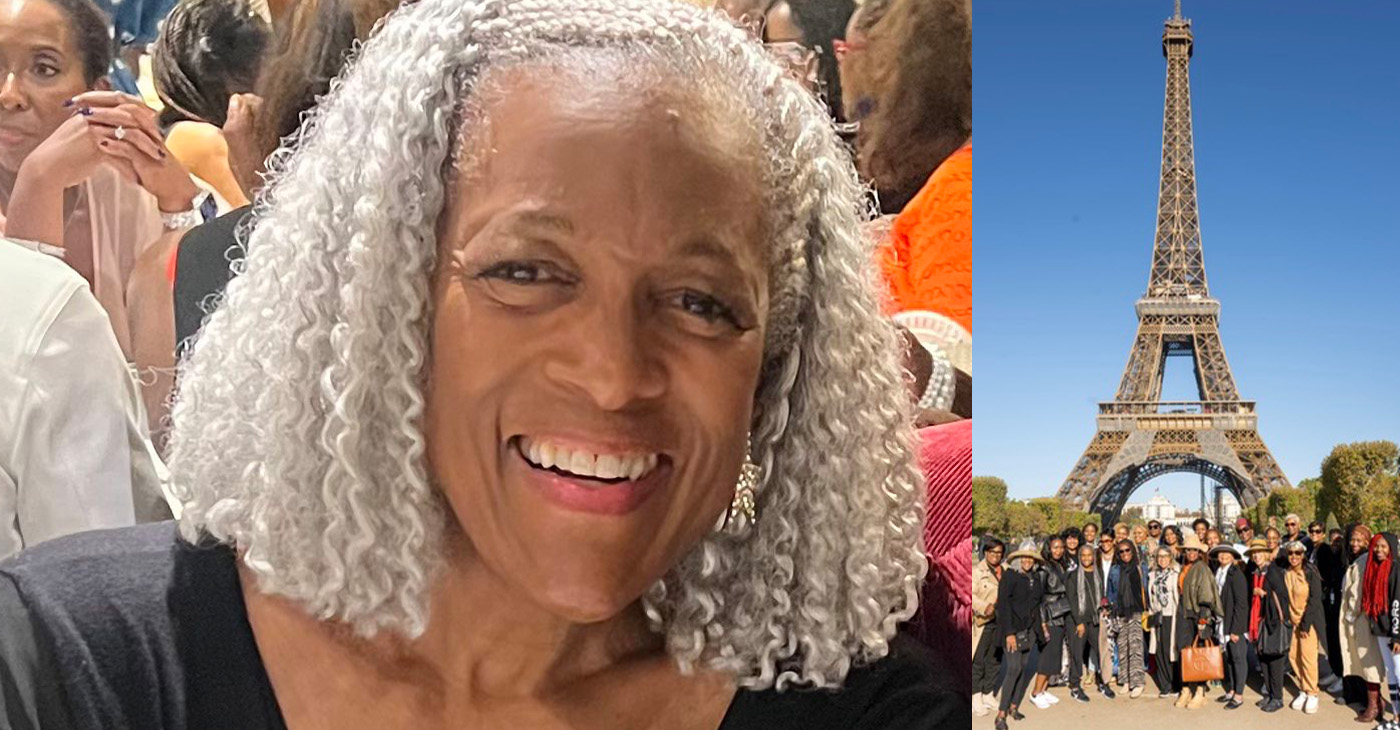
Retired Bay Area Journalist Finds Success in Paris with Black History Tours
In the late 90s, Stevenson finally realized her dream of living in Paris, now with her daughter. She started exploring the history of Africans in the city and would go on to teach others the same. Her business, which she named Black Paris Tours (BPT), received a significant boost when a family friend gave her a stack of cash and encouraged her to expand on the knowledge that she had only started to share with people she knew.
By Post Staff
There were two things Oakland-born, East Palo Alto-raised Ricki Stevenson always dreamed of:
- Going to New York as a newscaster to tell the true story of Blacks in America.
- Living and working in Paris one day.
Her dreams of life in Paris began when she was three years old and her mother, a former professional dancer, took her to see Josephine Baker perform. She was 11 when her parents took her to the Stanford University campus to meet James Baldwin, who was speaking about his book, “The Fire Next Time.” Ricki says that’s when she knew she’d one day live in Paris, “the city of light!”
But before that would ever happen, she had a tumultuous career as a newscaster across the country that was inspired by her family’s history.
Stevenson recalls marching with Cesar Chavez as he fought for labor rights for farm workers in California.
“Are we Mexican too?” she asked her parents. “No, but we will fight for everyone’s human rights,” they responded to her.
Ironically, Ricki’s paternal family roots went back to Greenwood, Oklahoma, infamous for the 1921 bombing of Black Wall Street. A time when Black people had oil wells, banks, and a thriving business community.

This background would propel her into a 25-year journalism career that gave her the opportunity to interview greats like President Jimmy Carter, PLO leader Yassir Arafat, James Baldwin, Rev. Jesse Jackson, UN Ambassador Andrew Young, Miriam Makeba, and the leaders of South African liberation movements.
A job offer from KCBS radio brought her back to the Bay Area in the 1980s. Then came the switch to TV when she was hired as a Silicon Valley business reporter with KSTS TV, working at the first Black-owned television station in northern CA (created and owned by John Douglas). Along the way, Stevenson worked as an entertainment reporter with BET; coproduced, with her disc jockey brother Isaac, a Bay Area show called “Magic Number Video;” lived in Saudi Arabia; worked as an international travel reporter with News Travel Network; and worked at KRON TV a news anchor and talk show host.
In 1997, Stevenson realized her dream of living in Paris with her young daughter, Dedie. She started exploring the history of Africans in the city and would go on to teach others the same. Her business, which she named Black Paris Tours (BPT), received a significant boost when a family friend, Admiral Robert Toney put a chunk of money in her hand. He said, “Ricki, my wife and I have been coming to Paris for 20 years, but in just two days with you and Dedie, we’ve learned and seen more than we ever did before.”
Years after BPT took off, Ricki met Nawo Carol Crawford and Miguel Overton Guerra, who she recruited as senior scholar guides for Black Paris Tours.
Guerra says he is proud of his work with Black Paris Tours in that it provides a wealth of information about the rich legacy of African and African American history and influence in Paris and Europe.
“I tend to have a feeling for history always being a means of a reference point backwards … you start to understand the history, that it isn’t just the United States, that it began with African people,” Guerra says.
He said that it’s been a pleasure to watch people learn something they didn’t know before and to take them through the city to key points in Black history, like hangout spots for writers like Baldwin and Richard Wright, restaurants in the busiest parts of Paris, the home of Josephine Baker and so much more.
Although the tours are open to all, Guerra hopes that those of African descent from all over the world can embrace that they don’t have to just stay where they are because movies and media have portrayed cities like Paris to be only white, it’s multicultural and accepting to all.
“We’ve been here, and we’ve been there, going way back when. And we shouldn’t be considered or consider ourselves to be strangers in any place that we go to,” he said.
Stevenson notes they’ve had 150,000 people take their tour over the years, with notables like former NFL quarterback Colin Kaepernick, Smokey Robinson, Steve Harvey, Miriam Makeba, and more.
Friends and former media colleagues of Stevenson compliment the BPT crew on their knowledge of the city and their ability to always keep it interesting.
“He [Guerra] just had a deep, deep wealth of knowledge and he was constantly supplanting information with historical facts and the like. I love that it was demonstrating and showing how Black people have thrived in Paris or contributed to the culture in Paris,” Candice Francis said.
She toured in the summer of 2022 and stated that in the two weeks that they visited Paris, BPT was the highlight of her trip. She shared that she was proud of Stevenson and the life she’d managed to manifest and build for herself.
“Even if you’re visiting Paris for the tenth time, if you haven’t taken the tour, then by all means, take it,” Francis emphasized.
Magaly Muñoz, Gay Plair and Paul Cobb also contributed to this story. You can book your own adventure with Black Paris Tours at www.blackparistour.com.


WORK FROM HOME
Home-based business with potential monthly income of $10K+ per month. A proven training system and website provided to maximize business effectiveness. Perfect job to earn side and primary income. Contact Lynne for more details: Lynne4npusa@gmail.com 800-334-0540


Oakland Post: Week of April 1 – 7, 2026

Black Artists in America, Installation Three Wraps at the Dixon Gallery and Gardens

Grief, Advocacy, and Education: A Counselor Reflects on Black Maternal Health

Future of Florida’s Black History Museum in Limbo

New Research Shows the Many Benefits of Early Learning

South Hampton K-8 Students Among Top 10 Finalists for Samsung’s ‘Solve for Tomorrow’ Competition

Cuba: No Negotiation with US on the President or Political System

Brooklyn Academy of Music Names Jamaican-Born Tamara McCaw as President

Trinidad & Tobego – U.S. Launches WhatsApp Channel for American Citizens in the Country

Oakland Post: Week of March 18 – 24, 2026

AI Innovation vs. Ethics and Environmental Impact

AI, Web3, and Digital Reparations

What If You Owned Your AI Agent?

Season 7, Episode 3 – January Reporter’s Roundtable 📱

Season 7, Episode 3 – January Reporter’s Roundtable

Reflecting on Black History Milestones in Birmingham AL

Oakland Post: Week of February 25 – March 3, 2026

PRESS ROOM: NBA Hall of Fame Nominee Terry Cummings Joins 100 Black Men of DeKalb County to Launch Victory & Values Initiative

Oakland Post: Week of March 4 – 10, 2026

Trump’s MAGA Allies are Creating Executive Order Plan to Steal the 2026 Midterms

U.S. manufacturing rebounds – how foundry services are adapting to rising demand

Poll Shows Support for Policies That Help Families Afford Child Care

Oakland Post: Week of March 11 -17, 2026

OP-ED: One Hundred Years of Black Workers Telling the Truth

Advancements in solar technology that are changing the way we power the world
Oakland Post: Week of March 18 – 24, 2026

Woman’s Search for Family’s Roots Leads to Ancestor John T. Ward – A Successful Entrepreneur and Conductor on the Underground Railroad

Financial Wellness and Mental Health: Managing Money Stress in College

COMMENTARY: Women of Color Shape Our Past and Future

PRESS ROOM: Civil Rights TV Launches in Selma as the World’s First 24/7 Civil Rights Television Network

Hyundai Ioniq 5 Parking, Safety, and 360 View #shorts

2025 Ioniq 5 New Wiper & Powerful Performance! #shorts

Electric SUV Range: Is 259 Miles Enough? #shorts

EV Charging: How Fast Can You Charge an Electric Vehicle? #shorts

Biometric Cooling… Messaging Seats…Come on! 2025 Infiniti QX80 Autograph 4WD

Charged Up: Witness the Magic of a Fully Electric Car! #shorts

Range Rover Sport PHEV Included…: See What’s Inside This Luxury SUV! #shorts

Invisible Hood View: Perfect Parking with X-Ray Vision! #shorts

AI Is Reshaping Black Healthcare: Promise, Peril, and the Push for Improved Results in California

ESSAY: Technology and Medicine, a Primary Care Point of View

Sanctuary Cities

The RESISTANCE – FREEDOM NOW

STATE OF THE PEOPLE: Freddie

ECONOMIC BOYCOTT DAY!!!!!

I told You So
-
 Activism3 weeks ago
Oakland Post: Week of March 11 -17, 2026
-
 Activism2 weeks ago
Oakland Post: Week of March 18 – 24, 2026
-
 Advice3 weeks ago
Financial Wellness and Mental Health: Managing Money Stress in College
-
 #NNPA BlackPress2 weeks ago
Brooklyn Academy of Music Names Jamaican-Born Tamara McCaw as President
-

 Advice3 weeks ago
Women & Wealth: Tips for Navigating Your Lifelong Financial Journey
-
 #NNPA BlackPress2 weeks ago
Grief, Advocacy, and Education: A Counselor Reflects on Black Maternal Health
-
 #NNPA BlackPress2 weeks ago
New Research Shows the Many Benefits of Early Learning
-
 #NNPA BlackPress2 weeks ago
Trinidad & Tobego – U.S. Launches WhatsApp Channel for American Citizens in the Country
