
Activism
Medical Debt in California: As Permanent Solutions Take Root, Blacks Remain Hardest Hit
On June 26, the Los Angeles County Board of Supervisors approved a $5 million pilot program to eliminate up to $500 million in medical debt owed by an estimated 150,000 residents. The funds will be used for an agreement with Undue Medical Debt, a non-profit organization that buys unpaid debt at a fraction of its original cost and absolves it. The effort is expected to launch later this year. The initiative, authored by Supervisors Holly Mitchell and Janice Hahn, intends to eventually buy a total of $2.9 billion in medical debt, impacting some 800,000 L.A. County residents.

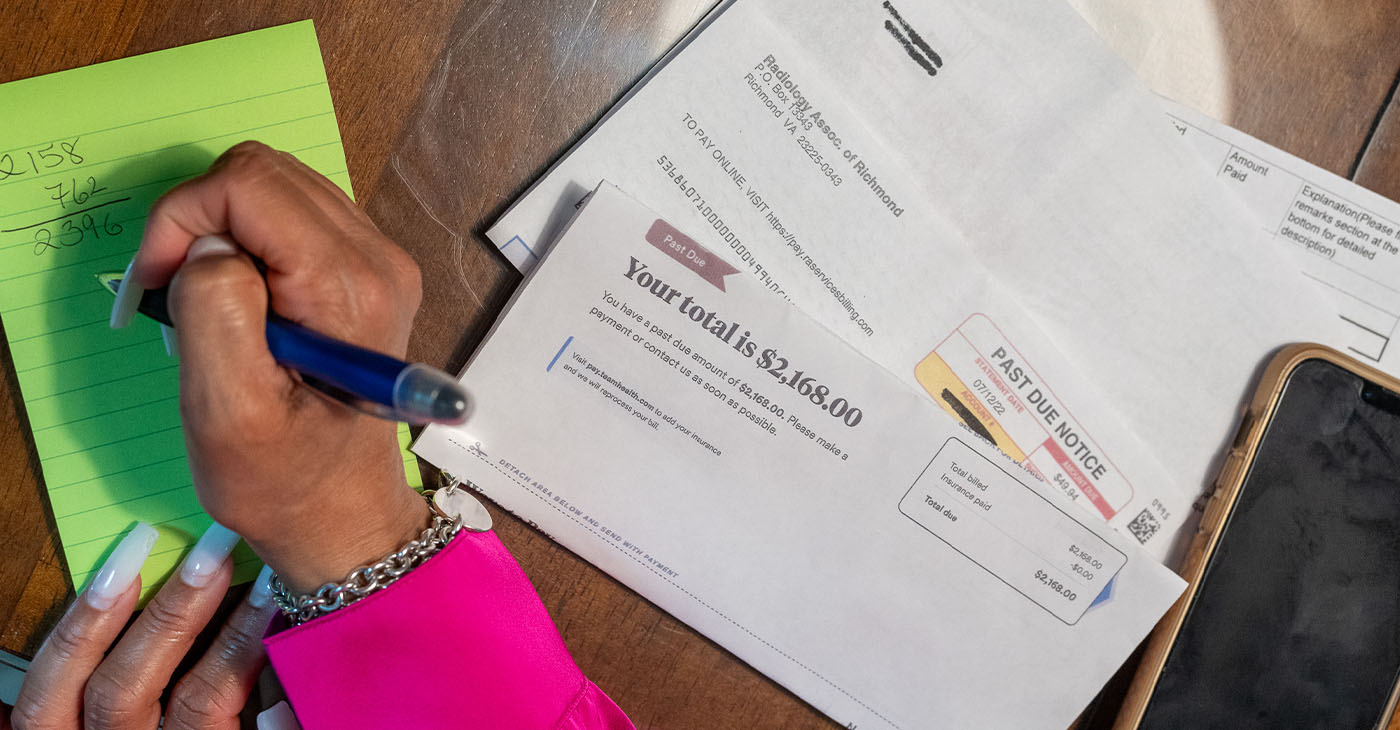
By Edward Henderson California Black Media
On June 11, Vice President Kamala Harris and Consumer Financial Protection Bureau Director (CFPB) Rohit Chopra announced that the Biden administration has established a new federal rule that removes medical debt from the credit reports of nearly 15 million Americans. The rule also bans reporting agencies from factoring that debt into credit scores.
“We are making it so that medical debt cannot be used against you when you apply for a car loan, a home loan, or a small-business loan,” said the Vice President.
“Millions of Americans will see an increase in their credit score, on average, of 20 points, which will mean every year an estimated 22,000 more American families will be approved for a mortgage and able to buy a home,” she added.
On June 26, the Los Angeles County Board of Supervisors approved a $5 million pilot program to eliminate up to $500 million in medical debt owed by an estimated 150,000 residents. The funds will be used for an agreement with Undue Medical Debt, a non-profit organization that buys unpaid debt at a fraction of its original cost and absolves it. The effort is expected to launch later this year. The initiative, authored by Supervisors Holly Mitchell and Janice Hahn, intends to eventually buy a total of $2.9 billion in medical debt, impacting some 800,000 L.A. County residents.
The federal government and Los Angeles County are not alone in trying to find permanent solutions to the worrisome problem of medical debt. Policymakers and advocates in California and around the country have been proposing a range of solutions to address the escalating problem of medical debt, which burdens people at all income levels, but falls especially hard on middle-class Black people.
In 2020, nearly 23.5% of Americans earning between $50,000 and $100,000 had medical debt that they could not afford to pay according to a study by Third Way, a Washington-D.C.-based think tank.
For African Americans, the numbers are particularly concerning. About 38% of Black Americans have accrued medical debt they can’t afford to pay.
“Medical debt is more than a financial burden; it is a profound health crisis that disproportionately impacts Black Californians, stripping them of economic security and mental peace, perpetuating a cycle of economic insecurity and health disparities in communities already vulnerable,” states Kellie Todd Griffin, President & CEO of California Black Women’s Collective Empowerment Institute.
Why do Black people have so much more medical debt than their White peers? Researchers from the National Consumer Law Center point to both the racial wealth gap and the racial health gap. In their 2022 report on medical debt, they found that “racial inequality underlies these disparities in medical debt.” Without equal opportunities to earn, save and build wealth through homeownership, Black people are less able to pay their medical bills, which leaves them unable to get medical care. This leads to a spiral of debt and poor health.”
According to the California Reparations Report, in 2019, the median African American household had a net worth of $24,100 as compared to the median net worth of white households of $188,200.
According to the report, “This wealth gap persists regardless of education level and family structure.”
Consider the case of Bethany Harris, a Black, middle-class resident of San Diego.
When excruciating back pain drove Harris to seek medical attention, she had no idea that doctors would admit her and recommend gallbladder surgery. She ended up spending three days in the hospital.
Despite having a stable professional job and employer-provided health, Harris was shocked to receive a $4,500 co-pay for her initial care and tests. A year later, the surgery added another $6,500 in co-pay responsibility.
“The co-pay is ridiculous,” Harris told California Black Media. I have been spending all this money out of my paycheck for 20 years for insurance. I barely use it outside of annual physicals and eyeglasses. It’s crazy, there is no way I can afford this stuff.”
For middle-class Black Californians like Harris, their income level often disqualifies them from most institutional discounts, government financial assistance, and nonprofit assistance.
Rhonda Smith, Executive Director of the California Black Health Network (CBHN), told California Black Media, “People with medical debt absolutely have rights.”
“California requires hospitals to provide financial aid to patients.” Download your hospital’s financial aid policy. You can get the policies and applications in the state on the California Department of Health Access and Information (HCAI) website.”
Dr. Naman Shah is a family physician and epidemiologist at the LA Department of Public Health, where he is Director for the Division of Medical and Dental Affairs.
Shah mentioned some of the other pitfalls that can plunge individuals further into debt, including medical credit cards and dubious or unclear billing methods employed by some hospitals. In addition, debt collections agencies will apply unscrupulous methods and, according to a study by ProPublica, disproportionately target Black communities.
A range of policies and programs to address medical debt are in motion across the country and here in California. In January 2024, New York City Mayor Eric Adams approved $18 million to purchase the medical debt of 500,000 New Yorkers, saving them up to $2 billion.
In March, state Attorney General Rob Bonta, Senator Monique Limón (D- Santa Barbara), and a coalition of prominent consumer advocacy organizations unveiled Senate Bill 1061 (SB 1061), legislation seeking to protect the financial security of Californians by prohibiting medical debt from being listed on credit reports.
Before Harris announced the White House rule, U.S. Senators Bernie Sanders (D-VT.) and Jeff Merkley (D-OR.) and U.S. Rep. Ro Khanna (D-CA-17) introduced legislation in May to cancel some $220 billion in medical debt owed by Americans across the country.
“This is the United States of America, the richest country in the history of the world. People in our country should not be going bankrupt because they got cancer and could not afford to pay their medical bills,” said Sanders. “The time has come to cancel all medical debt and guarantee health care to all as a human right, not a privilege.”
This article is supported by the California Black Health Journalism Project, a program created by California Black Media, that addresses the top health challenges African Americans in California face. It relies on the input of community and practitioners; an awareness of historical factors, social contexts and root causes; and a strong focus on solutions as determined by policymakers, advocates and patients.











Activism
Oakland Post: Week of April 1 – 7, 2026
The printed Weekly Edition of the Oakland Post: Week of April 1 – 7, 2026
To enlarge your view of this issue, use the slider, magnifying glass icon or full page icon in the lower right corner of the browser window.
Activism
Oakland Post: Week of March 18 – 24, 2026
The printed Weekly Edition of the Oakland Post: Week of March 18 – 24, 2026
To enlarge your view of this issue, use the slider, magnifying glass icon or full page icon in the lower right corner of the browser window.
Activism
Oakland Post: Week of March 11 -17, 2026
The printed Weekly Edition of the Oakland Post: Week of March 11 – 17, 2026
To enlarge your view of this issue, use the slider, magnifying glass icon or full page icon in the lower right corner of the browser window.

WORK FROM HOME
Home-based business with potential monthly income of $10K+ per month. A proven training system and website provided to maximize business effectiveness. Perfect job to earn side and primary income. Contact Lynne for more details: Lynne4npusa@gmail.com 800-334-0540


Oakland Post: Week of April 1 – 7, 2026

Black Artists in America, Installation Three Wraps at the Dixon Gallery and Gardens

Grief, Advocacy, and Education: A Counselor Reflects on Black Maternal Health

Future of Florida’s Black History Museum in Limbo

New Research Shows the Many Benefits of Early Learning

South Hampton K-8 Students Among Top 10 Finalists for Samsung’s ‘Solve for Tomorrow’ Competition

Cuba: No Negotiation with US on the President or Political System

Brooklyn Academy of Music Names Jamaican-Born Tamara McCaw as President

Trinidad & Tobego – U.S. Launches WhatsApp Channel for American Citizens in the Country

Oakland Post: Week of March 18 – 24, 2026

AI Innovation vs. Ethics and Environmental Impact

AI, Web3, and Digital Reparations

What If You Owned Your AI Agent?

Season 7, Episode 3 – January Reporter’s Roundtable 📱

Season 7, Episode 3 – January Reporter’s Roundtable

Reflecting on Black History Milestones in Birmingham AL

Oakland Post: Week of February 25 – March 3, 2026

PRESS ROOM: NBA Hall of Fame Nominee Terry Cummings Joins 100 Black Men of DeKalb County to Launch Victory & Values Initiative

Oakland Post: Week of March 4 – 10, 2026

Trump’s MAGA Allies are Creating Executive Order Plan to Steal the 2026 Midterms

U.S. manufacturing rebounds – how foundry services are adapting to rising demand

Poll Shows Support for Policies That Help Families Afford Child Care

Oakland Post: Week of March 11 -17, 2026

OP-ED: One Hundred Years of Black Workers Telling the Truth

Advancements in solar technology that are changing the way we power the world
Oakland Post: Week of March 18 – 24, 2026

Woman’s Search for Family’s Roots Leads to Ancestor John T. Ward – A Successful Entrepreneur and Conductor on the Underground Railroad

Financial Wellness and Mental Health: Managing Money Stress in College

COMMENTARY: Women of Color Shape Our Past and Future

PRESS ROOM: Civil Rights TV Launches in Selma as the World’s First 24/7 Civil Rights Television Network

Hyundai Ioniq 5 Parking, Safety, and 360 View #shorts

2025 Ioniq 5 New Wiper & Powerful Performance! #shorts

Electric SUV Range: Is 259 Miles Enough? #shorts

EV Charging: How Fast Can You Charge an Electric Vehicle? #shorts

Biometric Cooling… Messaging Seats…Come on! 2025 Infiniti QX80 Autograph 4WD

Charged Up: Witness the Magic of a Fully Electric Car! #shorts

Range Rover Sport PHEV Included…: See What’s Inside This Luxury SUV! #shorts

Invisible Hood View: Perfect Parking with X-Ray Vision! #shorts

AI Is Reshaping Black Healthcare: Promise, Peril, and the Push for Improved Results in California

ESSAY: Technology and Medicine, a Primary Care Point of View

Sanctuary Cities

The RESISTANCE – FREEDOM NOW

STATE OF THE PEOPLE: Freddie

ECONOMIC BOYCOTT DAY!!!!!

I told You So
-
 Activism3 weeks ago
Oakland Post: Week of March 11 -17, 2026
-
 Activism2 weeks ago
Oakland Post: Week of March 18 – 24, 2026
-
 Advice3 weeks ago
Financial Wellness and Mental Health: Managing Money Stress in College
-
 #NNPA BlackPress2 weeks ago
Brooklyn Academy of Music Names Jamaican-Born Tamara McCaw as President
-
 #NNPA BlackPress2 weeks ago
Grief, Advocacy, and Education: A Counselor Reflects on Black Maternal Health
-

 Advice3 weeks ago
Women & Wealth: Tips for Navigating Your Lifelong Financial Journey
-
 #NNPA BlackPress2 weeks ago
New Research Shows the Many Benefits of Early Learning
-
 #NNPA BlackPress2 weeks ago
Black Artists in America, Installation Three Wraps at the Dixon Gallery and Gardens
