
Politics
FACT CHECK: Why Bush’s Growth Forecast is a Stretch


Republican presidential candidate, former Florida Gov. Jeb Bush talks to members of the media after speaking to voters at the Derry Opera House, Tuesday, June 16, 2015, in Derry, N.H. Bush is campaigning in the nation’s earliest presidential primary state. (AP Photo/Jim Cole)
JOSH BOAK, AP Economics Writer
WASHINGTON (AP) — Republican presidential candidate Jeb Bush says there’s “not a reason in the world” why the U.S. economy can’t grow at 4 percent annually.
Actually, there are a bunch of reasons it probably can’t.
Many economists say the U.S. economy is ill equipped to grow consistently at even close to 4 percent. Current forecasts put growth averaging half that rate. Any president, Republican or Democrat, would have to overcome decades-long trends that are largely beyond the control of the Oval Office.
Those trends include the retirements of the vast generation of baby boomers — an exodus that limits the number of workers in the economy. Rising automation and low-wage competition overseas are among other factors. A result has been meager income growth, which has cut into the consumer spending that drives most economic growth.

“It would require substantial changes in fiscal and regulatory policy that I don’t believe any president could reasonably expect to enact in one term,” said Robert Stein, an economist at First Trust Advisors who was a Treasury Department official during George W. Bush’s presidency.
In his campaign announcement on Monday, Jeb Bush said “there is not a reason in the world why we cannot grow at a rate of 4 percent a year. And that will be my goal as president – 4 percent growth, and the 19 million new jobs that come with it.”
The pledge originated from a plan by the George W. Bush Institute to achieve growth averaging 4 percent for a decade.
Conservative economists defend the target as aspirational, a pledge that would leave the economy better off even if the next president fell short.
“I’m less concerned about the number than the commitment to grow rapidly,” said Douglas Holtz-Eakin, an economist who has advised Republican presidential candidates and now serves as president of the American Action Forum.
The historical odds of doubling growth from its current level are low.
Only four of the 16 presidential terms since World War II have experienced annual economic growth averaging more than 4 percent after inflation, according to research published last year by Princeton University economists Alan Blinder and Mark Watson.
President Harry Truman reaped the peace dividend as U.S. manufacturers helped rebuild nations devastated by World War II. The Kennedy and Johnson administrations enjoyed a boom because of tax cuts. And President Bill Clinton benefited during his second term from low interest rates and what eventually became a tech-stock bubble.
There are two primary ways to grow an economy faster: add more workers or increase their efficiency so that each hour on the job generates more income. Neither factor looks spectacular enough to deliver 4 percent growth, particularly since the share of Americans working has drifted downward as the number of retirees has increased.
“The demographics right now are for slowing population growth,” said Chad Stone, chief economist at the Center on Budget and Policy Priorities, a liberal think tank.
The economy has 157.5 million workers, including the unemployed on the hunt for a job, according to the Labor Department. Their ranks increased just 0.3 percent in 2014, the best year for hiring since the late 1990s. When economic growth averaged roughly 4 percent during Clinton’s second term, the growth rate for the number of workers joining the economy averaged 1.5 percent, nearly five times higher than the current level.
Because baby boomers are starting to retire, the nonpartisan Congressional Budget Office expects the rate will remain low and hinder broader growth. The CBO in January estimated that growth would average just 2.1 percent annually from 2018 to 2025.
In theory, Bush as president could overcome that obstacle by welcoming substantially more immigrants in the United States. This would cause the growth rate of workers to rise much more quickly, said Michael Strain, deputy director of economic policy studies at the American Enterprise Institute, a conservative think tank.
But efficiency gains — what economists call productivity — would still be a challenge.
For the past seven years, productivity growth has averaged a poky 1.4 percent, according to the Labor Department. That’s nearly half its rate between 2000 and 2007. Economists say it’s generally difficult for government policymakers to unleash sudden bursts of productivity.
One easy form of boosting productivity would involve government spending in infrastructure such as roads, bridges, ports and airports.
Josh Bivens, director of research at the liberal Economic Policy Institute, sees these investments as the “most reliable lever” to bolster productivity. Yet he notes that a 10-year, $2.5 trillion government infrastructure program would increase economic growth only 0.2 to 0.3 percent annually.
That increase would not be nearly enough to achieve consistent 4 percent growth after inflation.
And the Republican presidential candidates have been committed to finding ways to shrink government’s footprint instead of introducing new spending programs.
“There’s really no way,” Bivens said.
___
Associated Press writer Ken Thomas contributed to this report.
Copyright 2015 The Associated Press. All rights reserved. This material may not be published, broadcast, rewritten or redistributed.





Activism
Oakland Post: Week of March 18 – 24, 2026
The printed Weekly Edition of the Oakland Post: Week of March 18 – 24, 2026

To enlarge your view of this issue, use the slider, magnifying glass icon or full page icon in the lower right corner of the browser window.
Activism
Oakland Post: Week of March 11 -17, 2026
The printed Weekly Edition of the Oakland Post: Week of March 11 – 17, 2026
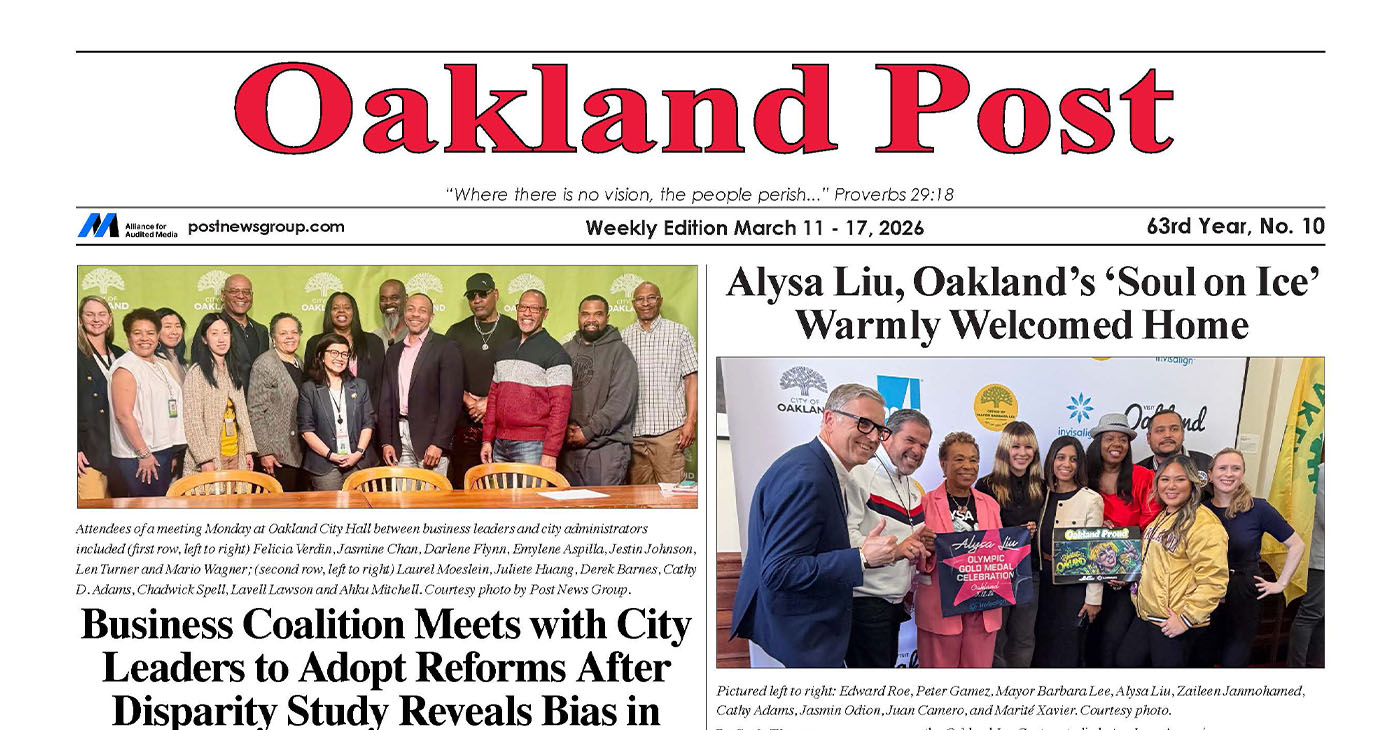
To enlarge your view of this issue, use the slider, magnifying glass icon or full page icon in the lower right corner of the browser window.
Activism
Oakland Post: Week of March 4 – 10, 2026
The printed Weekly Edition of the Oakland Post: Week of March 4 – 10, 2026

To enlarge your view of this issue, use the slider, magnifying glass icon or full page icon in the lower right corner of the browser window.
WORK FROM HOME
Home-based business with potential monthly income of $10K+ per month. A proven training system and website provided to maximize business effectiveness. Perfect job to earn side and primary income. Contact Lynne for more details: Lynne4npusa@gmail.com 800-334-0540


Black Artists in America, Installation Three Wraps at the Dixon Gallery and Gardens

Grief, Advocacy, and Education: A Counselor Reflects on Black Maternal Health

Future of Florida’s Black History Museum in Limbo

New Research Shows the Many Benefits of Early Learning

South Hampton K-8 Students Among Top 10 Finalists for Samsung’s ‘Solve for Tomorrow’ Competition

Cuba: No Negotiation with US on the President or Political System

Brooklyn Academy of Music Names Jamaican-Born Tamara McCaw as President

Trinidad & Tobego – U.S. Launches WhatsApp Channel for American Citizens in the Country

Oakland Post: Week of March 18 – 24, 2026

AI Innovation vs. Ethics and Environmental Impact

AI, Web3, and Digital Reparations

What If You Owned Your AI Agent?

Season 7, Episode 3 – January Reporter’s Roundtable 📱

Season 7, Episode 3 – January Reporter’s Roundtable

AI, Media, and Power | Part 2, Real-World Impacts and Tradeoffs

Oakland Post: Week of February 11 – 17, 2026

Reflecting on Black History Milestones in Birmingham AL

CITY OF SAN LEANDRO STATE OF CALIFORNIA PUBLIC WORKS DEPARTMENT ENGINEERING DIVISION NOTICE TO BIDDERS FOR ANNUAL STREET OVERLAY/REHABILITATION 2019-21 – PHASE III

Oakland Post: Week of February 18 – 24, 2026

PRESS ROOM: NBA Hall of Fame Nominee Terry Cummings Joins 100 Black Men of DeKalb County to Launch Victory & Values Initiative

Oakland Post: Week of February 25 – March 3, 2026

Trump’s MAGA Allies are Creating Executive Order Plan to Steal the 2026 Midterms

U.S. manufacturing rebounds – how foundry services are adapting to rising demand

OP-ED: One Hundred Years of Black Workers Telling the Truth

Advancements in solar technology that are changing the way we power the world

Chase Oakland Community Center Hosts Alley-Oop Accelerator Building Community and Opportunity for Bay Area Entrepreneurs

Poll Shows Support for Policies That Help Families Afford Child Care

Oakland Post: Week of March 4 – 10, 2026

PRESS ROOM: Civil Rights TV Launches in Selma as the World’s First 24/7 Civil Rights Television Network

Woman’s Search for Family’s Roots Leads to Ancestor John T. Ward – A Successful Entrepreneur and Conductor on the Underground Railroad

Hyundai Ioniq 5 Parking, Safety, and 360 View #shorts

2025 Ioniq 5 New Wiper & Powerful Performance! #shorts

Electric SUV Range: Is 259 Miles Enough? #shorts

EV Charging: How Fast Can You Charge an Electric Vehicle? #shorts

Biometric Cooling… Messaging Seats…Come on! 2025 Infiniti QX80 Autograph 4WD

Charged Up: Witness the Magic of a Fully Electric Car! #shorts

Range Rover Sport PHEV Included…: See What’s Inside This Luxury SUV! #shorts

Invisible Hood View: Perfect Parking with X-Ray Vision! #shorts

AI Is Reshaping Black Healthcare: Promise, Peril, and the Push for Improved Results in California

ESSAY: Technology and Medicine, a Primary Care Point of View

Sanctuary Cities

The RESISTANCE – FREEDOM NOW

STATE OF THE PEOPLE: Freddie

ECONOMIC BOYCOTT DAY!!!!!

I told You So

-
 #NNPA BlackPress4 weeks ago
Poll Shows Support for Policies That Help Families Afford Child Care
-
 Activism4 weeks ago
Oakland Post: Week of March 4 – 10, 2026
-
 #NNPA BlackPress3 weeks ago
Woman’s Search for Family’s Roots Leads to Ancestor John T. Ward – A Successful Entrepreneur and Conductor on the Underground Railroad
-

 #NNPA BlackPress4 weeks ago
OP-ED: NNPA Launches 2026 “Leadership Matters” Video Series
-

 #NNPA BlackPress3 weeks ago
Advocates Raise Alarm Over ICE Operation, MOU and Detention Risks in Baltimore County
-

 #NNPA BlackPress3 weeks ago
COMMENTARY: Women of Color Shape Our Past and Future
-

 #NNPA BlackPress3 weeks ago
Pete Buttigieg to Join Mayor Randall Woodfin for Community Town Hall in Birmingham
-
 Activism2 weeks ago
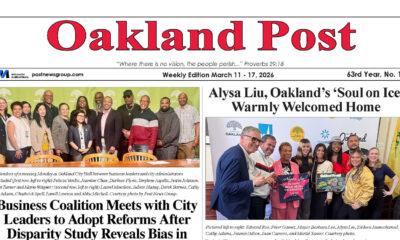
Oakland Post: Week of March 11 -17, 2026
