
Politics
FACT CHECK: Estate Tax Hits Fewer Than 1 Percent of Estates


In this March 17, 2015 file photo, Sen. John Thune, R-S.D. speaks to reporters on Capitol Hill in Washington. (AP Photo/Molly Riley, File)
STEPHEN OHLEMACHER, Associated Press
WASHINGTON (AP) — The federal estate tax inspires a lot of heated political rhetoric for a tax that very few people actually pay.
The House is scheduled to vote this week on a bill to repeal the estate tax, part of a package of bills highlighting Wednesday’s deadline to file income tax returns.
The federal tax on estates has been around in various forms since 1916. Republicans have long called for repealing it; they refer to it as the “death tax.” They claim it prevents small business owners and family farmers from passing businesses on to their heirs.
Democrats say repealing the tax is a giveaway to the rich, since the only families that pay it have many millions in assets.
The bill has little chance of becoming law. Senate Democrats appear to have enough votes to block it and President Barack Obama wants to increase the estate tax, not eliminate it. The White House threatened to veto the bill Tuesday.
Nevertheless, the House is expected to easily pass the bill, providing both political parties with a campaign issue in the 2016 elections for Congress and president.
___
THE CLAIMS: “The death tax is the wrong tax at the wrong time and hurts the wrong people. It’s the number one reason why family-owned businesses aren’t passed down to the next generation. It is Washington’s most immoral and calculated attack on the American Dream.” — Rep. Kevin Brady, R-Texas, sponsor of a House bill repealing the estate tax.
“For too long the federal government has forced grieving families to pay a tax on their loved one’s life savings that has been built from income already taxed when originally earned. Currently more than 70 percent of family businesses do not survive to the second generation, and 90 percent of family businesses do not survive to the third generation.” —Sen. John Thune, R-S.D., sponsor of a Senate bill repealing the estate tax.
“One of the laws that my friends on the other side of the aisle are trying to pass right now is a new, deficit-busting tax cut for a fraction of the top one-tenth of 1 percent. That’s fewer than 50 people here in Kentucky who would, on average, get a couple million dollars in tax breaks.” — Obama, speaking April 2 in Louisville.
___
THE FACTS: The federal tax rate on estates is 40 percent, but big exemptions limit the share of estates that pay it to fewer than 1 percent.
This year, the exemption is $5.43 million for a single person. Married couples can exempt up to $10.9 million. Larger estates pay taxes only on the amounts above these thresholds.
A total of 5,400 estates are expected to pay the tax this year — out of about 2.6 million deaths, according to the nonpartisan Joint Committee on Taxation, which provides official estimates for Congress. That’s 0.2 percent of all deaths in the U.S.
The exemption amounts increase with inflation, so the number of estates paying the tax each year is expected to grow slowly, reaching 5,500 in 2020 and staying there through 2024, according to JCT.
Each year, the estate tax generates less than 1 percent of federal tax receipts. But over time, it adds up.
Repealing the estate tax would reduce federal tax revenues by $269 billion over the next decade, according to JCT. The House bill does not include spending cuts to offset the lost revenue, so it would be added the deficit.
___
BACKDROP: Republicans say that some business owners get hit with the tax because they have valuable assets that don’t necessarily generate a lot of cash. They cite family farms, which may sit on valuable land but don’t generate enough money to pay hefty estate taxes unless heirs sell some or all the land.
“The appreciated value of land is phantom income. The value is locked in the asset, so if there’s no intent to sell the land, there’s no real income to tax other than the income the land actually produces, and that’s already taxed,” said Sen. Charles Grassley, R-Iowa.
Democrats counter that eliminating the estate tax would enable investors to amass vast sums of wealth that might never be taxed as long as they held it until they died and passed it to their heirs, who could receive it tax-free.
“The principle here is not to create a permanent aristocracy,” said Rep. Richard Neal, D-Mass.
___
Follow Stephen Ohlemacher on Twitter: http://twitter.com/stephenatap
Copyright 2015 The Associated Press. All rights reserved. This material may not be published, broadcast, rewritten or redistributed.





Activism
Oakland Post: Week of April 1 – 7, 2026
The printed Weekly Edition of the Oakland Post: Week of April 1 – 7, 2026
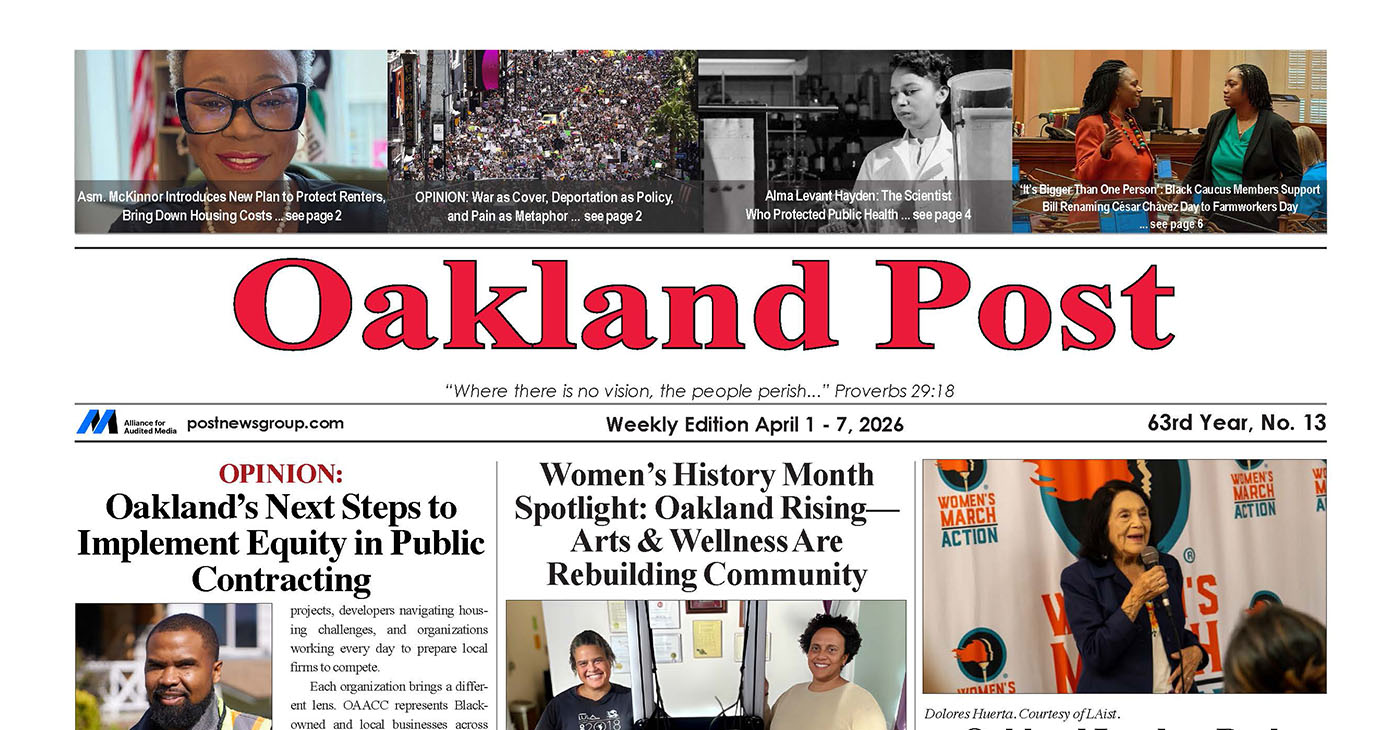
To enlarge your view of this issue, use the slider, magnifying glass icon or full page icon in the lower right corner of the browser window.
Activism
Oakland Post: Week of March 18 – 24, 2026
The printed Weekly Edition of the Oakland Post: Week of March 18 – 24, 2026

To enlarge your view of this issue, use the slider, magnifying glass icon or full page icon in the lower right corner of the browser window.
Activism
Oakland Post: Week of March 11 -17, 2026
The printed Weekly Edition of the Oakland Post: Week of March 11 – 17, 2026
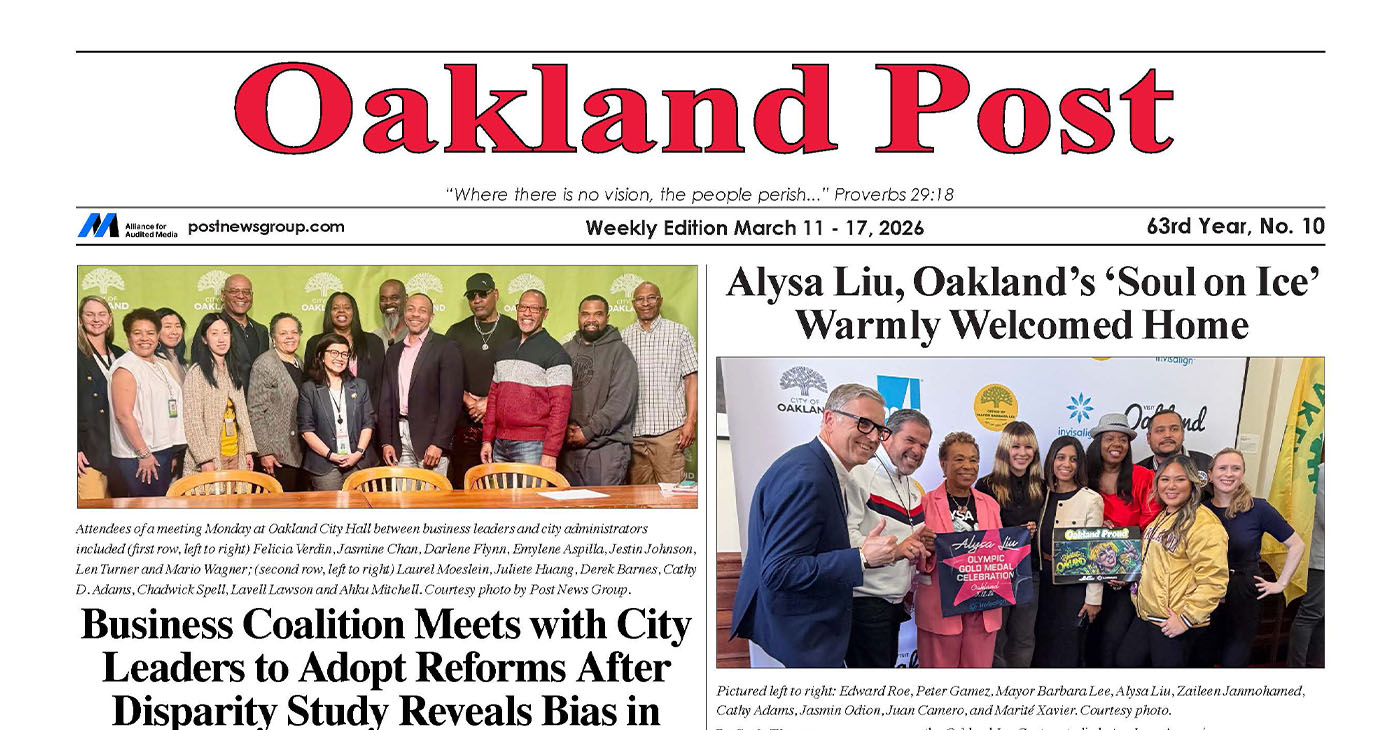
To enlarge your view of this issue, use the slider, magnifying glass icon or full page icon in the lower right corner of the browser window.
WORK FROM HOME
Home-based business with potential monthly income of $10K+ per month. A proven training system and website provided to maximize business effectiveness. Perfect job to earn side and primary income. Contact Lynne for more details: Lynne4npusa@gmail.com 800-334-0540


Oakland Post: Week of April 1 – 7, 2026

Black Artists in America, Installation Three Wraps at the Dixon Gallery and Gardens

Grief, Advocacy, and Education: A Counselor Reflects on Black Maternal Health

Future of Florida’s Black History Museum in Limbo

New Research Shows the Many Benefits of Early Learning

South Hampton K-8 Students Among Top 10 Finalists for Samsung’s ‘Solve for Tomorrow’ Competition

Cuba: No Negotiation with US on the President or Political System

Brooklyn Academy of Music Names Jamaican-Born Tamara McCaw as President

Trinidad & Tobego – U.S. Launches WhatsApp Channel for American Citizens in the Country

Oakland Post: Week of March 18 – 24, 2026

AI Innovation vs. Ethics and Environmental Impact

AI, Web3, and Digital Reparations

What If You Owned Your AI Agent?

Season 7, Episode 3 – January Reporter’s Roundtable 📱

Season 7, Episode 3 – January Reporter’s Roundtable

Reflecting on Black History Milestones in Birmingham AL

CITY OF SAN LEANDRO STATE OF CALIFORNIA PUBLIC WORKS DEPARTMENT ENGINEERING DIVISION NOTICE TO BIDDERS FOR ANNUAL STREET OVERLAY/REHABILITATION 2019-21 – PHASE III

Oakland Post: Week of February 18 – 24, 2026

Oakland Post: Week of February 25 – March 3, 2026

PRESS ROOM: NBA Hall of Fame Nominee Terry Cummings Joins 100 Black Men of DeKalb County to Launch Victory & Values Initiative

Trump’s MAGA Allies are Creating Executive Order Plan to Steal the 2026 Midterms

Oakland Post: Week of March 4 – 10, 2026

Chase Oakland Community Center Hosts Alley-Oop Accelerator Building Community and Opportunity for Bay Area Entrepreneurs

U.S. manufacturing rebounds – how foundry services are adapting to rising demand

Poll Shows Support for Policies That Help Families Afford Child Care

OP-ED: One Hundred Years of Black Workers Telling the Truth

Advancements in solar technology that are changing the way we power the world

Oakland Post: Week of March 11 -17, 2026

Woman’s Search for Family’s Roots Leads to Ancestor John T. Ward – A Successful Entrepreneur and Conductor on the Underground Railroad

COMMENTARY: Women of Color Shape Our Past and Future

Hyundai Ioniq 5 Parking, Safety, and 360 View #shorts

2025 Ioniq 5 New Wiper & Powerful Performance! #shorts

Electric SUV Range: Is 259 Miles Enough? #shorts

EV Charging: How Fast Can You Charge an Electric Vehicle? #shorts

Biometric Cooling… Messaging Seats…Come on! 2025 Infiniti QX80 Autograph 4WD

Charged Up: Witness the Magic of a Fully Electric Car! #shorts

Range Rover Sport PHEV Included…: See What’s Inside This Luxury SUV! #shorts

Invisible Hood View: Perfect Parking with X-Ray Vision! #shorts

AI Is Reshaping Black Healthcare: Promise, Peril, and the Push for Improved Results in California

ESSAY: Technology and Medicine, a Primary Care Point of View

Sanctuary Cities

The RESISTANCE – FREEDOM NOW

STATE OF THE PEOPLE: Freddie

ECONOMIC BOYCOTT DAY!!!!!

I told You So
-
 Activism4 weeks ago
Oakland Post: Week of March 4 – 10, 2026
-
 Activism3 weeks ago
Oakland Post: Week of March 11 -17, 2026
-
 #NNPA BlackPress4 weeks ago
Woman’s Search for Family’s Roots Leads to Ancestor John T. Ward – A Successful Entrepreneur and Conductor on the Underground Railroad
-
 #NNPA BlackPress4 weeks ago
COMMENTARY: Women of Color Shape Our Past and Future
-

 Advice3 weeks ago
Financial Wellness and Mental Health: Managing Money Stress in College
-

 #NNPA BlackPress4 weeks ago
Advocates Raise Alarm Over ICE Operation, MOU and Detention Risks in Baltimore County
-
 Activism2 weeks ago
Oakland Post: Week of March 18 – 24, 2026
-

 #NNPA BlackPress4 weeks ago
Pete Buttigieg to Join Mayor Randall Woodfin for Community Town Hall in Birmingham
