
Family
Diversify Your Dinner Menu
FLORIDA COURIER — Crafting quick, easy, nutritious meals is one of the most common goals for home chefs.

By The Florida Courier
Crafting quick, easy, nutritious meals is one of the most common goals for home chefs, yet it may sometimes be difficult to keep the menu feeling fresh and new. By introducing a variety of ingredients, you can broaden the horizons of your family’s dinner options.
For creative, simple, tasty family meals, consider these globally inspired recipes that highlight inventive ways to incorporate veal as a satisfying main ingredient in nearly any dish. From sandwiches to salads, the versatility of an ingredient like veal can help you build out a full menu with a wide array of protein-rich dishes. With recipes like these, veal can become a staple on your family’s weekly menu.
Visit vealmadeeasy.com for additional recipes and complete nutrition information.
CLASSIC VEAL PARMESAN SANDWICHES
Prep time: 10 minutes
Cook time: 10 minutes
Serves: 6
- 6 veal cutlets (3 ounces each)
- salt, to taste
- ground black pepper, to taste
- 1/2cup all-purpose flour
- 1 egg wash
- 1 cup breadcrumbs
- 1 cup vegetable oil
- 12 tablespoons tomato sauce
- 3 tablespoons Parmesan cheese, grated
- 6 slices provolone cheese
- 6 slices mozzarella cheese
- 6 sub rolls
Heat oven to 350 F.
Pound each veal cutlet between sheets of parchment or plastic wrap until 1/4-inch thick. Blot veal dry.
Season each cutlet with salt and pepper, to taste. Dredge veal in flour; shake off excess. Dip in egg wash and dredge in breadcrumbs.

In large skillet over medium heat, heat about 1/8-inch oil to about 350 F. Working in batches, add breaded veal to hot oil and pan fry first side until golden brown and crisp, about 2 minutes. Turn once and pan fry second side until it reaches internal temperature of 160 F, about 1-2 minutes.
Drain on paper towels or wire rack set over baking sheet.
Add 2 tablespoons tomato sauce to each veal cutlet and sprinkle 1/2 tablespoon Parmesan cheese on top. Add one slice provolone and mozzarella cheese to each cutlet.
Place veal parmesan in oven 2-3 minutes, or until the cheese begins to melt and veal is hot. Add veal to sub rolls and serve.
VEAL, SPINACH AND TOMATO AREPAS
Prep time: 15 minutes
Cook time: 20 minutes
Serves: 4
- 1/2pound veal cutlets
- 1 teaspoon cumin
- 1/2teaspoon chili powder
- 1 1/2tablespoons olive oil
- 2 green onions (1 ounce each), sliced
- 1 clove garlic, minced
- 1 can (10 ounces) diced tomatoes and green chilies
- 1/8teaspoon salt
- 2 cups packed baby spinach (about 2 1/2 ounces)
- 4 arepas (5 inches in diameter)
- 1/4cup crumbled Queso Blanco cheese (1 ounce)
Pound veal cutlets into 1/41/8-inch thickness; cut into 1-inch strips. Place in bowl and toss with cumin and chili powder.
In 12-inch, nonstick skillet over medium heat, heat olive oil. Cook veal strips 1-2 minutes. Remove veal to plate; keep warm. In same skillet over medium heat, cook green onions and garlic 2-3 minutes. Add tomatoes and salt; over high heat, heat to boil. Reduce heat to low; simmer 5 minutes until slightly reduced.
Stir in spinach. Cook 3-4 minutes, or until spinach wilts and is tender. Return veal to skillet; heat through.
To serve, heat skillet or griddle over medium heat. Toast arepas on each side until lightly browned and heated through, turning once.
Cut each arepa in half horizontally. Top bottom half of each arepa with veal mixture. Sprinkle each with cheese; replace arepa tops.
VEAL ZA’ATAR FLATBREADS
Prep time: 15 minutes
Cook time: 25 minutes
Serves: 4
- 1/4cup za’atar seasoning
- 3 tablespoons extra-virgin olive oil, divided
- 1 package (10 ounces) flatbreads
- 1 onion (4 ounces), finely chopped
- 1/2pound ground veal
- 1/4cup crumbled feta cheese
- 1 tomato (6 ounces), cored and chopped
- chopped parsley, for garnish
Heat oven to 425 F. In small bowl, combine za’atar seasoning and 2 tablespoons olive oil.
Spread about 1 tablespoon za’atar mixture on each flatbread. Arrange flatbreads on large baking sheet; set aside.
In 10-inch skillet over medium heat, heat remaining olive oil. Cook onion 4-5 minutes, stirring occasionally. Add veal and cook 4-5 minutes until no longer pink, stirring to break up meat.
Remove skillet from heat; stir in feta cheese. Spoon 1/4 veal mixture onto each flatbread. Sprinkle each flatbread with tomato. Bake 8-10 minutes, or until hot. Sprinkle each flatbread with parsley.
MEDITERRANEAN GRILLED SALAD
Prep time: 20 minutes
Cook time: 10 minutes
Serves: 4
- 1 large orange (12 ounces)
- 1/2cup Italian salad dressing
- 1 teaspoon Dijon mustard
- 1 veal cutlet (12 ounces), pounded to 1/4-1/8-inch thick
- 1 bulb fennel (7 ounces), trimmed, halved and cored
- 1/2small red onion (1 1/2 ounces), thinly sliced
- 1 1/2cups cooked farro
- 2 cups packed baby arugula (about 3 ounces)
- 1 head radicchio (4 ounces), cored and torn (about 2 cups packed)
- 1/2cup toasted hazelnuts, chopped
- 1ounce Parmesan cheese
Grate 1/2 tablespoon zest from orange; reserve orange. Stir zest into salad dressing.
Use knife to remove skin and pith from orange. Use knife to cut between fruit and membrane to release each orange section. Squeeze membrane to extract 1/4 cup juice; reserve juice and orange sections.
In bowl, whisk reserved orange juice, mustard and salad dressing. Remove 1/4 cup dressing to re-sealable food storage bag. Add veal cutlets to dressing in bag. Re-seal bag and turn several times until veal is coated with dressing; set aside.
Prepare grill or heat grill pan over medium-high heat on stovetop. Remove veal cutlets from dressing; discard dressing. Grill veal cutlets 5-6 minutes, turning once. Remove cutlets from heat. Place on cutting board and cut into bite-size pieces.
Thinly slice fennel halves and place in bowl. Add red onion, farro, arugula and radicchio; toss. Add veal, orange sections, reserved salad dressing and hazelnuts.
Draw blade of vegetable peeler across surface of cheese to make thin ribbons. Toss to coat with dressing. Divide salad among four bowls.
This article originally appeared in the Florida Courier.











Arts and Culture
Book Review: Books on Black History and Black Life for Kids
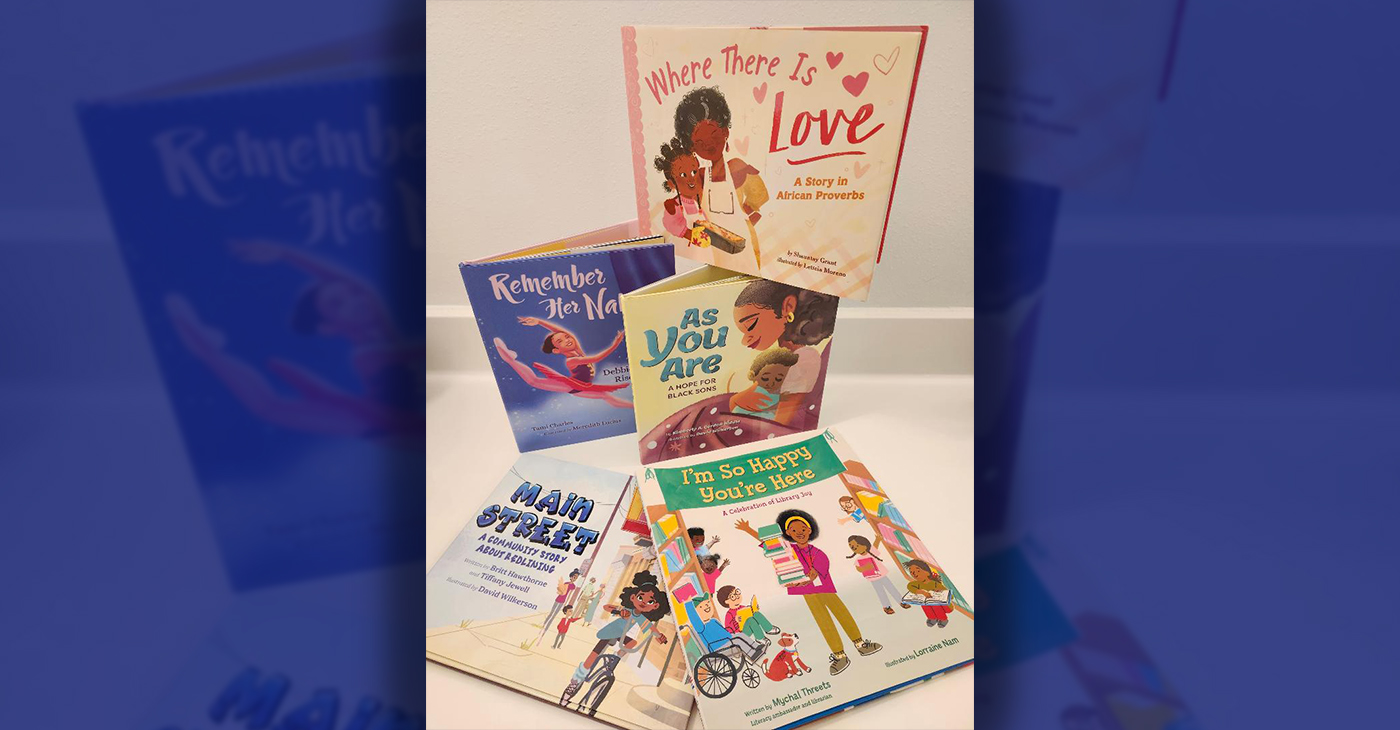
For the youngest reader, “As You Are: A Hope for Black Sons” by Kimberly A. Gordon Biddle, illustrated by David Wilkerson (Magination Press, $18.99) is a book for young Black boys and for their mothers. It’s a hope inside a prayer that the world treats a child gently, and it could make a great baby shower gift.
By Terri Schlichenmeyer
Authors: Various, Copyright: c. 2025, 2026, Publishers: Various, SRPs: $17.99-$18.99, Page Counts: Various,
Everybody in your family has stories to share.
Your parents have told you some, no doubt. Your grandparents have offered a few, too, and aunties and uncles have spun some good tales. But there’s so much more to know, so grab one of these great books and learn about Black History and Black life.
For the youngest reader, “As You Are: A Hope for Black Sons” by Kimberly A. Gordon Biddle, illustrated by David Wilkerson (Magination Press, $18.99) is a book for young Black boys and for their mothers. It’s a hope inside a prayer that the world treats a child gently, and it could make a great baby shower gift.
If someone said you couldn’t do something that you were clearly able to do, would you fight to do it anyhow? In the new book, “Remember Her Name! Debbie Allen’s Rise to Fame” by Tami Charles, illustrated by Meredith Lucius (Charlesbridge, $17.99), a young girl in the Jim Crow South is told that she can’t dance because of the color of her skin.
She didn’t listen, though, and neither did her mother, who took her daughter to Mexico, where the girl soared! This is an inspiration for any 5-to-7-year-old; be sure to check out the back-of-the-book information, if you’re an adult fan.
Do you often hear your elders say things that sound like lessons? They might be, so “Where There is Love: A Story of African Proverbs” by Shauntay Grant, illustrated by Leticia Moreno (Penguin Workshop, $18.99) is a book you’ll like. It’s a quick-to-read collection of short proverbs that you can say every day. Kids ages 4-to-6 will easily remember what they find in this book; again, look in the back for more information.
Surely, you love your neighborhood, which is why the tale inside “Main Street: A Community Story about Redlining” by Britt Hawthorne and Tiffany Jewell, illustrated by David Wilkerson (Penguin Kokila, $18.99) is a book for you.
Olivia’s neighborhood is having a block party, but she’s sad when no one shows up. That’s when she learns that “the government” is discriminating against the people and businesses near where she lives. So, what can she and her neighbors do? The answer might inspire 6-to-8-year-old kids to stand up to wrongs they see, and to help make their neighborhoods stronger and safer.
And finally, if a kid wants a book, where can they go to find it? In “I’m So Happy You’re Here: A Celebration of Library Joy” by Mychal Threets, illustrated by Lorraine Nam (Random House, $18.99) is a good introduction to the best of what a library has to offer. The freedom to walk into a library and borrow a book is the theme here, as is the sheer happiness of being welcomed, no matter who you are. This is an easy book for kids as young as two and as old as five to enjoy.
On that note, if you want more, head to that library, or a nearby bookstore. They’ll be glad to see you. They’ve got stories to share.
Alameda County
Black History Events in the East Bay
What began as Negro History Week in 1926 by author and journalist Carter G. Woodson as a way to celebrate the achievements of African Americans, the observance is now a month-long event
By Post Staff
What began as Negro History Week in 1926 by author and journalist Carter G. Woodson as a way to celebrate the achievements of African Americans, the observance is now a month-long event, and nearly every day in the Bay Area, there is somewhere to honor the ancestors, our living thought leaders, artists, and activists, and prepare children for the future. Below are just a few places to go.
Lunar New Year X Black History Month 2026: Celebrating Asian & African American Solidarity
Now in its fourth year, the Oakland Asian Cultural Center rolls out its biggest event, featuring lion dancers, drummers, performers, arts & crafts, a Kids + Teens Zone curated by Storyland Collective, a marketplace of local artisans, and free admission for all ages! This event is part of OACC’s ongoing Open E.A.R.S. for Change initiative, launched in 2020 to build stronger relationships between local APIA and Black communities. SambaFunk closes out the day at 3:15 and the Bantaba Drum Call and Comrade Lover Lion Dancers perform shortly after story time for young children at noon. Register for free tickets. https://oacc.liveimpact.org/li/8737/sevent/evt/home/294475/69
Oakland Asian Cultural Center
388 Ninth St. Suite 290
Oakland, CA
Feb. 7, 11 a.m.- 4 p.m.
DIY: Black Culture Bookmark Making
Go to the Golden Gate Branch of the Oakland Public Library for small-scale collaging at this Black-themed make-your-own-bookmarks session.
Bring: Your vision, creativity, and, if you like, wallet-sized photos or images of your favorite Black heroes or family members.
We’ll supply the cardstock paper, African diaspora designs, artwork, images, lettering, glue, scissors, and laminating. This session is suitable for adults and seniors.
Golden Gate Library
5609 San Pablo Ave.
Oakland, CA,
Feb. 11, 5:30-7 p.m.
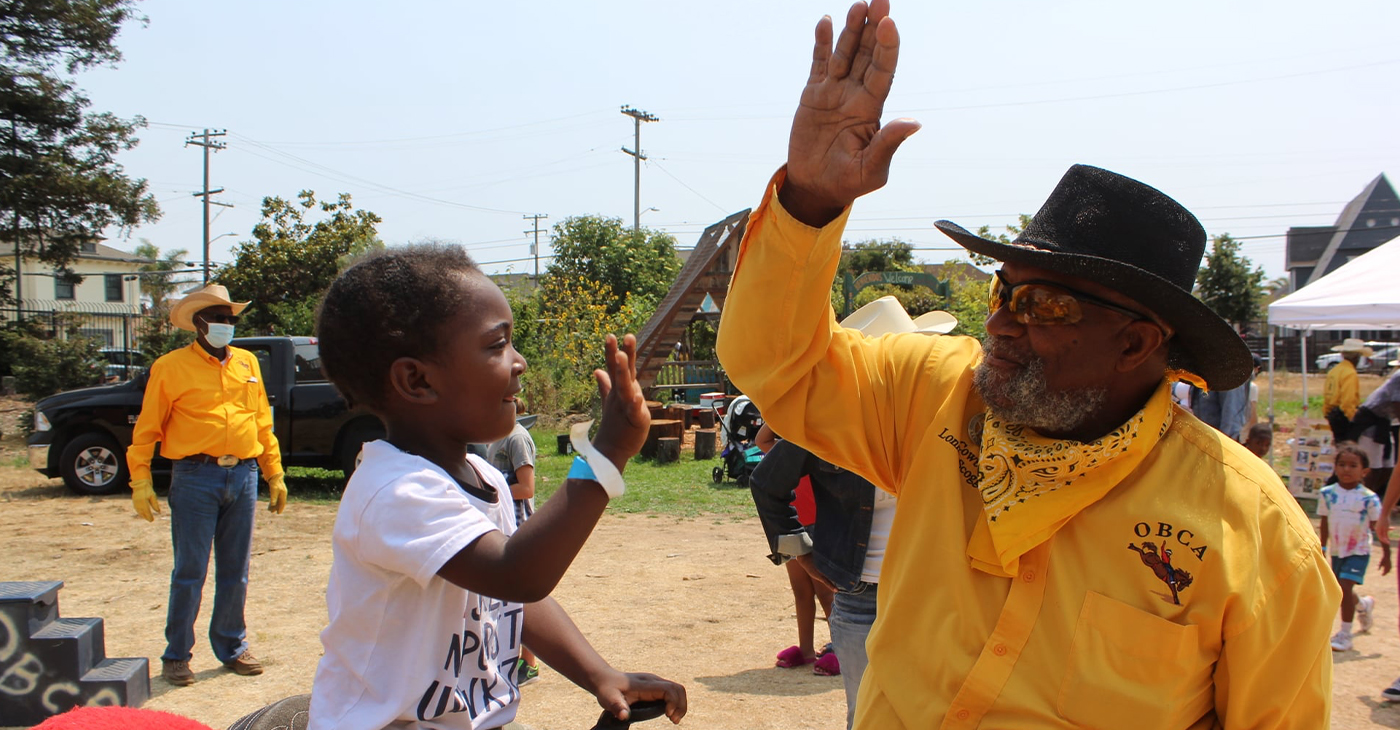
Oakland Black Cowboy Association Shares Love of the Ride
Celebrate the history, culture, and living legacy of Black cowboys at the Black Cowboy Academy. It will be an interactive day of lasso lessons, pony grooming with real live ponies, and meet and greets with actual cowboys! Fairyland joins hands and hearts with the Oakland Black Cowboy Association and the Metropolitan Horsemen’s Association this Valentine’s Day for an immersive event of learning and love. Included with general admission.
Children’s Fairyland
699 Bellevue Ave.
Sat., Feb. 14, 10 a.m.- 1 p.m.
Love Stories for Black History Month
At the Berkeley Public Library, a children’s book fair “Valentine to Black Stories” will feature some of your favorite Black authors of children’s books!
Come celebrate love, Black authors, and Black stories at this special children’s book fair. They will have free books, crafts and special presentations from Bay Area Black authors.Festivities will feature a collage workshop led by Oakland artist Chanel London of Hella Artsy. Participants will be invited to make collage portraits inspired by artist Derrick Barnes.
Berkeley Central Public Library
2090 Kittredge St. Berkeley, CA
Sat. Feb. 14, 1- 4 p.m.
The Black Child Book Fair (BCBF) from Chicago to Oakland, CA- Book Signing Event
BCBF began in Chicago in 2009 through the vision and experience of author and poet Darryl Harvey. Harvey’s vision brings extraordinary children’s book authors together to close the great need for black representation in children’s books. Engage with authors, participate in story time and fun activities.
Oakland African American Museum and Library
859 14th St., Oakland CA
Sat. Feb. 21, 12-5 p.m.
Activism
Medi-Cal Cares for You and Your Baby Every Step of the Way
Across California, including Alameda and San Francisco counties, Medi-Cal is working to address those concerns by expanding and coordinating maternal health services so pregnant and postpartum people receive care that is respectful, comprehensive, and easier to navigate. From the first prenatal visit through a child’s first birthday, Medi-Cal provides coverage and support designed to protect both parent and baby.

Advertorial
For many pregnant people, pregnancy brings a mix of both joy and uncertainty. Alongside excitement, there are questions about finding the right doctor, understanding what care is covered, and knowing where to turn for support after the baby arrives. For Black families in Alameda and San Francisco counties those questions are often compounded by long-standing disparities in maternal health outcomes.
Across California, including Alameda and San Francisco counties, Medi-Cal is working to address those concerns by expanding and coordinating maternal health services so pregnant and postpartum people receive care that is respectful, comprehensive, and easier to navigate. From the first prenatal visit through a child’s first birthday, Medi-Cal provides coverage and support designed to protect both parent and baby.
These services are available to people who qualify for Medi-Cal. In California, eligibility is based primarily on income, household size, age, pregnancy status, disability, or other qualifying circumstances. Pregnant people qualify at higher income levels than non-pregnant adults and remain eligible through pregnancy and for 12 months after the pregnancy ends.
Importantly, pregnant people who qualify for Medi-Cal are eligible for full-scope coverage regardless of immigration status, including medical, behavioral health, dental, and vision services during pregnancy and the postpartum year.

A Clearer Path Through Pregnancy: The Birthing Care Pathway
The Birthing Care Pathway helps pregnant people understand what care they should receive and when, while supporting providers in delivering coordinated, culturally responsive services. It outlines key steps during pregnancy, including prenatal screenings, behavioral health check-ins, nutrition support, and preparation for labor and delivery.
For Black pregnant and postpartum people in Alameda and San Francisco counties the pathway emphasizes early prenatal care, shared decision-making, and connections to community-based programs that address medical needs and social drivers of health.
Doula Services: Support Before, During, and After Birth
Medi-Cal covers doula services for pregnant and postpartum members who qualify. Doulas provide non-medical emotional support, education, and advocacy during pregnancy, labor and delivery, and postpartum recovery. Research shows doula care is associated with reduced stress, improved birth outcomes, and increased breastfeeding success.
Covered doula services include prenatal visits, support during labor and delivery, and postpartum follow-up visits, in accordance with Medi-Cal benefit guidelines.
Care That Continues After Birth: The Postpartum Pathway
More than half of pregnancy-related deaths in California occur after childbirth, with Black families facing the greatest risks. The Postpartum Pathway defines the care pregnant and postpartum people who qualify for Medi-Cal should receive during the first year after birth.
The Pathway promotes a comprehensive postpartum visit within 12 weeks, ongoing primary care through 12 months postpartum, screening and treatment for postpartum depression and anxiety, breastfeeding support, chronic condition management, and referrals to community-based services.
Mental Health, Dental, and Vision Care Included
Medi-Cal covers perinatal behavioral health services for eligible members, including screening, therapy, counseling, and medication management when medically necessary. Services may be provided in person or through telehealth.
Pregnant and postpartum people who qualify for Medi-Cal also receive full dental benefits, including exams, cleanings, and medically necessary treatment, as well as vision care such as eye exams and eyeglasses.
Community Supports Through CalAIM
CalAIM (California Advancing and Innovating Medi-Cal) is a statewide initiative that strengthens Medi-Cal by improving care coordination and addressing health-related social needs.
Through CalAIM, eligible Medi-Cal members in Alameda and San Francisco counties may receive Community Supports such as transitional housing assistance, medically tailored meals, and help navigating social services.
How to Contact Medi-Cal in Alameda and San Francisco Counties
Pregnant and postpartum people who meet Medi-Cal eligibility requirements can get help enrolling, choosing a health plan, finding providers, or accessing doula and postpartum services by contacting the Alameda County Medi-Cal office at (510) 795-2428 or the San Francisco Medi-Cal office at (855) 355-5757 or calling the number on their Medi-Cal card.
Support at Every Step
Pregnancy and postpartum care should be clear, compassionate, and complete. Through the Birthing Care Pathway, Postpartum Pathway, doula services, behavioral health care, Black Infant Health, and Community Supports, Medi-Cal is working to ensure that eligible families in Alameda and San Francisco counties — especially Black Californians — receive the care and support they need to stay healthy and give their babies a strong start.
Ready to Learn More or Get Started?
Pregnant and postpartum people in Alameda and San Francisco counties can learn more about Medi-Cal benefits, enroll in coverage, or get help finding providers by contacting the Alameda County Medi-Cal office or San Francisco County Medi-Cal office or calling the number on their Medi-Cal card. Trained representatives can explain eligibility, available services, and next steps.


WORK FROM HOME
Home-based business with potential monthly income of $10K+ per month. A proven training system and website provided to maximize business effectiveness. Perfect job to earn side and primary income. Contact Lynne for more details: Lynne4npusa@gmail.com 800-334-0540


Black Artists in America, Installation Three Wraps at the Dixon Gallery and Gardens

Grief, Advocacy, and Education: A Counselor Reflects on Black Maternal Health

Future of Florida’s Black History Museum in Limbo

New Research Shows the Many Benefits of Early Learning

South Hampton K-8 Students Among Top 10 Finalists for Samsung’s ‘Solve for Tomorrow’ Competition

Cuba: No Negotiation with US on the President or Political System

Brooklyn Academy of Music Names Jamaican-Born Tamara McCaw as President

Trinidad & Tobego – U.S. Launches WhatsApp Channel for American Citizens in the Country

Oakland Post: Week of March 18 – 24, 2026

AI Innovation vs. Ethics and Environmental Impact

AI, Web3, and Digital Reparations

What If You Owned Your AI Agent?

Season 7, Episode 3 – January Reporter’s Roundtable 📱

Season 7, Episode 3 – January Reporter’s Roundtable

AI, Media, and Power | Part 2, Real-World Impacts and Tradeoffs

Discrimination in City Contracts

Oakland Post: Week of February 11 – 17, 2026

Reflecting on Black History Milestones in Birmingham AL

Rising Optimism Among Small And Middle Market Business Leaders Suggests Growth for California

CITY OF SAN LEANDRO STATE OF CALIFORNIA PUBLIC WORKS DEPARTMENT ENGINEERING DIVISION NOTICE TO BIDDERS FOR ANNUAL STREET OVERLAY/REHABILITATION 2019-21 – PHASE III

Oakland Post: Week of February 18 – 24, 2026

PRESS ROOM: NBA Hall of Fame Nominee Terry Cummings Joins 100 Black Men of DeKalb County to Launch Victory & Values Initiative

Oakland Post: Week of February 25 – March 3, 2026

Trump’s MAGA Allies are Creating Executive Order Plan to Steal the 2026 Midterms

U.S. manufacturing rebounds – how foundry services are adapting to rising demand

OP-ED: One Hundred Years of Black Workers Telling the Truth

Advancements in solar technology that are changing the way we power the world

Chase Oakland Community Center Hosts Alley-Oop Accelerator Building Community and Opportunity for Bay Area Entrepreneurs

Poll Shows Support for Policies That Help Families Afford Child Care

PRESS ROOM: Civil Rights TV Launches in Selma as the World’s First 24/7 Civil Rights Television Network

Hyundai Ioniq 5 Parking, Safety, and 360 View #shorts

2025 Ioniq 5 New Wiper & Powerful Performance! #shorts

Electric SUV Range: Is 259 Miles Enough? #shorts

EV Charging: How Fast Can You Charge an Electric Vehicle? #shorts

Biometric Cooling… Messaging Seats…Come on! 2025 Infiniti QX80 Autograph 4WD

Charged Up: Witness the Magic of a Fully Electric Car! #shorts

Range Rover Sport PHEV Included…: See What’s Inside This Luxury SUV! #shorts

Invisible Hood View: Perfect Parking with X-Ray Vision! #shorts

AI Is Reshaping Black Healthcare: Promise, Peril, and the Push for Improved Results in California

ESSAY: Technology and Medicine, a Primary Care Point of View

Sanctuary Cities

The RESISTANCE – FREEDOM NOW

STATE OF THE PEOPLE: Freddie

ECONOMIC BOYCOTT DAY!!!!!

I told You So
-
 Activism4 weeks ago
Oakland Post: Week of February 25 – March 3, 2026
-
 #NNPA BlackPress4 weeks ago
Poll Shows Support for Policies That Help Families Afford Child Care
-

 Activism3 weeks ago
Oakland Post: Week of March 4 – 10, 2026
-

 #NNPA BlackPress3 weeks ago
Woman’s Search for Family’s Roots Leads to Ancestor John T. Ward – A Successful Entrepreneur and Conductor on the Underground Railroad
-

 #NNPA BlackPress3 weeks ago
OP-ED: NNPA Launches 2026 “Leadership Matters” Video Series
-

 #NNPA BlackPress3 weeks ago
Advocates Raise Alarm Over ICE Operation, MOU and Detention Risks in Baltimore County
-

 #NNPA BlackPress3 weeks ago
COMMENTARY: Women of Color Shape Our Past and Future
-

 #NNPA BlackPress3 weeks ago
Pete Buttigieg to Join Mayor Randall Woodfin for Community Town Hall in Birmingham
