
Bay Area
Updated Alameda County Health Orders Released

On Monday, May 18, the Alameda County Public Health Official issued an updated Shelter-in-Place Order that allows certain businesses to resume operations at this time, under specific conditions. The measured steps towards re-opening are designed to avoid a spike in new COVID-19 cases that could overwhelm our health care system.
Effective immediately, the businesses allowed to operate include:
- Retail stores for curbside or storefront pick up, and/or delivery only
- Manufacturing businesses permitted to operate under the state Resilience Roadmap
- Logistics and Warehousing permitted to operate under the state Resilience Roadmap
These businesses must implement Site-Specific Protection Plans, as required by California’s Resilience Roadmap, and informed by local guidance issued by the Alameda County Dept. of Public Health, to include the following elements:
- Social distancing protocol plans for employees and customers
- Administrative controls to stagger employees, breaks, and teleworking for those that can work remotely
- Training for employees on limiting spread of COVID-19 (temperature and/or symptoms screening, hand washing technique, and face-covering requirements)
- Disinfection protocols for routine and deep cleaning
- Industry-specific best practices
- Notification of COVID-19 positive cases
- Compliance and documentation
See a roster of additional businesses permitted to operate with site-specific safety plans and COVID-19 protective measures at:http://www.acphd.org/media/577585/alameda-county-health-officer-order-20-11-appendix-c1-english.pdf.
Businesses seeking guidance on Alameda County guidelines for re-opening should e-mail covidrecovery@acgov.org.
Businesses and activities authorized under previous orders may continue.
Public or private gatherings of any size remain prohibited.
“While the data is moving in the right direction, we are monitoring the five indicators with vigilance and caution,” said Dr. Erica Pan, health officer for Alameda County. “Early Stage 2 includes curbside or storefront retail and manufacturing and warehouses. It does not include other office workplaces or additional industries authorized by the State for some other counties that have applied to move faster, like malls and dine-in restaurants.”
A second order by the Alameda County Health Officer allows highly regulated vehicle-based gatherings of up to 200 cars at a time, for no longer than three hours, with specific conditions, including by-invite only, onsite security if there are more than 10 cars, and more. For example, these gatherings might include drive-in movie theaters as well as in-car graduation ceremonies, worship services, or funerals.
To specifically support businesses with curbside or storefront pick up, and/or delivery, the City is taking the following steps:
- Expediting White Curb Requests
In order to facilitate customer pick-up and delivery from Oakland businesses during the COVID-19 period, business owners can request a temporary white curb in front of their business. To request a temporary white curb, please contact Oak311 by dialing 311 or online at https://www.oaklandca.gov/services/oak311.
- Business Use of Frontage Zones
The City is not requiring permits nor enforcing penalties related to the use of the frontage zone of business.
The frontage zone is the first three feet of public space directly in front of a business. For a limited time, no permits or fees will be required for the use of frontage space, provided that the use:
-
- is consistent with social distancing;
- respects the pedestrian path, so people may walk and roll freely; and
- and does not create a safety hazard where one did not exist before.
Business owners can start using frontage spaces in front of their establishments today.
Businesses can contact the OakDOT permit office with any questions at (510) 238-3891.
- Streamlining Sidewalk and Roadway Permitting
In anticipation of further updates to Alameda County’s Shelter in Place Order, City departments are working to revise the permitting process for sidewalk and roadway encroachments to make it easier for retailers and restaurants to use larger portions of the sidewalk and roadway to support their businesses. The City is working to streamline permits for parklets, café seating and other uses to help businesses better meet physical distancing requirements, and anticipates issuing updated guidelines by the end of May. City departments want to hear from local businesses about how it can streamline permitting for creative ways to use larger portions of the sidewalk, adjacent parking spaces, and the broader street space to support businesses.
Food Service Opportunity
The City is partnering with World Central Kitchen and others to provide meals to Oakland’s hungry. Restaurants must have the capacity to provide up to 300 meals per day.
World Central Kitchen’s goal is to engage 200+ restaurants to serve 2 million meals in Oakland through the end of July. Additionally, the state’s new Great Plates Delivered program will need restaurants to supply meals for seniors. Please note, you are not eligible for this new program if you are already participating in another state or federal meal service program.
Participating restaurants will need to be able to meet senior and/or general meal requirements:
- Senior meals:
- Breakfast must be low in sodium, no sugary drinks (<24 grams/8 oz., 100% fruit juice).
- Lunch and dinner: a piece of fresh fruit or vegetable on each dish, and low in sodium, no sugary drinks (<24 grams/8 oz., 100% fruit juice).
- General meals: Lunch/Dinner type meals must contain 14-16 oz. of food, composed of 4 oz. protein,
- 6 oz. starch/grain, 6 oz. vegetable, and be free of peanuts, tree nuts, and shellfish.
The meal service program – not the restaurants – will arrange for the delivery of meals. Restaurants are paid by the food operator for the meals in bulk purchases.
Interested restaurants should complete this short survey form and send a scan or photo of their menu to kwilliams@oaklandca.gov. The meal service program staff will be in touch with restaurants that are the best fit.
Other Re-opening Resources
In anticipation of these measured openings, the City posted a number of resources at: https://www.oaklandca.gov/resources/re-opening-resources. Resources include the State of California industry guidelines to help businesses reduce risk and establish a safe, clean environment for workers and customers.
- Read the Centers for Disease Control and Prevention’s Worker Safety and Support guidelines
- at: https://www.cdc.gov/coronavirus/2019-ncov/community/worker-safety-support/index.html.
- Read the state guidelines, find industry-specific checklists and learn more at: https://covid19.ca.gov/industry-guidance/
- Find County resources for businesses, including fillable social distancing protocol templates in multiple languages, at: http://www.acphd.org/2019-ncov/covid-recovery.aspx
Every organization and business, regardless of when it will be permitted to open, should prepare for reopening by working on plans that include:
- Physical distancing for employees and visitors
- Administrative controls to stagger employees and breaks, and continued teleworking for those who can work remotely
- Training for employees on limiting spread of COVID-19 (temperature and/or symptoms screening, handwashing technique, face-covering requirements)
- Disinfection protocols for routine and deep cleaning
Business Re-opening & Recovery Survey
To help gauge COVID-19 impacts on Oakland business and what resources would help business owners as they plan for re-opening and recovery, the City has launched a brief Business Re-opening and Recovery Survey.
The survey launched in English and additional languages will be added by Wednesday.



Activism
Oakland Post: Week of September 23 – 29, 2026
The printed Weekly Edition of the Oakland Post: Week of September 23 – 29, 2026


To enlarge your view of this issue, use the slider, magnifying glass icon or full page icon in the lower right corner of the browser window.

Activism
Oakland Post: Week of September 16 – 22, 2026
The printed Weekly Edition of the Oakland Post: Week of September 16 – 22, 2026

To enlarge your view of this issue, use the slider, magnifying glass icon or full page icon in the lower right corner of the browser window.
Activism
Oakland Post: Week of September 9 – 15, 2026
The printed Weekly Edition of the Oakland Post: Week of September 9 – 15, 2026

To enlarge your view of this issue, use the slider, magnifying glass icon or full page icon in the lower right corner of the browser window.



Asm. Corey Jackson Announces Launch of 24-Hour Childcare in His District

IN MEMORIAM: The Rev. Leon “Sonny” Clark, Longtime Orange County Pastor and Community Leader, Dies at 72

Poll: Becerra Widens His Lead Over Hilton; Californians Split on Wealth Tax

From Historic Memories to New Possibilities: Oakland Celebrates Coliseum 60

County Office of Education Says OUSD Finances Are Getting Healthier, Materially Stronger

LIVE FREE Sunday Dinner Brings Faith, Fellowship and Civic Conversation to Oakland

Remembering Chauncey Bailey as Student Journalists Face Threats to Truth-Telling

BLACspace Cooperative Invites Bay Area to Experience Oakland’s Black Cultural Ecosystem Through a BLAC Map Tour + Party

In Wake of Death on Doorstep, Williams Chapel Baptist Church Calls for Better Care, Funding for Unhoused

Oakland Centenarian Nuna McKee Honored!

Caribbean Nations Produce Action Plan Calling for UK Reparations Over Slavery

Oakland Post: Week of September 23 – 29, 2026

Doulas Are Helping Black California Moms Navigate Pregnancy–Even as High Mortality Rates Persist

Newsom Signs Addictive Social Media Law to Protect Kids

On Your November Ballot: Prop 38 Would Allocate $8.4 Billion to Immunology and Immunotherapy Funding

Four Candidates, Including Incumbent Barbara Lee, Qualify for Oakland Mayor’s Race

Standoff for Justice: Our Homes Are Worth Fighting For

Oakland Post: Week of August 26 – September 1, 2026

Frontier Airlines’ Return to Oakland Airport Brings Flights, Jobs and Opportunity

Gubernatorial Candidate Steve Hilton Blasts California New Tire Rules; Newsom Hits Back

Chef Sharon Lee Blends Culinary Excellence, Education and Empowerment

Jackie Wright Champions Bay Area Stories, Filmmakers and Cultural Institutions

Big City Mayors Ask for “Yes” Vote on Housing Bond Measure; Conservatives Say “No”

Gov. Newsom’s Latest Appointees Include Sacramento Advocate for Formerly Incarcerated Students; State’s New Tech Chief

Oakland Coliseum Project Opens Door for Small Businesses to Build Bigger

Misnamed ‘Parent’ PAC Seeks to Influence Oakland School Board Elections

Longtime BWOPA Member Brendalyn Goodall Appointed to California Workforce Development Board

Gov. Newsom Signs Law Shielding Immigration Aid Workers From Doxing Threats

Secretary of State Shirley N. Weber Urges Californians to Vote Early as Voter ID Battle Intensifies

From Palestine to Oakland: Seeds for Liberation Examines Shared Struggles for Freedom

The Conversation With Al McFarlane 6/23/26

Media Monday 6/22/26

LIVE! ASK ALMA! — TUES. 6.23.26 7PM EST

Car Buying Secrets: 4 Hidden Checks Before You Sign!

Is This 550 HP Charger Worth YOUR Money? AutoNetwork Review

Celebrating Juneteenth – Frederick Douglass on education and resistance

LIVE! — ASK ALMA! — TUES. 6.19.26 7PM EST

Hyundai Ioniq 5 Parking, Safety, and 360 View #shorts

2025 Ioniq 5 New Wiper & Powerful Performance! #shorts

Electric SUV Range: Is 259 Miles Enough? #shorts

EV Charging: How Fast Can You Charge an Electric Vehicle? #shorts

Biometric Cooling… Messaging Seats…Come on! 2025 Infiniti QX80 Autograph 4WD

Charged Up: Witness the Magic of a Fully Electric Car! #shorts

Range Rover Sport PHEV Included…: See What’s Inside This Luxury SUV! #shorts

Invisible Hood View: Perfect Parking with X-Ray Vision! #shorts
-
 Business4 weeks ago
Chef Sharon Lee Blends Culinary Excellence, Education and Empowerment
-
 Black History4 weeks ago
Jackie Wright Champions Bay Area Stories, Filmmakers and Cultural Institutions
-
 Community4 weeks ago
Big City Mayors Ask for “Yes” Vote on Housing Bond Measure; Conservatives Say “No”
-
 Community2 weeks ago
Misnamed ‘Parent’ PAC Seeks to Influence Oakland School Board Elections
-
 Business4 weeks ago
Longtime BWOPA Member Brendalyn Goodall Appointed to California Workforce Development Board
-
 Community4 weeks ago
Gov. Newsom Signs Law Shielding Immigration Aid Workers From Doxing Threats
-

 Activism3 weeks ago
Oakland Post: Week of September 2 – 8, 2026
-
 Black History4 weeks ago
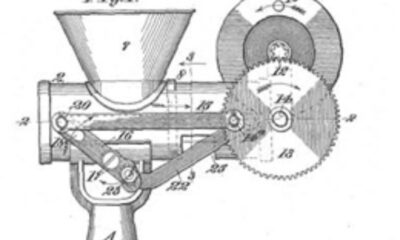
Madeline M. Turner: The Inventor Who Made Juicing Easier
