
National
Plans for 2 Separate Selma Marches Cancelled as Groups Unify


Bernard Lafayette (Courtesy Photo)
By George E. Curry
NNPA Editor-in-Chief
WASHINGTON (NNPA) – A very public conflict between the Bridge Crossing Jubilee, Inc., the local group that has been commemorating the 1965 Selma-to-Montgomery March for more than four decades, and the largely White-run The Faith & Politics Institute, a Washington-based group that had organized competing marches in Selma and Montgomery on the weekend commemorating the 50th anniversary of “Bloody Sunday,” has been resolved with both groups agreeing to participate in a single march in Selma, a coalition of organizations has announced.
“The organizations in the unified committee will sponsor one march, the sacred Bloody Sunday re-enactment march across the Edmund Pettus Bridge on Sunday, March 8, 2015,” the 10 major organizations said in a joint press release. “No organizations in the unified committee will sponsor and or participate in any other march.”
The Faith & Politics Institute, which focuses on bringing people together to reflect on spiritual values and hold conversations across racial, religious, ideological and party lines, had announced plans to hold a march led by President Obama in Selma on Saturday, the day before the big march, and a separate march and rally on Sunday in Montgomery that would have competed directly with the annual bridge-crossing ceremonies. Rep. John Lewis (D-Ga.), who was brutally beaten on “Bloody Sunday,” is closely affiliated with the Faith & Politics Institute.
In an “Open Letter” to the group, dated Feb. 11, Alabama State Senator Hank Sanders of Selma wrote, “It appears to me that Faith and Politics has set out to not only diminish but to destroy Bloody Sunday. You not only scheduled another march on Saturday in Selma but you scheduled a march and rally in Montgomery on Sunday during the afternoon when the sacred Bloody Sunday March takes place in Selma. It would have been so simple to hold your events in Montgomery on Saturday and join the events in Selma on Sunday. However, the arrogance of power has caused you to try to diminish the sacred Bloody Sunday March and Commemoration and change history.”
After publication of Sanders’ letter, representatives from 10 organizations – including the Bridge Crossing Jubilee, the Southern Christian Leadership Conference (SCLC), Rainbow PUSH, the National Action Network (NAN), The Faith in Politics Institute, and the National Voting Rights Museum in Selma – came together to resolve the conflict.
The end result is that President Obama will speak in Selma on Saturday, March 7, the actual anniversary of the Bloody Sunday, but there will be no march in Selma that Saturday or in Montgomery on Sunday. The Faith in Politics Institute and local organizers have clashed before.
“This was not the first time I am sorry to say that the issue of who will be among those on the front lines has recently become a bone of contention. Faith and Politics has insisted that only members of the Faith and Politics delegation be on the front lines,” Sanders wrote. “We have insisted that some of the nearly 600 other individuals who were also on the Bridge on Bloody Sunday in 1965 be included. In 2013 when Vice President Biden was here, Faith and Politics wanted to allot only 30 places for survivors of Bloody Sunday with 270 places for members of their delegation, including congressional staff members. When an agreement was worked out that it would be half and half, Faith and Politics then had the Secret Service give virtually every place to members of the Faith and Politics delegation. It seems that you value status, power and money far more than you value blood, sacrifice, struggle and history.”
According the Sanders, “In the 17 or so years that Faith and Politics has been coming to the Bridge Crossing Jubilee, not once have you organized a March or contributed in any way. You raise millions of dollars by claiming to sponsor the Bloody Sunday March but never paid for even a chair, a porto-toilet, water or anything else. You never organized other people to come if they were not in your delegation. You just show up and insist on privilege even though you refused to be a co-sponsor because you could not be the sole sponsor. This is about your privilege and power. Bloody Sunday is about sacredness, sacrifice and struggle.”
Other organizers said that in the annual jousting for positioning in the march, attempts were made to remove Charles Steele, Jr. president of SCLC, from the front of the line even though Dr. Martin Luther King’s old organization organized the original march.
Messages seeking comment were left Tuesday for both the interim president and communications director of The Faith & Politics Institute but were not returned by press time. The federal government, schools, and many offices in the nation’s capital were closed Tuesday because of inclement weather.
Event organizers said Bernard Lafayette, board chairman of SCLC and an early organizer in Selma, played a key role in brokering an agreement between the sparring groups. Lafayette, an ordained minister and longtime civil rights activist, has credibility in both camps and conducts conflict resolution training around the world.
With a truce now in place, march organizers are looking to the future with a list of activities that will span five days, from Thursday, March 5, through Monday, March 9.
Thursday’s activities will include a play about Jimmie Lee Jackson, whose death was the impetus for the Selma-Montgomery March, and a memorial for the martyrs of the Civil Rights Movement. Friday’s activities will include a session on women in the Civil Rights Movement, an educational summit, a session on organizing tactics, and a mock trial.
Saturday’s highlights include a parade, a voting rights workshop, breakout sessions on such topics as environmental justice and mass incarceration, a film festival capped by the Freedom Flame Awards Gala and an Old School blues show and dance.
The Sunday schedule begins with a Martin Luther and Coretta Scott King Unity Breakfast, a pre-march rally at famed Brown chapel AME Church with the bridge crossing at 2:30 pm, followed by a rally and salute to the movement’s foot soldiers. The march from Selma to Montgomery will take place on Monday, ending with a rally at the Alabama State Capitol.
A complete listing of events is posted on the website www.selmajubilee.com.
The joint press release stated, “The Living Legends Dialogue on Saturday, March 7, 2015 will feature Diane Nash, Bob Moses, Claudette Colvin, Dr. Bernard Lafayette and the youth leaders of the Black Lives Matter Movement.”
The coalition said it was also welcoming back “the foot soldiers and leaders of the Voting Rights Movement,” including former Student Nonviolent Coordinating Committee (SNCC) President John Lewis, Amelia Boynton, Dick Gregory, and former SCLC stalwarts Joseph Lowery, C.T. Vivian, Andrew Young, Diane Nash, Bernard Lafayette and Jesse Jackson.
“Ten major civil rights organizations have unified to commemorate the 50th Anniversary of Bloody Sunday and the Selma-to-Montgomery Marches,” they said in a joint press release. “We have jointly created more than 40 events for this historic anniversary weekend…”
###






Activism
Six Months in, Probate Reform Coalition Marks Progress in Protecting Elders From Financial Abuse
Despite the cited obstacles, NPRC has made some promising inroads towards their mission. NPRC has identified that nationwide the Attorneys General must be engaged and encouraged to implement oversight, protection and enforcement of the law; members find support from each other as they advocate for redress via “letters of compassion” sent to judges, nursing facilities and law enforcement agencies and members are instructed on their rights, how to take constructive action to protect those rights through access to resources that allow them to intelligently represent themselves in court.

By Tanya Dennis
The National Probate Reform Coalition, a loose-knit national coalition of advocates, victims, and families dedicated to protecting elder rights, especially within the probate court system, was formed by the Post Newspaper Group (PNG) after more than a decade of reporting on the mistreatment of elders and the plunder of their estates.
In response, PNG Publisher Paul Cobb set in motion a series of monthly town halls to address the problem and propose workable solutions, designating it a “year of action.”
At six months, the coalition has attracted families, advocates, and experts across the nation whose strategies have proven effective in their respective states, and who are moving forward collectively with the mission of engaging judicial, legislative, and enforcement agencies to ensure elders are not exploited or abused.
“The issue of elder abuse is multi-layered”, says NPRC planning committee member Venus Gist. “Elders are our most vulnerable population, next to children, and they are easily exploited by strangers, their own family members, and the judicial system designed to protect them.”
Since January, NPRC has, via monthly virtual meetings held on the first Thursday of each month, clearly defined the issues and formulated workable solutions that can be implemented nationwide.
“There are amazing laws on the books that protect elders and their assets,” said NPRC member Zakiya Jendayi. “The problem is they are ignored, and that lack of oversight has led to systemic abuse in the Probate Court system, not just in Alameda County, but nationwide.
“The scary part is the collusion and wall of silence NPRC has encountered when reaching out to the Judicial Council, legislators, and the State Bar for assistance. It’s so obvious that one hand is washing the other, that they’re protecting each other, that it’s difficult to initiate any type of meaningful reform much less dialogue.”
Despite the cited obstacles, NPRC has made some promising inroads towards their mission. NPRC has identified that nationwide the Attorneys General must be engaged and encouraged to implement oversight, protection and enforcement of the law; members find support from each other as they advocate for redress via “letters of compassion” sent to judges, nursing facilities and law enforcement agencies and members are instructed on their rights, how to take constructive action to protect those rights through access to resources that allow them to intelligently represent themselves in court.
Stacy Drake, a Texas member, says, “I’ve been looking for help for over 10 years with my situation, and I finally found it within the NPRC coalition. God answered my prayers.”
Broadening its reach within Alameda County, NPRC has invited Oakland Mayor Barbara Lee to assist with outreach, education, and resolution.
“We hope to host an elder abuse/elder protection symposium annually, if not twice a year, to let our elders know that Alameda County and the City of Oakland are a safe place, a place where in their golden years they have no worries regarding exploitation and abuse,” said Cobb. “Society is defined by how the care for its children and elders.”
Bay Area
UC Berkeley Named Top Public University in the U.S. and No. 7 in the World by ‘U.S. News’
Berkeley has been consistently awarded the distinction of the U.S.’s top public university since the Best Global Universities list was first published in 2014. “A strong position in the Best Global Universities rankings recognizes a school’s profound commitment to world-class research and cross-border academic excellence,” said LaMont Jones, managing editor for education at U.S. News.
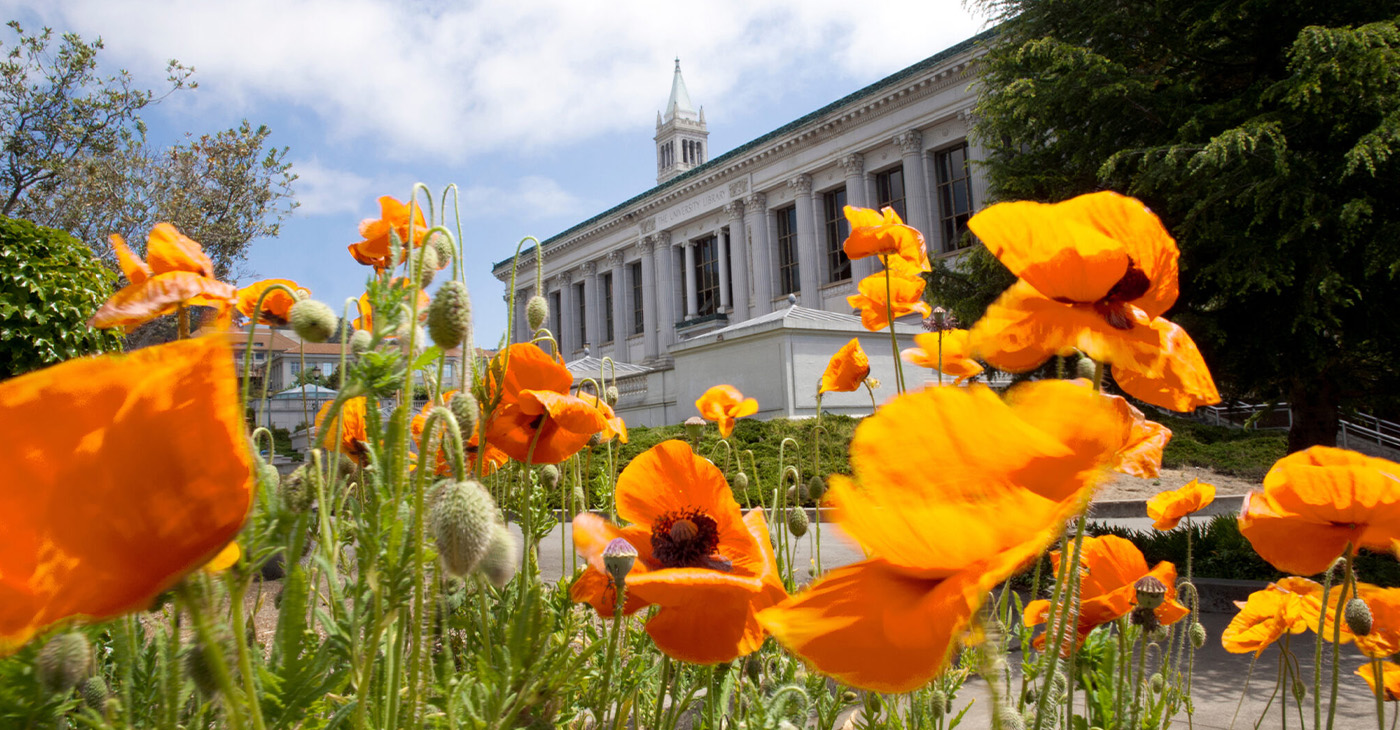
The 2026 Best Global Universities rankings evaluated 2,250 research institutions from more than 100 countries
By Lila Thulin
U.S. News & World Report has ranked UC Berkeley No. 7 in its 2026 list of the best global universities, which assesses more than 2,250 research institutions worldwide.
Berkeley also claimed the honor of top public university in the U.S.
Released on Monday, the list evaluates universities from more than 100 countries on 13 metrics such as global and research reputation (as reported by academics and peers) and number of highly cited scholarly papers.
Berkeley has been consistently awarded the distinction of the U.S.’s top public university since the Best Global Universities list was first published in 2014.
“A strong position in the Best Global Universities rankings recognizes a school’s profound commitment to world-class research and cross-border academic excellence,” said LaMont Jones, managing editor for education at U.S. News.
The rankings also assess a university’s strength in various subject areas; these assessments are separate from U.S. News’ 2026 Best Graduate Programs rankings released in April.
This year, Berkeley was named in the top three nationally in seven subject areas – environment/ecology, ecology, water resources, physics, computer science, chemistry, and engineering – and in the top five for a total of 17 subjects. Subject rankings are based heavily on scholarly publications and citations as well as reputation.
In September, U.S. News also released its 2026 Best Colleges list, in which Berkeley was also named the No. 1 public institution among American universities.
That honor joins other accolades judging campus to be the best public university in the country, such as those from Forbes, The Wall Street Journal and Times Higher Education.
#NNPA BlackPress
Lock In Car Price: Avoid Dealer Payment Traps!
Watch the long-form video https://youtu.be/YANxGwD2CjI Don’t get swayed by monthly payments! Always settle the out-of-the-door price first, including all fees. Only then discuss monthly payments, terms, and potential add-ons. #AutoNetwork #CarBuyingTips #CarSales #DealershipSecrets #Negotiation
The post Lock In Car Price: Avoid Dealer Payment Traps! appeared first on BlackPressUSA.

Watch the long-form video
Don’t get swayed by monthly payments! Always settle the out-of-the-door price first, including all fees. Only then discuss monthly payments, terms, and potential add-ons. #AutoNetwork #CarBuyingTips #CarSales #DealershipSecrets #Negotiation
The post Lock In Car Price: Avoid Dealer Payment Traps! appeared first on BlackPressUSA.

WORK FROM HOME
Home-based business with potential monthly income of $10K+ per month. A proven training system and website provided to maximize business effectiveness. Perfect job to earn side and primary income. Contact Lynne for more details: Lynne4npusa@gmail.com 800-334-0540



Oakland Museum Presents Landmark Retrospective Celebrating Beloved Bay Area Artist Mildred Howard

Ferry Fares to Increase July 1 as Ridership Hits Record Highs

Stop the Hate Symposium Brings Oakland Together Through Dialogue, Partnership, and Community Healing

Six Months in, Probate Reform Coalition Marks Progress in Protecting Elders From Financial Abuse

A Long Time Coming: School District Kicks Off Massive $97 Million Renovation of West Oakland’s McClymonds High School

IN MEMORIAM: Oakland Dance Legend Reginald Ray-Savage, 67

UC Berkeley Named Top Public University in the U.S. and No. 7 in the World by ‘U.S. News’

NCBW-OBAC Champions Black Women Entrepreneurs at Business en Blaque Expo

Lock In Car Price: Avoid Dealer Payment Traps!

Sell Your Car: Get Offers BEFORE Visiting Dealerships!

The Conversation With Al McFarlane 6/23/26

Media Monday 6/22/26

LIVE! ASK ALMA! — TUES. 6.23.26 7PM EST

Car Buying Secrets: 4 Hidden Checks Before You Sign!

After 10-Year Wait, Fillmore Heritage Center Reopens in San Francisco

Oakland Post: Week of May 20 – 26, 2026

Oakland Post: Week of May 27 – June 2, 2026

Oakland Post: Week of June 3 – 9, 2026

5 Cleveland Police Officers Injured, Gunfire Erupts During East Side Pursuit

2026 World Cup is Here and Atlanta is Ready For It

COMMENTARY: Black Music is the Sound of Black Freedom: Let Us Reclaim Both This Juneteenth

Oakland Director Boots Dazzles Once Again in ‘I Love Boosters’

Venus Williams Calls a Sabalenka Exit a Tragedy

COMMENTARY: Using Art, Healing, And Community to Transform Mental Health Dialogue

Oakland Post: Week of June 10 – 16, 2026

Sale of Coliseum to African American Developers Moves Toward Completion

Study: Waiting Lists for Child Care Assistance Nearly Doubled

Uptown Music Theatre Summer Camp Returns to Inspire the Next Generation of Performers

Let’s Talk Karmelo Anthony!
The Conversation With Al McFarlane 6/23/26
Media Monday 6/22/26
LIVE! ASK ALMA! — TUES. 6.23.26 7PM EST
Car Buying Secrets: 4 Hidden Checks Before You Sign!

Is This 550 HP Charger Worth YOUR Money? AutoNetwork Review

Celebrating Juneteenth – Frederick Douglass on education and resistance

LIVE! — ASK ALMA! — TUES. 6.19.26 7PM EST

Hyundai Ioniq 5 Parking, Safety, and 360 View #shorts

2025 Ioniq 5 New Wiper & Powerful Performance! #shorts

Electric SUV Range: Is 259 Miles Enough? #shorts

EV Charging: How Fast Can You Charge an Electric Vehicle? #shorts

Biometric Cooling… Messaging Seats…Come on! 2025 Infiniti QX80 Autograph 4WD

Charged Up: Witness the Magic of a Fully Electric Car! #shorts

Range Rover Sport PHEV Included…: See What’s Inside This Luxury SUV! #shorts

Invisible Hood View: Perfect Parking with X-Ray Vision! #shorts
-
 Art3 weeks ago
After 10-Year Wait, Fillmore Heritage Center Reopens in San Francisco
-
 Activism3 weeks ago
Oakland Post: Week of June 3 – 9, 2026
-
 #NNPA BlackPress3 weeks ago
5 Cleveland Police Officers Injured, Gunfire Erupts During East Side Pursuit
-
 #NNPA BlackPress3 weeks ago
2026 World Cup is Here and Atlanta is Ready For It
-
 Arts and Culture3 weeks ago
COMMENTARY: Black Music is the Sound of Black Freedom: Let Us Reclaim Both This Juneteenth
-
 Art3 weeks ago
Oakland Director Boots Dazzles Once Again in ‘I Love Boosters’
-
 #NNPA BlackPress3 weeks ago
Venus Williams Calls a Sabalenka Exit a Tragedy
-
 #NNPA BlackPress3 weeks ago
COMMENTARY: Using Art, Healing, And Community to Transform Mental Health Dialogue
